Summary
-
1. Explore the Potala Palace in Lhasa
-
2. Discover Jokhang Temple and Barkhor Street
-
3. Attend philosophical debates at Sera Monastery
-
4. Admire the turquoise waters of Yamdrok-tso Lake
-
5. Experience the Mount Everest Base Camp
-
6. Pilgrimage to Mount Kailash
-
7. Visit Tashilhunpo Monastery in Shigatse
-
8. Discover Drepung Monastery
-
9. Explore Gyantse and Pelkor Chode Monastery
-
10. Join local festivals
-
11. Namtso Lake: one of Tibet’s natural jewels
-
What to do in Tibet?
-
When is the best time to go to Tibet?
-
Is it possible to travel to Tibet?
-
Is Tibet an expensive destination?
Visiting Tibet also means taking time to observe practices and places that occupy a central role in local life. Philosophical debates in monasteries, pilgrimages around sacred peaks, or explorations of the high plateaus — some experiences add a deeper dimension to the journey.
1. Explore the Potala Palace in Lhasa
The Potala Palace in Lhasa, former residence of the Dalai Lamas, remains one of the must-see places on any Tibet trip. This landmark with its recognizable silhouette, perched on the Red Hill, overlooks the old city of Lhasa and embodies the fusion of spiritual and political power in Tibetan history.
Its monumental architecture, built dating back to the 7th century, houses thousands of rooms, sanctuaries, mural paintings and gilded stupas, witnesses to faith and collective memory. Accessible from Xining to Lhasa or via the Friendship Highway when arriving in Tibet from Nepal, visiting it often requires several days in Lhasa, with the presence of a guide and entrance tickets reserved in advance. The Potala, with its prayer flags fluttering in the wind, remains a major symbol of the Roof of the World.
2. Discovery of Jokhang Temple and Barkhor Street
In the heart of Lhasa, the Jokhang Temple is regarded as Tibet’s spiritual center, built under the reign of King Songtsen Gampo, a pivotal figure in Tibet in the 7th century. Around this sacred sanctuary stretches the Barkhor Street, where pilgrims perform the kora, a ritual circular walk, in an atmosphere of deep reverence.
This pedestrian zone, lined with traditional houses, small stalls and local products, offers a direct immersion into religious fervor and Tibetan daily life. Daily, devotees from across the Tibet gather here, continuing a millennium-old tradition. This place, where faith and commerce intersect, is essential for understanding the cultural importance of the capital.
3. Attend philosophical debates at Sera Monastery
The Sera Monastery, located not far from the center of Lhasa, is renowned for its public philosophical debates, held each afternoon in a shaded courtyard. These exchanges, sometimes lively, allow monks to deepen Buddhist teachings in a structured setting, faithful to the tradition of the great monastic universities.
The monastery itself is a remarkable example of Tibetan architecture, with prayer halls, statues, and ancient manuscripts. Accessible to those who spend several days in Lhasa, visiting the site provides a view of a living ritual, still practiced, which reinforces the presence of a guide for better understanding of rites and religious terminology. It represents a fundamental facet of Tibet’s intangible heritage.
4. Admire the turquoise waters of Yamdrok-tso Lake
Among Tibet’s iconic landscapes, Yamdrok-tso Lake holds a prominent place. Located about 100 km from Lhasa, this sacred lake, with its intense blue, is surrounded by high plateaus and mountains where yak herds graze. Considered one of the region’s major spiritual sources, it features in many itineraries departing from Lhasa, often en route to Shigatse or the Kailash mountains.
Observing its shifting reflections throughout the day is a breathtaking experience, especially at sunrise or late afternoon. A place of pilgrimage as much as contemplation, Yamdrok-tso Lake embodies the fusion of an extreme environment and Tibetan spirituality, while offering a window into the local wildlife.
5. Discover the Mount Everest Base Camp
The Everest Base Camp on the Tibetan side attracts travelers seeking altitude and perspective. Accessible from Shigatse via the Friendship Highway, it brings you close to the north face of the world’s highest peak. The panorama of Everest from the Rongbuk Monastery is one of the Himalayas’ most impressive views, combining ascent and monumental scenery.
This site requires proper acclimatization and logistics arranged by a specialized agency, especially for obtaining permits. The camp is a strong milestone in a Tibet trip, often marked by a night above 5,000 meters and extreme conditions, but offset by the visual power of the place and the emotion of silence.
6. Pilgrimage to Mount Kailash
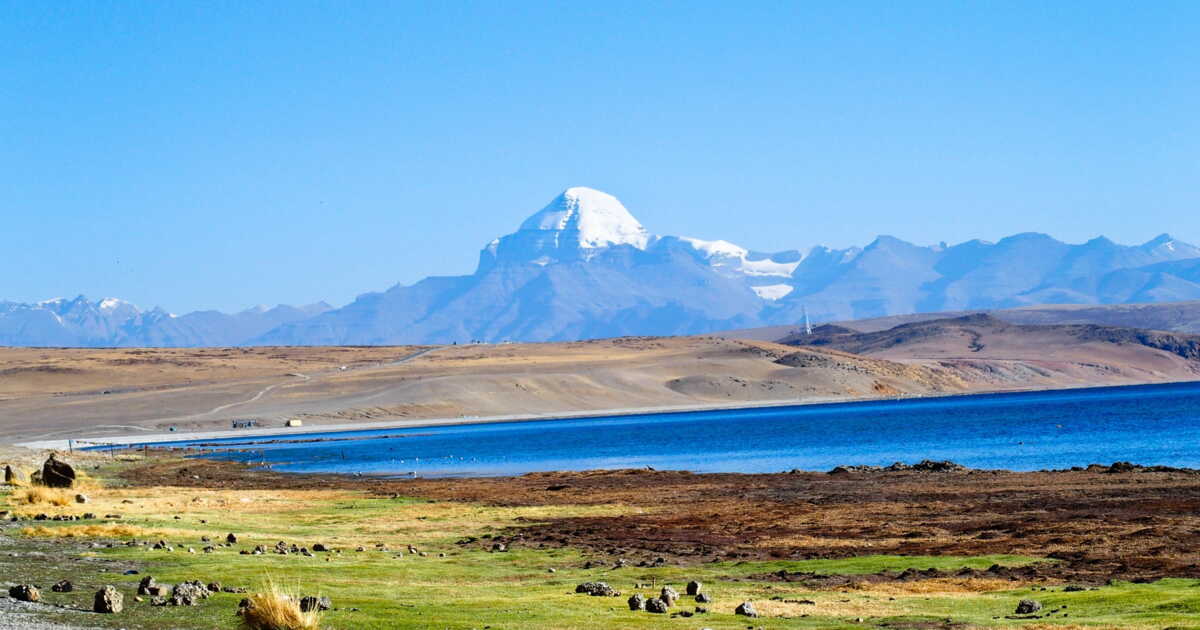
Mount Kailash, in western Tibet, is venerated by four major religions and recognized as a sacred high peak, around which the kora — a 52 km circuit walked by pilgrims — unfolds. Not climbed, it is considered the world’s center by many spiritual traditions. The route crosses passes above 5,600 meters, near the Manasarovar Lake, another sacred site associated with Kailash.
7. Visit Tashilhunpo Monastery in Shigatse
The Tashilhunpo Monastery, located in Shigatse, is a major religious site founded in the 15th century and remains the historic seat of the Panchen Lama. It stands out for its size, distinctive architecture and the wealth of its wall paintings, statues and stupas. Walking through its many courtyards and halls helps to understand the important role played by Shigatse in Tibet’s religious history, as well as the spiritual prestige of the monastery.
Access from Lhasa via the Friendship Highway makes it a logical stop in exploring the major monastic sites. Shigatse’s heritage, both architectural and liturgical, fully contributes to the deep identity of the Roof of the World.
8. Discover Drepung Monastery
The Drepung Monastery, once the largest in the world, rises on a hill at the edge of Lhasa. A center of study and meditation, it once housed up to 10,000 monks and today remains central to the transmission of Buddhist texts. Its imposing buildings, traditional monastic houses and libraries make it a major site of Tibetan religious heritage.
Integrated into many cultural itineraries, it illustrates the layout of the great monastic universities and is a must-stop for those dedicating several days in Lhasa. The visit, guided or self-guided, provides a complete glimpse of the religious life structured on this high-altitude terrain.
9. Explore Gyantse and Pelkor Chode Monastery
In Gyantse, a small historic town on the way to Shigatse, the Pelkor Chode Monastery draws attention with its unique Kumbum stupa. This nine-level religious monument, housing dozens of ornately decorated chapels, represents a must-see for enthusiasts of Tibetan architecture and sacred iconography. Shigatse, the regional whole to which Gyantse is often linked, concentrates several elements of Tibetan heritage, including this emblematic monastery. The site is also one of the few that combine monastic life and fortifications, with Gyantse Fort overlooking the valley. This location offers a cross-section between spirituality and military history in Tibet’s fabric.
10. Participate in Local Festivals
Attending a religious festival in Tibet, such as the Saga Dawa Festival in Lhasa, offers a dive into collective fervor and sacred ritual. This major Tibetan Buddhist celebration, marking the birth, enlightenment and death of the Buddha, takes place each year between May and June, during one of the most favorable times to travel.
The city transforms: processions follow one another, prayer flags are changed, and the population gathers at the monasteries to pray. Participating in these festivities as a visitor helps to better grasp Tibet’s spiritual value beyond the landscapes, and to live a truly travel experience that is both cultural and introspective.
11. Namtso Lake: one of Tibet’s natural jewels
Namtso Lake, one of the world’s highest saline lakes, is located about 220-250 km from Lhasa. Surrounded by snow-capped mountains, it constitutes a spot of rare purity, appreciated for its majestic landscapes and spiritual dimension. A place of pilgrimage, Namtso Lake is also conducive to observing wildlife, notably migratory birds. Reachable on a half-day excursion or a two-day trip depending on conditions, the site is particularly popular in summer, when trails are passable and campsites are set up.
The cultural importance of the site is reinforced by the legends surrounding it and by living religious practices. Its relative isolation makes it an ideal place for travelers seeking silence, nature, and depth.
In conclusion, Tibet reveals itself through a blend of spirituality, natural majesty, and living traditions. Whether your interest lies in culture, history, or adventure, every journey to Tibet is an unforgettable exploration. This mystical destination offers a variety of experiences waiting to be discovered, enriching travelers with unique memories and perspectives.
What to do in Tibet?
Planning a Tibet trip means stepping into a region marked by a unique cultural significance, balancing spirituality, history, and extreme nature. The must-see places include Lhasa, the spiritual capital, where several days in Lhasa are needed to discover the Norbulingka Summer Palace, the Potala perched on the Red Hill, and the great monastic universities.
The Sama Monastery, considered the country’s first Buddhist institution, remains an iconic site, often described as an oasis amid lunar landscapes. Further west, Shigatse, the country’s second-largest city, captivates with its architecture and preserved heritage, testimonies of a prestigious past. Between prayer flags, yak herds, and traditional houses, Tibet reveals a fascinating balance between altitude, faith, and memory.
What is the best time to go to Tibet?
The ideal period to visit Tibet spans from May to October, when temperatures are milder and high-altitude roads are clear. Summer, though touristy, remains a favorable time to explore the must-see places, notably Lhasa, Shigatse, or the areas near Manasarovar Lake and the Kailash mountains.
This season also allows for high-altitude wildlife viewing, attendance at major Buddhist festivals, and a journey along the Friendship Highway, the iconic long route that connects Tibet from Nepal. Planning a multi-day itinerary is essential to acclimate to the altitude and better appreciate Tibet’s cultural and natural significance, a region nicknamed the Roof of the World.
Is it possible to travel to Tibet?
Traveling to Tibet is indeed possible, but the journey requires structured organization. Due to regulations set by the Chinese government, access to Tibet involves obtaining a special permit in addition to plane tickets, and the presence of an authorized guide is mandatory throughout the stay.
Travelers can enter either through mainland China, via routes such as Xining to Lhasa (notably on the high-altitude train), or by overland from Nepal via the Friendship Highway, the iconic access route. A specialized agency is therefore essential to organize the circuit and ensure compliance with local administrative requirements.
Is Tibet an expensive destination?
A trip to Tibet represents a significant investment, but costs vary depending on duration, desired comfort level, and chosen season. The main expense items include airfare, entry permits, domestic transport, mandatory guides, and accommodation. Using a specialized agency is essential, as independent travelers are not allowed to move freely.
If Tibet is considered an expensive destination compared with other regions in Asia, the richness of its cultural significance, the beauty of its landscapes, and the unique character of the experience more than justify the cost. Each morning on the Tibetan side is a lesson in slowness, verticality, and memory.
This article was drafted with the help of artificial intelligence, then corrected, expanded, and validated by our reporters.