

Huttopia Launches Its Vacation Observatory


Huttopia annonce la création de son Observatoire des vacances

CroisiEurope


Huttopia has created the Huttopia Holidays Observatory, launching with a first major survey.  
This research and analysis body, developed with ObSoCo, aims to fill the lack of solid data on this topic.  
Here are a few figures: 
Although it is often said that 40% of French people do not take holidays, the survey shows that the actual rate of non-vacation is 28%. Situations vary: only 4% are truly and permanently excluded from holidays, 11% cannot afford to go this year, but hope to be able to do so soon, and 7% make a financial or time-related choice, preferring to use their money or their time for other things, such as renovations.  
Meanwhile, 6% choose not to travel by preference. However, the study reveals a strong democratization of holidays. Indeed, 74% of 18-24-year-olds used to go on holidays when they were children, compared with only 48% of those aged 65-75.  
 
Another important point of this survey: ecology. The environmental impact is the last criterion for choosing a destination, affecting only 8% of French people.  
Yet, 75% of them express strong interest in holidays centered on the outdoors and nature. Today, the term “ecological” is often seen as a constraint, whereas vacation time is linked to pleasure and freedom.


What is the aim of this survey?

The results of this first edition will be analyzed in the book “The Book of Holidays, and What They Tell Us” (co-authored by Guénaëlle Gault and Jean Viard), which will be published on June 5, 2026 by Éditions de l’Aube. 

 
This survey will be annual to track evolutions over time. All results will be freely available online to feed public debate. 

 
Through this Observatory, the Huttopia Foundation aims to provide a solid database to encourage public and economic actors to support universal access to holidays, through public policies for holiday camps, green classes, or affordable and locally available private offers. 


Bordeaux: Saint-Michel Spire to Reopen to the Public


La flèche Saint-Michel signe son retour après 5 ans de travaux, Nicolas Duffaure

IFTM TourMaG Party


After five years of renovation, the Saint-Michel spire in Bordeaux will soon be reopened to the public.

Residents of Bordeaux and visitors will be able to rediscover it starting from June 13.

They will be able to admire this Gothic-style edifice and its spire, which rises to 114 meters high, making it the fourth tallest church tower in France.

The bravest may also climb its 230 steps to behold Bordeaux from its summit, with a 360-degree panoramic view.


The Saint-Michel Spire: a renovation that took time

Beginning in 2022, the monument underwent a major restoration to repair deteriorated stone, cracks, and weak points in its structure.

The edifice had become considerably deteriorated.

To read: The City of Wine celebrates its 10th anniversary from June 4 to 7, 2026

Over the centuries, since the 15th century, the monument has undergone numerous modifications and renovations that have contributed to its fragility, a situation further intensified by weather-related hazards. It was therefore essential to undertake works to durably protect this heritage.

The project lasted nearly five years, with the spire being closed at the end of 2021 before reopening in June 2026. This duration can be explained by the scale of the mission and the height of the building.

To reach the highest parts, substantial technical means were required to perform precise work:

  • complete restoration of the stone claddings;
  • replacement of damaged stones and joints;
  • bring the lightning protection system up to standard;
  • restoration of the cross located at the very top.

TGV M to Welcome Its First Passengers in Early September 2026


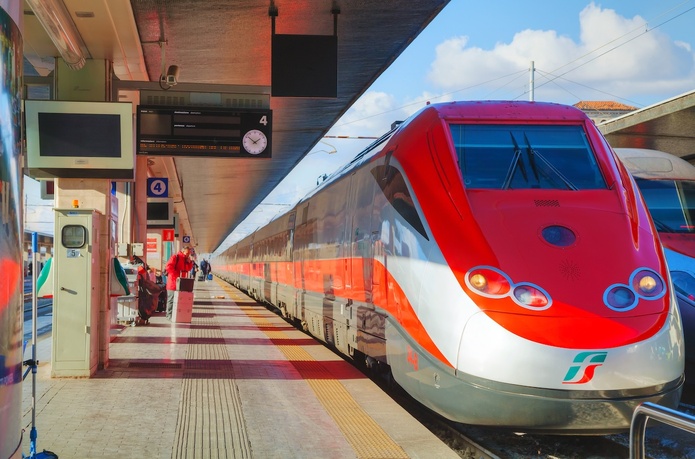
TGV M : un début des opérations commerciales prévu en septembre 2026 - Crédit photo : SNCF Voyageurs

IFTM TourMaG Party


Il devait, à l’instar du CDG Express, débuter son exploitation pour les JO de Paris. Finalement, les usagers français auront attendu deux années supplémentaires.

En effet, le TGV M vient de franchir sa dernière étape avant sa mise en circulation à grande échelle. La livraison des rames à la SNCF débutera dès le début de l’été.


Il a obtenu l’autorisation de mise sur le marché délivrée par l’ERA, l’Agence de l’Union européenne pour les chemins de fer.

Cette étape cruciale permet de vérifier que le matériel répond aux “exigences de sécurité et d’interopérabilité”.

“La qualité du travail préparatoire et la coopération des parties prenantes ont contribué à la bonne progression de l’évaluation, marquant un des derniers jalons vers l’entrée en service du train
“, selon le communiqué de l’opérateur.

Désormais, la SNCF et Alstom, le constructeur, vont pouvoir accélérer la mise en place de ce train de nouvelle génération.


TGV M: Commercial operations slated to begin in September 2026

Thus, the delivery of the first two sets destined for operation is planned for June 2026. Four more will follow by the end of August and, in total, the carrier will have 13 sets by the end of 2026.


For train enthusiasts, you will still have to wait a few more weeks before hoping to boards this new rolling stock.

A phase of testing and adjustments in real-world conditions is essential before welcoming the first passengers.

SNCF Voyageurs and Alstom have chosen to strengthen the commissioning arrangements by planning a several-week pre-commercial run of the first sets on the national network.

This exceptional step will mobilize hundreds of teams from the two companies in order to check every detail of the onboard experience, support the adoption of the train by the operational teams and finalize the last adjustments before welcoming the first TGV INOUI travelers
“, explains the press release.

To read : SNCF: what does the TGV M look like, which will run in 2026?

While commercial operations were scheduled for July 1, 2026, according to the latest postponement, they will not take place before early September.

For reminder, the TGV M is a 100 % French-designed train in its conception and built from 97 % of recyclable materials. It will feature 740 seats in its maximum configuration, i.e., 20 % more seats.

SNCF Voyageurs and Eurostar have ordered 160 train sets.

Slow Village Aims for International Expansion with Around 30 Sites by 2030


Le camping SLOW VILLAGE ANDUZE, Gard - Photo Slow Village

IFTM TourMaG Party


TourMaG – Could you introduce Slow Village?

Baptiste Bonnichon: Slow Village is a group based in Angers. Today, the group owns 14 establishments spread across France, in some of the country’s most beautiful locations, as we like to say, including 11 that bear the Slow Village brand.

Slow Village is a concept of nature-focused hotels with a premium positioning. Our approach, inspired by slow tourism, is to create living spaces and holiday destinations where people can reconnect with time, with nature, with the land, and with the terroir of the places where we operate.

To achieve this, we pursue a highly committed sustainable approach and we rely on the European Eco-label.


Also to read:
Bon Air Club aims to invent a new generation of outdoor “base camps”


Slow Village: a discerning selection of implantation sites

TourMaG – You recently selected certain locations to set up campsites, notably Belle-Île-en-Mer, Île de Ré, and the Lot. Why did you choose these destinations for your investments?

Baptiste Bonnichon:
We have a particular approach in our acquisitions: we always own and operate the establishment. We are very selective about the destinations we choose.

Today, Slow Village is present in Brittany, at Brignogan, on a magnificent beachside site on a hill. We are also in Pornic, in a very natural site, in Les Ponts-de-Cé, in the Loire Valley near Angers, and in Vendée near Saint-Gilles-Croix-de-Vie.

Finally, we also have sites at Biscarrosse, Oléron, Saint-Martin-de-Ré and La Couarde on Île de Ré as well as in the Périgord where we have two establishments: near Sarlat, in the Céou valley, and near Les Eyzies, close to Saint-Léon-sur-Vézère, in the Périgord Noir. Finally, in Gers, we have a site at Lamothe-Goas, but also in the Cévennes park as well as in La Roche-sur-Yon, near one of France’s most beautiful villages.

When we acquire existing establishments, we strive to stay within this charter of very beautiful places, with low density for the placement of our accommodations.

We always position ourselves next to a tourist point of interest, accessible on foot or by bike, in places that are either atypical or unique. For example, Belle-Île-en-Mer is an exceptional Breton island, well known for hiking and trail running (the Belle-Île trail exists). The site is close to the harbor, walkable, in a natural area, with the beach accessible on foot.

Île de Ré is also a place our guests love because it is preserved, with a very eco-responsible approach and many cycling routes. Already present at Saint-Martin-de-Ré, the second site at La Couarde allows us to be present in another part of the island. The beach is accessible on foot, we are 100 meters from the sea, between the salt marshes of Île de Ré and the beach. It is quite an exceptional site.

The third is the Mas de Saboth estate in the Lot valley. It is a hilltop site with an exceptionally beautiful view over the Lot, between Cahors and Saint-Cirq-Lapopie, a magnificent small village of the department. It is always with this vision in mind when we intend to establish ourselves in a region.


TourMaG – The current market is dominated by campsites or nature hotels with fewer than 300 places. Is that the establishment size you target as a priority?

Baptiste Bonnichon:
Yes, we focus on sites that range between 100 and 300 places. There is a real opportunity because, among the 7,500 campsites in France, 80% are still run or owned by independents.

It is with these owners, who wish to sell their campsite, that we source our projects. These are stories we write on small, human-sized sites with a very familial dimension. It is these sites that we look at and enjoy taking over.


European Eco-Label: all sites certified this year

TourMaG – You mentioned sustainability earlier, beyond the aesthetic aspects of the places. How does that translate in practice?

Baptiste Bonnichon:
Yes. First, when choosing locations, there is an ecological and environmental prism. We always study, during our acquisitions, all risks. It is a way to examine the ecological dimension. What risks does a site face: submersion risk, rising waters over time for the site’s longevity, fire risk, etc. That is the initial analysis we perform.

Next, we analyze the biodiversity present on the site and how we can best preserve it. We conduct biodiversity analyses progressively across all sites in the group.

Finally, once we have acquired the site, we rely on the European Eco-label. It is the only environmental label that remains public, issued by the European Commission. It represents 67 stringent criteria in operating models, but these elements are fully integrated into our system and linked to our operational processes.

They compel us in a concrete way to meet a broad set of environmental criteria applicable to tourism. We are the first hotel group in France to systematically use the European Eco-label across all our sites.

We launched a wave of certification across all our sites. The eco-labeling of all our sites will be completed this year. We aim for 100% of our properties to be eco-labeled.

What is particularly interesting about the Eco-label is that we must renew it every two years. At each renewal, we are required to improve, which places us in a continuous improvement process regarding the environmental dimension.


TourMaG – concretely, what kinds of work do you undertake in the campsites you purchase?

Baptiste Bonnichon:
The Slow Village approach and concept means we do not run camping; we operate as a full-nature hotel experience, even though the underlying asset remains a campsite.

We pursue a far more nature-centered approach, with a focus on the quality of our accommodations. Compared with more traditional camping groups, we do not use white PVC accommodations (or they only remain temporarily until we renew them).
(or they stay only as long as we renew them gradually).

When we invest in a new site, we transform a very large portion, 50 to 70% of the accommodations, to install lodgings that meet the Slow Village standard.

This entails hotel-grade quality criteria, wooden cladding in a cabin-like style, an eco-friendly approach, large outdoor terraces, and a substantial vegetative density to offer a significant nature experience.

Then, we recreate or enhance the heart of life so that it aligns with Slow Village standards, including a modern, design-focused restaurant. The menu adheres to our standards for local production and local suppliers. We operate all of our restaurants; we are not in management. All our chefs are trained in the Slow Village culinary method, from the perspective of catering and supplier selection.

Regarding activities, the Slow Club stands in opposition to what is typical in classic club camping. Our Kids Club is heavily inspired by the Montessori method, with upcycling activities, building tipis in nature, exploring biodiversity, creating herbariums, or discovering the animals that inhabit the site to better know and protect them.

We establish educational farms at each of our sites to reconnect children and families with the rural, agricultural, and animal dimensions.

Finally, unlike many campgrounds, the heart of our concept is not a swimming pool with giant water slides. We always prioritize a water feature. For example, at Biscarrosse, one of our largest sites, there is no pool because the lake is 50 meters away, and our guests love it. In Lamothe-Goas, there are rivers right next to us, and we have recreated a natural swimming lagoon with ecological filtration, without pouring a single cubic meter of concrete, with a strong commitment to the quality of infrastructure.


Brittany: How the Ker Lorient Pass Is Revolutionizing Sustainable Tourism


Ker [care] Lorient, premier dispositif français inspiré du modèle danois « CopenPay, CLO & CLEM-LBST

IFTM TourMaG Party


b[From May 18 to June 30, 2026, Lorient Bretagne Sud Tourisme innovates with “Ker [care] Lorient,” an initiative aimed at encouraging sustainable tourism anchored in the territory. ]b

Directly inspired by the Copenhagen-originated CopenPay model, the destination becomes the first in France to adopt this concept of “contributive tourism”.

Launched in the summer of 2024 in the Danish capital, the scheme aims to highlight the climate-positive efforts by tourists.

Thus, during their stay, travelers can benefit from a free lunch, a boat excursion offered, or a free bike rental, if they prefer the train rather than the plane to travel to Copenhagen, or the bike rather than the car once on site.

Back to France and to “Ker Lorient”.

Without shaming visitors, the principle is to celebrate responsible actions.


Ker Lorient: Concrete steps toward tourism with a positive impact

Vacationers who opt for a slower pace and help preserve the territory are rewarded with exclusive perks. An original invitation to explore Southern Brittany differently.

This pass, offered free of charge and sent by email after online registration, is aimed at visitors who stay at least two nights at the hotel, or three nights in a campsite or bed and breakfast, and who adopt an environmentally respectful approach.

Train, bike, hiking, boat-bus or even a car-free full day: every action counts.

In return, a network of local partners committed to sustainable practices offers specific perks and discounts.

Pass holders will, for example, have access to discounts on guided tours of the Le Minor hosiery workshop, to discounts on Sunday stays at the hotel, or to benefits with nautical operators and eco-responsible cafés in the region.

A concrete way to transform the visitor into a temporary resident and to effectively support the local economy.

Read: Slow Village aims for international expansion and about thirty sites by 2030

Youth Hostels: Rethinking the Business Model


Auberges de jeunesse : un modèle économique fragile... - Crédit photo : Depositphotos @draghicich

IFTM TourMaG Party


The United Federation of Youth Hostels was due to celebrate its 70th anniversary this year.

Created in the wake of paid vacations and a France rebuilding itself, discovering leisure and its territories, the FUAJ operated about thirty establishments in France and employed 317 staff, until its liquidation with continued activity, announced on March 2.

After more than two months of uncertainty, the teams and the hostels now know more about the upcoming summer and their future.

The court designated the consortium formed by ONLE FAC Habitat and GSE to take over almost the entire network, with the exception of the establishments at Beaugency and Beaulieu-sur-Dordogne.

It is a relief, because there is no social upheaval.

99 % of the employees keep their jobs, the hostels are maintained and will be developed by a group that has a solid financial base, which we lacked. This is the best possible scenario that could have been chosen.

The buyers intend to continue the project, to develop it and to renovate the hostels.

And if such an actor steps forward, it is because, despite our weaknesses, we were not so bad at what we did and the product is interesting“, explains David Le Carré, the former general manager of the United Federation of Youth Hostels.


FUAJ: 10 million euros to secure the takeover

The sole shadow on the takeover is the 12 economically motivated layoffs at the headquarters.

That was the only offer proposing to take over 50% of the headquarters staff. We are dealing with a benevolent and humane actor“, he describes to us.

For those who do not know the group behind the takeover of the FUAJ, ONLE FAC Habitat is an association that belongs to SMERRA.

The student health mutual, created in 1970, developed by aggregating services for young French people, such as insurance and housing.

Before this takeover, it owned 12,000 student housing units distributed across 100 social residences located in numerous university towns in France.

With the United Federation of Youth Hostels, it will probably further diversify its activity.

We also find in the LOGIFAC dossier, another housing management entity owned by SMERRA.

We are dealing with an actor philosophically close to the spirit of the hostels.

How they are handling the file today makes me optimistic. They want to ensure the continuity of the network, while adopting a very humane and firm approach, meaning that they will focus on the business side, because they are putting more than 10 million euros on the table.

They naturally expect results, and that is perfectly normal,
” confirms David Le Carré.

For now, nothing is definitive as to the network’s use.


Youth Hostels: a fragile economic model…

The new owner of the thirty addresses has not specified whether they will remain entirely as youth hostels or if a portion of the network will be converted into student residences.

They are giving themselves three years to carry out the economic turnaround of the structure, which seems reasonable.

They will take the time to understand the network and how it operates before making decisions about possible changes in the use of the residences.

After that, I think they want to create bridges between their student-focused activity and hostel activity.


At least for 2026, they are pursuing a continuity of activity. Then, there will probably be things to do, with the transformation of some establishments into student residences
“, says David Le Carré.

Read: From the youth hostel to Generator: a whole history

The buyers did not disclose their strategy to the court. They emphasized above all that their primary objective was to ensure the network’s longevity and to prevent the disappearance of a historic actor.

This takeover on the stand is also an opportunity to reflect on the path traveled by the United Federation of Youth Hostels, but also on the relatively lively vitality of social tourism, abandoned by public actors.

When the person who is now the ex-general manager took command of the FUAJ, it was placed under court-ordered restructuring. It was 2018, and despite the work done, it never managed to recover.

The FUAJ began to lose money as early as 2005.

And at that time, the emergence of new-generation hostels with a higher-end positioning had not yet occurred.

We did not have the funds to transform the network and renovate. We relied on our own funds, which was not sustainable without banking partners.

It is crucial to understand how youth hostels operate, because the economic model is hard to sustain. It does not make a huge profit and every euro spent must be controlled,
sums up the leader.

Nevertheless, the arrival of The People, Jo&Joe, Meininger and Generator had an impact on the historic players, who faced a drained cash flow.


Auberges de jeunesse : The People, Jo&Joe, Meininger… ont fragilisé les acteurs associatifs

“The holiday villages face the same problems as those we encountered.

The arrival of profit-driven players, while we were an association, pushed the sector toward upgrading, thus toward investments, and therefore toward higher prices.

We forget all the primary missions of youth hostels.
I can tell you that establishments in their historic format, as we knew them, I do not know any that earn thousands. In fact, even these new players do not rake in much money.

I think what happened to us is far from trivial for others“, recounts the former DG.

Like social tourism actors, the federation had to face a shift in model and a withdrawal by the State.

Until last century, the model developed thanks to volunteering, very modest rents, government aid, and assisted contracts…

Then it tightened when it was necessary to hire, end volunteer work, while local authorities no longer provided premises for free or at low cost, and no longer contributed to investments.

If you do not have a financial, institutional actor or an investment fund backing you, you are left with nothing but your own eyes to cry on.

When the new players arrive with super nice, Instagrammable buildings, it quickly becomes difficult. In cities with high pressure, it becomes complicated.

Our business model meant that establishments in Paris, Lyon or Bordeaux funded Pontarlier, Pontivy, or other secondary towns.

If we want access to tourism for everyone, everywhere in France, then the carrying territories must finance those that are less so. But that was no longer possible.


We tried to work with Bpifrance, but the doors were closed. We fell into the boxes of its tourism accelerator program, but since we were in a continuation plan following our restructuring, it was not possible for them to fund us.

We faced the same fate with the Banque des Territoires and the Caisse des Dépôts. The actors who finance the profitable sector do not really fund social tourism
“, he reflects on the difficulties of the FUAJ.


Tourisme social : “The State supports the project philosophically, but no longer financially”

Just like Touristra in the aftermath of Covid, the United Federation of Youth Hostels will not have managed to reinvent itself, due to lack of financing.

This example is not merely a warning for this sector in particular, but another alert for social tourism, which experiences great difficulties in widespread indifference.

The State philosophically supports the project of the right to holidays for everyone, but it no longer does so financially.

Associations are left financially on their own.

I understand that the State has other priorities.

We have in the UNAT some very vocal people on this theme of public support, of affordable rents… but I fear it may be a lost cause given the current economic context in France
“, laments David Le Carré, who is among the people who will be laid off in a few days.

So it is the closing of a 70-year-old history book, and the opening of another, with more resources and the desire to safeguard the missions of social tourism.


Bpifrance Invests in Belambra


Bpifrance entre au capital de Belambra - Photo Belambra

IFTM TourMaG Party


Bpifrance announces its entry into Belambra’s capital alongside the Mid Cap I fund of Antin Infrastructure Partners, now the group’s majority shareholder.

The operation aims to support the transformation undertaken by the French tourism accommodation player, while backing its development and investment projects.

This stake is achieved via the France Investissement Tourisme 3 and Large Cap funds of Bpifrance. It comes after the completion of the acquisition of a majority stake in Belambra by Antin Infrastructure Partners, the entry into exclusive negotiations having been announced on February 13, 2026.

A historic actor in tourist accommodation in France, Belambra traces its origins to 1959. Owned since 2014 by Caravelle, the group has embarked on a transformation of its model in recent years. According to the press release, this strategy accelerated from 2021 with the arrival of a new management team led by Alexis Gardy, around two main axes: modernizing the asset portfolio and upgrading the offer.

Today, Belambra operates 44 establishments in France, including 35 holiday clubs and 9 hotels. Located mainly on the coast and in the mountains, these sites serve leisure clients, groups and conferences. The group particularly highlights an all-inclusive offering including catering, activities, children’s clubs, sports activities, aquatic spaces and wellness facilities.


Continue Upgrading the Portfolio and Accelerate Opening of New Establishments in France

For Belambra, the arrival of Bpifrance marks a new milestone in its development strategy. The group intends to continue upgrading its portfolio, strengthen full ownership of its real estate assets, and accelerate the opening of new establishments in France, in the mountains as well as on the coast.

The operation also fits within the continuity of support provided by the Caisse des Dépôts, via its Banque des Territoires subsidiary.

I would like to thank Caravelle, which has successfully supported Belambra’s transformation and upgrading in recent years. We are now very happy to welcome Antin and Bpifrance by our side,” said Alexis Gardy, president of Belambra Clubs.

According to him, “the support of Antin and Bpifrance demonstrates the confidence placed in Belambra’s trajectory and the work accomplished by the entire teams.” This new phase should allow the group “to accelerate its development, continue its investments and strengthen its presence in the most beautiful French territories.”


This capital entry into Belambra fully aligns with Bpifrance’s investment thesis: to support and accompany structural players in the tourism sector as they transform,” say Serge Mesguich, head of the Tourism and Leisure division, and Eric Lefebvre, Large Cap director at Bpifrance.

Accessible Tourism Awards 2026: Winners Announced


Les lauréats aux Trophées du Tourisme Accessible 2026 12e édition, photo by Tourisme & Handicap

IFTM TourMaG Party


The tourism sector has just reached a new milestone in universal accessibility, highlighting local and regional initiatives.

The awards ceremony for the twelfth edition of the Accessible Tourism Trophies took place at the heart of the Handica fair, in Lyon. It honored organizations that have made accessibility not merely a regulatory obligation but a genuine lever for development. To participate, applicants had to hold the state label “Tourisme & Handicap” covering cognitive, visual, motor, and auditory impairments, and promote this approach across all their communication materials.

For the 2026 edition, the jury recognized several establishments with particularly inspirational approaches. In the lodging sector, Villa Juno, located in Saint-Aubin-sur-Mer in Calvados, was awarded for adapting its spaces to visually impaired people through meticulous work on color contrasts.

In terms of collective structures, the La Costette holiday center, in Haute-Loire, was praised for its global arrangements and its partnership with a local ESAT, promoting the professional integration of people with disabilities.

The cultural and welcoming aspect is not left out, as the Narbo Via Museum in Narbonne won its category thanks to adapted workshops and the presence of a dedicated mediator.

In Charente-Maritime, the Destination Île de Ré tourism office stood out by providing advanced tools such as thermogonflated maps and documents in Braille. Finally, the leisure sector highlighted the TAP, the Grand Poitiers National Stage, recognized for the accessibility of its cinema and theatre infrastructures.


Special distinctions for territorial and civic engagement

Beyond the mere infrastructures, these are honorary trophies that recognized broad strategies for holistic territorial development. The Gold Trophy, awarded by Atout France, was given to the Occitanie Regional Committee for Tourism and Leisure, now integrated into the Agency for Attractiveness & Development of Occitanie (AD’OCC). This distinction underscores a long-term regional policy bearing fruit: the territory now ranks second nationwide, with nearly 500 labeled sites.

To conclude this list, the Tourisme & Handicaps association chose to award its “Coup de Cœur” prize to the Voie Verte Yvan Poncé, located in the commune of Paulhan, in Hérault. Built on an old 1.4-kilometer railway line, this path crosses vineyard landscapes and directly connects the village’s various neighborhoods, offering an accessible natural space for all.

This final distinction pays heartfelt homage to the memory of Yvan Poncé, a local figure deeply committed to accessibility and a former evaluator of the state label. It closes a twelfth edition marked by the consolidation of a national network now counting more than 4,000 qualified structures across France.

S4BT (CDS Group) Acquires HotelHub


Ziad Minkara, fondateur et PDG du groupe S4BT et Jay Virdee, PDG d'HotelHub - Photo : S4BT

IFTM TourMaG Party


The S4BT Group, a specialist in business travel, has just acquired Travel Centric Technology, the London-based parent company of HotelHub, a hotel technology platform serving international corporate travel agencies.

This supplier is “specialized in consolidating fragmented hotel content from centralized distribution systems (GDS) and non-GDS sources within a single operating environment,” S4BT said in a press release.

Its platform is integrated into the workflows of major international corporate travel agencies and handles complex and high-volume hotel transactions.”

With this acquisition, the Group now represents eight brands specializing in business travel: CDS, Goelett, Corporate Rates Club (CRC), TMS, SIAP, Methodica, Trevium and HotelHub and offers a business hotel service integrated across all TMCs, based on interoperable platforms and open APIs.

Our ambition is clear: to build the most integrated and technologically advanced business travel platform,” said Ziad Minkara, founder and CEO of the S4BT group in this press release.

The acquisition of HotelHub marks a decisive step in this direction. It propels S4BT into a new dimension, strengthens our position and ensures a solid presence in the United Kingdom. It is not a finality, but a foundation on which we will continue to invest, integrate and develop our solutions.”


More than 60,000 hotel reservations per day

HotelHub thus enables S4BT to extend its presence in the United Kingdom, but also to increase the Group’s engineering capabilities, with 50% of the workforce (out of the Group’s 700 employees) now dedicated to technological and product development.

Moreover, HotelHub’s hotel infrastructure will be integrated into S4BT’s reservation platforms, payment solutions and electronic invoicing tools, “providing better operational control and added value to corporate travel agencies and client companies.”

The innovation efforts, notably in AI-driven rate optimization, automated reconciliation and analysis of hotel performance, should improve revenue quality and the operational efficiency of partner corporate travel agencies.

Finally, this integration will enable S4BT to process more than $5 billion in annual hotel reservations and more than 60,000 hotel bookings per day, thanks to access to more than 2 million properties worldwide.

Read also: CDS launches S4BT, Solutions for Business Travel: a European champion in corporate travel

Flight Centre Travel Group: Profit Rises in H1 FY2026


Flight Centre Travel Group : bénéfice en hausse au premier semestre 2026 - Depositphotos.com Auteur Maridav

IFTM TourMaG Party


Flight Centre Travel Group (FLT) unveiled on February 26 solid financial results for the half-year ended December 31, 2025. Underlying profit before tax (UPBT) stood at AUD 124.6 million (EUR 75.07 million), up 4% from the prior year (AUD 119.7 million or EUR 72.11 million).

The group’s Corporate division, led by the FCM Travel and Corporate Traveller brands, continues to set records in terms of business volume (TTV = Total Transaction Value=), according to a group press release.

In Europe, the momentum is particularly striking, notably thanks to the Meetings, Incentives, Conferences, and Exhibitions (MICE) sector.

Steve Norris, Chief Executive of FLT for the EMEA region, notes: « The solid expansion of FCM Meetings and Events has paved the way, the United Kingdom posting a year-on-year increase of 46 %. This success reflects the stability and reliability of FCM’s service delivery, underscored by its strongest post-COVID performance in terms of SLA (Service Level Agreement). »


“There are opportunities for well-positioned players”

These results are driven notably by artificial intelligence and innovation. « This is not about making people work harder. It is about working smarter through AI-based tools and streamlined processes that free up our consultants to focus on complex and high-value client engagements », explains Chris Galanty, Global Head of Corporate at Flight Centre Travel Group.

The group is betting on its proprietary technology platforms, notably Melon and FCM Booking (backed by the Whereto technology), to streamline the client experience.

Today, 10 % of FCM’s global revenue comes from events, payment solutions and advisory services.

As the corporate travel sector enters a period of intense consolidation, Chris Galanty is taking an offensive stance:

« New players disrupt traditional models. (…) This creates opportunities for well-positioned players – and we are seizing them with a strong portfolio of new accounts and high retention. »

With Asia back in profitability and a 13 % growth in the SME segment in the United States, Flight Centre Travel Group, the company approaches the second half of 2026 with clearly expressed confidence.