A journey through Malaysia that feels like several journeys rolled into one. For this Southeast Asian nation, nestled between neighboring Thailand and Indonesia, visiting Malaysia isn’t merely about seeing a country; it’s wandering through a mosaic, a patchwork of atmospheres and styles, of cultures and religions, a nearly creole kaleidoscope of communities living intertwined in harmony.
There are Hindus, Muslims (the majority of the country), Christians, Buddhists. There are Malays, Indians, Tamils, Chinese; there are Indian Muslims (the Mamaks) and Indian Hindus, there are Peranakans (or Baba-Nyonya, descendants of Chinese married to Malays), and there are as many languages and dialects as there are communities, or almost.
Each city has its Little India, its Chinatown, its numerous beautiful temples dedicated to the various practiced religions, and nothing seems to disturb the peaceful coexistence of these little cultural fragments which, added together, give Malaysia, a country of passage (the Portuguese, the Dutch, and the British were colonizers) and a welcoming nation for all of Asia known through the centuries.
“When I was younger, as Charles, the first of the guides who will accompany us on this trip coordinated by Destination Explore, explains to us, we lived in community with our neighbors. The neighbors are the first people you meet when you have a problem, regardless of their faith or origin; we share joys and pains, the meals we make, the celebration evenings. It’s perhaps less the case now with the “condos,” the large modern housing complexes, it’s a bit more MYOB, “mind your own business,” but the spirit of the country still remains closely tied to this concord.
Kuala Lumpur, the Glittering
As soon as you land, the first day of the journey unfolds, as it should, in Kuala Lumpur. Malaysia’s economic capital, Kuala Lumpur is a modern city where the few buildings dating from the colonial era, mostly British, stand out amid a cluster of tall glass and steel towers. Initially founded around tin mines, bought in bulk by the Chinese, it is now the wealthiest city of one of Southeast Asia’s roaring tigers, and the country’s recent wealth is reflected in this architecture of a new city.
Named after the national oil company, the Petronas Twin Towers, towering, dominant, disproportionately phallic, linked by one of the world’s most famous pedestrian bridges, from which we survey the city with a sense of omnipotence, did not rise from the ground by accident.
The presence of oil on the national territory, and thus very affordable gasoline, makes Malaysia a country of cars, and sometimes a country of interminable traffic jams. “There can be three, four, five, six cars per family—the father’s car, the mother’s, the daughter’s, the son’s, the weekend car, the family car… When you start working, the first objective is, after three months, to go to the dealership”, explains Charles.


In Kuala Lumpur and elsewhere in the world, when we visit it, it is Ramadan. The streets dedicated to street food, like Jalan Alor or Bukit Bintang, two of the most famous, come alive as soon as the fast breaks, teeming with a dense and joyful crowd, delighted to eat well for barely a few ringgits, the local currency, about three francs and six sous — food is particularly cheap in the country, a handy note when setting a budget for a trip.
From height and variety, Kuala Lumpur also offers a workout for the legs: climbing the 272 colorful steps shared by pilgrims, tourists, and occasionally a bold monkey, to reach Batu Caves, a little north of the city. In this impressive complex, guarded by a colossal statue of the Hindu deity Murugan nearly 43 meters tall, the lively Hindu festival Thaipusam takes place each year.
Malacca, Magellan Penang and the “street food”
After two nights at the modern and very elegant Hyatt Centric in Kuala Lumpur, the journey continues to Malacca, about a two-hour drive from the Malaysian capital. The mood shifts completely. The mythical city visited by Ferdinand Magellan, who contributed to its capture by the Portuguese in 1511 and who found his slave and interpreter Henrique there, Malacca is a UNESCO-listed little treasure, a peaceful, low-lying city where labyrinthine streets offer a wealth of cafés, restaurants, stalls, and art galleries.
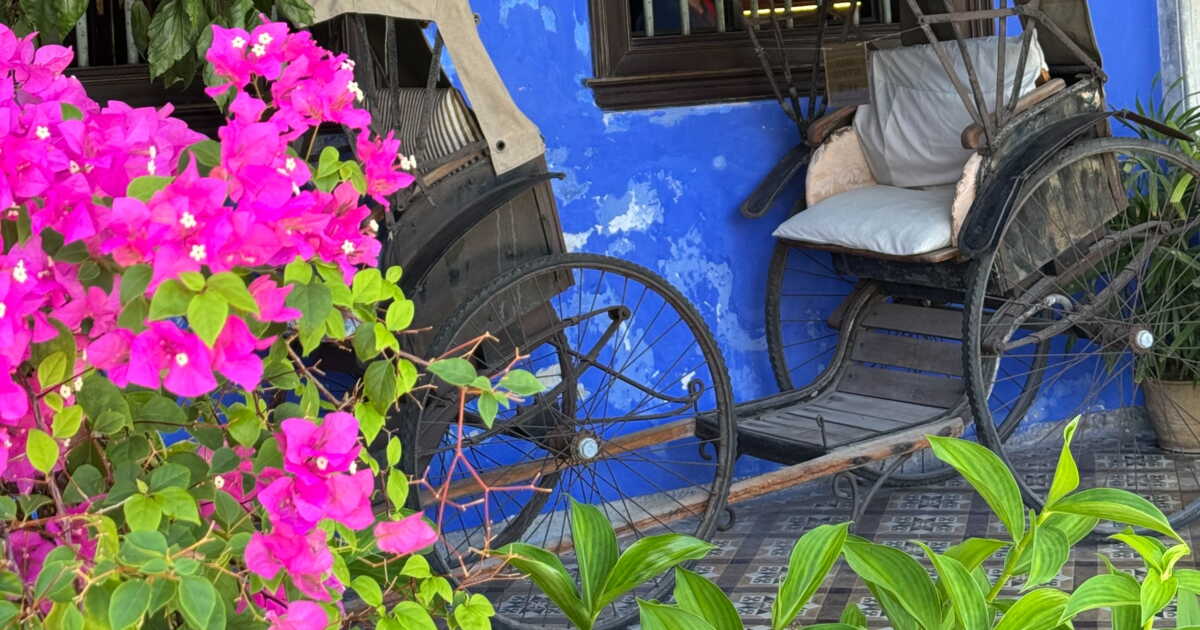
We spend only a few hours in Malacca, notably for lunch at one of the city’s excellent Indian restaurants, a place that looks unassuming but leaves you satisfied and happy. Yet the city’s incredibly cool vibe, its colors, its water-worn façades make us want to return someday, with a bit more time to enjoy its atmosphere and its rich history.


A short domestic flight with Malaysia Airlines brings us to the next and final stop of our short stay, Penang. Where, between a visit to the Habitat Penang Hill nature park, a spectacular retreat in the green jungle accessible by funicular from the city, or a stroll through the colorful and busy streets of the old town, the program is rather enticing: to eat.
And to eat well: like a condensed national culinary culture, two hours by plane from the capital, Penang Island and its capital George Town, also UNESCO-listed, are paradises for gourmets with adventurous stomachs and eyes who want to learn everything there is to know about Malaysia, on the tip of the tongue.
The “hawker centers,” Southeast Asia’s equivalent of Western food courts, consist of long lines of more itinerant stalls lining the sidewalks in the heart of the city—where the wok flames crackle in a symphony of scents, offering the traveler a thousand cultures in as many plates.
On the street or indoors, as at Ivy’s Nyonya Cuisine where we are lucky to sample a succulent procession of typically Peranakan dishes, such as Kapitan chicken curry and Joo Hoo Char, some of these places are celebrated by the Michelin Guide. It’s no accident that Penang was once named by Time Out as Southeast Asia’s most exciting city for street food, ahead of Hanoi, Singapore, or Mumbai, and that George Town remains for many guides the true gastronomic capital of Malaysia.


From roti canai (an Indian-influenced crepe) to durian, the “king of fruits” with its distinctive—some would say overpowering—aroma, not to mention the myriad ways to prepare rice, noodles, soups, fresh herbs and spices (char kway teow, asam laksa, hokkien mee…), there is in this country a limitless palate to explore and savor for two or three lifetimes. When will you come back?
The Luxury of Business
Before ever setting foot in the country, the journey begins with a touch of luxury: it is in business class that Malaysia Airlines, which invites us on this journey, takes us halfway across the globe. For the ordinary traveler not accustomed to such generosity, the difference with economy class is phenomenal—and the 13-hour journey passes infinitely faster.
As Malaysian hospitality dictates, the service is exemplary; we dine on (very) good dishes native to the country, from satays (ubiquitous little beef or chicken skewers, sometimes lamb) to nasi lemak (rice cooked in coconut milk and perfumed with pandan leaves), and the reclining seats allow true rest. It is therefore with a confident stride and a refreshed spirit that we can begin the first of the four days of our journey upon arrival.