Peru, a country of history and natural diversity, attracts travelers from around the world. From its towering mountains to its green valleys, and its unparalleled archaeological sites, the country offers a multitude of unforgettable experiences. For those looking to explore Peruvian culture, nature, and cuisine, this guide details the must-sees to discover. But what exactly should you do during your 15-day stay in Peru? Follow our suggestions for a balanced journey that blends adventure and relaxation.
1. Discovery of Lima, the cultural and gastronomic capital
Lima, capital of Peru and typically the starting point of a travel route across South America, stands out as a key place to understand the country’s cultural diversity before moving on to other major sites such as Cusco, the Sacred Valley, Lake Titicaca, or the Andean range.
The city is particularly renowned for its gastronomy of international acclaim, showcased by iconic specialties such as ceviche or lomo saltado, reflecting the richness of coastal and highland products. The historic districts of Miraflores and Barranco, perched directly above the Pacific Ocean, offer panoramic viewpoints that help grasp the coastal setting of the capital.
The historic center, inscribed on the World Heritage list, gathers major buildings such as the Cathedral of Lima or the Palace of the Government, bearing witness to the city’s political, religious, and administrative importance since colonial times. This first step, complementary to the country’s major archaeological sites—from Machu Picchu to Pisac or Chan Chan—effectively prepares travelers for Peru’s geographic diversity, between mountain ranges, peaceful shores, and the Peruvian Amazon, while providing a coherent introduction to contemporary Andean culture.
2. Exploration of Cusco’s archaeological riches and the Sacred Valley
Cusco, former capital of the Inca Empire, occupies a central place within the Sacred Valley and serves as a pivotal stop in any trip to Peru, especially for travelers seeking to acclimate to altitude before reaching higher sites in the Andean Cordillera. This region, densely marked by the heritage of the ancient world, is lined with major archaeological sites such as Sacsayhuamán, Pisac and Ollantaytambo, illustrating Inca engineering through their agricultural terraces, ceremonial centers, and advanced fortification systems.
The local markets of Cusco and the surrounding villages offer a living glimpse into contemporary Andean culture, notably through textile crafts, traditional objects, and agricultural products from the high plateaus. As a starting point toward Machu Picchu, Lake Titicaca with its islands such as Amantaní, or toward the Colca Canyon, the Condor Cross, or the Peruvian Amazon, Cusco fits a coherent itinerary blending heritage, environment and cultural discovery. Paired with other highlights such as Lima, Arequipa, or the vestiges of Chan Chan, the Cusco region concentrates the historical, geographic and human dimensions of Peru in a thoughtful approach to highlighting the country’s principal tourist assets.
3. Trek to Machu Picchu, an iconic site
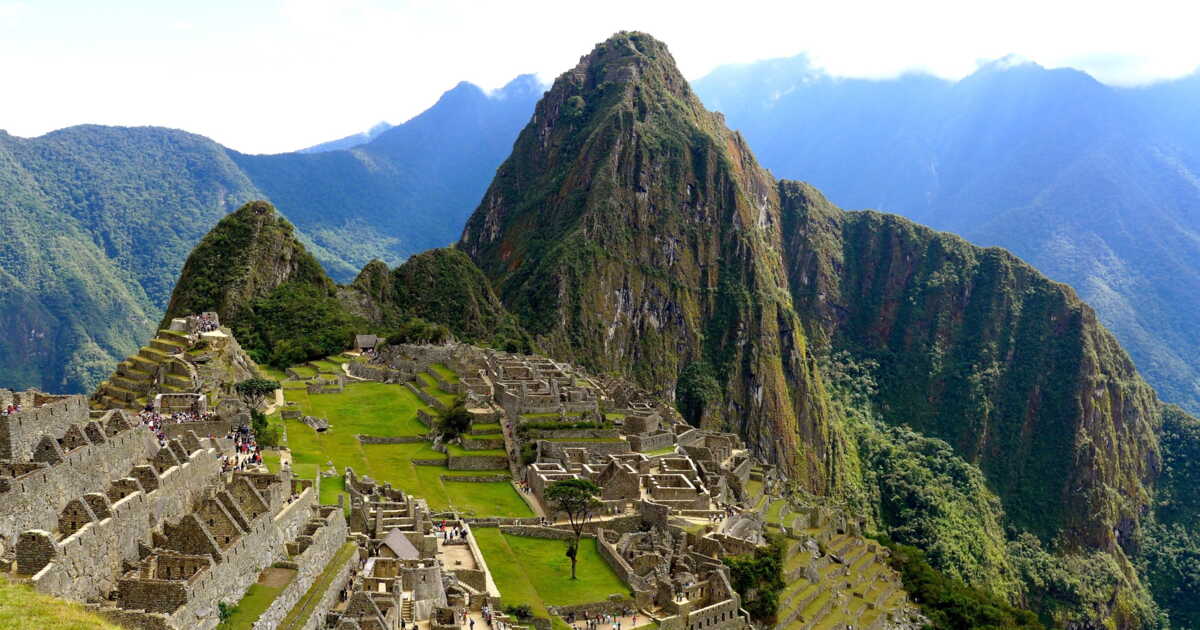
No trip to Peru would be considered complete without a structured visit to Machu Picchu, one of the most emblematic archaeological sites in South America, listed as a UNESCO World Heritage Site. This ancient Inca city, perched above 2,400 meters in the heart of the Andes, can be reached either via the Inca Trail, a multi-day hike favored by hiking enthusiasts, or by train departing from Ollantaytambo, in the Sacred Valley.
Access to this site requires careful planning, notably because of visitor quotas and weather conditions, and it is recommended to schedule your visit early in the morning to benefit from lighter crowds and to witness the sunrise over the ruins, a moment particularly conducive to contemplating the site in its natural setting.
Machu Picchu, through its strategic placement, its architecture integrated with the topography, and its importance in Inca civilization, fits into a broader itinerary that connects key places such as Cusco, Pisac, Sacsayhuamán, and Lake Titicaca and the island of Amantaní. This segment can also be extended to other areas of Peru such as Arequipa, the Colca Canyon, the Condor Cross, Chan Chan, or the Peruvian Amazon, enabling an exploration of the country’s geographic and cultural diversity within a frame that is educational, patrimonial and environmental.
4. Immersion in nature at the Huascarán National Park
For outdoor enthusiasts embarking on a Peru itinerary oriented toward high-altitude discovery, the Huascarán National Park stands as a reference site, both for the richness of its Andean ecosystems and for the breadth of its mountain ranges.
Located in the Andes mountain range, this UNESCO World Heritage site houses the Huascarán mountain, the highest peak in Peru at over 6,700 meters, along with a dense network of glacial lakes, hanging valleys and marked trails. The park allows guided participation in numerous activities — hiking, trekking, and observing the local fauna — in a natural setting of exceptional beauty marked by the presence of queñua forests, rock formations and spectacular panoramas.
Travelers are advised to acclimate properly to altitude, as some park areas exceed 6,000 meters, which requires suitable physical and logistical preparation. Integrated into a broader itinerary passing major archaeological sites such as Machu Picchu, Pisac, or Chan Chan, and notable places such as Cusco, the Lake Titicaca, Arequipa or the Colca Canyon, the Huascarán National Park offers a complementary reading of Peru, focused on its natural and alpine dimensions, at the crossroads of environmental preservation and active experience.
5. Encounter with the cultures of Lake Titicaca
The Lake Titicaca, situated above 3,800 meters in the Andes, is an emblematic site of South America and a must-stop on any trip to Peru, both for its geographic character and its cultural importance. Known as the world’s highest navigable lake, it hosts inhabited islands for centuries, including the Uros Islands, entirely built on floating reed mats, and Taquile Island, famous for its textile traditions inscribed on the UNESCO intangible cultural heritage list.
These sites, reachable by boat from Puno, allow travelers to grasp active Andean ways of life, notably through homestays that promote respectful immersion into local community realities. A stop on the Amantaní Island, also located on the lake, extends this approach by combining heritage, crafts, and traditional hospitality.
Le lac Titicaca s’intègre logiquement dans un itinéraire comprenant des sites archéologiques majeurs comme Machu Picchu, Pisac, ou Chan Chan, ainsi que des destinations naturelles telles que le Canyon de Colca, la Croix du Condor, ou l’Amazonie péruvienne. Entre haute altitude, paysages lacustres et transmission culturelle, cette région offre une synthèse pertinente des dimensions humaine, géographique et patrimoniale qui caractérisent l’expérience de découverte au Pérou.
6. Discovery of Arequipa and the Colca Canyon
Arequipa, nicknamed the “White City” due to its architecture built from sillar stone, is an essential place for any trip to Peru, combining urban wealth, heritage interest and proximity to grand natural landscapes. The historic center of the city, a UNESCO World Heritage Site, gathers remarkably preserved colonial buildings, among which the Santa Catalina Monastery, a true city within a city, illustrating the social and religious organization of the colonial era.
Within a few hours’ drive, the Colca Canyon, one of the deepest in the world, offers travelers the chance to observe from vantage points such as the Condor Cross the flight of this emblematic raptor of the Andean mountain ranges. Hiking trails and natural hot springs add to the region’s appeal for outdoor enthusiasts.
On the outskirts, traditional villages offer a structured glimpse into Peruvian rural life, with their markets, handicrafts and communal customs. Integrated into a broader itinerary that includes Cusco, Lake Titicaca, Machu Picchu, the Sacred Valley archaeological sites, or the Peruvian Amazon, Arequipa constitutes a relevant articulation point between history, nature and living culture within a balanced journey through Peru.
7. Aerial view of the Nazca Lines, a desert riddle
The Nazca lines, located in the southern coastal desert of Peru, constitute an exceptional set of geoglyphs whose full visualization is only possible from altitude, usually via a lightweight plane overflight. Classified as UNESCO World Heritage, these monumental figures – representing animals, geometric shapes and anthropomorphic symbols – still raise many questions about their function, whether astronomical, religious or ritual.
For travelers interested in the interaction between pre-Columbian art and grand landscapes, these drawings etched into the ground offer a singular experience that goes beyond simple visual contemplation, raising questions about the relationship between territory, memory, and symbolic expression in ancient civilizations. Their discovery fits within a broader itinerary spanning Peru’s main archaeological sites, such as Chan Chan, Machu Picchu, Pisac, or Cusco, and can be combined with natural explorations such as the Colca Canyon, Lake Titicaca, the Andes, or the Peruvian Amazon. The Nazca Lines, by their scale and mystery, offer a complementary reading of the country’s cultural diversity at the crossroads of archaeology, desert environments, and the contemporary search for meaning.
8. Relaxation at the Huacachina Oasis
The Huacachina Oasis, located in the southern coastal region of Peru, is a singular place in South America, combining desert landscape with a tourist offering built around outdoor activities. Nestled at the foot of towering sand dunes, this natural oasis particularly attracts adrenaline seekers, who can practice sandboarding on steep slopes or join motorized buggy excursions across the desert, guided by local guides.
These dynamic experiences fit into a logic of active territorial discovery, while highlighting a distinctive landscape within the Andean context. At day’s end, travelers can enjoy the tranquility around the water’s edge to unwind and watch the sunset, a privileged moment to appreciate the shifting light on the sandy reliefs. Integrated into a route including the Nazca Lines, Arequipa, the Colca Canyon, the Lake Titicaca, Cusco, Machu Picchu, and the Sacred Valley sites, Huacachina enriches the Peru journey with a contrasting sequence, oriented toward adventure, outdoor sport and the discovery of a rare desert environment in this part of the continent.
9. Immersion in the Amazon at Puerto Maldonado
The Puerto Maldonado region, located in the southeast of Peru, serves as a privileged gateway to the Peruvian Amazon, offering travelers structured access to one of the richest biodiversity hotspots in South America. Staying in a jungle lodge provides full immersion in this ecosystem, with guided support for exploring sensitive natural habitats.
Boat excursions on local rivers, often organized at dawn or dusk, provide real opportunities to observe the local wildlife, including monkeys, caimans, toucans, macaws and other iconic jungle species. Guided interpretive walks allow visitors to explore the tropical vegetation in all its complexity, while addressing conservation issues.
Puerto Maldonado s’intègre logiquement dans un itinéraire plus vaste reliant les sites archéologiques de Cusco, Pisac, Machu Picchu, les grands ensembles naturels comme le Canyon de Colca, le lac Titicaca et la cordillère des Andes, ou encore les vestiges côtiers comme Chan Chan. En tant qu’endroit de transition entre le monde andin et la forêt amazonienne, cette région permet de compléter le voyage au Pérou par une dimension environnementale forte, centrée sur la biodiversité, l’exploration encadrée et la sensibilisation aux équilibres écologiques du territoire.
Voyager au Pérou, c’est s’immerger dans une mosaïque culturelle et naturelle unique. En explorant ses sites archéologiques, ses paysages variés et sa riche gastronomie, chaque voyageur pourra vivre une expérience enrichissante. Ce guide fournit une base pour découvrir les multiples visages de ce pays fascinant, tout en invitant à s’aventurer hors des sentiers battus.
Paysages du Pérou : des chaînes de montagnes aux forêts tropicales, un territoire d’exception
The landscapes of Peru are among the most contrasting on the continent. Between the vertical Andes, the deep valleys of the Colca Canyon, the changing light of Lake Titicaca, and the green vastness of the Peruvian Amazon, the country forms a rare geographic mosaic.
For hikers, every trail becomes an immersive experience, whether climbing toward Machu Picchu, walking the paths around Arequipa, or venturing to rural areas leading to the Chan Chan ruins. Peru is not just a collection of sites to visit; it is a land of altitudes, textures and colors, shaped by geology as much as by the civilizations that left their mark.
How long does it take to visit Peru: building an itinerary worthy of Andean diversity
Peru is a country whose geographic and cultural wealth invites a substantial amount of time to visit. For a balanced discovery, three weeks allow you to traverse the iconic places without rushing, including Cusco, the Sacred Valley, the Lake Titicaca, the Colca Canyon, or the Peruvian Amazon.
In two weeks, a tight itinerary centered on the southern high Andes, with Arequipa, Pisac, the historic center of Lima, and the legendary Machu Picchu, already offers a dense immersion. In fewer than ten days, clear choices must be made: a circuit between Cusco and the Andean Cordillera provides an excellent starting point to grasp the country’s essence. Each path undertaken opens a new perspective on this leading South American nation.
What budget to plan for 15 days in Peru: anticipating costs for a structured trip
A 15-day trip to Peru requires a budget that can be adjusted according to the type of services sought. For a self-guided stay with standard accommodations, internal transport and main visits, you should budget between 1,920 to 2,740 euros (including flights) per person, or about 800 to 1,200 € excluding flights.
Entry to Machu Picchu, excursions on the Lake Titicaca (notably toward Amantaní Island) or trips to the Colca Canyon and the Condor Cross represent expenses to anticipate. The cost of living remains generally affordable, especially outside major cities like Lima. A good budget plan allows including major sites, such as Chan Chan or the agricultural terraces of the Sacred Valley, while leaving room for the unexpected, essential for a successful journey in South America.
What to do in Peru with kids: exploring the country as a family, between living history and spectacular nature
Traveling to Peru with children is an opportunity for learning and active discovery. The country lends itself to family tourism thanks to the variety of its archaeological sites, the richness of its landscapes, and activities suited to different ages. In Cusco, the historic center offers interactive museums while the Sacred Valley region lets you explore the agricultural terraces at a comfortable pace. A excursion on the Lake Titicaca, reaching Amantaní, provides cultural immersion in Andean traditions. For younger visitors, watching condors in the Colca Canyon or walking trails around Pisac can become memorable moments. Peru invites families to travel differently, at the crossroads of play, memory and nature.
This article was written with the help of artificial intelligence, then corrected, supplemented and validated by the newsroom’s journalists.