

At the southern tip of the Puglia region—and thus of Italy—the Salento is a sun‑baked plain scattered with olive groves and grain fields bordered by dry-stone walls, inhabited by picturesque towns, among which Lecce, its capital, shines with Baroque architecture.
The Lecce region is also the cradle of one of the remarkable family sagas brought to light in the second half of the 20th century by the rise of the tourism industry: the Reale family.
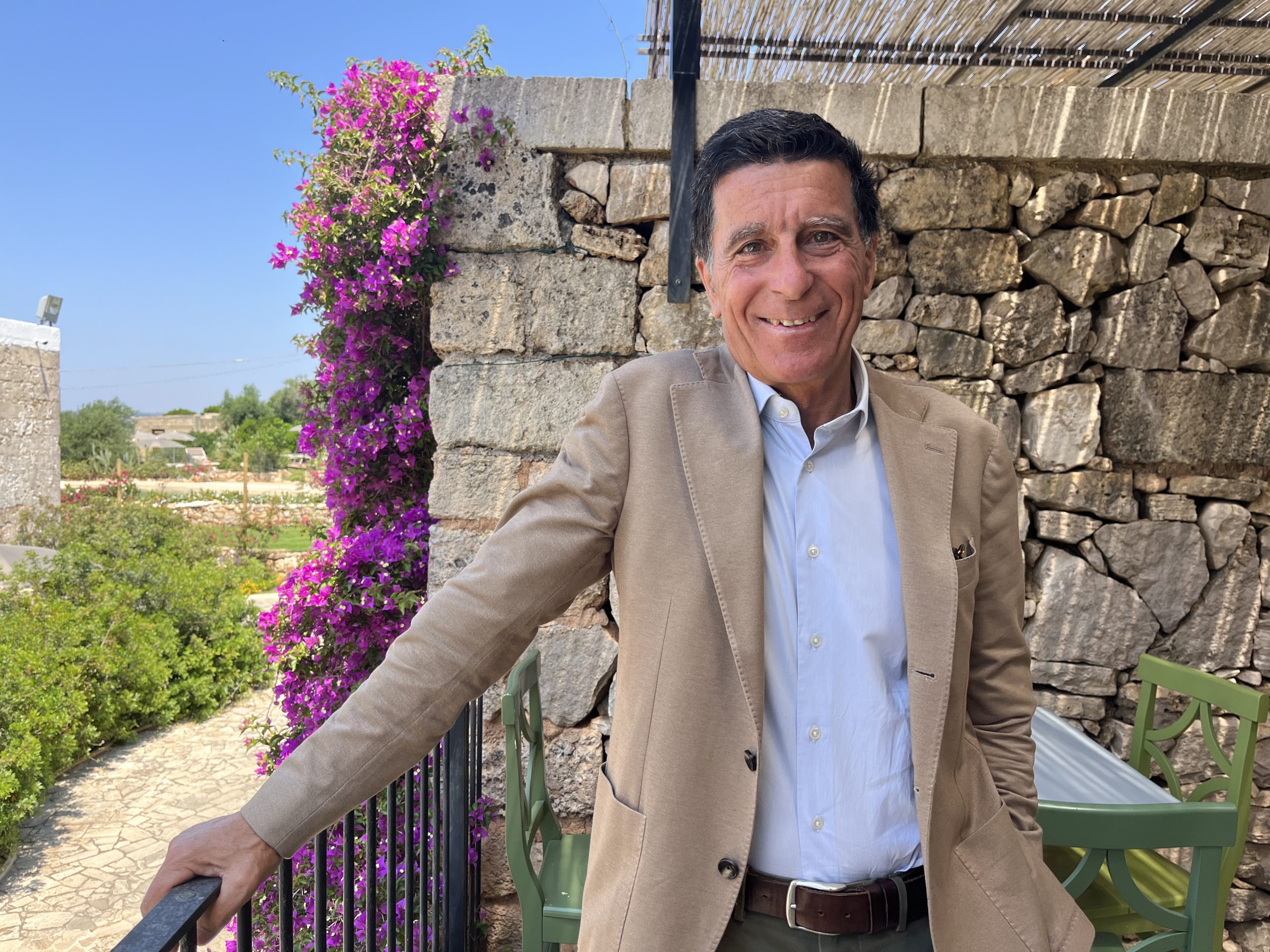
Today led by two brothers, Damiano and Amedeo, this success story is embodied in three tourist ventures: Masseria Fontanelle, a charming 35‑room and suite hotel perched on the heights of Torre San Giovanni and the Ugento coastal Regional Natural Park; a beachside campsite in the same locality; and, a few kilometers away, Vivosa Apulia Resort, a seaside resort ideal for families.
The latest addition to their portfolio, Masseria Fontanelle has all the ingredients to captivate travelers seeking simplicity, authenticity and emotion.
In the 17th century, it served as the summer residence of Ugento’s Benedictine nuns. In the last century, it was transformed into a family-oriented tourist residence, gaining an additional first floor in the process.
After purchasing it in 2020, the Reales redesigned it with meticulous attention to detail, sustainability and… “the spirit of the place”.
The Lecce region is also the cradle of one of the remarkable family sagas brought to light in the second half of the 20th century by the rise of the tourism industry: the Reale family.
Today led by two brothers, Damiano and Amedeo, this success story is embodied in three tourist ventures: Masseria Fontanelle, a charming 35‑room and suite hotel perched on the heights of Torre San Giovanni and the Ugento coastal Regional Natural Park; a beachside campsite in the same locality; and, a few kilometers away, Vivosa Apulia Resort, a seaside resort ideal for families.
The latest addition to their portfolio, Masseria Fontanelle has all the ingredients to captivate travelers seeking simplicity, authenticity and emotion.
In the 17th century, it served as the summer residence of Ugento’s Benedictine nuns. In the last century, it was transformed into a family-oriented tourist residence, gaining an additional first floor in the process.
After purchasing it in 2020, the Reales redesigned it with meticulous attention to detail, sustainability and… “the spirit of the place”.
An authenticity rooted in the region
Decorated with antique everyday objects — plant-fiber cournets, wicker baskets, open-weave wooden benches, massive ceramic jars — this intimate, elegant and refined retreat does not immediately scream luxury. Yet it offers the true luxury of today: silence and an authenticity deeply rooted in the land.
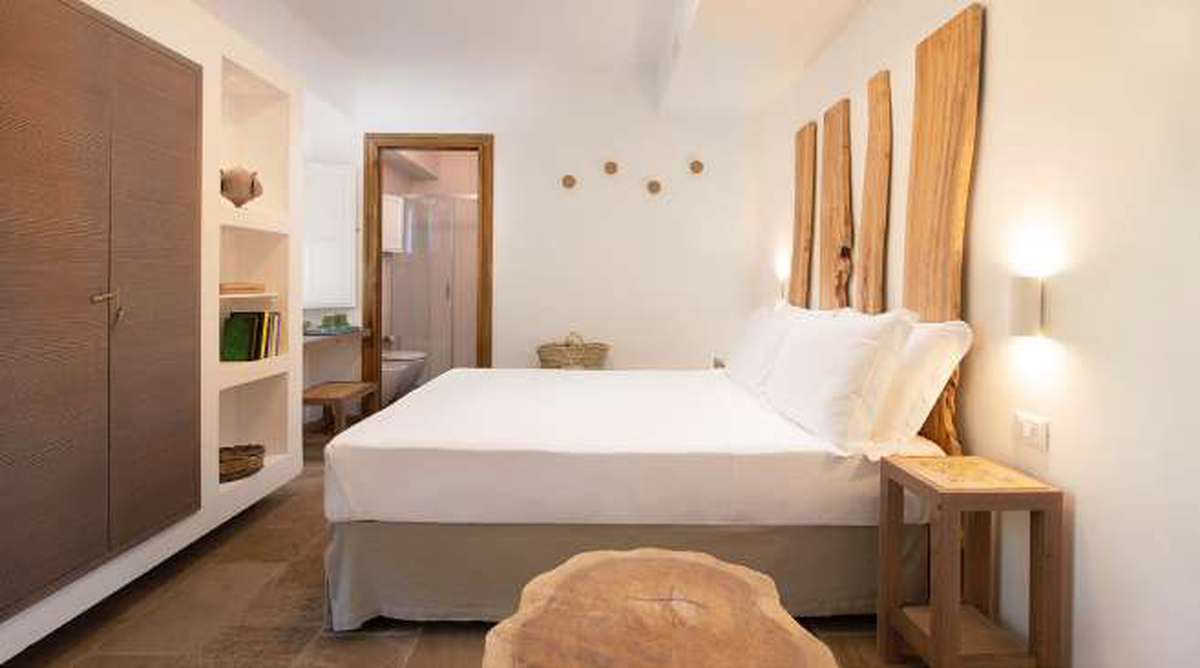
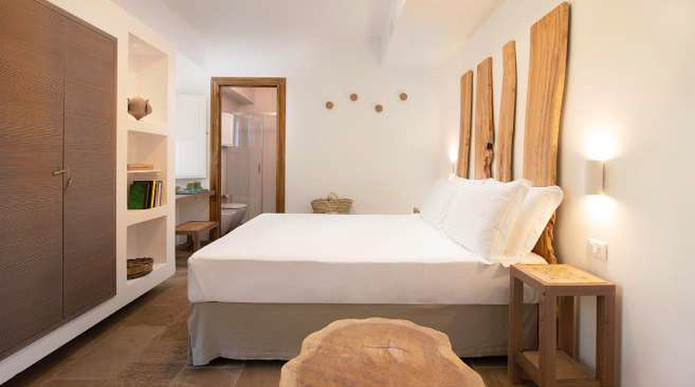
This confidential adults-only address (children are admitted only from age 12) is ideal for resting and reconnecting with nature, provided one has the budget to indulge in one of three Junior suites or even one of the 32 rooms (three categories: “Patio”, “Vista” and “Masseria”) whose sobriety is thoughtfully crafted thanks to pale beige plasters, olive wood headboards, and stone-carved floor tiles.
Indeed, the “Patio” rooms, the most modest, are quite affordable at the start or end of season (from 129 € per night). But in high season, one can still expect up to… 850 € per night. The rates for the other, more spacious rooms are naturally higher.
At the restaurant there is offered –from breakfast buffet to dinner- a festival of local specialties and products sourced from short supply chains, sometimes “homemade” such as jams or olive oil.
Here, the chef does not chase performance; first and foremost he lets the territory be savored.
This confidential adults-only address (children are admitted only from age 12) is ideal for resting and reconnecting with nature, provided one has the budget to indulge in one of three Junior suites or even one of the 32 rooms (three categories: “Patio”, “Vista” and “Masseria”) whose sobriety is thoughtfully crafted thanks to pale beige plasters, olive wood headboards, and stone-carved floor tiles.
Indeed, the “Patio” rooms, the most modest, are quite affordable at the start or end of season (from 129 € per night). But in high season, one can still expect up to… 850 € per night. The rates for the other, more spacious rooms are naturally higher.
At the restaurant there is offered –from breakfast buffet to dinner- a festival of local specialties and products sourced from short supply chains, sometimes “homemade” such as jams or olive oil.
Here, the chef does not chase performance; first and foremost he lets the territory be savored.
At the Spa, treatments inspired by Benedictine traditions
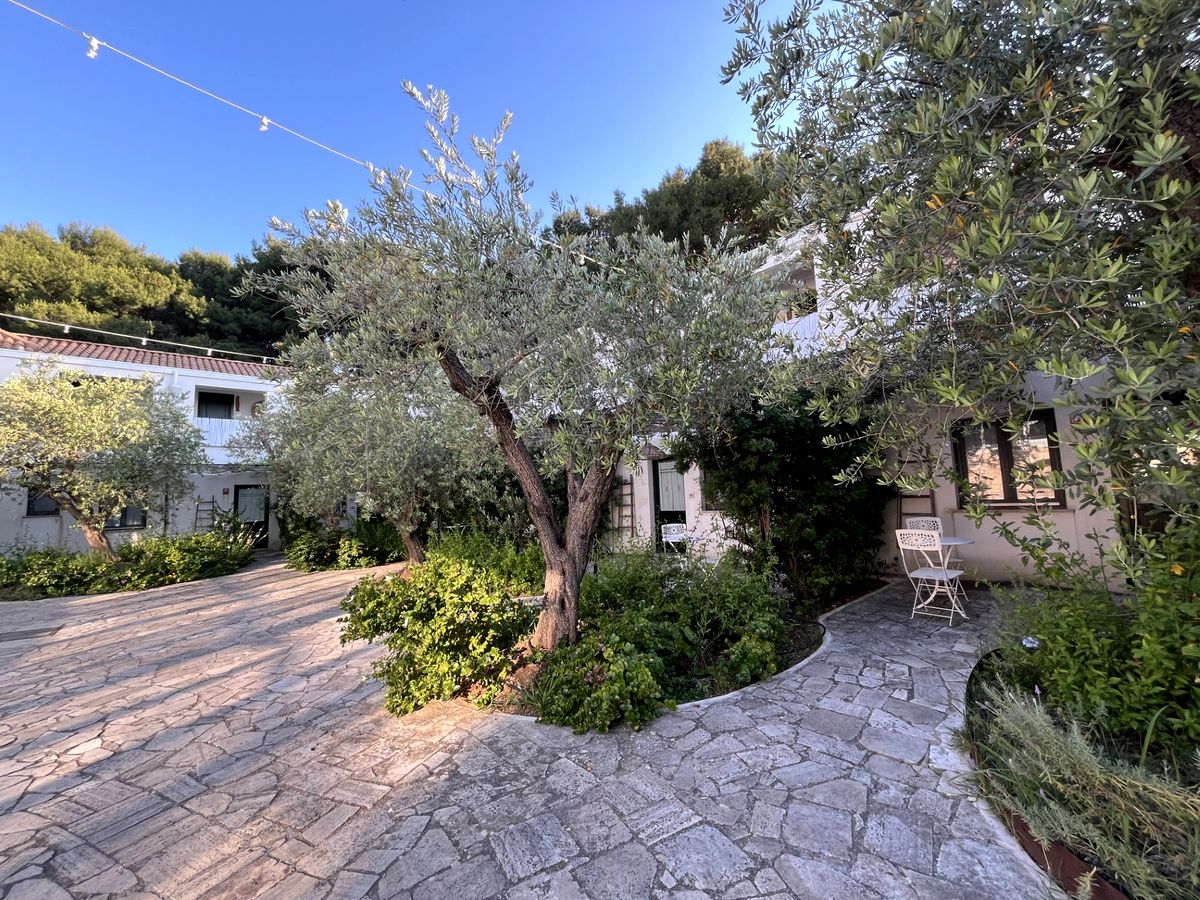
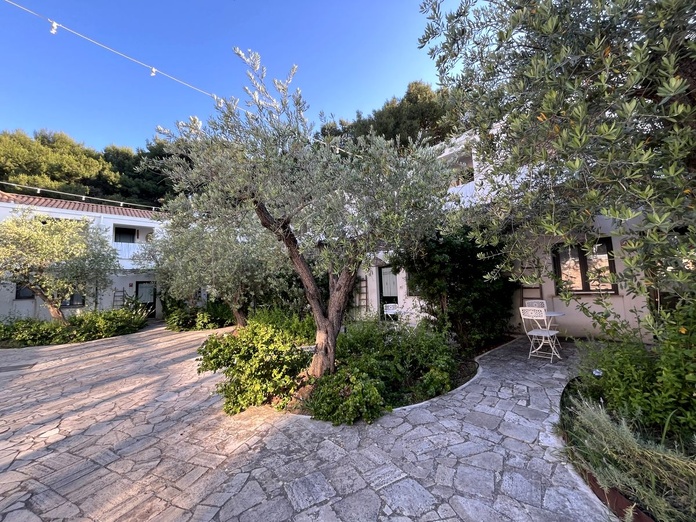
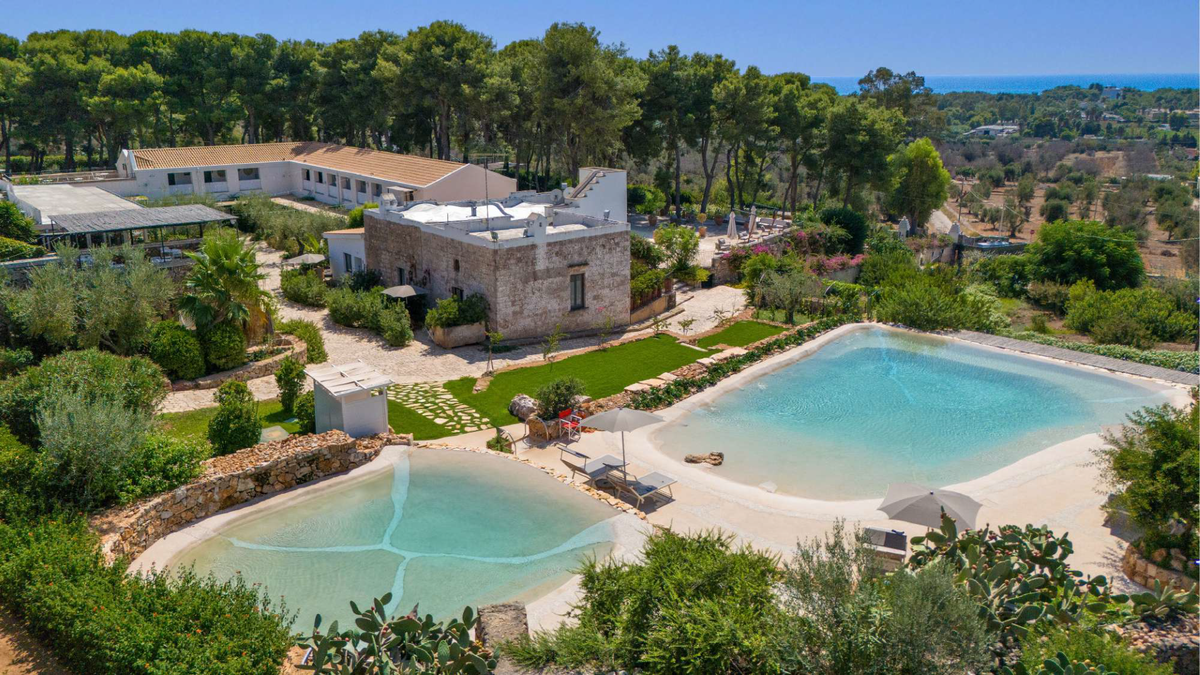
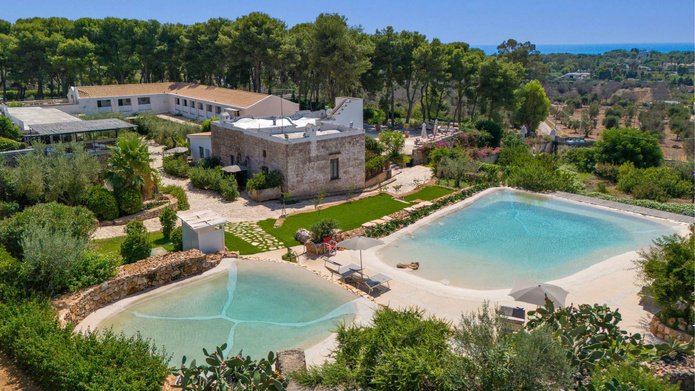
Faite de pierres calcaires apparentes, désormais agrémentée de deux terrasses d’où la vue porte jusqu’à la mer (idéal pour admirer le coucher du soleil !), la Masseria Fontanelle se niche sur un promontoire, au milieu des oliveraies, derrière une pinède peuplée d’impressionnants conifères où sont disposés transats, chaises longues, hamacs et lits de repos.
Tout autour, des espèces méditerranéennes résistantes à la sécheresse -bougainvillées colorés, grenadiers, lavandes, romarins, figuiers de barbarie, etc.- complètent le décor.
Le soir, sont proposées des séances de cinéma en plein air ou une programmation culturelle teintée de traditions locales. La soirée peut bien entendu se poursuivre au Bar.
Convertie en Spa intime, l’ancienne citerne du monastère propose, elle, des soins inspirés des traditions bénédictines à base d’ingrédients naturels comme l’huile d’olive et le miel.
Deux piscines, aménagées avec des matériaux écologiques, complètent l’offre. La mer n’étant qu’à quelques kilomètres, des navettes y conduisent à heure fixe.
Des vélos sont à disposition de ceux qui veulent se balader dans les collines environnantes, à moins qu’ils ne préfèrent s’y risquer à pied. Enfin, pour les plus curieux, la conciergerie organise des visites immersives, dans les bourgades environnantes.
La Masseria Fontanelle accueille aussi des réunions d’affaires dans sa petite salle MICE, des retraites de yoga (à l’initiative d’agences spécialisées) et se laisse volontiers privatiser pour des mariages.
Tout autour, des espèces méditerranéennes résistantes à la sécheresse -bougainvillées colorés, grenadiers, lavandes, romarins, figuiers de barbarie, etc.- complètent le décor.
Le soir, sont proposées des séances de cinéma en plein air ou une programmation culturelle teintée de traditions locales. La soirée peut bien entendu se poursuivre au Bar.
Convertie en Spa intime, l’ancienne citerne du monastère propose, elle, des soins inspirés des traditions bénédictines à base d’ingrédients naturels comme l’huile d’olive et le miel.
Deux piscines, aménagées avec des matériaux écologiques, complètent l’offre. La mer n’étant qu’à quelques kilomètres, des navettes y conduisent à heure fixe.
Des vélos sont à disposition de ceux qui veulent se balader dans les collines environnantes, à moins qu’ils ne préfèrent s’y risquer à pied. Enfin, pour les plus curieux, la conciergerie organise des visites immersives, dans les bourgades environnantes.
La Masseria Fontanelle accueille aussi des réunions d’affaires dans sa petite salle MICE, des retraites de yoga (à l’initiative d’agences spécialisées) et se laisse volontiers privatiser pour des mariages.
At the beginning of this family saga, tobacco fields
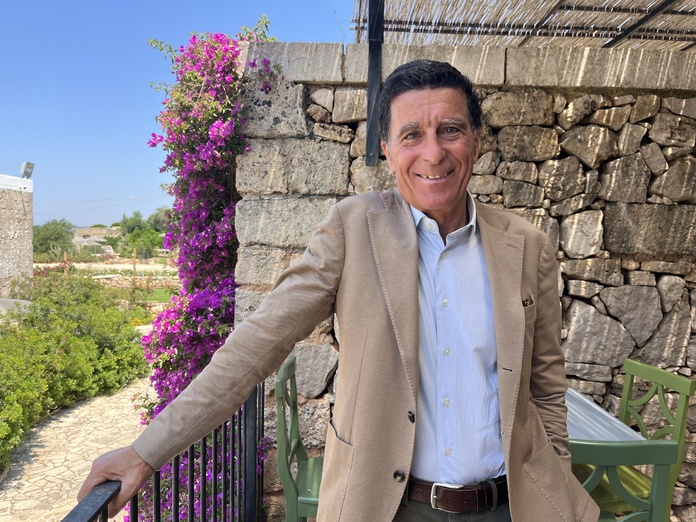
Sometimes, at Masseria Fontanelle, you might accidentally encounter Damiano Reale, who today runs the family business with his brother. Not so surprising, in fact: he devotes 90% of his time to the tourism projects.
Listening to him, you appreciate the path traveled since the early 20th century!
At that time, the Reales were landowners. Their main activity? Tobacco. This crop they had first cultivated under agreements with the Italian Tobacco Manufacture, before moving on to turning the leaves into cigarettes.
This activity was so prosperous that wines came in second place.
Back then, the Reales — like many others in Puglia — sold their grapes to third parties or sold their red wines in bulk — sometimes with an alcohol content of 16 or 17 degrees — in northern Italy and even as far as France, where they helped boost the body and strength of local wines of mediocre quality.
Listening to him, you appreciate the path traveled since the early 20th century!
At that time, the Reales were landowners. Their main activity? Tobacco. This crop they had first cultivated under agreements with the Italian Tobacco Manufacture, before moving on to turning the leaves into cigarettes.
This activity was so prosperous that wines came in second place.
Back then, the Reales — like many others in Puglia — sold their grapes to third parties or sold their red wines in bulk — sometimes with an alcohol content of 16 or 17 degrees — in northern Italy and even as far as France, where they helped boost the body and strength of local wines of mediocre quality.
“In the 1970s, we understood tourism was the future”
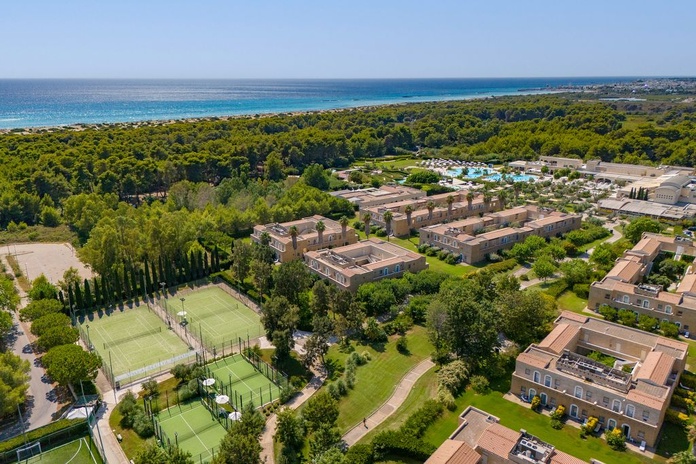
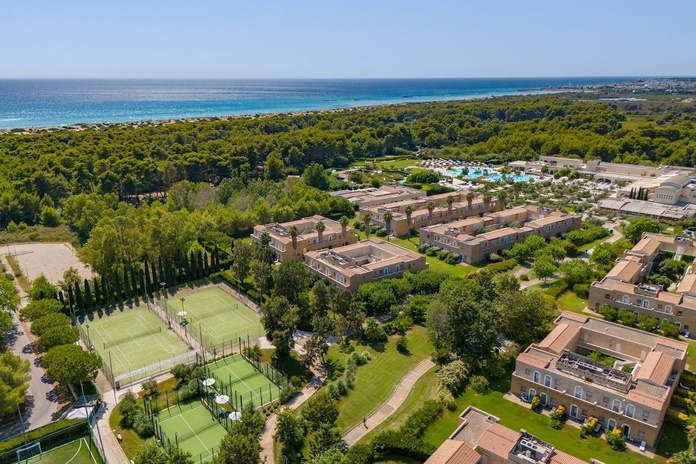
Still, in the mid‑1960s, when tourism took off in the Puglia region, the Reales had the prudent idea of purchasing large plots by the sea near Torre San Giovanni/Ugento. It would be only in 1976 that they opened a campsite there. A pilot venture.
A few years later, the Reales took their first real plunge into the tourism industry by partnering to create a holiday club, by the Adriatic, near Otranto, one of the “most beautiful villages in Italy.” A club that bore the stamp of … Club Med!
“After a few years, we pulled out of that project. Yet from that moment, we had understood that tourism was the future,” recalls Damiano Reale.
Truth be told, a vocation had been born, all the more so as, at the same time, the Reales realized that the tobacco era would end.
When they stopped this cultivation in 2001, the Reales already had in mind the construction of the future Vivosa Apulia Resort on part of the land bought along the Ugento coast.
A few years later, the Reales took their first real plunge into the tourism industry by partnering to create a holiday club, by the Adriatic, near Otranto, one of the “most beautiful villages in Italy.” A club that bore the stamp of … Club Med!
“After a few years, we pulled out of that project. Yet from that moment, we had understood that tourism was the future,” recalls Damiano Reale.
Truth be told, a vocation had been born, all the more so as, at the same time, the Reales realized that the tobacco era would end.
When they stopped this cultivation in 2001, the Reales already had in mind the construction of the future Vivosa Apulia Resort on part of the land bought along the Ugento coast.
A successful All-Inclusive formula
Certified B Corp
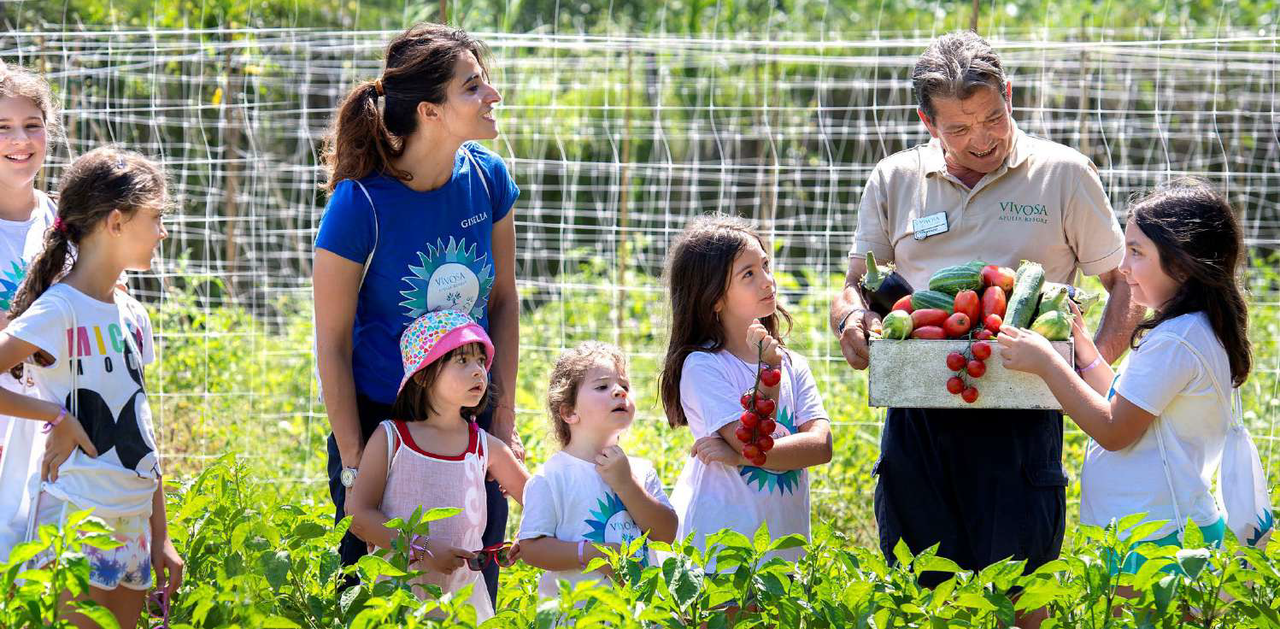
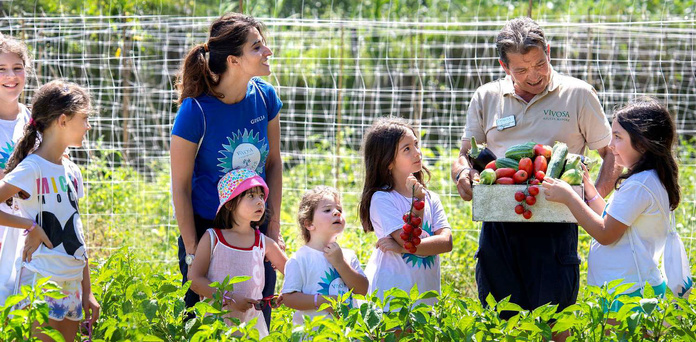
Along the way, Vivosa Apulia has continued to deepen its eco-responsible commitment.
« Since last February, our resort has been certified as a B Corp, » boasts Damiano Reale. Indeed, this certification attests to high environmental standards, but also to ethical and sustainable management. « Today, we are the only hotel in Italy to have a positive carbon footprint, » he adds.
« To reach that, it took time. We had to work a lot and shift our staff’s mindsets, » insists Damiano Reale, for whom energy savings, waste sorting, combatting waste in all forms, and reducing single‑use plastics are no longer secrets.
Also, the aesthetics of the trees and local species planted around the resort serve first to be drought‑tolerant and to moderate the heat. Water fountains scattered here and there help avoid the need for plastic bottles. As for the solar panels installed along the resort’s edge, they provide 40% of its energy consumption.
« Since last February, our resort has been certified as a B Corp, » boasts Damiano Reale. Indeed, this certification attests to high environmental standards, but also to ethical and sustainable management. « Today, we are the only hotel in Italy to have a positive carbon footprint, » he adds.
« To reach that, it took time. We had to work a lot and shift our staff’s mindsets, » insists Damiano Reale, for whom energy savings, waste sorting, combatting waste in all forms, and reducing single‑use plastics are no longer secrets.
Also, the aesthetics of the trees and local species planted around the resort serve first to be drought‑tolerant and to moderate the heat. Water fountains scattered here and there help avoid the need for plastic bottles. As for the solar panels installed along the resort’s edge, they provide 40% of its energy consumption.
Vineyards of quality now renowned
Although deeply committed to tourism, the Reales have not renounced their rural roots. Indeed, in the 20th century, through a share agreement, the family’s vineyards located in Cellino San Marco, in the Lecce province, to the north of the Salento, had fallen into the hands of another branch of the family.
However, when they found themselves without an heir to manage them, Damiano, Amedeo and their father bought them back.
Since then, Damiano, who holds an agriculture degree like his father and grandfather before him, oversees the cultivation of the vines. Fortified by his business and marketing studies, Amedeo, for his part, handles the marketing of the wines, which, now bottled, benefit from the IGP Salice Salentino, a quality label awarded by Europe.
With 180 hectares, Vignetti Reale is the largest estate within this IGP dominated by small properties. And as he clearly does nothing halfway, Damiano is the president of the IGP.
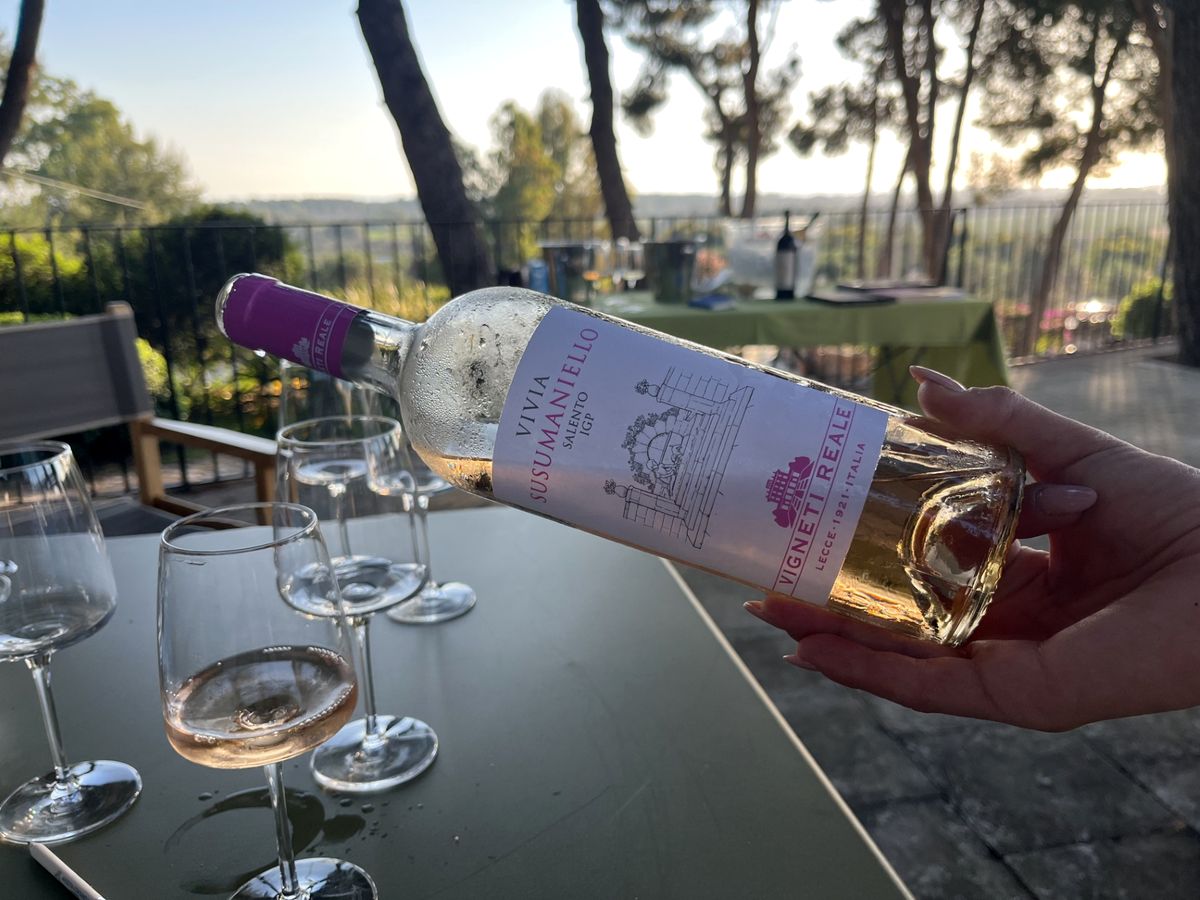
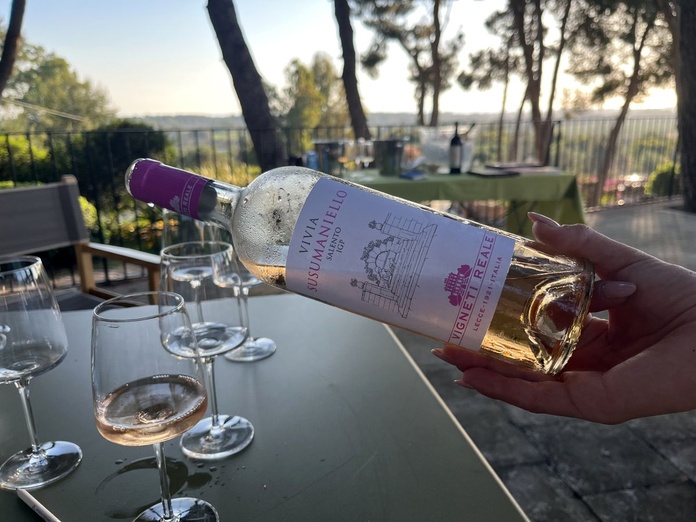
Of course, the wines of Vignetti Reale are offered at the tables of their hotels. With, for enthusiasts, commented tastings, such as the one we participated in one evening at Masseria Fontanelle.
This was an opportunity to discover that the Salento is the premier terroir for the Negroamaro grape and, to a lesser extent, Malvasia Nera, varieties that yield powerful, complex and fruity red wines with a deep ruby robe. We also tasted a harmonious and balanced rosé, with a pale slightly orange-tinged robe, produced from the Susumaniello grape. And finally, a white based on Chardonnay, soft and fresh, with aromas of lychee and peach.
A confirmation that alongside their tourism revolution, the Apulia region has embarked on a true wine revolution. Another reason to visit!
However, when they found themselves without an heir to manage them, Damiano, Amedeo and their father bought them back.
Since then, Damiano, who holds an agriculture degree like his father and grandfather before him, oversees the cultivation of the vines. Fortified by his business and marketing studies, Amedeo, for his part, handles the marketing of the wines, which, now bottled, benefit from the IGP Salice Salentino, a quality label awarded by Europe.
With 180 hectares, Vignetti Reale is the largest estate within this IGP dominated by small properties. And as he clearly does nothing halfway, Damiano is the president of the IGP.
Of course, the wines of Vignetti Reale are offered at the tables of their hotels. With, for enthusiasts, commented tastings, such as the one we participated in one evening at Masseria Fontanelle.
This was an opportunity to discover that the Salento is the premier terroir for the Negroamaro grape and, to a lesser extent, Malvasia Nera, varieties that yield powerful, complex and fruity red wines with a deep ruby robe. We also tasted a harmonious and balanced rosé, with a pale slightly orange-tinged robe, produced from the Susumaniello grape. And finally, a white based on Chardonnay, soft and fresh, with aromas of lychee and peach.
A confirmation that alongside their tourism revolution, the Apulia region has embarked on a true wine revolution. Another reason to visit!
 Publié par Paula Boyer Responsable rubrique LuxuryTravelMaG – TourMaG.com
 Voir tous les articles de Paula Boyer


Ajoutez TourMaG à votre flux Google Actualités