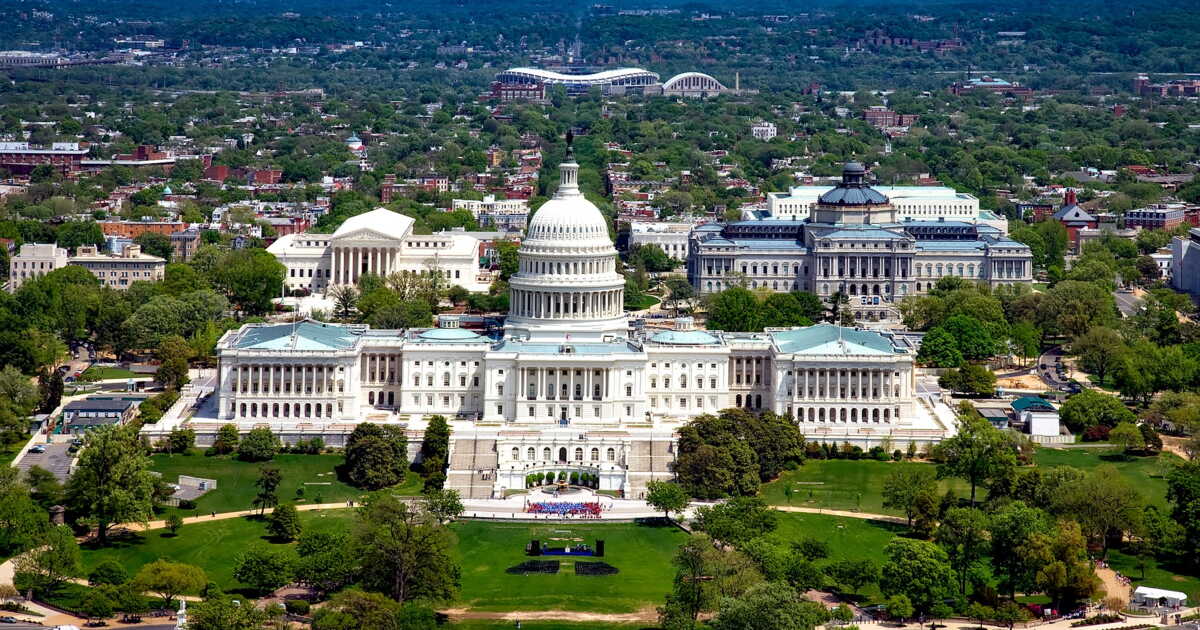
Washington, D.C., the capital of the United States, is a city rich in history, culture, and politics. Nestled between the states of Virginia and Maryland, Washington hosts an impressive array of museums, memorials, and historic sites. With its blend of majestic architecture, dynamic neighborhoods, and green spaces, it offers countless activities to discover. If you’re wondering what to do in Washington, here is a guide to help optimize your stay.
1. Explore the National Mall
The National Mall forms the institutional and symbolic heart of Washington, D.C., and extends over three kilometers from the Capitol to the Lincoln Memorial, creating a major axis for the capital. This vast open space houses some of the United States’ most iconic monuments, including the Washington Monument, a nearly 170-meter-tall obelisk honoring George Washington.
At the opposite end, the Lincoln Memorial commemorates the presidency of Abraham Lincoln in a monumental setting, offering a structured perspective on American history. The Jefferson Memorial, dedicated to the author of the Declaration of Independence, and the WWII Memorial, dedicated to World War II veterans, complete this national memory circuit, making the National Mall a must-see route for any visit to Washington DC, accessible and rich in historical content.
2. Discover the Smithsonian Museums
Exploring Washington DC would be incomplete without diving into the collections of the Smithsonian Institution, a network of seventeen museums and galleries, and the National Zoo, freely accessible to the public. The National Museum of Natural History, with its exhibits on dinosaurs, ecosystems, and gemstones, attracts a diverse audience, from families to researchers.
Meanwhile, the National Air and Space Museum offers a structured reading of American aviation and space history through an impressive collection of aircraft, satellites, and space modules. These institutions, integrated into a coherent museum itinerary, reinforce the educational mission of Washington, D.C., as a cultural destination with high added value for visitors of all ages.
3. Visit Key Political Sites
As the federal capital, Washington DC houses the major American political institutions, including the United States Capitol, seat of Congress, accessible to the public through documented guided tours. This historic building, whose dome dominates the city’s skyline, provides a concrete introduction to how the legislative power operates. A few streets away, the White House, though partially open to the public on request, remains a central anchor in any structured itinerary in Washington DC.
Completing this ensemble are the building of the Supreme Court, whose sessions are open to observation according to the court’s schedule, and the Library of Congress, the largest library in the world, accessible for its exhibitions and archival collections. These visits ground the stay in an institutional understanding of American democracy.
4. Strolling through Georgetown
The Georgetown district, one of the oldest in Washington DC, offers a stark contrast to the city’s monumental axes, thanks to its cobblestone streets, historic façades, and a small-town vibe woven into the metropolitan fabric. Renowned for its independent shops, cafés, and varied restaurants, Georgetown attracts architecture lovers, strollers, and visitors seeking local life. The Chesapeake and Ohio Canal, which cuts through the neighborhood, provides a walking or biking route, especially appreciated on sunny days. In the evening, the area becomes a hub of cultural activity, with bars, concerts, and a lively culinary scene, reinforcing its role in the city’s urban diversity.
5. Explore Redeveloped Neighborhoods
The recently redeveloped areas of Navy Yard and The Wharf illustrate the contemporary transformation of Washington, D.C. along its waterfronts. The Navy Yard district, once industrial, has become a mixed-use hub gathering restaurants, microbreweries, public spaces, and family-friendly recreation, notably around Nationals Park. Not far away, The Wharf, on the banks of the Potomac River, offers a more tourist-oriented setting, with outdoor concerts, temporary markets, and river cruises organized throughout the year. These neighborhoods complement the capital’s more traditional circuits, providing a contemporary and dynamic reading of the urban fabric.
6. Visit Arlington National Cemetery
The Arlington National Cemetery, located just across the Potomac River, though outside the administrative boundaries of Washington, DC, is integrated into the region’s major memory-tour itineraries. Renowned for housing the Tomb of the Unknown Soldier, this military site hosts a ceremonial changing of the guard with impressive protocol, especially on national holidays. The site also includes graves of major figures in American history, including John F. Kennedy, marked by the eternal flame. This site, managed by the military, provides a structured moment of reflection for visitors seeking to understand military sacrifice and national memory.
7. Venture Outside Washington
For those with a few days to spare, the surrounding areas of Washington, D.C. offer accessible excursions that enrich the travel experience. A few miles to the south, Old Town Alexandria in Virginia charms with its colonial architecture, bustling shopping streets, and a lively riverfront. Further south, Mount Vernon, the historic residence of George Washington, provides an immersion into the daily life of the nation’s first president, with exhibits focused on his house, his farms, and his political legacy. Eastward, Annapolis, the capital of Maryland and home to the Naval Academy, offers a maritime setting, historic buildings, and a tranquil atmosphere, ideal for a day trip outside the capital.
In conclusion, Washington, D.C. stands out for the richness of its cultural content, the accessibility of its national institutions, and the diversity of its urban neighborhoods. Whether for a short stay or a full week, the city offers a density of sites and activities suited to all traveler profiles. From the Washington Monument to the Capitol, through the Smithsonian museums, neighborhood markets, and redeveloped waterfront spaces, each visitor can build a personalized itinerary according to their interests. Washington DC is not limited to a political function: it is a living territory, at the crossroads of history, innovation and everyday life.
How long does it take to visit Washington DC? A 3- to 5-day stay to explore the essentials
To thoroughly visit Washington DC, a stay of 3 to 5 days is recommended to discover its emblematic sites without rushing. The Capitol, the Lincoln Memorial, the Supreme Court, the Library of Congress, or the Washington Monument all require time to be fully appreciated, both for their historical dimension and for the scale of the buildings. Many museums in Washington, especially those of the Smithsonian, such as the National Museum of Natural History, deserve several hours each. By concentrating visits by geographic area, you optimize travel and improve comfort. Two days can be enough for a quick overview, but that requires making choices.
What to do in Washington DC in 2 days? A focused itinerary between institutions and historic monuments
In 2 days in Washington DC, it is entirely possible to build a coherent itinerary by selecting the must-sees. The first day can be devoted to discovering the iconic monuments: Lincoln Memorial, Washington Monument, Capitol, and, time permitting, a quick visit to the Supreme Court or the Library of Congress, all within reasonable walking distance. The second day can be dedicated to the city’s museums, particularly the National Museum of Natural History, which is very accessible and educational. In the evening, neighborhoods like Georgetown or The Wharf offer a lively atmosphere to close the day. Two days are enough for a first structured approach, provided you have a well-defined program.
This article was written with the help of artificial intelligence, then corrected, expanded, and validated by the newsroom’s journalists.