A flagship destination in South Asia, Nepal is not limited to Everest and the grand Himalaya treks. This fascinating country offers a wide diversity of experiences, spanning cultural discoveries, wild nature, spirituality, and outdoor activities.
1. Exploring the Kathmandu Valley
Exploring the Kathmandu Valley often marks the starting point of a trip to Nepal, an ideal destination for culture and history enthusiasts. A true gem nestled in the heart of the Himalayan range, the Kathmandu Valley gathers an exceptional concentration of architectural treasures and medieval towns such as Patan, Bhaktapur – the ancient royal city – and the city of Kathmandu, the capital of Nepal.
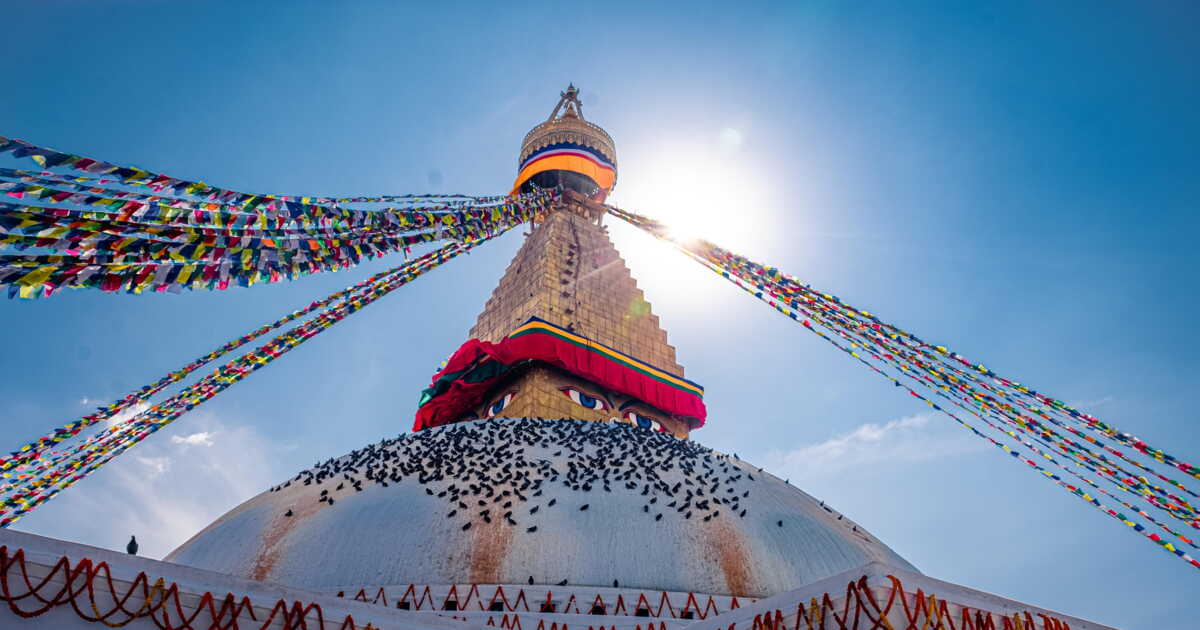
Here, the Eyes of the Buddha watch from the Boudhanath Stupa, while prayer flags flutter in the wind around Swayambhunath. Each location in the valley tells a chapter of Buddhist or Hindu history, offering visitors a timeless journey. These cities and picturesque mountain villages are also an excellent starting point to explore the living traditions of the local culture, celebrations like the Bisket Jatra, and to admire the pagoda roofs of temples in a setting with pleasant temperatures, especially during a Nepal trip in autumn, a season known for its mild temperatures and clear skies.
2. Outdoor activities in Pokhara
In Pokhara, a calm city in the southeast of Nepal and a gateway to the Annapurna circuit, thrill-seekers will discover a broad spectrum of outdoor activities. Between paragliding, mountain biking, kayaking and boat trips, every moment in this small country with lush nature evokes a magical place at the right moment. Located within an ideal domestic flight time from Kathmandu, Pokhara also enchants with its tranquility and serene atmosphere, far from the bustle of Nepal’s capital.
3. Trekking region discoveries in Nepal
Setting off to explore the trekking region is to embrace the soul of Nepal on a world map, a destination with grand must-sees. From the Namche Bazar village, perched on the slopes toward the roof of the world, to the trails of the Annapurna Circuit, every route leads to Tibetan-influenced villages, to vertiginous peaks, and to breathtaking landscapes.
The weeks in Nepal spent hiking these high mountains are punctuated by daytime heat, cool nights, and human encounters. The trek to the Everest Base Camp or the Langtang trek plunges you into a timeless journey, in a land of yesteryear where road construction gives way to ancient footpaths. These itineraries sometimes demand patience, especially in the face of waiting times or weather fluctuations, but each step reaffirms why Nepal is a destination of grand landscapes, as spectacular as it is timeless.
4. Safari in Chitwan National Park
A safari in Chitwan National Park reveals another facet of a trip to Nepal, away from the peaks and toward the Indian border. UNESCO World Heritage-listed, this park in the southeast of Nepal is the habitat of the Bengal tiger, the one-horned rhinoceros, the crocodile, the elephant, and more than 500 species of birds.
À dos d’éléphant ou en balade en canoë sur la rivière Rapti, on y découvre une destination idéale pour explorer une biodiversité d’exception. En dehors de la saison des pluies, les températures élevées renforcent l’exotisme de ce voyage hors du temps. Loin des sentiers battus, cet endroit devient une échappée rare, dans un petit pays qui ne cesse de surprendre par la variété de ses expériences. Chitwan est aussi un lieu d’observation privilégié pour ceux qui souhaitent conjuguer nature, faune sauvage et culture locale dans un cadre unique.
5. The spiritual site of Lumbini
The spiritual site of Lumbini, birthplace of the Buddha, unfolds as a destination with grand founding narratives. Located not far from the Indian border, Lumbini draws thousands of pilgrims each year, coming to meditate in the sacred park gardens, lined with temples and international monasteries. Here, the Eyes of the Buddha are not merely a symbol: they fill the space with an inner peace that few places can offer.
During a Nepal trip in autumn, a period when temperatures are pleasant, the spirituality of Lumbini resonates especially strongly. This magical place allows one to reconnect with oneself and with a multi-millennial history. The ideal duration of a visit is short, but the experience makes it a timeless journey, a deep anchor in the essence of Nepal, away from the high mountains, yet just as essential to understand the richness of this destination.
6. Cultural courses and experiences
Immersing oneself in the local culture of Nepal also means taking part in courses and workshops embedded in daily life. Whether it is a cooking workshop to learn how to make momos or an introduction to traditional weaving, these experiences reveal the soul of the Himalayan little country. Yoga and meditation retreats in the Thamel district in Kathmandu or in picturesque mountain villages allow one to slow down time, far from the bustle.
These precious moments, often lived in towns or less touristy places, are as many chances to blend into a timeless setting, authentic and preserved. By choosing to celebrate the Nepalese New Year, attend local festivities, or simply admire the prayer flags fluttering on rooftops, the trip to Nepal takes on a participatory dimension. It guarantees a destination with grand must-sees not only through its landscapes but also through the richness of its living traditions.
The Nepal is a mosaic of expected and unexpected experiences that will continue to surprise visitors. Whether you are drawn to nature, culture, or spirituality, this complex and varied country will surely engage you fully. By choosing from this list of activities, travelers can ensure a rewarding and well-organized stay in this unique corner of the world.
When to go to Nepal? Identifying the ideal season for a balanced and well-suited trip
Choosing the right time to visit Nepal is crucial. The dry season, from October to April, is ideal for hiking, while the warmer months can be favorable for cultural activities and safaris. The monsoon, from June to September, can make some treks difficult, though the surrounding nature then takes on a vibrant green intensity.
Is Nepal a beautiful country? Discover an authentic gem on the roof of the world
Consider viewing Nepal not just as a small country but as a wealth in itself. Located between India and China, this unique land unfolds as a magical place on the Himalayan range, dominated by the Mount Everest, the roof of the world. It is a destination of grand must-sees, where picturesque mountain villages, old royal towns, and majestic stupas like the Boudhanath Stupa weave a dense cultural narrative. An autumn trip to Nepal allows enjoying pleasant temperatures and clear skies, offering a clear reading of this Nepal on a world map where the harmony between nature and spirituality is fully lived.
What to do and what not to do in Nepal? Essential etiquette for a respectful and enriching journey
Traveling in this country with vibrant traditions requires a nuanced understanding of cultural codes. In Tibetan-influenced villages as well as in the city of Kathmandu, greet with respect, remove shoes before entering a temple, and do not touch someone’s head. It is also wise to avoid pointing at sacred statues or disturbing the prayer flags. In this timeless journey, adapting to local customs is key to a balanced and harmonious experience, especially in remote villages where the local culture remains strong.
What budget should you plan for Nepal? A destination accessible in many facets
Traveling to Nepal suits a range of profiles, from solo hikers to cultural visitors. The average cost for two weeks in Nepal ranges between 1000 and 2000 euros, depending on the activities chosen, the quality of accommodations, and internal transport. Areas like the Kathmandu Valley, the medieval town of Bhaktapur, or the Thamel district offer options for every budget. Treks, especially toward Namche Bazar village or the Annapurna Circuit, require suitable gear and sometimes a guide, elements to factor into the budget.
How long does it take to visit Nepal? Tailoring duration to the pace of the country
The ideal duration to explore Nepal depends on the nature of the stay: a cultural foray of 7 to 10 days is enough to traverse the Kathmandu Valley, from the Nepalese capital to the old royal city of Bhaktapur, up to the Peace Pagoda at the start of Pokhara. For trekking enthusiasts, two weeks in Nepal constitute a minimum to venture into the high mountains. The flight time to reach Kathmandu from Europe is about 10 hours, not counting layovers. But on average from Europe, journeys run around 13 to 16 hours with layovers. This timeless journey deserves careful planning.
How to get around Nepal? Transportation options suited to a varied geography
Given its rugged topography and the sometimes uneven road development, Nepal requires patience and flexibility. Transport is via local buses, shared taxis, or domestic flights between major cities such as Kathmandu, Pokhara, and Bharatpur. In rural areas, walking remains the most reliable way to reach certain picturesque mountain villages. Jeep rides or elephant-back excursions are sometimes offered in the southeast Nepal, notably in Chitwan National Park.
Is Nepal dangerous? Understanding risks and precautions to take
Asking whether Nepal is dangerous often reflects legitimate concerns but is usually exaggerated. This small country is generally safe for travelers, including solo travelers. However, natural risks, such as landslides during the monsoon season, or hazards in the high mountains, require heightened vigilance. In large cities, notably the Thamel district, caution is advised, as is true anywhere. The experience remains safe as long as you respect local customs and heed local advice.
This article was drafted with the help of artificial intelligence, then corrected, extended and validated by the editors of the desk.