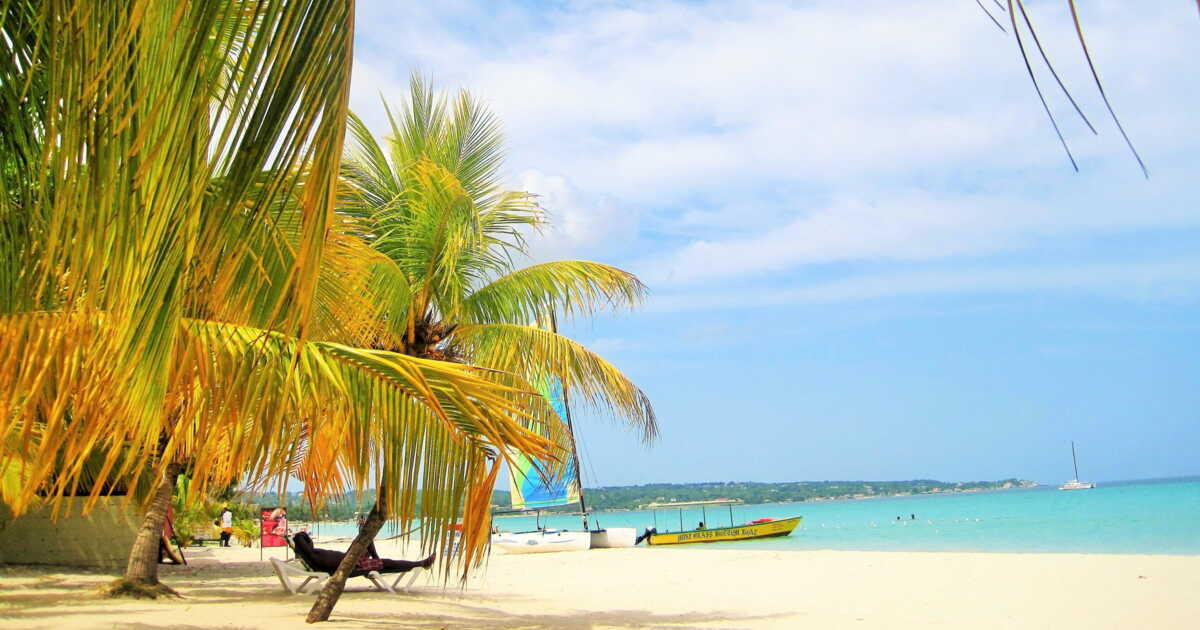
Nestled in the heart of the Caribbean, Jamaica is an island renowned for its rich cultural heritage, its white-sand beaches, and its tropical climate. Whether you are into land, sea, or cultural activities, Jamaica offers a wide array of options for travelers seeking adventure, relaxation, or historical discoveries. So, what to do in Jamaica? Let us explore together some of the activities not to miss during your stay on this iconic island.
1. Montego Bay: Beaches and Water Activities
Montego Bay, iconic seaside town on the north coast of the Jamaica, is a must-visit destination for anyone looking to begin their Jamaican journey with a focus on relaxation and water activities. Known for its iconic beaches such as Doctor’s Cave Beach and its turquoise waters perfect for swimming, the city is also renowned for its nightlife, its lively little bars, and its proximity to numerous tourist attractions.
Montego Bay International Airport provides easy access to this region, making it an ideal starting point for a complete island tour. Once influenced by colonial culture and the sugar trade, Montego Bay today stands as a desirable place to stay as well as a legendary destination, where historical heritage sits alongside modern infrastructure.
2. Negril: sunsets and relaxation
In the Negril region, situated between the cliffs and the Caribbean Sea, visitors discover a soothing atmosphere, especially thanks to the famous Seven Mile Beach. This iconic spot, perfect for unwinding in swimwear, offers a unique sunset panorama, particularly from the renowned Rick’s Café, which has become a meeting place to watch bold dives and the horizon’s shifting colors.
From Negril to Montego Bay, excursion options are plentiful, and nature lovers can discover the magnificent Negril Falls, natural pools, or Ys Falls, all steps to include in a well‑designed Jamaica Negril itinerary. Despite a sometimes unfavorable reputation, Negril remains a safe and popular destination, offering privileged access to nature and local culture.
3. Ocho Rios: nature and adventure
Ocho Rios, on the north coast, stands as a dynamic hub of tourist attractions, combining lush nature and adventure. It is here that the famous Dunn’s River Falls draw thousands of visitors each year seeking thrills. Between bamboo rafts, lush tropical forests, and exploration of sites such as Mystic Mountain, the town offers an active immersion into Jamaica’s tropical environment. Dolphin Cove, not far from the town center, also provides unforgettable experiences with marine life. Marking the heart of 17th-century Jamaica, the region also bears a rich past, notably tied to the sugar cane industry, and a successful shift toward more sustainable tourism.
4. Kingston: culture and history, from Emancipation Park to the Bob Marley Museum
As the capital of Jamaica, Kingston represents a place of history and memory where one grasps the island’s very essence. Between modernity and tradition, the Fleet Street district offers a glimpse of local street art works, while the Front Street area bears testimony to growing urbanization. The Bob Marley Museum, housed in the artist’s former home, pays homage to this reggae icon, revealing the inseparable link between music and Jamaican society. The colonial history is also embodied through Devon House or Emancipation Park, symbols of Jamaica from the era before Europeans arrived to its post‑independence development. Despite its contrasts, Kingston is a place of multiple myths, a vibrant culture, but also a gateway for travelers seeking a cultural stay.
5. Port Antonio: authentic adventure
Less touristy and more authentic, Port Antonio charms with its authenticity and the beauty of its natural landscapes. This region, which has over the centuries served as a refuge for artists and writers, remains a place of legend. Here, coffee plantations on the hills sit alongside the deep waters of the Blue Lagoon or the tranquil banks of the Rio Grande, perfect for a bamboo raft descent. Nearby, Treasure Beach and the Reach Falls complete an itinerary that prioritizes ecotourism and off‑the‑beaten‑path exploration. Port Antonio’s town center preserves architecture from another era, a testament to a time when Jamaica and the region attracted the earliest travelers from Europe.
6. Randonnée dans les Blue Mountains
The Blue Mountains, the island’s highest range, form a mountainous belt at the heart of a World Heritage area. A prime spot for hikers, they shelter lush tropical forests and unique ecosystems. As you ascend these peaks, you traverse world‑renowned coffee plantations. Guided excursions allow travelers of all ages, including those in their older years, to experience a natural adventure while observing endemic fauna and flora. The panorama over the Caribbean Sea completes a sensory experience where Jamaica’s natural and human history blends with the present.
7. Immersion at the Blue Hole: natural adventure and thrills in Jamaica
Situated about thirty minutes from Ocho Rios, this Blue Hole is one of Jamaica’s most surprising places, where turquoise waters spring from a limestone abyss framed by lush tropical forests. Located in a legendary spot on the north coast, this site reveals an adventurous dimension: cliff jumps, rope swings, and immersion in crystal-clear natural pools.
This excursion represents a highlight of a Jamaica trip, and perfectly illustrates that the region is not limited to beach resorts, but comprises a range of varied environments accessible to all ages, including older adults, provided you have a rental car or a local guide. It is a must-do on a trip to Jamaica.
8. Music and Gastronomy
As the cradle of reggae, Jamaica also offers a rich culinary tradition that accompanies its musical culture. Jerk chicken, ackee and saltfish, and dishes rooted in African and European traditions testify to a deep cultural blend. In the little bars or local restaurants, these dishes are often enjoyed with music, underscoring the importance of conviviality in interactions with the population. From Kingston’s downtown to beachside hubs like Montego Bay, gastronomy is omnipresent and reflects a history shaped by migrations, colonization, and independence. Through its dishes and rhythms, Jamaica continues to resonate with a strong identity, born from a complex past and a proud present.
In conclusion, Jamaica offers a multitude of activities and destinations, from its vibrant culture to its idyllic beaches. This island remains a Caribbean destination of choice for those seeking an enriching and diverse journey, catering to all inspirations and interests of travelers.
Do 7 days in Jamaica suffice?
A seven-day stay in Jamaica can be an excellent starting point for a well-orchestrated circuit, but it’s important to know that it does not allow you to explore the island in its entirety or all its facets. In a week, it is quite feasible to discover Montego Bay’s beaches, take a detour to Negril on the north coast, or even reach the Blue Mountains for a hike to the region’s highest point.
However, if one wishes to include in their itinerary a full tour of Jamaica, with sites such as Ocho Rios, Port Antonio, or sugar cane and coffee plantations, then a longer stay of 10 to 15 days is advised. This duration allows you to vary neighborhoods (such as Kingston’s Fleet Street district), assemble the pieces of a historical and geographical puzzle, and access places of multiple myths: natural pools, bamboo rafts on the Martha Brae River, not to forget Montego Bay International Airport as the arrival point. In short, 7 days are enough to enjoy a focused discovery of Jamaica, but to immerse oneself in a country rich in legends and World Heritage, the key is to plan for more time.
Is Jamaica Safe to Travel To?
When planning a trip to Jamaica, it is essential to address safety with precision and discernment. Jamaica remains a popular tourist destination, with its beach resorts and turquoise waters, but it is also a country that has carried a reputation for crime. Authorities and foreign services recommend heightened vigilance, especially in major cities like Kingston or in certain areas of Montego Bay.
However, well-established tourist zones, resorts, and main excursion routes are generally safe for visitors, provided you follow prudent guidelines: avoid traveling alone at night, stay on marked routes, and prefer official taxis or a rental car. By adopting a responsible approach, this country — famed for its musical legend embodied by Bob Marley, which left a mark on Jamaican culture — can offer an authentic and serene experience. Travelers are encouraged to approach their trip with a mindset of discovery and preparation rather than improvisation.
Is Jamaica Expensive?
Budget-wise, a stay in Jamaica need not be a costly endeavor, but it largely depends on the travel style chosen. Recent guides indicate daily budgets of about 45‑110 USD for an average traveler, and 210‑400 USD for a true mid‑range with comfortable hotel.
It is thus possible to modulate the budget effectively: economical accommodation options, local dining, free or low-cost activities in the lush tropical forests or on the beaches of the Caribbean Sea can help keep expenses down. However, access to prestigious places (coffee plantations, exclusive guided tours, a rental car for a full Jamaica circuit) entails additional costs. To optimize your budget, plan ahead — book in advance, opt for off-season stays, compare offers — and calibrate your level of expectations to your desires.
How to Get Around Jamaica?
Getting around Jamaica can be an integral part of the travel experience, provided you organize your transportation well. Whether linking iconic destinations such as Montego Bay, Negril, or Ocho Rios, or venturing toward the Black River wildlife and the Blue Mountains’ coffee plantations, several options await travelers: a rental car, shuttle services between beach towns, or organized excursions.
Choosing a rental car allows you to map out a Jamaica Negril itinerary or Negril to Montego Bay with full autonomy, while planning stops such as YS Falls or a visit to the Bob Marley Museum. However, it is wise to check road conditions, signage, and to favor safe travel times. Public transport can be economical but less reliable for a structured itinerary. Preplanning ensures that the traveler, whether mature or more energetic, fully enjoys Jamaica’s scenery, legendary sites, and the region’s rich heritage.
Jamaica Map: Essential Reference for Planning a Jamaica Trip
The map of Jamaica proves to be much more than a simple geographic outline: it becomes the central tool for a thought-out trip in Jamaica, allowing you to visualize the north coast beach towns like Montego Bay or Ocho Rios, the high elevations of the Blue Mountains — the island’s highest point — and the more hidden areas such as Port Antonio or Treasure Beach.
Understanding how the regions are laid out, identifying international airports and the routes of travel helps structure a clear itinerary: a full tour of Jamaica that links beaches, lush tropical forests, coffee and sugar plantations, and remnants of colonial past, tracing back to 17th‑century Jamaica. The map also shows that the island is a land of many myths, ranging from the legacy of sugar cane culture to Kingston’s street art, through bamboo rafts on Martha Brae; it thus stands as the first reference point for approaching this destination with confidence.
Jamaican Landscape: A Rich Panorama of Sea, Mountains, and Heritage
The Jamaican landscape harmoniously blends several elements: on one side, the turquoise waters of the Caribbean Sea washing over the beaches of Negril or Montego Bay; on the other, the wooded slopes of the Blue Mountains, one of the last major forested ranges Jamaica still preserves. This geographic contrast invites exploration of lakeside or subterranean areas, lush tropical forests shaped over centuries, and seaside resorts where relaxation and heritage mingle. The whole island stands as a home to myths, moving from sugar cane plantations to Kingston’s street art and bamboo rafts on Martha Brae; it thus presents itself as a coherent and diverse territory, not merely a tropical cliché.
This article was written with the help of artificial intelligence, then corrected, completed, and validated by the editors.