Nestled in Southeast Asia, between India, China, and Thailand, Myanmar is a country rich in cultural and natural heritage. Despite recent political challenges, Myanmar continues to attract travelers with its breathtaking landscapes and cultural diversity. Whether it’s the splendid temples of Bagan, the tranquil life around Inle Lake, or the beaches of Ngapali, Myanmar hides wonders waiting to be explored.
However, traveling in this country requires preparation and caution, offering us the opportunity to review 10 must-do activities while addressing the crucial question of safety to make the most of your trip to Myanmar. Before any international journey, we remind you that it is useful to consult the Travel Advice from the Ministry of Foreign Affairs to learn about security and health risks specific to certain areas, and the administrative steps to take before your trip.
1. Explore the temples of Bagan
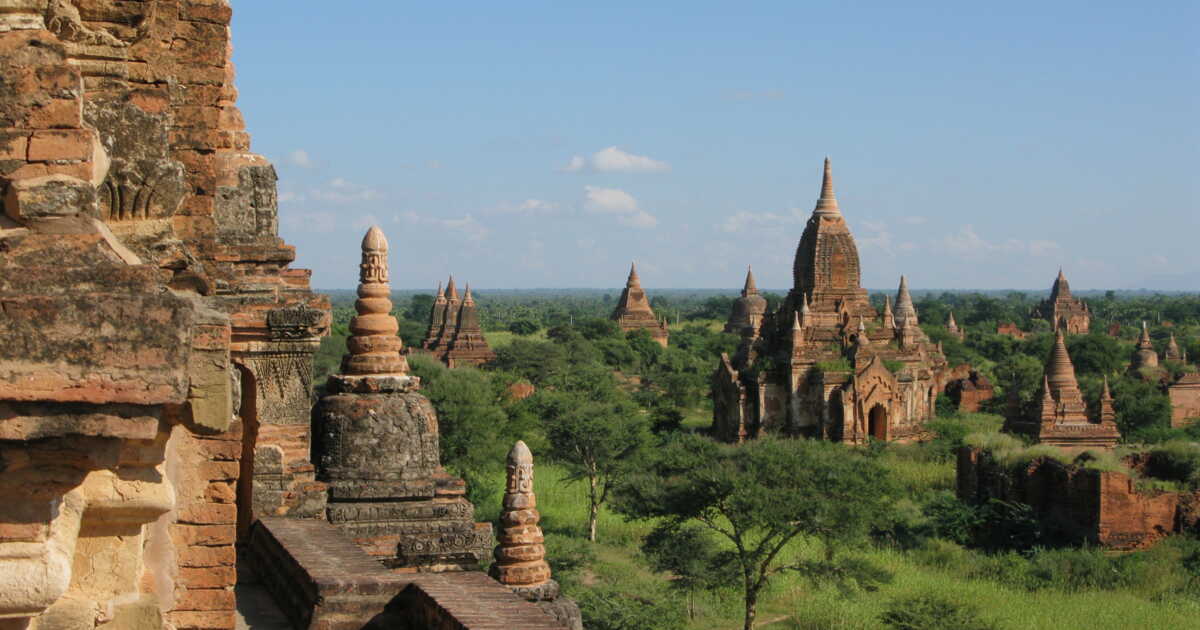
Exploring the temples of Bagan is like tracing time within one of the world’s largest archaeological sites. Located in a vast central plain, this region alone encapsulates Myanmar’s religious heritage, with more than 2,000 Buddhist monuments rising across the landscape. Among the key sites, the Ananda Temple, the Shwesandaw Pagoda, and Thatbyinnyu attest to ancient architectural genius, often enhanced by the first light of day.
The experience becomes even more striking when viewed from the air, aboard a flight with Oriental Ballooning, offering a unique perspective on the scenery. For a structured trip, using a rental car from Pindaya or an electric scooter can be wise, while ensuring to respect local norms, notably the traditional attire required at these unique sites.
2. Discover life around Inle Lake
Around Inle Lake, life unfolds between traditions and lake landscapes. In this mountainous region, local families sustain an ancestral way of life, with local markets, tea plantations, and floating gardens. Traversing the stilts and meeting Intha fishermen balancing on their boats is an authentic favorite for travelers attentive to the kindness of the locals.
A beautiful day of hiking can begin in Kalaw to reach the lake on foot, passing through villages of the country inhabited by mountain tribes. These routes are popular, but should be approached with caution, taking into account weather conditions and possible earthquakes in certain areas.
3. Admire the majesty of the Shwedagon Pagoda in Yangon
In the heart of Yangon, Shwedagon Pagoda stands as a major Buddhist archaeological site in Myanmar, often surrounded by a respectful and solemn atmosphere. Visiting this place helps to understand the importance of Buddhism in the local culture, while observing traditional dress, young monks, tribal women, and carefree children who move around in this sacred space.
Alongside, exploring the streets of Yangon and the People’s Park offers an intriguing transition to a city marked by its colonial past and its openness to the wider world. The city also reveals Burmese culinary specialties and crafts, in a lively yet composed atmosphere.
4. Trek to Mandalay Hill and U Bein Bridge
Around Mandalay, Myanmar’s second city and former capital, exploration ideally starts at Mandalay Hill. The panorama it provides, within a network of pagodas, helps to better understand the historical and religious layout of this area.
Organized itineraries, often offered by local companies, also allow reaching Mandalay-Sagaing in Myanmar, another substantial monastic center. Further south, the U Bein Bridge—rising above a shallow lake—offers immersion into local life. It’s best to visit at dawn or dusk to savor the changing atmosphere.
5. Relax at Ngapali Beach
Ngapali Beach, also known as Ngapali Beach, lies in a preserved coastal dimension of Myanmar. Located on the western coast facing the Bay of Bengal, it is ideal for a restful pause after the intensity of cultural circuits.
This setting, relatively untouched by mass tourism, nevertheless requires some preparation. For example? Checking accessibility, selecting reliable Gulf-area tour operators, and staying aware of health guidelines. This unique place, rooted in the Ngapali Arakan region, can also foster meaningful exchanges with locals about fishing, seafood, or coastal traditions.
6. Explore the caves of Hpa-An
The caves of Hpa-An, notably Saddan Sacred Cave and Kaw Ka Thawng Cave, are emblematic of the natural and religious heritage of southeastern Myanmar. These limestone formations, sprinkled with Buddha statues, stelae, and ancient inscriptions, are visited in a reflective ambiance.
Access to these caves typically starts from the town of Hpa An, via hiking-friendly paths or using suitable local transport. They are sometimes included in less-touristed circuits, combined with villages where one can discover rice wine, long-necked women, and other facets of Burmese diversity.
7. Join a Kalaw to Inle Lake trek
The Kalaw to Inle Lake trek is one of Myanmar’s most renowned hiking routes. It winds through rolling hills, tea plantations, hamlets inhabited by hillside tribes, and fields cultivated by traditional methods.
This experience often includes homestays with local families, direct contact with residents, and demands serious preparation to adapt to the climate. The route also reveals the geographical contrasts of this mountainous region, between the cool highlands and the humid valleys, before reaching the shores of Inle Lake.
8. Metropolitan experience in Naypyidaw
Naypyidaw, the city of the same name and administrative capital since 2005, embodies another facet of contemporary Myanmar. With its empty avenues and oversized urban planning, it often confounds the visitor, yet offers a unique glimpse into the Burmese state project.
From official institutions to sites like Uppatasanti Pagoda or the Zoological Garden, the capital reveals itself in a spirit of observation. Due to the strong presence of the military, movements should be planned with caution, particularly via authorized companies.
9. Discover the Golden Rock at Kyaiktiyo
The Golden Rock of Kyaiktiyo, perched on a rocky peak, is a unique pilgrimage site in southeastern Myanmar. Its structure seems to defy gravity, balanced atop over a thousand meters high, gilded in gold and crowned with a pagoda. The site attracts tourists as well as devotees from across the country.
The ascent can be done on foot or via a local shuttle, though one must remain mindful of crowds, seasons, and strict cultural rules. The Golden Rock sits within a spirituality that is often shared with women, young monks, or children, in accordance with traditions.
10. Savor Burmese cuisine
Burmese cuisine provides a fundamental gateway to understanding Myanmar through its flavors and customs. From Mohinga, a fish soup often enjoyed for breakfast, to Laphet Thoke, the tea-leaf salad, the cuisine stands out for its use of simple yet aromatic ingredients.
Rice wine, artisanal in certain regions, sometimes accompanies meals. These dishes are discovered in local markets, at homestays, or in eateries frequented by locals, far from mass tourism. Gastronomy thus becomes a vehicle for meeting people and understanding the country.
11. Ngapali Beach
Ngapali Beach, on Myanmar’s western coast, embodies a rare seaside space still preserved from mass tourism, nestled between turquoise sea and fishing villages. Located in the Ngapali Arakan region, this Ngapali Beach enchants with its calm, palm trees, and direct access to the Bay of Bengal, making it a unique place to rest after a dense cultural itinerary. Despite its appeal, access remains conditioned by the availability of regional operators, often modest, and the need to verify up-to-date information about the area, which is subject to occasional restrictions.
In a Myanmar on a journey of discovery, this seaside stop can be integrated as a complement to a structured itinerary, linking the streets of Yangon, Mandalay’s historic sites, or the caves of Hpa An, providing a balance between heritage exploration and relaxation. In a setting more detached from the bustle of the country’s major cities, interactions with locals, sampling rice wine or culinary specialties, and strolls along Ngapali Beach offer travelers a measured immersion, provided you approach this coastline with the necessary logistical precautions.
12. Explore Mandalay Hill
Finally, Mandalay Hill, integrated into any visit to Mandalay in Myanmar, is a key vantage point. At the top of this hill lies a pagoda from which there is an unobstructed view over the city and the surrounding countryside. Access, sometimes steep, is by foot or by motorized means, depending on the condition of the trails. The site is also frequented by young monks, adding a lively and educational dimension to the visit.
By pairing this step with Mandalay Sagaing in Myanmar, travellers discover two important spiritual centers, reinforcing the appeal of a structured circuit in this central region. In conclusion, Myanmar invites exploration and discovery while demanding careful preparation and constant vigilance regarding the security situation. Choosing an ethical journey, planning itineraries with current conditions in mind, and strictly respecting local customs will ensure a rewarding and safe experience.
What is the current situation in Myanmar?
The situation in Myanmar remains fragile and complex. The country is on a high security alert… The military regime exercises strict control; border areas and certain interior regions are the theater of armed violence, unexploded landmines, and poorly maintained infrastructure.
Official warnings advise avoiding non-essential travel, given both the risks of conflict and the limited access to medical care and emergency assistance. For a traveler, this requires extreme vigilance: stay informed in real time, avoid gatherings, avoid remote rural areas, and favor well-marked and recognized routes.
Is it advisable to go to Myanmar?
From a purely tourist perspective, Myanmar offers an exceptional array of cultural and natural riches, but in terms of safety and accessibility, the situation warrants strong cautions… Foreign authorities have all, without exception, issued advisories urging postponement of trips or strict limitation of the areas visited.
Thus, a traveler might consider an exceptional stay, with rigorous organization, an itinerary focused on safe zones as previously noted, and professional guidance. It is also recommended to obtain comprehensive insurance, prepare a contingency plan, and strictly respect local rules (no photos of soldiers, precautions in sensitive areas). The trip should be conceived as an expert journey, not merely a beach holiday.
When to visit Myanmar?
What is the right time to travel to Myanmar? The best climatic period for a stay in Myanmar is during the dry season, from November to February, when visiting conditions are more comfortable: clear skies, access to Ngapali’s beaches, and passable roads. Conversely, the rainy season runs from June to October, making some accesses difficult, particularly the coastal regions, and heavy rainfall can sometimes disrupt travel. Seasonal planning thus allows combining the best weather with better accessibility—a crucial criterion in Myanmar’s particular context.
This article was written with the help of artificial intelligence, then revised, extended, and validated by the editors of the desk.