Summary
-
1. Visiting Delhi: between history and modernity
-
2. Admiring the Taj Mahal in Agra
-
3. Discovering Rajasthan and the Pink City Jaipur
-
4. Attending ceremonies on the shores of the Ganges in Varanasi
-
5. Exploring the backwaters of Kerala
-
6. Relaxing on the beaches of Goa
-
7. Discovering the archaeological sites of Hampi
-
8. Trekking in the Indian Himalayas
-
9. Participating in a local festival
-
10. Savoring authentic Indian cuisine
-
What to do in India in 10 days?
-
What are the do’s and don’ts in India?
-
What to do in North India?
-
What to do in South India?
-
When to visit India?
-
What to do before heading to India?
India, a vast land with many facets, draws travelers with its cultural diversity, varied landscapes, and exceptional heritage. This South Asian country, rich in ancient histories and traditions, stirs both fascination and curiosity. Through this article, we offer a detailed guide to exploring India, whether for a short or an extended stay. The aim of this guide is to provide a list of must-see highlights while addressing regional specifics and cultural experiences.
1. Visiting Delhi: between history and modernity
Visiting Delhi offers a gateway to India through one of its most complete entrances, balancing imperial heritage, colonial urban planning, and a contemporary metropolis. In Old Delhi, Chandni Chowk nearly reads as an open-air museum, where narrow lanes, spice markets, ancient facades, and specialized stalls reveal centuries of urban history.
The Jama Masjid and the Red Fort recall Mughal might, while New Delhi, with the India Gate, Connaught Place and grand avenues inherited from the British era, illuminates another historical sequence marked by colonial presence and the heyday of the British Raj in the early 20th century.
This stop often serves as the starting point of an India trip, before heading to Rajasthan, the Pondicherry route, the northern Himalayas, or the country’s major sacred sites.
2. Admiring the Taj Mahal in Agra
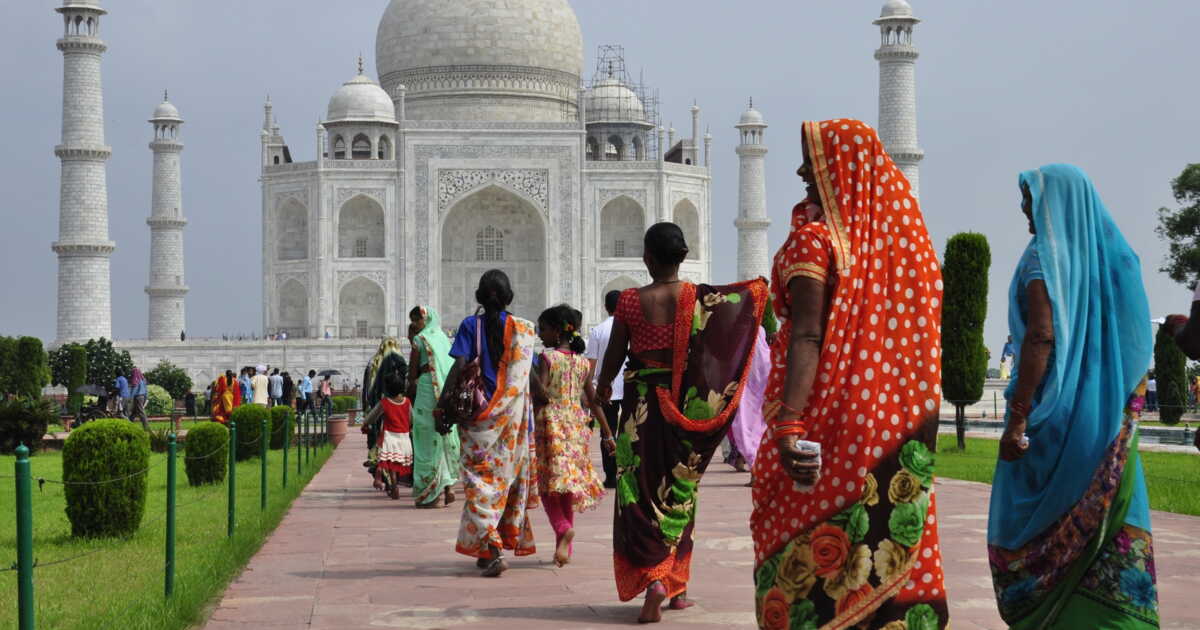
In Agra, admiring the Taj Mahal means discovering one of India’s most iconic monuments, as well as understanding the central role of funerary architecture in Mughal history. Built in the 17th century by Shah Jahan, this white marble mausoleum captivates with the symmetry of its gardens, the delicacy of its inlays, and the mastery of its proportions, especially visible at sunrise or sunset.
The visit can be complemented by the Agra Fort and Fatehpur Sikri, two essential sites to place the Taj Mahal in a broader political and artistic context. For a deeper cultural itinerary, Agra can also fit into a route linking Delhi, Jaipur, the Ajanta Caves, or major Hindu shrines, to measure the patrimonial diversity of the subcontinent.
3. Discovering Rajasthan and the Pink City Jaipur
Rajasthan offers one of the most striking images of North India, with palaces, fortresses, markets, and historic cities with strong identities. In Jaipur, the “Pink City” groups several major sites, including the Hawa Mahal, the City Palace, the Amber Fort, and the Jantar Mantar, a remarkable astronomical observatory listed as a world heritage site.
This discovery can be extended toward Jodhpur, the Blue City, whose indigo houses dominated by the Mehrangarh Fort illustrate another facet of princely architecture, or toward the Thar Desert, where villages, dunes, and ancient caravan routes remind us of the importance of cross-border exchanges in regional history.
Thus, Rajasthan stands as a foundational stage for understanding the continuity between royal traditions, crafts, ancient urban planning, and cultural tourism.
4. Attending ceremonies on the banks of the Ganges in Varanasi
In Varanasi, attending ceremonies on the banks of the Ganges offers a glimpse into one of the deepest spiritual dimensions of India. Each evening, the Aarti gathers priests, devotees, and visitors on the ghats in a codified choreography where lamps, chants, offerings, and ritual gestures convey the strength of the Hindu faith in daily life. A dawn boat ride allows observers to witness ablutions, prayers, and activity along the river, while appreciating the antiquity of this sacred city.
Varanasi is not only a place for contemplation: it is a cultural hub, where music, textiles, funeral rites, and urban life form a complex whole that is essential for any traveler seeking to understand India beyond its monuments.
5. Exploring the Kerala backwaters
In Kerala, exploring the backwaters reveals a slower India, organized around water, canals, rice paddies, and lake villages. A houseboat cruise offers views of the southern landscape, between coconut groves, traditional houses, and everyday life, far from the intensity of the large metropolises.
The journey can continue in Kochi, a port shaped by Portuguese, Dutch, and British influences, and then toward the plantations of Munnar, where tea curves the hills and contrasts with other notable producing regions like Darjeeling.
For travelers curious about material culture, a detour through Ahmedabad via an internal flight can complete this view thanks to the Calico Textile Museum, a major reference for understanding Indian know-how related to fabrics, dyes, and traditional crafts.
6. Relaxing on the beaches of Goa
Relaxing on the coastal beaches of Goa offers a glimpse of an India shaped by the Arabian Sea, where Portuguese heritage, seaside culture, and religious heritage mingle. The beaches of Anjuna, Palolem, and Calangute attract with their laid-back atmosphere, but Goa is more than mere sun and sea: its colonial churches, old houses, markets, and local cuisine recount centuries of exchanges between Europe and India.
The cuisine, flavored by spices, coconut, seafood, and some Catholic influences, provides a valuable entry point to understanding this region. In a broader itinerary, Goa can serve as a transition between the archaeological sites of the Deccan, southern beaches, and the historic towns along the western coast.
7. Discovering the archaeological sites of Hampi
In Hampi, exploring the archaeological sites feels like wandering through a vast open-air museum, where temples, pavilions, pools, colonnades, and granite blocks form one of the most spectacular historic landscapes in India.
Former capital of the Vijayanagara empire, the site reflects considerable political, religious, and commercial power, evident in the richness of sculptures and the layout of sacred spaces. The visit gains an extra dimension when linking Hampi with other major rock-cut or monumental ensembles, such as the Ajanta Caves, famed for their Buddhist paintings and rock-cut architecture.
These places help illuminate the deep historical layers of India, where dynasties, beliefs, and arts produced culturally coherent landscapes.
8. Trekking in the Indian Himalayas
Going on a trek in the Indian Himalayas offers a more physical and contemplative way to approach the country, especially in the Ladakh, often nicknamed Little Tibet for its high-altitude landscapes, monasteries, and Buddhist heritage. Itineraries wind through mineral valleys, high passes, isolated villages, and plateaus where light continually reshapes the reliefs.
The Thiksey Monastery, near Leh, stands out as one of the most memorable visits for understanding local spirituality, religious architecture, and the organization of monastic life. This region contrasts sharply with the Ganges plains, Rajasthan, or Kerala, illustrating how a single country can unite high mountains, Tibetan cultures, pastoral traditions, and vast near-desert spaces in one journey.
9. Participating in a local festival
Joining a local festival in India allows you to observe the vitality of traditional practices, whether it is Holi, Diwali, Durga Puja, Pushkar Fair, or temple- and village-based celebrations. Holi, often described as the festival of colors, turns streets into spaces of sharing and movement, while Diwali lights up homes, markets, and temples with a family and religious atmosphere.
This immersion can be complemented by visiting the Golden Temple in Amritsar, a central site of Sikhism, where welcoming visitors and community meals provide a tangible reading of Indian spirituality. In a broader cultural approach, these celebrations show how India blends rites, music, cuisine, crafts, and sociability, while preserving strong regional identities.
10. Savoring authentic Indian cuisine
To savor the authentic Indian cuisine is to travel the country through its spices, cooking methods, cereals, breads, curries, chutneys, and traditional beverages. Each region has its benchmarks: biryani in Hyderabad, dosa in the South, thali in Gujarat or Rajasthan, spicy fish along the Goa coast, vegetarian dishes tied to religious traditions, not to mention Darjeeling tea, whose international reputation makes it a symbol of the Himalayan foothills.
After a stay in this region, enjoying a Darjeeling tea can become a simple way to extend the journey, bringing the plantation landscapes and the tea’s colonial history back to the cup. To deepen this discovery, nature lovers can head to the Jim Corbett National Park, famed for its forests, safaris, and Bengal tigers, before continuing south by plane, from Pondicherry to Tanjore, along the Pondicherry Route, between colonial outposts, Dravidian temples, and Tamil culinary traditions.
In conclusion, whether you are passionate about history, culture, or adventure, India offers an endless array of experiences. Its majestic sites, diverse landscapes, and incredible cultural variety make it a unique destination. To deepen your journey, consider exploring other themes such as local festivals, traditional crafts, or culinary routes.
What to do in India in 10 days?
A 10-day stay in India can be enough to enjoy a authentic glimpse of the country, by combining city visits, cultural discoveries, and immersion in the World Heritage. You might start in New Delhi to feel the pulse of the Indian capital, then head to a region rich in history to behold the Taj Mahal—that iconic white marble mausoleum—and then explore a few fortresses or ancient forts.
Passing through historic cities or old urban quarters allows you to observe the diversity of Indian cities. This quick yet intense visit provides a vivid glimpse of the blend of traditions, architecture, and contemporary life, ideal for a first contact with India.
What are the do’s and don’ts in India?
Before departure, it is essential to learn the local rules to respect customs and avoid misunderstandings. In India, some practices considered ordinary elsewhere may be frowned upon: for example, modest dress is often requested, especially at sacred sites.
Respect for beliefs, religious traditions, and social codes is paramount. It is therefore advisable to research before visiting temples or monuments and to follow the advice of local authorities. Respect for local customs contributes to a harmonious, mindful, and culturally sensitive journey in India.
What to do in North India?
North India contains historical and spiritual treasures. Between ancient monuments, royal cities, and high Himalayan plateaus, the North offers a diverse palette. From New Delhi, you can visit the Red Fort, a symbol of the imperial past, or set off toward cities with rich architectural heritage, sometimes dominated by a palace or a fortress, or by royal ruins.
Going north, one reaches regions like Ladakh, which evokes a kinship with Tibetan Buddhism, offering mountainous landscapes and Buddhist culture—a striking contrast with the northern plains. This region blends heritage, spirituality, and nature, ideal for those seeking grandiose landscapes and a deep connection with the soul of India.
What to do in South India?
The South of India captivates with its beaches, tropical climate, and lush landscapes. You can enjoy the Goa beaches, lined by the sea, for moments of relaxation and natural beauty. In more rural or mountainous areas, tea plantations provide a tranquil, green and refreshing setting—a stark contrast to the bustle of the big cities.
Exploring this southern region reveals a different India: less urban, more tranquil, oriented toward nature, well-being, and a relaxed pace of life. It invites rest and contemplation away from crowds, while unveiling a calmer, more contemplative face of the country.
When to visit India?
The choice of travel period strongly shapes the experience. India experiences varied climates across regions: some places endure very humid seasons, others extreme heat. To make the most of a visit, plan your trip outside climate extremes when the weather is milder. Participating in the Festival of Colors or other local celebrations can enrich the experience—but also be mindful of crowds and weather conditions. Thoughtful timing ensures a comfortable, respectful, and memorable visit, aligned with India’s geographic and cultural diversity.
What to do before leaving for India?
Before departure, it is advisable to check formalities: visa, vaccines, insurance, readings on customs, and a list of places to explore. Well planning your itinerary—identifying the cities, monuments, and regions to visit—helps optimize time and avoid surprises. For a first stay, it is useful to assemble a few invaluable places: famous monuments, historical sites, natural zones, and traditional neighborhoods. This preparation ensures a calm and enriching journey, allowing you to make the most of India’s cultural, historical, and scenic riches.
This article was written with the help of artificial intelligence, then corrected, enhanced and validated by the editorial team.