The Normandy D-Day beaches and the Royal Fortresses of Languedoc in the south of France, better known by their former name ‘Cathar Castles’, were inscribed on Sunday as UNESCO World Heritage.
Across just over 80 km of coastline, between the Manche and Calvados departments in the northwest of France, the Allied D-Day beaches of June 6, 1944 were the scene of a decisive battle to liberate Europe from Nazism and bring World War II to an end.
These beaches “are directly and physically associated with the Landing (…) which played a decisive role in the liberation of Western Europe from Nazi occupation”, recalled a representative of UNESCO’s International Council on Monuments and Sites (Icomos) at the session in Busan, South Korea. This ensemble of sites “symbolically commemorates the immense human sacrifice that was made to overturn an authoritarian occupation deeply rooted in Europe”, she continued.
The nomination concerned the five D-Day beaches known by their code names Utah, Omaha, Gold, Juno and Sword, but also Pointe du Hoc, site of decisive fighting, the German Longues-sur-Mer artillery battery, and the artificial port of Arromanches-les-Bains, known as Port Mulberry, made up of enormous concrete caissons built in England to facilitate Allied logistics.
Numerous military cemeteries and commemorative monuments are associated. “We’re super happy, because we didn’t believe it would happen”, said AFP to the president of the Normandy Region, Hervé Morin, who was present in Busan for this bid launched in 2006. “There is no more prestigious label than this” he praised, estimating that it could bring 20% more tourists to the sites. “An immense pride for Normandy and for France!” rejoiced the Minister of the Armed Forces, Alice Rufo, on X.
Two inscriptions, two histories that marked France
The president of the Aude department, Hélène Sandragné, also welcomed UNESCO’s listing of the Royal Fortresses of Languedoc, calling it a “lever” for tourism and economic development. “It will increase our attractiveness and Aude needs it”, she told AFP.
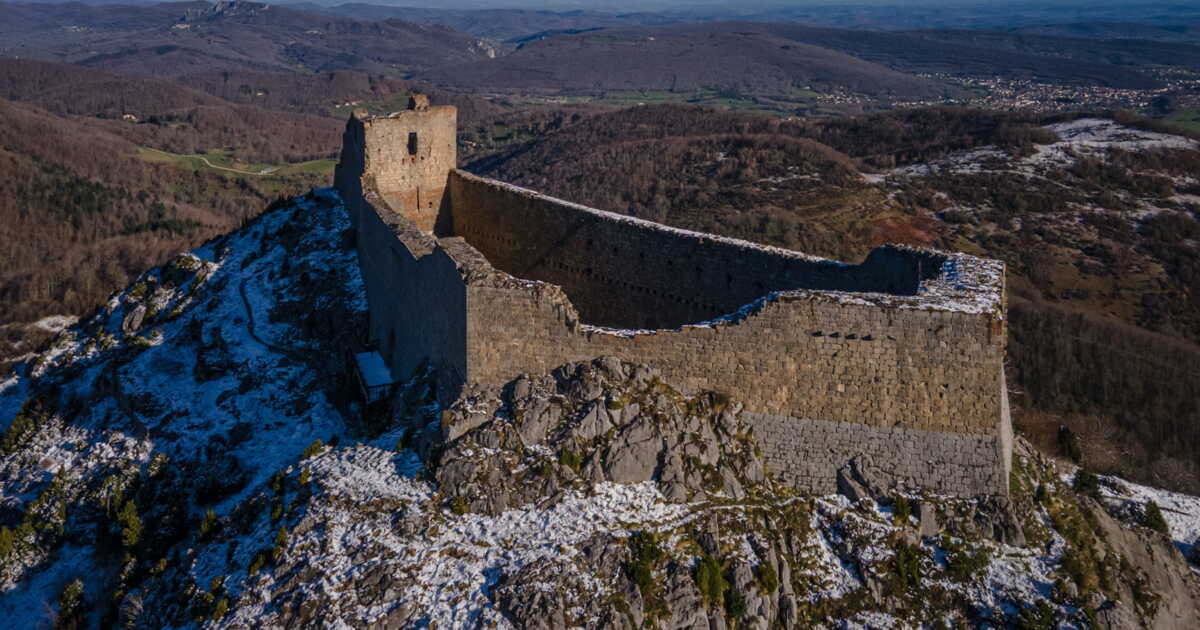
Often perched atop steep rocky crags, the eight fortresses, including Montségur in Ariège and Peyrepertuse or Quéribus in Aude, were built after the Albigensian Crusade (1209-1229), when part of Languedoc fell under royal domain.
Some of these sites had previously served as refuges for the Cathars accused of heresy. With these fortresses, the King of France aimed to keep an eye on the local population still deemed dissident and to monitor the Kingdom of Aragon, located just a few tens of kilometers from Quéribus or Peyrepertuse.
The fortresses were administered by a seneschal based in the Cité of Carcassonne, itself rebuilt at the same time and already inscribed on the World Heritage list in 1997. Considered as an “central element of the defensive system”, its castle and ramparts are also part of these eight monuments now on UNESCO’s list.
“These fortresses attest to the exceptional adaptation of military architecture to topographical constraints and the emergence of new forms of territorial organization by the French monarchy”, UNESCO said.
“Irony of history, these fortresses which yesterday broke the rebellious ardor of the people of Languedoc will give them a new momentum tomorrow” also declared Mrs. Sandragné, who sees in this distinction an asset for the “preservation and restoration” of these citadels.
For Fabrice Chambon, a guide at Montségur castle, where more than 200 “heretics” were burned in 1244 before the fortress we visit today, the erasure of the word “Cathar” has “moved quite a few people”. A petition by opponents to this renaming was signed by nearly 9,400 people.
With these two new sites inscribed on the World Heritage list, “France now has 56 UNESCO-listed properties. It is a pride, but also a responsibility”, said the Culture Minister Catherine Pégard to AFP.