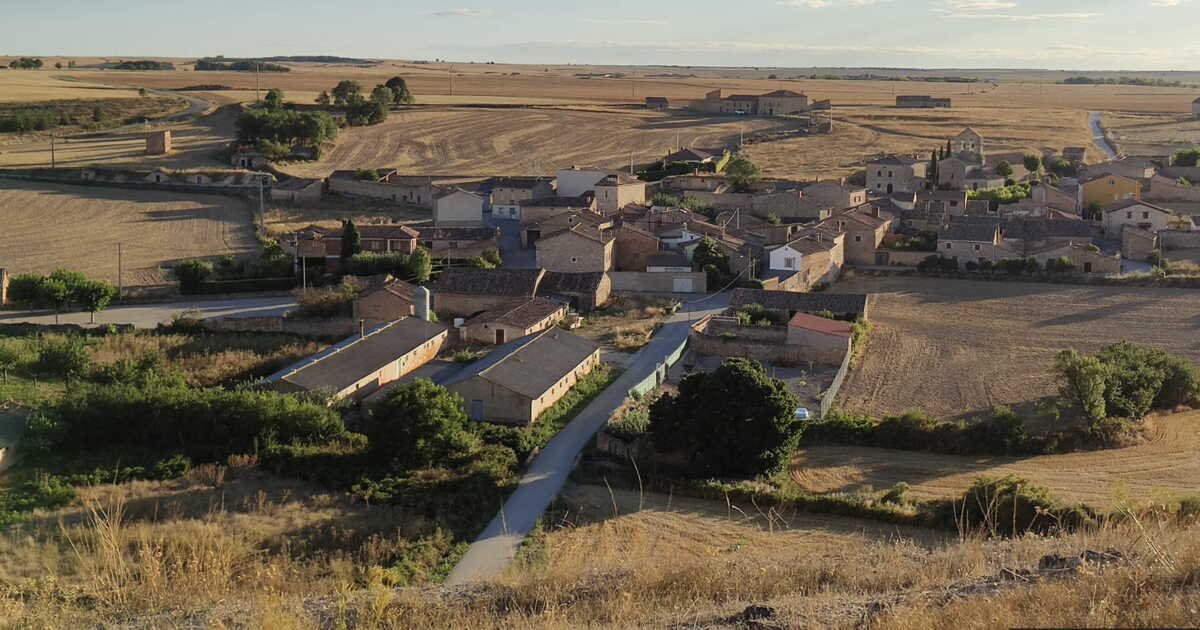
The small village of Avellanosa de Muñó, located in the province of Burgos in northern Spain, is about to break its usual calm to welcome a large number of visitors for an exceptional event. Usually, this hamlet has only a few inhabitants and lacks restaurants or shops. The silence is such that you can hear carpenter bees buzzing around the lavender bushes or hear the songs of the black-and-white swallows weaving between the stone roofs of the nearly deserted streets.
The only notable gathering of the week occurs when a white van, belonging to a neighboring bakery, arrives to deliver bread to the residents. Yet, in a few days, this ordinarily peaceful place will become a must-attend meeting point for astronomy enthusiasts coming to observe the total solar eclipse that will cross the Atlantic on August 12. An exceptional event that has not occurred since 1999.
Avellanosa de Muñó, an ideal place to observe the solar eclipse
Physicist María Teresa López Sánchez told the BBC that it will be the first total solar eclipse visible from continental Spain since 1912. It will only be observable along a narrow band crossing the continent, and Avellanosa de Muñó lies precisely on that trajectory. Added to this is a particularly favorable observing environment with its golden wheat fields, gentle hills, and a wide western horizon that provides an ideal setting, with few buildings and low light pollution.
This small village could thus allow astronomy enthusiasts to enjoy the eclipse in a setting calmer than the usual popular viewing sites. It will occur just before sunset and create a double dusk effect. “It will be like living two sunsets in a few minutes”, the expert explained, who then advised climbing into the caves to gain “a breathtaking view”. Born in Avellanosa de Muñó in 1937, María Teresa López Álvarez has never lived anywhere else. In almost nine decades spent in this village, she has watched it transform over the years.
For generations, the hamlet has lived off dry farming, kitchen gardens, vineyards, and livestock. But with the mechanization of agriculture and the lack of nearby jobs, many residents gradually left the village to join large cities such as Madrid, Bilbao or Barcelona. Raúl Grande Revilla, born here 73 years ago before moving to Madrid during his childhood, will return for the eclipse. He will be accompanied by some family members, forming a group of around twenty people and doubling the village’s population for an evening.
Bookings made years in advance of the solar eclipse
This August will thus mark the return of several former residents of Avellanosa de Muñó. According to the physicist, some of his neighbors will host friends and relatives coming from all over Spain, but also from the United Kingdom, France, or Venezuela. For Lucrezia López, a professor in the geography department at the University of Santiago de Compostela, such occasional events can encourage people to “rediscover a place to which they are already attached”.
The Parador de Lerma hotel, located nearby and housed in the former palace of the Duke of Lerma, has been fully booked for the event since 2022, and Alberto Bosque Coello, from Castile and León’s tourism office, says that the same pattern is happening across the region. “Most of our accommodations are full. In fact, they were booked well in advance” he notes, adding that eclipse specialists were seeking “the best place, not the best known”, because they wanted optimal observing conditions.
When the moment arrives, locals and visitors will head to the caves that overlook the village. With the sun at only eight degrees above the horizon during totality, a clear view to the west will be essential, making the perched caves a privileged place to admire this exceptional celestial spectacle. But the caves are not merely a viewpoint. For generations, this dwindling community has gathered there to watch the sunset, and one former resident even chose to have his ashes scattered there. A place of great sentimental value for the village.