

Just after Newsberry Springs and its famous Baghdad Café (see the first part of our road trip), Route 66 enters Arizona where lies the land of the Navajo Nation.
The Navajos, however, are not encountered immediately.
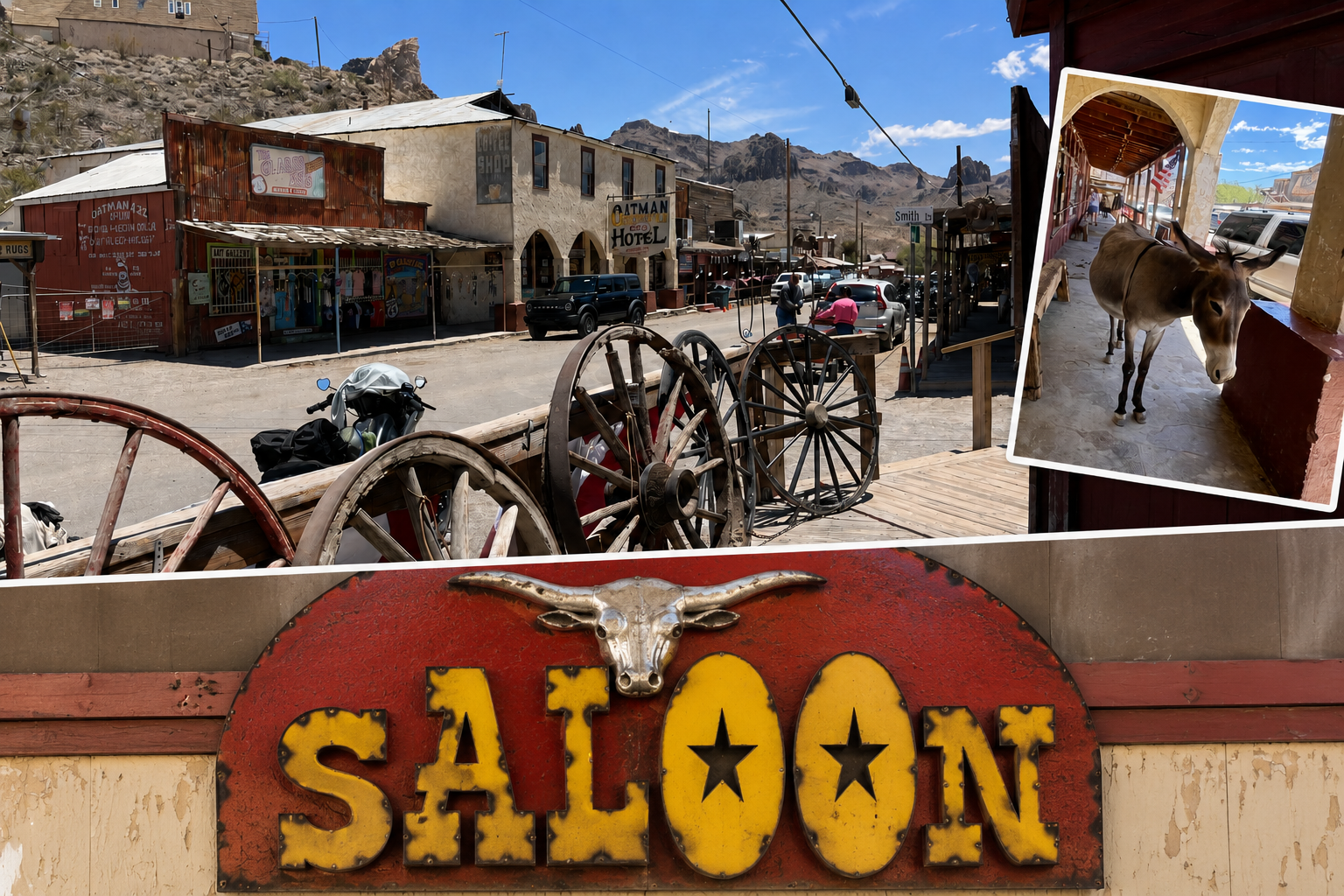
Perched in the heart of the Black Mountains, the first settlement you meet is named Oatman. It is an old mining town where time seems suspended despite the influx of tourists.
Its history is closely tied to the conquest of the Far West: this village flourished, housing up to 10,000 inhabitants, after two prospectors found gold in the area in 1915. It declined after the mine closed.
Always filled with wooden buildings worthy of the finest western set pieces, Oatman offers a vivid immersion into the Western American imagination. Everything feels so authentic that you might imagine hearing gunshots. Of course, nothing like that happens!
Nowadays, this endangered town is being revived (a little) thanks to tourism. The donkeys wandering freely through its streets, and sometimes into the many, rather kitschy, souvenir shops, give it a distinctive publicity. They are the descendants of the pack animals abandoned by miners as they left.
The Navajos, however, are not encountered immediately.
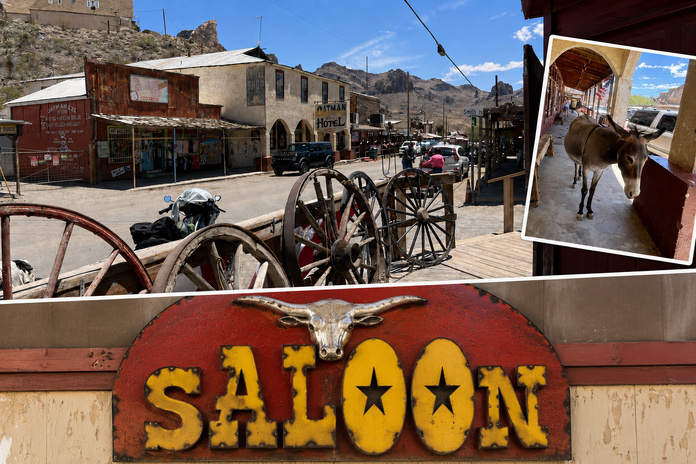
Perched in the heart of the Black Mountains, the first settlement you meet is named Oatman. It is an old mining town where time seems suspended despite the influx of tourists.
Its history is closely tied to the conquest of the Far West: this village flourished, housing up to 10,000 inhabitants, after two prospectors found gold in the area in 1915. It declined after the mine closed.
Always filled with wooden buildings worthy of the finest western set pieces, Oatman offers a vivid immersion into the Western American imagination. Everything feels so authentic that you might imagine hearing gunshots. Of course, nothing like that happens!
Nowadays, this endangered town is being revived (a little) thanks to tourism. The donkeys wandering freely through its streets, and sometimes into the many, rather kitschy, souvenir shops, give it a distinctive publicity. They are the descendants of the pack animals abandoned by miners as they left.
In Oatman, Clark Gable’s Wedding Night
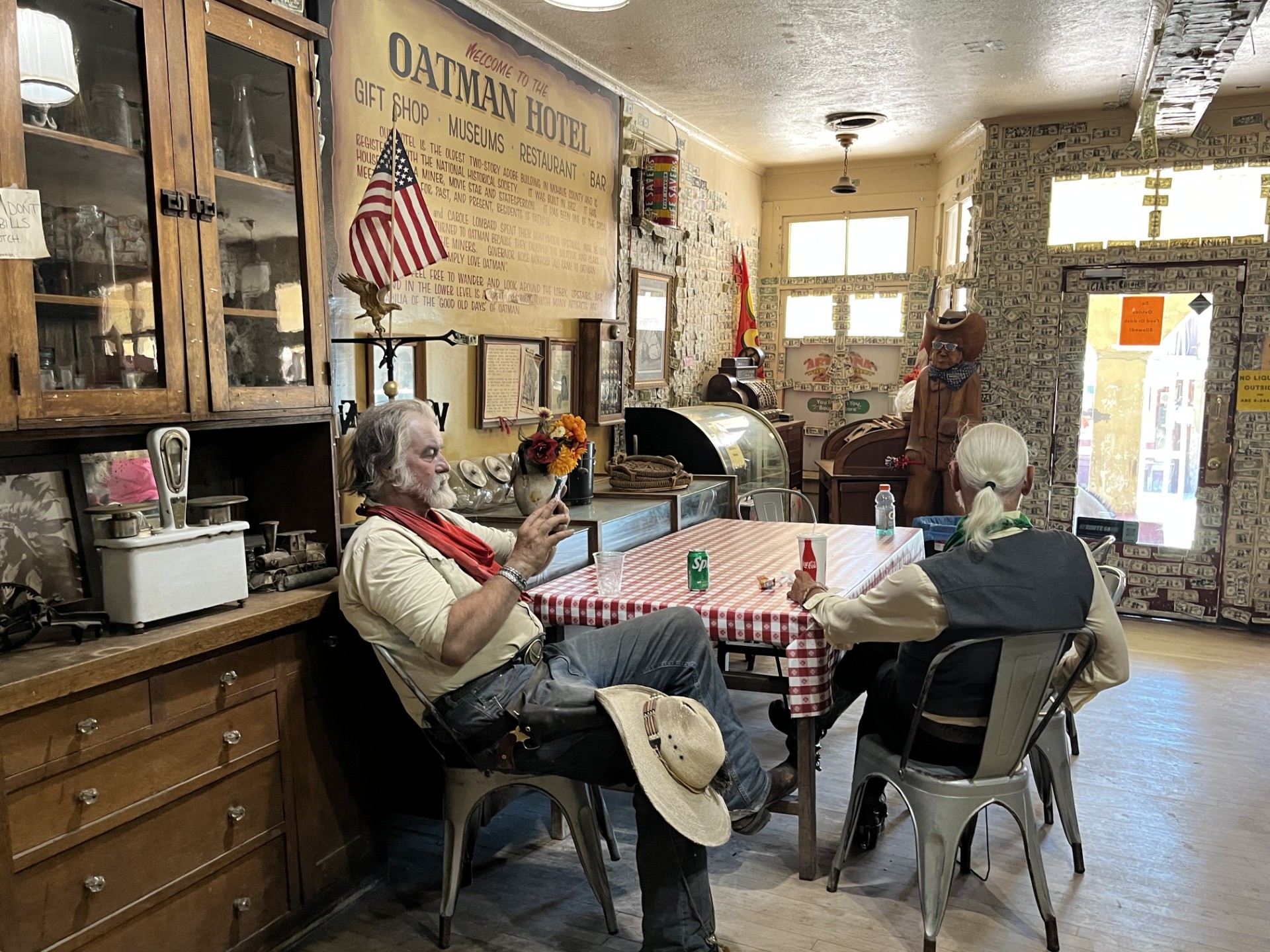
Although it now sells ice cream, the Oatman Hotel has remained as it was.
In its saloon, the walls and ceiling are covered with dated and signed banknotes from the countless visitors.
And while some bar pillars still sit at the tables, rather than playing cards as in the past, they scroll for hours on their phones, beneath an old photograph of Clark Gable and his wife Carole Lombard.
No one knows if this is true or a legend. One thing is certain: Oatman boasts of hosting the wedding night of these two Hollywood stars after their secret marriage in Kingman in 1939. And of having seen them again, often, afterwards.
On occasion, Clark Gable is said to have played cards with the miners!
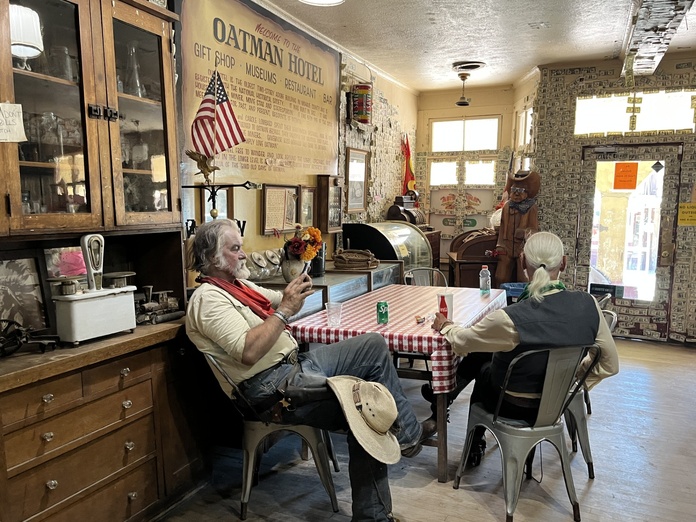
In its saloon, the walls and ceiling are covered with dated and signed banknotes from the countless visitors.
And while some bar pillars still sit at the tables, rather than playing cards as in the past, they scroll for hours on their phones, beneath an old photograph of Clark Gable and his wife Carole Lombard.
No one knows if this is true or a legend. One thing is certain: Oatman boasts of hosting the wedding night of these two Hollywood stars after their secret marriage in Kingman in 1939. And of having seen them again, often, afterwards.
On occasion, Clark Gable is said to have played cards with the miners!
Kingman, “The Heart of Historic Route 66”
The next stop on Route 66 is Kingman.
Dynamised by a few notable enterprises, this 35,000-inhabitant town still cherishes its past. It presents itself as “The Heart of Historic Route 66”, nothing less!
At night, its atmosphere becomes quite magical thanks to the neon glow of its many shops.
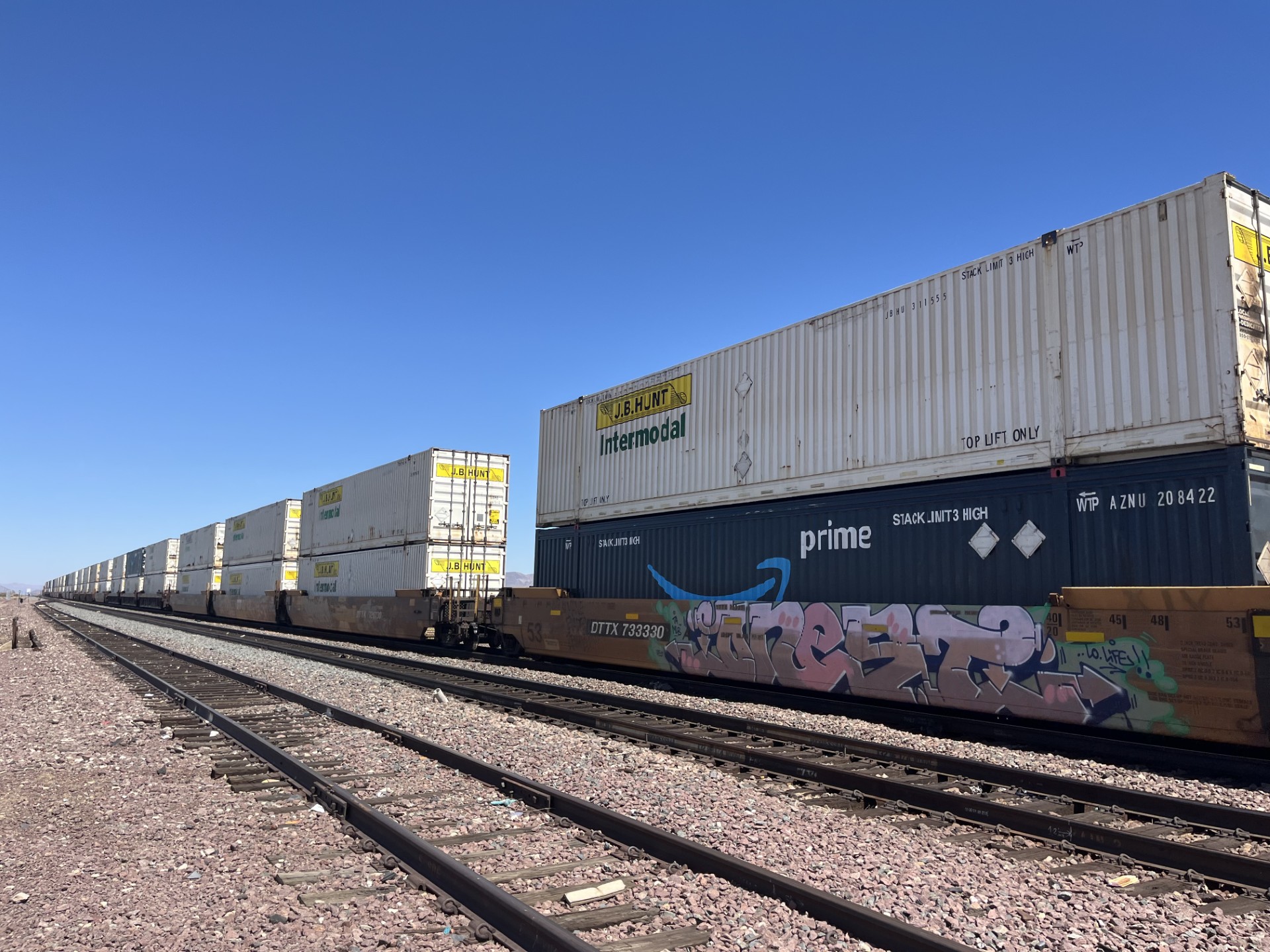
By day, with its stone and brick buildings that have withstood the test of time, its traditional look as a road and especially railway hub becomes more evident: do the whistles of the endless convoys of the Atchison Topeka & Santa Fe Railroad still mingle every 12 minutes with the roar of cars on Andy Devine Avenue?
At 211 E on this avenue, Tin Can Alley On 66 offers original aluminum caravans fully reconfigured and air-conditioned where you sleep like a baby. At 1440 E on the same avenue, the historic El Trovatore Motel recalls having seen many Hollywood glories, starting with Clark Gable and Marilyn Monroe.
On the exterior wall of this establishment, a breathtaking 63-meter-long colorful mural now traces in pictures the entire Route 66 journey, from Chicago to Santa Monica.
Dynamised by a few notable enterprises, this 35,000-inhabitant town still cherishes its past. It presents itself as “The Heart of Historic Route 66”, nothing less!
At night, its atmosphere becomes quite magical thanks to the neon glow of its many shops.
By day, with its stone and brick buildings that have withstood the test of time, its traditional look as a road and especially railway hub becomes more evident: do the whistles of the endless convoys of the Atchison Topeka & Santa Fe Railroad still mingle every 12 minutes with the roar of cars on Andy Devine Avenue?
At 211 E on this avenue, Tin Can Alley On 66 offers original aluminum caravans fully reconfigured and air-conditioned where you sleep like a baby. At 1440 E on the same avenue, the historic El Trovatore Motel recalls having seen many Hollywood glories, starting with Clark Gable and Marilyn Monroe.
On the exterior wall of this establishment, a breathtaking 63-meter-long colorful mural now traces in pictures the entire Route 66 journey, from Chicago to Santa Monica.
In Kingman, the Black Arch of souvenir photos
Not far from there, in a imposing concrete building with handsome display windows, the Powerhouse Visitor Center serves as a treasure trove of tourist information. And as a must for souvenir enthusiasts.
Its Railroad Museum plunges visitors back into the grand adventure of the conquest of the West.
On site, two other museums compete in originality: the Arizona Route 66 Museum recounts the history, from the ancestral trails of Native Americans to the final routing of this mythical road, passing through the tracks used by settlers during the conquest of the West.
First in the world of its kind, the Route 66 Electric Vehicle also travels back in time, but… with its astonishing collection of electric vehicles: the oldest date from the early 20th century!
Facing the Visitor Center, Locomotive Park pays homage to Kingman’s rail past, featuring, as a guest star, steam locomotive No. 3759, a steel monster still ready to leap.
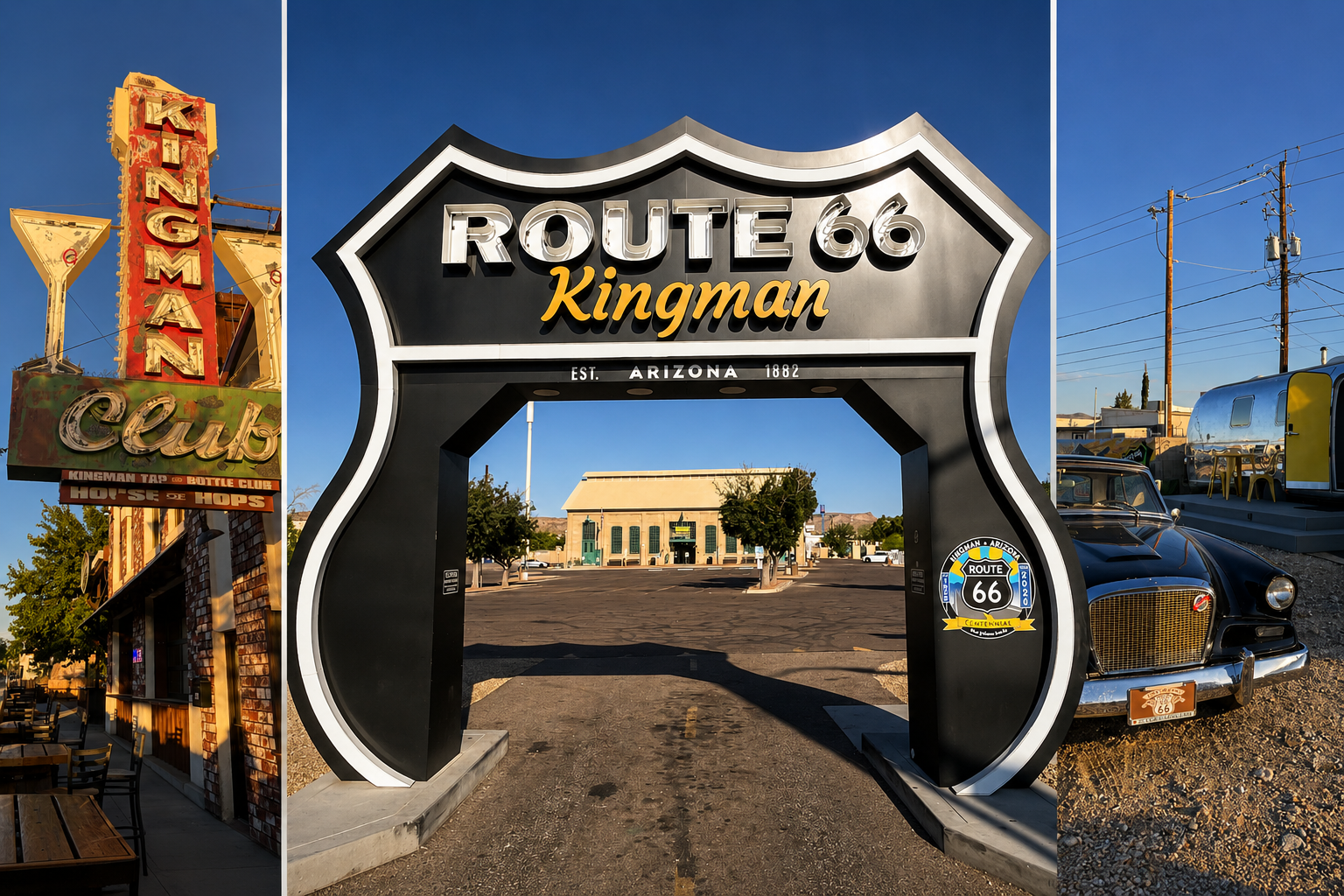
The most popular attraction in Kingman? It sits in the parking lot of the Visitor Center. It is an impressive black steel arch, stamped with Route 66. Tourists love posing in front of it!
Its Railroad Museum plunges visitors back into the grand adventure of the conquest of the West.
On site, two other museums compete in originality: the Arizona Route 66 Museum recounts the history, from the ancestral trails of Native Americans to the final routing of this mythical road, passing through the tracks used by settlers during the conquest of the West.
First in the world of its kind, the Route 66 Electric Vehicle also travels back in time, but… with its astonishing collection of electric vehicles: the oldest date from the early 20th century!
Facing the Visitor Center, Locomotive Park pays homage to Kingman’s rail past, featuring, as a guest star, steam locomotive No. 3759, a steel monster still ready to leap.
The most popular attraction in Kingman? It sits in the parking lot of the Visitor Center. It is an impressive black steel arch, stamped with Route 66. Tourists love posing in front of it!
Angel Delgadillo, the celebrated “savior” of Seligman
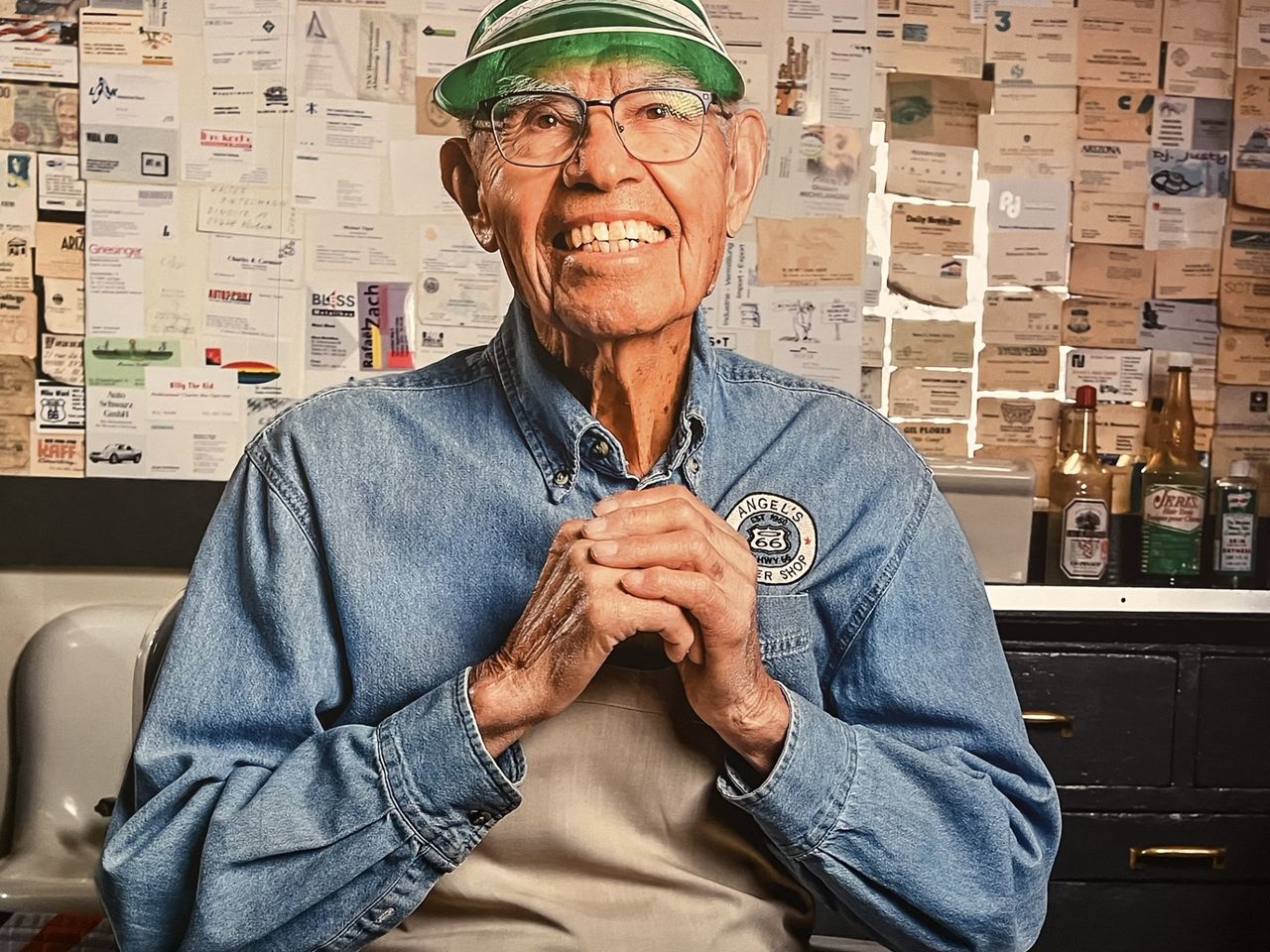
After this rite of passage to which we obviously sacrificed, we head to Seligman!
This town almost disappeared from the map after the construction of Interstate 40, which connected the East Coast to California.
In 2020, it counted only 446 inhabitants. It was saved by the famous Angel Delgadillo, alongside the Route 66.
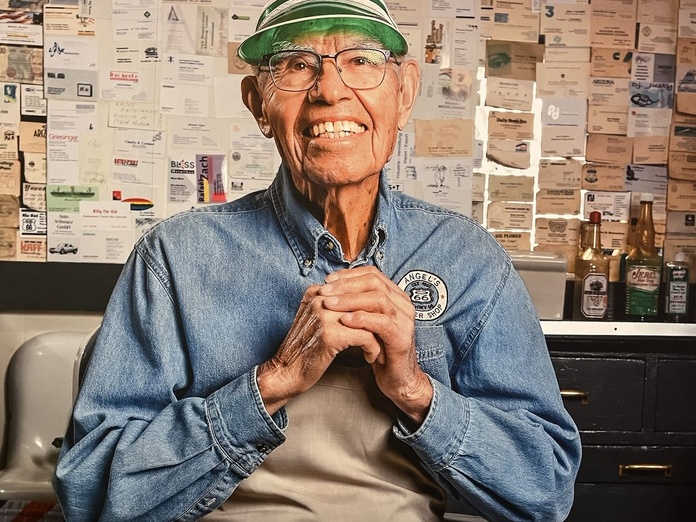
On site, this local son now in his 90s is a real hero. His photo sits in front of his bric-a-brac shop while, leveraging his fame, his family now runs several stores on the main street where one can find touch-and-go restaurants, clothing shops, kitschy souvenirs and signs displaying life-size photos of Elvis Presley and Marilyn Monroe.
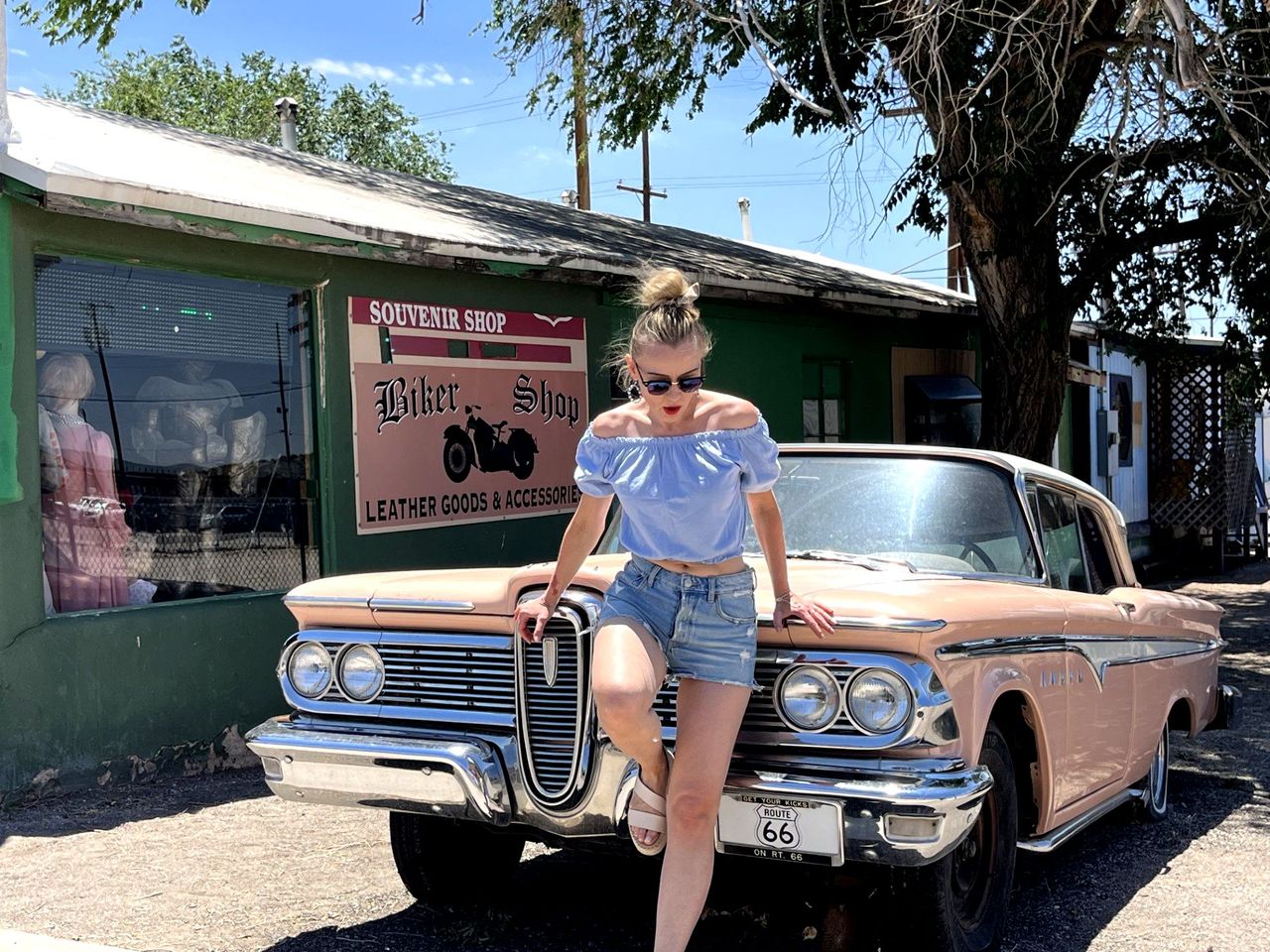
Old colorful cars from the 1950s-60s with headlights painted like big eyes, as in cartoons, complete Seligman’s decor. It is not unusual to see young women in shorts posing on the hood before heading to enjoy an ice cream!
This town almost disappeared from the map after the construction of Interstate 40, which connected the East Coast to California.
In 2020, it counted only 446 inhabitants. It was saved by the famous Angel Delgadillo, alongside the Route 66.
On site, this local son now in his 90s is a real hero. His photo sits in front of his bric-a-brac shop while, leveraging his fame, his family now runs several stores on the main street where one can find touch-and-go restaurants, clothing shops, kitschy souvenirs and signs displaying life-size photos of Elvis Presley and Marilyn Monroe.
Old colorful cars from the 1950s-60s with headlights painted like big eyes, as in cartoons, complete Seligman’s decor. It is not unusual to see young women in shorts posing on the hood before heading to enjoy an ice cream!
Gateway to the Grand Canyon
Sedona, its red cliffs and energy vortices
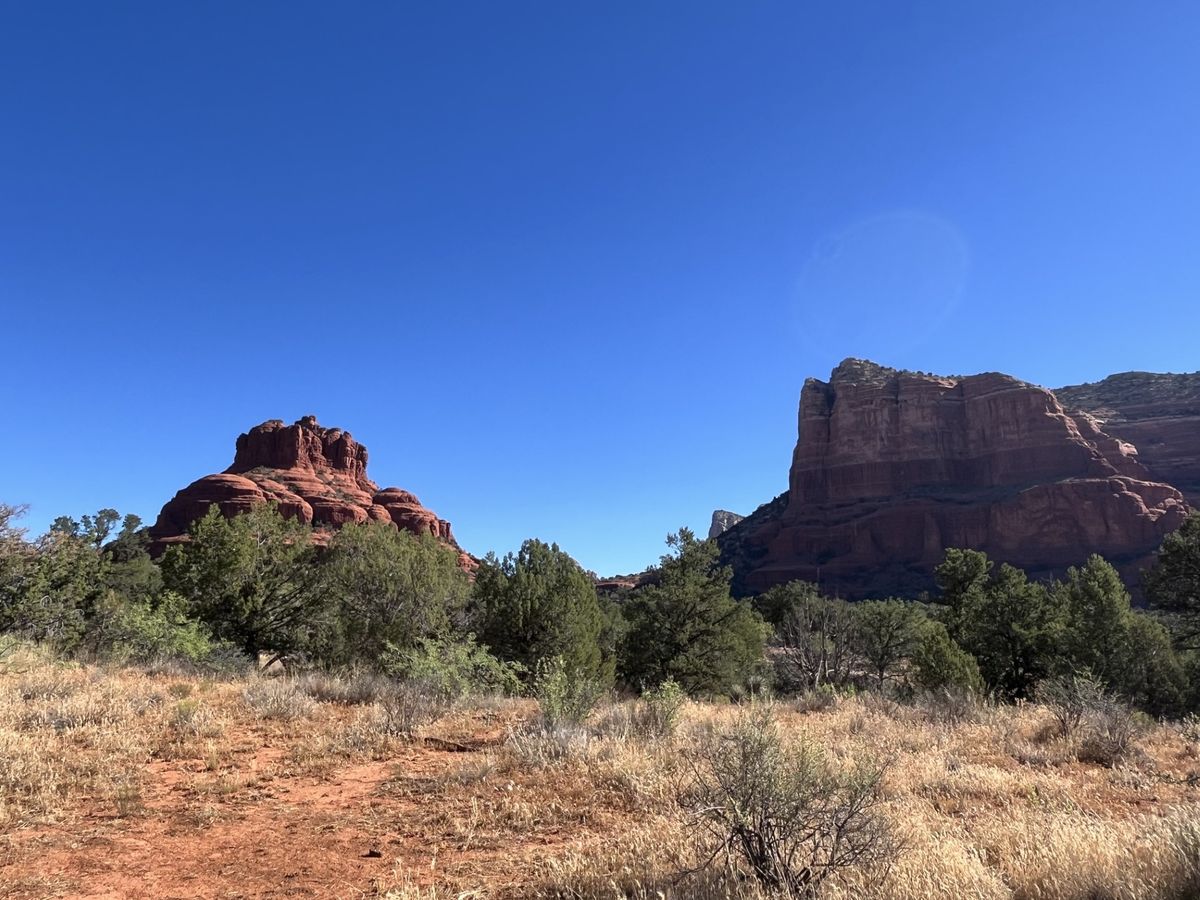
Not far from the Grand Canyon, other sites deserve a visit, starting with the ruins of a fortified citadel perched high up, built in the 12th century in Wupatki Park by the Pueblo Indians.
At that time, they cultivated corn and squash on lands made fertile by the latest volcanic eruptions of Sunset Crater, whose cone rises nearby in the sun-blasted grassy plain.
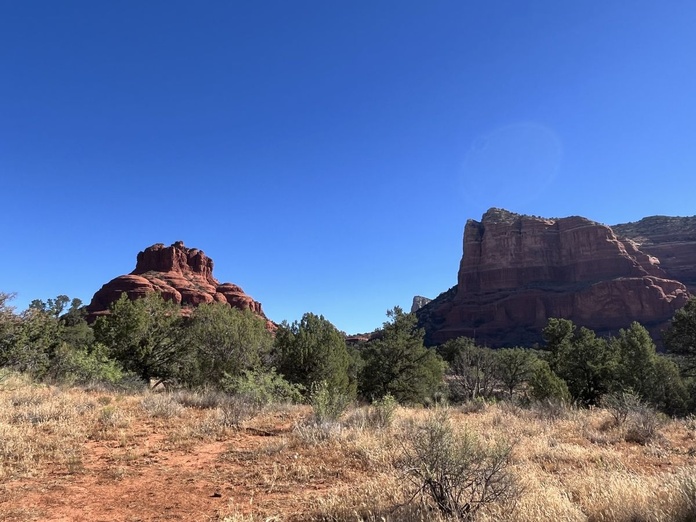
About fifty kilometers south of Flagstaff, the desert landscapes dotted with cacti and the red cliffs of Sedona are also worth the detour.
This town (12,000 inhabitants) is today the capital of the New Age, of yoga, meditation and energy vortices, but its superb landscapes are best known for the fact that more than 60 westerns were filmed here.
In the era of John Ford and John Wayne, Hollywood’s biggest stars worked a lot in Arizona, where lies the largest Native American reservation in the United States, the Navajo Nation, a people who arrived in the southwestern United States around 1300 to 1500.
Unfortunately, its most extraordinary site — Monument Valley and its towering sandstone fins set in a red desert — is two hours’ drive from Flagstaff.
During this road trip, we did not go there, nor to Winslow and Holbrook, the last two stopover towns in Arizona. Then, Route 66 crosses into New Mexico, and then heads into Oklahoma.
At that time, they cultivated corn and squash on lands made fertile by the latest volcanic eruptions of Sunset Crater, whose cone rises nearby in the sun-blasted grassy plain.
About fifty kilometers south of Flagstaff, the desert landscapes dotted with cacti and the red cliffs of Sedona are also worth the detour.
This town (12,000 inhabitants) is today the capital of the New Age, of yoga, meditation and energy vortices, but its superb landscapes are best known for the fact that more than 60 westerns were filmed here.
In the era of John Ford and John Wayne, Hollywood’s biggest stars worked a lot in Arizona, where lies the largest Native American reservation in the United States, the Navajo Nation, a people who arrived in the southwestern United States around 1300 to 1500.
Unfortunately, its most extraordinary site — Monument Valley and its towering sandstone fins set in a red desert — is two hours’ drive from Flagstaff.
During this road trip, we did not go there, nor to Winslow and Holbrook, the last two stopover towns in Arizona. Then, Route 66 crosses into New Mexico, and then heads into Oklahoma.
In Scottsdale, the nuances of the Museum of the West
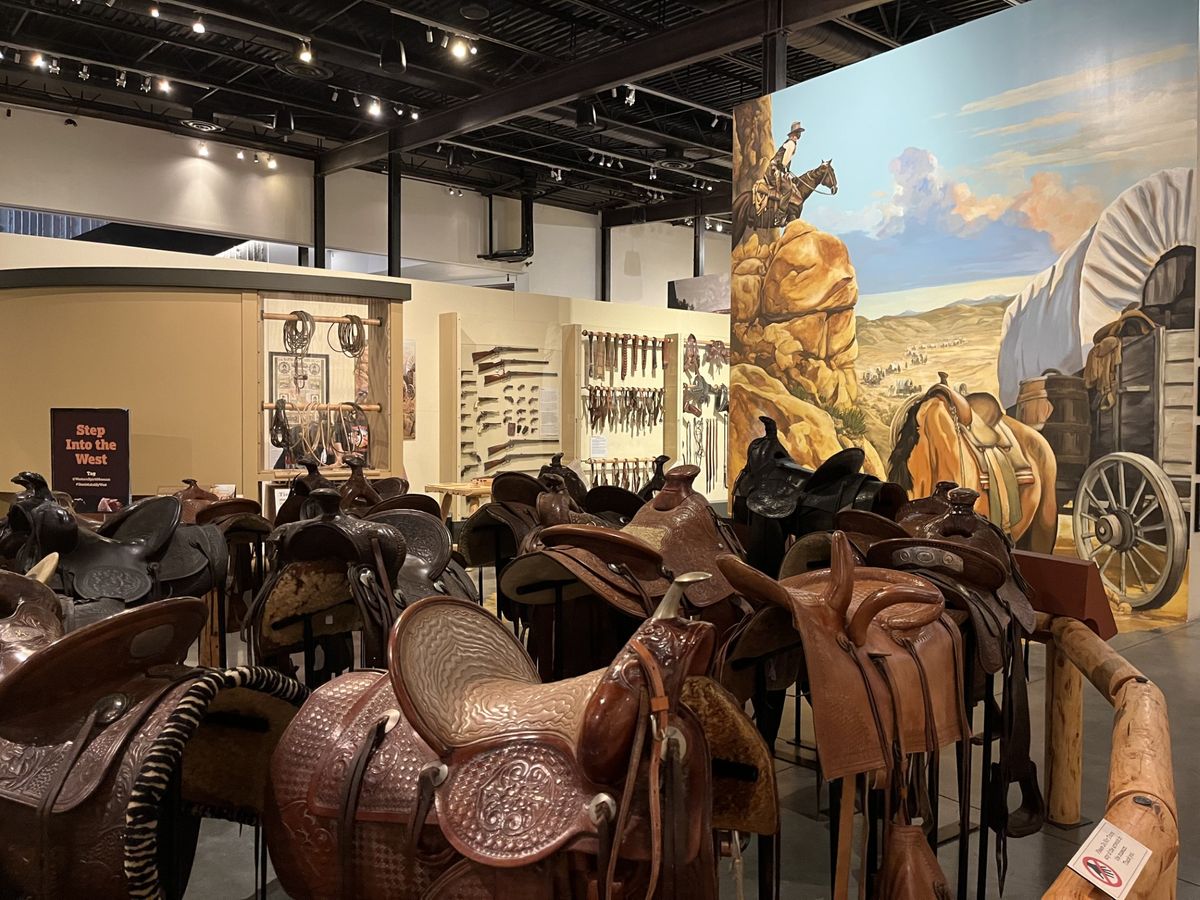
After turning away from Sedona and stopping at Taliesin West, the former residence-workshop (UNESCO-listed) of one of the world’s most famous architects, Frank Lloyd Wright (whose open-plan design and the blurring of inside and outside define his so-called “prairie” style), our journey ends in Scottsdale.
This city of 250,000 inhabitants stretches along the outskirts of the sprawling Phoenix, the capital of Arizona.
Nestled at the gate of the Sonoran Desert, Scottsdale offers much more than a single plunge into the American West. It is a destination in its own right, composed of spectacular nature, refined culture, inventive gastronomy, and a relaxed way of life.
Art galleries of all kinds and outdoor sculptures concentrate in its Old Town, with a Western feel… modernized.
If it is pleasant to stroll there in the late afternoon (when it is cooler), it is even more fascinating to discover its Museum of the West.
Through a remarkable collection of objects, photographs and artworks, it highlights the richness of Native American cultures and tells the history — fascinating, often bloody but far more complex than is often said — of the conquest of the West.
It is with this leap through time that our journey ends. We took immense pleasure in crossing these vast spaces, these breathtaking landscapes, these towns still authentic, punctuated by endearing encounters.
Throughout the journey, the song “Route 66” composed by Bobby Troup and performed by the crooner Nat King Cole in 1946, then covered in 1961 by Chuck Berry, one of the pioneers of rock ‘n’ roll, kept ringing in our heads.
Its refrain said: “Get Your Kicks on Route 66”. In other words, “Get a kick on Route 66.” These three guys were right: you get your kicks on Route 66!
This city of 250,000 inhabitants stretches along the outskirts of the sprawling Phoenix, the capital of Arizona.
Nestled at the gate of the Sonoran Desert, Scottsdale offers much more than a single plunge into the American West. It is a destination in its own right, composed of spectacular nature, refined culture, inventive gastronomy, and a relaxed way of life.
Art galleries of all kinds and outdoor sculptures concentrate in its Old Town, with a Western feel… modernized.
If it is pleasant to stroll there in the late afternoon (when it is cooler), it is even more fascinating to discover its Museum of the West.
Through a remarkable collection of objects, photographs and artworks, it highlights the richness of Native American cultures and tells the history — fascinating, often bloody but far more complex than is often said — of the conquest of the West.
It is with this leap through time that our journey ends. We took immense pleasure in crossing these vast spaces, these breathtaking landscapes, these towns still authentic, punctuated by endearing encounters.
Throughout the journey, the song “Route 66” composed by Bobby Troup and performed by the crooner Nat King Cole in 1946, then covered in 1961 by Chuck Berry, one of the pioneers of rock ‘n’ roll, kept ringing in our heads.
Its refrain said: “Get Your Kicks on Route 66”. In other words, “Get a kick on Route 66.” These three guys were right: you get your kicks on Route 66!
Useful Information
– This road trip was organized by Brand USA with the help of Cercle des voyages. For more information, visit TheBrandUSA.com.
– To find travel ideas to the United States as well as resources to organize your stay, consult the sites AmericaTheBeautiful.com and www.visittheusa. See also the new American Originals content.
– To know the entry requirements and formalities for entering the United States, consult the page “Get facts. Get going.”
– How to go there: many airlines serve the United States.
Among them, Air Tahiti Nui, which carried us to Los Angeles. Depart from CDG at 12:05. Arrive in Los Angeles at 14:17 (local time). Up to 7 flights per week in peak season.
For the return, we took an American Airlines flight from Phoenix (Arizona) to Los Angeles, where we boarded Air Tahiti Nui to Paris.
– To find travel ideas to the United States as well as resources to organize your stay, consult the sites AmericaTheBeautiful.com and www.visittheusa. See also the new American Originals content.
– To know the entry requirements and formalities for entering the United States, consult the page “Get facts. Get going.”
– How to go there: many airlines serve the United States.
Among them, Air Tahiti Nui, which carried us to Los Angeles. Depart from CDG at 12:05. Arrive in Los Angeles at 14:17 (local time). Up to 7 flights per week in peak season.
For the return, we took an American Airlines flight from Phoenix (Arizona) to Los Angeles, where we boarded Air Tahiti Nui to Paris.
 Published by Paula Boyer Head of LuxuryTravelMaG – TourMaG.com
 See all articles by Paula Boyer


Ajoutez TourMaG à votre flux Google Actualités