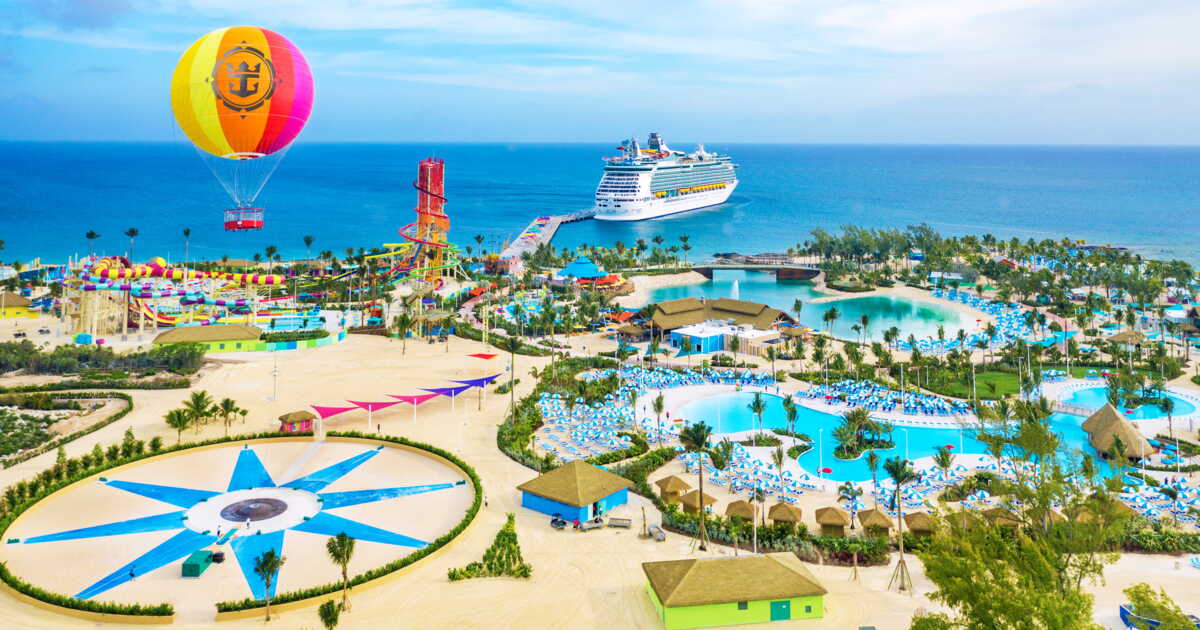
In brochures, they make quite an impression. Lately, private islands have become one of the cruise industry’s latest weapons to entice passengers. In the Bahamas, Royal Caribbean, for example, transformed Little Stirrup Cay into a true fun park. Renamed Perfect Day at CocoCay, or CocoCay for the in‑the‑know, the island offers white-sand beaches, pools, private cabanas and a vast water park. From the ship’s portholes, the vegetation is nearly erased by the neon-coloured slides that saturate the landscape, like giant serpents.
“There, everyone is having fun”, recounts a Daily Mail journalist who tried the experience. In the edition of Thursday, August 13, he describes entire families cavorting in the pools and couples toasting with champagne in the private overwater cabanas.
A world designed specifically for the traveler
Since its opening in 2019, which cost $250 million in investments (about €231 million), CocoCay has become Royal Caribbean’s most popular port of call worldwide. The 58‑hectare island now concentrates all vacationers’ desires: families can enjoy the water attractions, adults have access to calmer zones and sometimes areas reserved for those over the legal age. Royal Caribbean has refined its winning formula to turn CocoCay into a model.
After a first Royal Beach Club in Nassau, the company opened another space in Santorini, and it aims to offer a total of eight such complexes by 2028.
More money away from crowds and constraints
Yet the concept is far from new. Norwegian Cruise Line was the first to buy its own island in 1977, with Great Stirrup Cay, also in the Bahamas. Since then, Disney Cruise Line, Princess Cruises, Holland America Line and others have followed. The movement has accelerated on all fronts in recent years. MSC Cruises would notably have invested $200 million (around €185 million) to transform a former industrial island into a marine reserve at Ocean Cay.
Carnival, for its part, has developed Celebration Key on more than 26 hectares of land in Grand Bahama, featuring a lagoon and one of the longest bars accessible from a pool anywhere in the world.
For all these companies, these islands primarily represent a new revenue stream. Passengers can access certain facilities for free, but paid options pile up quickly. Restaurants, drinks, watersports or private cabanas help push up the bill. At CocoCay, the star of the line, access to the water park starts at around €77 per person, while booking premium cabanas can cost nearly €3,500.
At the same time, the companies also save on certain costs tied to traditional port calls and avoid conflicts with residents of destinations that are very touristy, or even overrun.