Summary
-
1. Discover the Giant’s Causeway
-
2. Delve into Belfast’s history
-
3. Take the Causeway Coastal Route
-
4. Explore Derry/Londonderry
-
5. Engage in outdoor activities
-
Is it worth going to Northern Ireland? A cultural and natural journey that deserves your attention
-
When is the best time to visit Northern Ireland? Tailoring your trip to changing weather
-
What is the most beautiful part of Northern Ireland? A journey from County Antrim to Derry
-
What is the capital of Northern Ireland? Belfast, between industrial heritage and cultural renaissance
-
Do you need a visa to go to Northern Ireland? Entry requirements to know before your trip
Nestled in the northeast part of the island of Ireland, Northern Ireland offers a rich blend of cultural heritage, breathtaking natural landscapes, and fascinating historical sites.
1. Discover the Giant’s Causeway (Giant‘s Causeway)
Listed as a UNESCO World Heritage site, the Giant’s Causeway stands as one of Northern Ireland’s most remarkable wonders, notable both for its geological formation and the symbolic weight it carries in the collective imagination. Made up of nearly 40,000 hexagonal basalt columns formed millions of years ago, this spectacular stretch of the Irish coast, located in County Antrim, evokes a strange sensation, especially when sunlight pierces the mist to illuminate the causeway.
A visit to Northern Ireland would not be complete without experiencing this spectacular panorama, accessible via a prepared walking trail. The Visitor Centre offers deeper insight into the site’s volcanic origins, while highlighting the legendary narratives that surround it. A place of open nature, blending wild landscapes with accessibility, the Causeway is a highlight of a coastal road trip along the north coast, often complemented by a stop at the Carrick-a-Rede Rope Bridge or the Temple of Mussenden to prolong the experience.
2. Delve into Belfast’s history
Belfast, the capital of Northern Ireland, is a place of historical memory and dynamic culture. Titanic Belfast is a must-see during your visit, a complex commemorating the construction of the famous liner and its tragic history. For fans of modern history, the Peace Walls and the mural graffiti offer a glimpse into the Troubles era. End your visit at Crumlin Road Gaol, a former prison now open to the public to better understand the region’s often intricate past.
Exploring Titanic Belfast: a historical immersion in the heart of the Titanic Quarter
Located to the east of Belfast’s city center, in the Titanic Quarter, stands one of the United Kingdom’s most emblematic museums: Titanic Belfast. Built on the very site of the old shipyards, this Titanic Belfast museum meticulously and powerfully recounts the history of the iconic liner, from its design to its tragic sinking. The museum experience blends interactive archives, life-sized recreations, and technical documentation, drawing visitors from around the world.
This visit to Northern Ireland serves as an excellent starting point for understanding the region’s industrial footprint. A few minutes on foot, the port, the Titanic sculpture, and the historic docks extend the experience into a setting steeped in memory. On a road trip around Belfast, this site stands among the highlights for those interested in maritime history as well as the city’s modern transformations.
Botanic Gardens and Ulster Museum: nature and culture at the heart of Belfast
The Botanic Gardens, located south of Belfast, offer a natural interlude within an urban frame, ideal for a few hours of strolling among Victorian glasshouses and manicured lawns. This relaxing space also serves as a gateway to culture, housing the Ulster Museum, a must-visit institution for anyone looking to deepen their understanding of Northern Ireland through art, archaeology, natural history, and contemporary events related to the Northern Irish conflict.
At the crossroads of the United Kingdom and the Republic of Ireland, this museum sheds light on the historical and identity nuances of a complex territory. The pairing of the botanical garden and the museum makes for a meaningful stop on any Belfast cultural road trip, alternating city days with intellectual immersion into the island’s past and present.
Cathedral Quarter and St. George’s Market: a living glimpse of contemporary Belfast
The Cathedral Quarter represents the cultural and artistic heart of Belfast, known for its cobbled lanes, mural art, and creative venues. Further southeast, near Lanyon Place and the River Lagan, St. George’s Market, active since the 19th century, hosts artisans, local producers, and musicians, creating a vibrant weekend atmosphere.
For a Northern Ireland visit that goes beyond clichés, this area showcases Belfast’s modernity without losing touch with its roots. These places also reflect the current dynamism of a United Kingdom undergoing change, where traditions and renewal coexist in a shared space.
Crumlin Road Gaol: the memory of imprisonment in a conflicted past
Once a prison, now a museum, Crumlin Road Gaol offers a striking lens on Northern Ireland’s recent political history. Located in Belfast, this 19th-century building housed both common prisoners and political detainees, becoming a major site of memory for the Troubles. The visit, often guided, traverses cells, corridors, and courtroom spaces in a silence heavy with meaning.
This step naturally fits into an exploration of Northern Ireland rooted in contemporary reality, pairing with nature-focused itineraries. It complements urban routes featuring Titanic Belfast or the Cathedral Quarter, providing a fuller picture of the city and its role in the history of the United Kingdom.
3. Take the Causeway Coastal Route
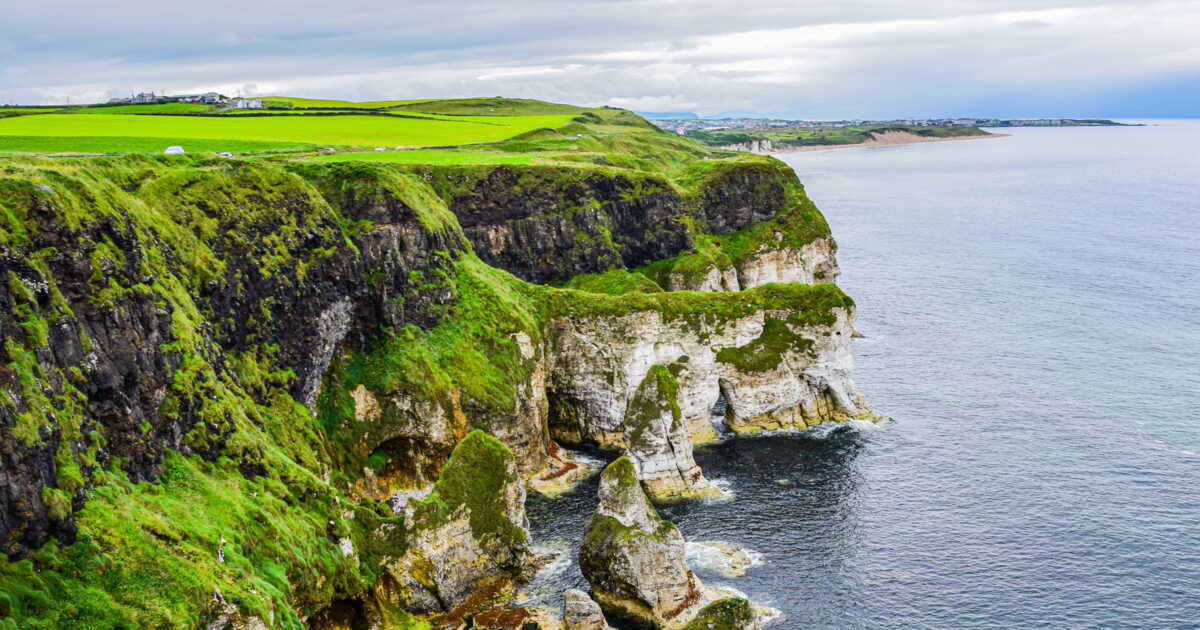
The Causeway Coastal Route, regarded as one of Europe’s most beautiful scenic drives, links Belfast to Derry and traces the scenery of Northern Ireland along the coast with rare intensity. This coastal road winds between rugged cliffs and seaside towns, offering excellent opportunities for short inland detours to glimpse Game of Thrones filming locations like the Dark Hedges and the dramatic coastal trails of the Gobbins, a must-see attraction.
Designed for a multi-stop exploration, this route blends the chance to discover with immersion in an authentic Ireland, ideal for contemplation, especially at sunrise on the solstice or during clear spells that reveal striking contrasts across the Atlantic Ocean.
4. Explore Derry/Londonderry
Situated on the northwest edge of Northern Ireland, the city of Derry (also known as Londonderry) stands at the crossroads of history, memory, and contemporary creation. Famous for its 17th-century walls, it remains marked by the Troubles and the Bloody Sunday events, whose memory resonates around every corner, notably near the iconic Free Derry Corner in the Bogside district, a hotspot of political and artistic engagement. This city has also gained international visibility thanks to the series Derry Girls, which poignantly highlights the paradoxes and resilience of this community.
Today, Derry in Northern Ireland hosts numerous festivals, exhibitions, and cultural initiatives, making this stop a good place to grasp the complexity of Northern Ireland beyond its landscapes. In a road trip combining an Ireland visit with a historical route, it serves as a vital stop to understand the past while observing current social dynamics, just a few hours from the north’s major natural sites.
5. Participate in outdoor activities
Renowned for its lush nature, Northern Ireland offers numerous possibilities for outdoor activities, especially for hiking enthusiasts, water sports lovers, or gentle explorers. The Mourne Mountains, with their spectacular summits, provide hiking trails suitable for all levels, revealing dramatic panoramas over wooded valleys and distant coastlines.
Further west, the Fermanagh Lakelands offer a wonderful setting for paddling, birdwatching, or simply enjoying the quiet of inland lakes, nestled in the heart of the rural interior. For sea-based activities, the beautiful Irish beaches along the Irish coast allow for surfing, sailing, or coastal walking, especially around White Rocks Strand. This variety of experiences can be easily woven into a multi-day road trip along the coast, providing a balanced mix of active exploration and peaceful contemplation.
In conclusion, whether you’re passionate about history, nature, or cultural experiences, Northern Ireland offers something to satisfy every curiosity. Visiting this region reveals a country where past and present intertwine within a natural setting of rare beauty. To deepen your experience, consider exploring not only the well-known tourist sites but also the hidden treasures that make it a unique and memorable destination.
Is Northern Ireland worth visiting? A cultural and natural journey that deserves your attention
A visit to Northern Ireland promises a richly contrasted experience, between spectacular landscapes, recent history, and accessible great outdoors. This portion of the United Kingdom, distinct from the Republic of Ireland, captivates with its marvellous places such as the coastline of County Antrim, the wild terrain of the Mourne Mountains, or the striking settings of the Gobbins, frequently cited in guides as a must-see attraction.
Couple these with iconic sites like the Titanic Belfast museum, the Mussenden Temple, or the Dark Hedges, some of which gained fame thanks to the TV series Game of Thrones, and you have a complete destination—historical, natural, and cinematic all at once. Whether you’re planning a few days in a van, a full road trip, or a broader discovery of Ireland, Northern Ireland proves to be an excellent starting point and a rare opportunity to encounter Atlantic winds, ruined castles, and vibrant culture.
What is the best time to visit Northern Ireland? Adapting your trip to the changing climate
The best time to visit Northern Ireland runs from May to September, when the sun is more present and temperatures are milder, offering favorable conditions to fully enjoy the landscapes of Ireland, its lovely Irish beaches like White Rocks Strand, or cliff-top hiking trails such as those found at Fair Head. The oceanic climate remains unpredictable, so it’s wise to pack clothing for wind and showers even in summer.
The sun over the Giant’s Causeway, when it breaks through the clouds, can transform this iconic place into a scene of intense beauty. For light-lovers, the solstice sunrise reveals remarkable hues along the Irish coast, especially in June. Around these times, you can combine long walks, local festivals, and cultural visits while minimizing weather-related constraints.
What is the prettiest part of Northern Ireland? A journey from County Antrim to Derry
Among Northern Ireland’s most beloved spots, County Antrim stands out for the density of its natural and cultural sites. The Port of Ballintoy, the Fair Head cliffs, the Dunluce Castle ruins, and the geological formations of the Giant’s Causeway compose a route that blends dramatic scenery with outdoor nature. This region is also traversed by the Gobbins, a cliff-top path carved into the rock, a true favorite for walkers.
Venturing westward to the city of Derry (also known as Derry-Londonderry), immortalized thanks to the series Derry Girls, adds a historical and contemporary dimension to Northern Ireland exploration. These regions combine heritage, varied landscapes, and well-preserved inland scenery, making the northern part a great place to slow down and view the island from another angle.
What is the capital of Northern Ireland? Belfast, between industrial heritage and cultural renaissance
Belfast, capital of Northern Ireland, is today a city undergoing transformation, anchored in its industrial past yet clearly oriented toward cultural tourism. The Titanic Quarter, with the Titanic Belfast museum, offers an immersive chronicle of the liner’s history from its shipyards at Harland & Wolff. A few minutes on foot, the St. George’s Market, one of the oldest covered markets in the United Kingdom, provides a dive into local gastronomy.
Art and architecture enthusiasts will also discover the Cathedral Quarter, the city’s creative core, dotted with galleries, murals, and historic pubs. Additionally, a visit to the Crumlin Road Gaol helps illuminate the tensions that marked recent political history. Belfast serves as an excellent starting point for exploring the region, while offering in itself a representative spectrum of Northern Ireland’s past and present.
Do you need a visa for Northern Ireland? Entry requirements to know before your stay
For European Union nationals (excluding Irish citizens protected under the Common Travel Area), a tourist visa is not required, but a valid passport and a British Electronic Travel Authorization (EVA / ETA) are mandatory. For those combining both territories on a road trip, it’s important to anticipate administrative, currency, and mobile-network differences.
There is no systematic border check between the two jurisdictions, but authorities may perform occasional verifications. Before you depart, it’s wise to consult official British sources on current formalities and to anticipate possible adjustments according to the political situation. These practical tips are essential to ensure a smooth visit to Ireland, especially when staying across multiple regions.
This article was drafted with the help of artificial intelligence, then corrected, supplemented, and validated by the editorial team.