At the extreme northeast of Norway, trails allow walkers to approach the Russian border as closely as possible. But behind the landscapes of boreal forests and tundra, hikers discover a territory where cameras, lookout posts, and military patrols remind how sensitive the place is. For several years now, this 198-kilometer border has drawn more visitors, notably cruise ship passengers. A tourist curiosity that takes on a very particular dimension here.
A border turned into a tourist attraction
In Kirkenes, a small town near the meeting point of Norway, Finland, and Russia, the border has become one of the curiosities offered to travelers. Several operators run guided walking excursions in the area, notably along the Pasvik River. One route lasts about three hours and leads to Russehøgda, a summit overlooking the Storskog border post, the only land crossing allowed between the two countries.
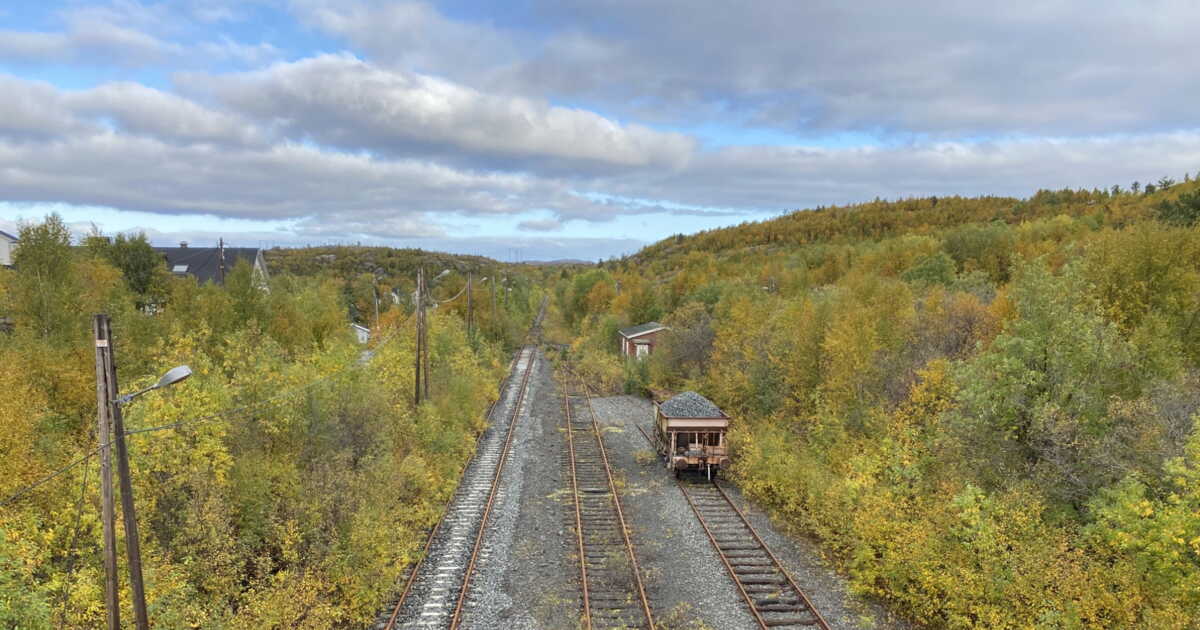
The hike first passes through a birch and conifer forest before reaching a cleared forest belt eight meters wide. This strip marks the border area and visitors are not allowed to venture into it. Yellow boundary posts on the Norwegian side and red ones on the Russian side mark the international boundary.
Security has tightened since Russia invaded Ukraine in 2022. Visitors may notice cameras installed in trees, observation posts, and military patrols. Some rules are particularly strict: it is notably forbidden to photograph soldiers, to touch or climb the border posts, or to throw objects toward Russia. Hikers must also carry their passports with them.
For Henrik Hoffmann, a guide stationed in Kirkenes since 2021, this particular atmosphere is part of what makes the excursion appealing. “Many older travelers are especially interested because they remember the Cold War and have followed the relations between Europe and Russia for decades,” he told the BBC. According to him, the hike also helps visitors grasp concretely what it means to live near this border.
The interest of visitors, in fact, has grown in recent years, after an initial decline in tourism following Russia’s invasion of Ukraine. Havila Voyages has offered excursions in this region since 2000, while Hurtigruten also organizes a border visit, which includes, among other things, a World War II-era anti-aircraft shelter.
In the Footsteps of a Turbulent History
Yet this border is not limited to its present surveillance measures. Across the Kirkenes region, traces of a long-shared history among Norwegians, Finns, and Russians remain visible.
In the town, some streets indeed bear signs in both Norwegian and Russian. A monument also commemorates the liberation of Kirkenes by the Red Army in 1944, after the Nazi occupation. At the Borderland Museum, visitors can discover the relations that have shaped this border region over generations.
Further on, the Pasvik River winds a sinuous course before skirting the Boris Gleb Orthodox Church. Dating from the 12th century, the building played a role in defining the modern border, established about two centuries ago.
From the heights of Russehøgda, the contrast is striking. Tundra and forests spread around the hiker, while the facilities of the Storskog post appear in the distance. A few vehicles continue to cross the border daily, even if recreational crossings have diminished.
And despite the increasing crowd of visitors, fewer locals seem to take these paths. “You don’t see many Norwegians here,” notes Henrik Hoffmann, before suggesting that this might be a classic case of a population that explores less of its own surroundings.
The hike therefore offers much more than a stroll through Arctic landscapes. Just meters from the posts that separate Norway and Russia, the scenery constantly reminds us that this part of Europe is also a space where history and geopolitical tensions remain very concretely visible.