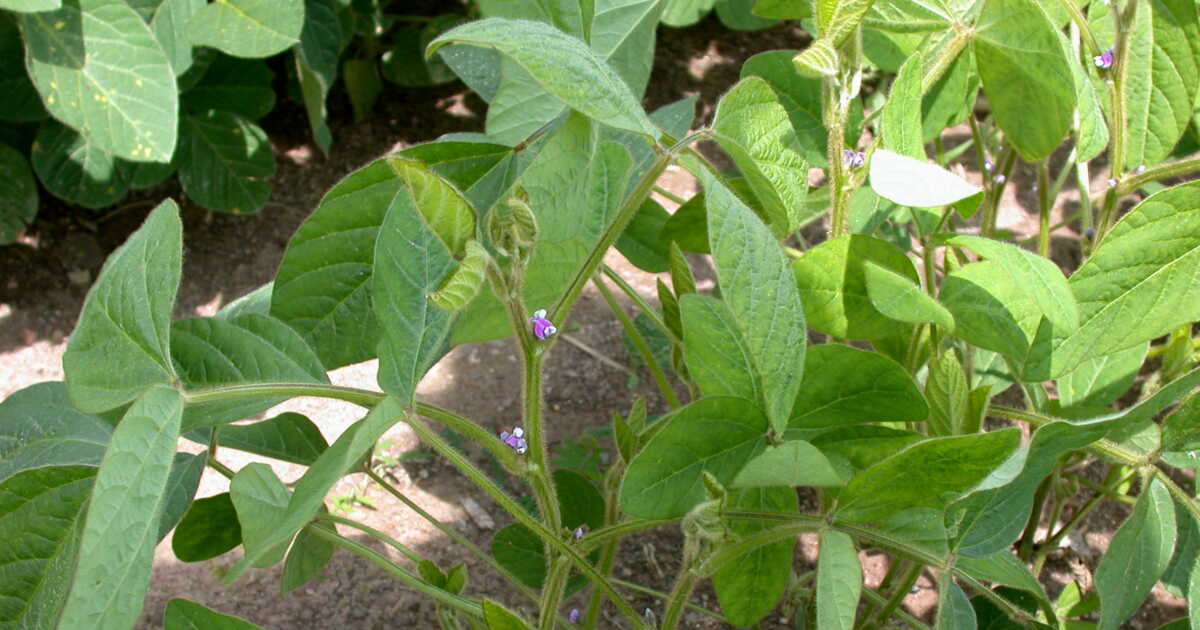
Soy oil, soy milk, tofu… It is consumed in a thousand forms. More importantly, 70% of the world’s soybean harvest is destined to feed livestock. The plant is also used to manufacture biofuels, ink, candle wax, and foams for car seats! A decidedly prosaic fate for a legume whose cradle is China, where it has been cultivated for five millennia and was long regarded as one of the five sacred grains, alongside rice, wheat, barley, and millet. The Middle Kingdom saw its status as the leading producer of soy in the world stolen in the 20th century by the Americas (the United States, Brazil…), where the plant was introduced in the 18th century by an Englishman, and it must now import it.
American Revolution
Once a mere forage crop, soy experienced a meteoric rise in the United States after 1945 to alleviate shortages of fats and proteins. And especially in the 1990s, when the country became a pioneer of GMOs. Today, 95% of American soy is genetically modified. A model criticized because it is linked, among other things, to widespread herbicide use.
Brazilian Giant
Brazil is the leading producer and exporter of soy. Over the past five decades, the cultivation of the plant has exploded there, now spanning 50 million hectares. The flip side? This expansion has come at the expense of ecosystems, notably the deforestation of the Amazon rainforest and the Cerrado savanna.
Courted in France
In the 18th century, at Versailles, the king’s cooks paid dearly to Dutch merchants for soy sauce brought from Japan, to add an exotic touch to banquets. The courtiers adored it, believing that this condiment contained meat juice. The success endured within the French aristocracy, just as the misunderstanding did, for a whole century!
➤ Article published in GEO magazine no. 571, “Italy in Focus, from the Marche to Calabria”, September 2026.
➤ If you love GEO, to miss nothing, discover our subscription plans to receive GEO at home every month with ease.