

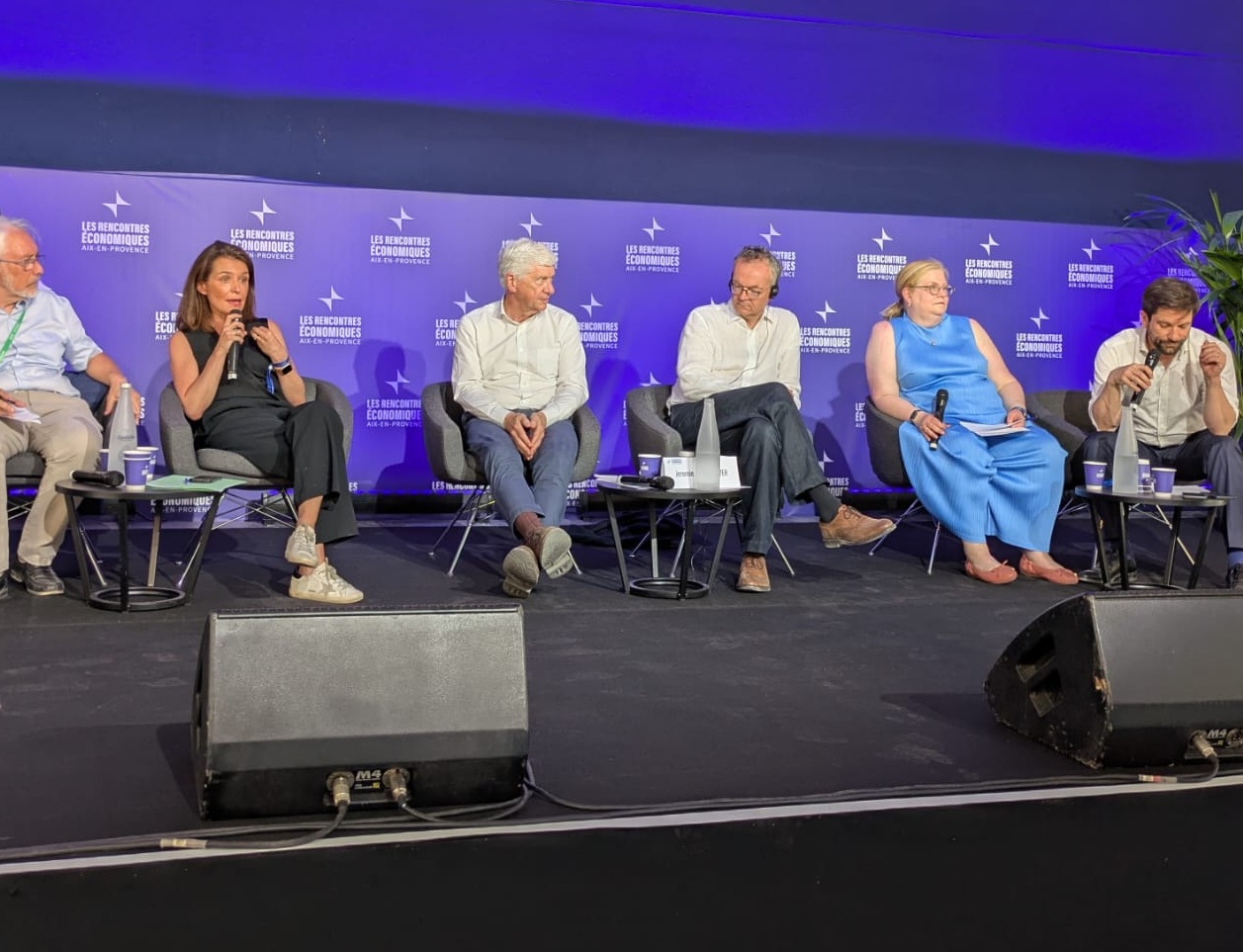
On the occasion of the 26th Aix-en-Provence Economic Meetings, organized by the Circle of Economists, an edition marked by youth, hope, but also uncertainty, whether economic or societal, the intervention of Arnaud Vaissié, cofounder and president of International SOS drew our attention in particular.
Not only had he travelled, but he was also taking part in a debate devoted to a theme dear to French entrepreneurs, “public finances, an unattainable balance“.
In the economic capital of Provence, the executive came to unveil one of his other roles, that of president of the collective “Too Much Is Too Much”, born at the end of 2025.
“It’s a group of business leaders led by Éric Maumy, president of APRIL, Marie-Christine Coisne-Roquette, non-executive president of Sonepar, me, and a few other figures.
Our objective is to regularly publish contributions and take part in debates.
We wish to continuously intervene on the economic nonsenses that proliferate in the French public debate. They are extremely dangerous, because they continually challenge two fundamental rules, the balance of accounts and the competitiveness of companies,” laments the leader, whom we met between two debates.
“In case of a crisis, we are the most exposed country in the euro area”
It is rare to find, aside from Thomas Porcher and a few economists positioned to the left of the political spectrum, people who are not worried about the trajectory of our country’s budget.
France’s debt continues to plunge into the abyss, and the narrow leeway of the current government is unlikely to change that.
“”I would have liked to bring you good news, but when I looked last night at the evolution of France’s ten-year debt interest rates, I did not see anything particularly encouraging. The rate at which we borrow stands at 3.67%, eight basis points above Spain’s and forty points above Portugal’s. We also borrow at rates higher than those of Greece and Belgium. If an economic crisis occurs, we are the most exposed country in the euro area. The slope is very bad, since we borrow at more than 3.5%, while our repayment capacity is more like 2%,” introduced Alain Trannoy, director of studies at EHESS and member of the Circle of Economists.
This debt, which stood at over €3.4 trillion at the end of 2025, is expected to continue growing and become one of the major economic issues, if not the main one, of the 2027 presidential election.
Some have understood this well, starting with a candidate seen in the Jourdan Park alleys, Édouard Philippe, for whom Christelle Morançais spoke as spokesperson.
“”It must be said plainly, give meaning and have courage. In 2007, a Prime Minister said he was at the head of a country in bankruptcy, but nothing has been done since. We need action. Let us stop white papers, reports, etc. The answer is simple. We must establish the gold rule, thus banning budget deficits, but above all enshrining it in the Constitution. This will put political leaders in front of their responsibilities,” imagined the President of the Pays de la Loire regional council.
“Difficult choices will have to be made”, according to Moody’s
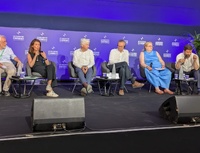
Moreover, it has been more than fifty years since any balanced budget has been presented by a French administration. For Moody’s, the situation, while not grave, is far from comfortable.
“”France’s rating mirrors that of countries that can face major challenges, as is the case for the United Kingdom, Taiwan or Saudi Arabia. Despite this, they possess structural strengths. France has a rich and diversified economy, favorable demography, prudent debt management, and high-quality public institutions. It must, however, face several challenges, namely the high level of its debt and the polarization of its political life. We foresee that debt-service indicators will continue to deteriorate over the next five years. Growth will be decisive, because it can reverse the snowball effect. The outlook is negative.””
This debt, which stood at over €3.4 trillion at the end of 2025, should continue to grow and become one of the main, if not the main, economic topics of the 2027 presidential election.
Some understood it well, starting with a candidate seen in the Jourdan Park lanes, Édouard Philippe, for whom Christelle Morançais spoke as spokesperson.
“”It must be said plainly, give sense and have courage. In 2007, a Prime Minister said he led a country facing bankruptcy, but nothing has been done since. Action is needed. Stop the white papers, the reports, etc. The answer is simple. We must establish the golden rule, thus banning budget deficits, but above all enshrining it in the Constitution. This will place the political leaders before their responsibilities,” imagined by the Pays de la Loire regional council president.
”
“”
Lest we confuse: the translation preserves the sense of the quote; the original text ends with quoting the regional president; the above continues accordingly.
“It’s not burnout, it’s a considerable worry” from the business leaders
“The easy option in such a situation is to cut investments, while the right move is to **make efficiency improvements in government functioning by reducing subsidies, whatever they may be**.
In the Pays de la Loire region, we gained two years of financing capacity by cutting expenditures by €100 million on a €2 billion budget.
To read: Laurent Abitbol: after the businessman, the politician?
And in a France frozen by fear of the other, the future, pensions, unemployment, or AI, it’s not certain that the debates have soothed consciences, at least those of workers and the little hands who make up the country.
There was, of course, talk about the state’s largesse toward businesses, for it would be unfair to ask the French to bear the burden without everyone contributing.
The leaders supported this idea, while calling for investment liberalization and a net salary close to gross. That brought a smile to one of the guests who received a star-like welcome, Sébastien Lecornu.
“”The paradox is that our State functions when the sea is rough. It works well in times of crisis and becomes especially rigid when the sea is calm. And that is the challenge of reforming the State. Because it is clear that our current events are state-driven. The pandemic is the State. The war is the State. Energy policies are partly, but not entirely, a matter for the State. I want you all to be convinced, and I say this deliberately, even in light of the controversies of the previous weeks, that we are in a country where the State holds.””
This is a way of saying that, of course, there must be less administrative heaviness, fewer constraining rules, and fewer charges… but without forgetting that, in this permacrisis period, the State remains on the front line. The war in Iran reminded us of that.
Tourism professionals repeatedly knocked on ministry doors to obtain aid. They finally arrived once reservations started to rebound.
The current government had the instruction not to “reproduce the same mistakes“, according to the Prime Minister himself, as during spring 2021 and 2022 when the State released €72 billion to compensate for the energy crisis caused by the Ukraine war.
“A deep sense of inequality in wealth distribution”, according to Lecornu
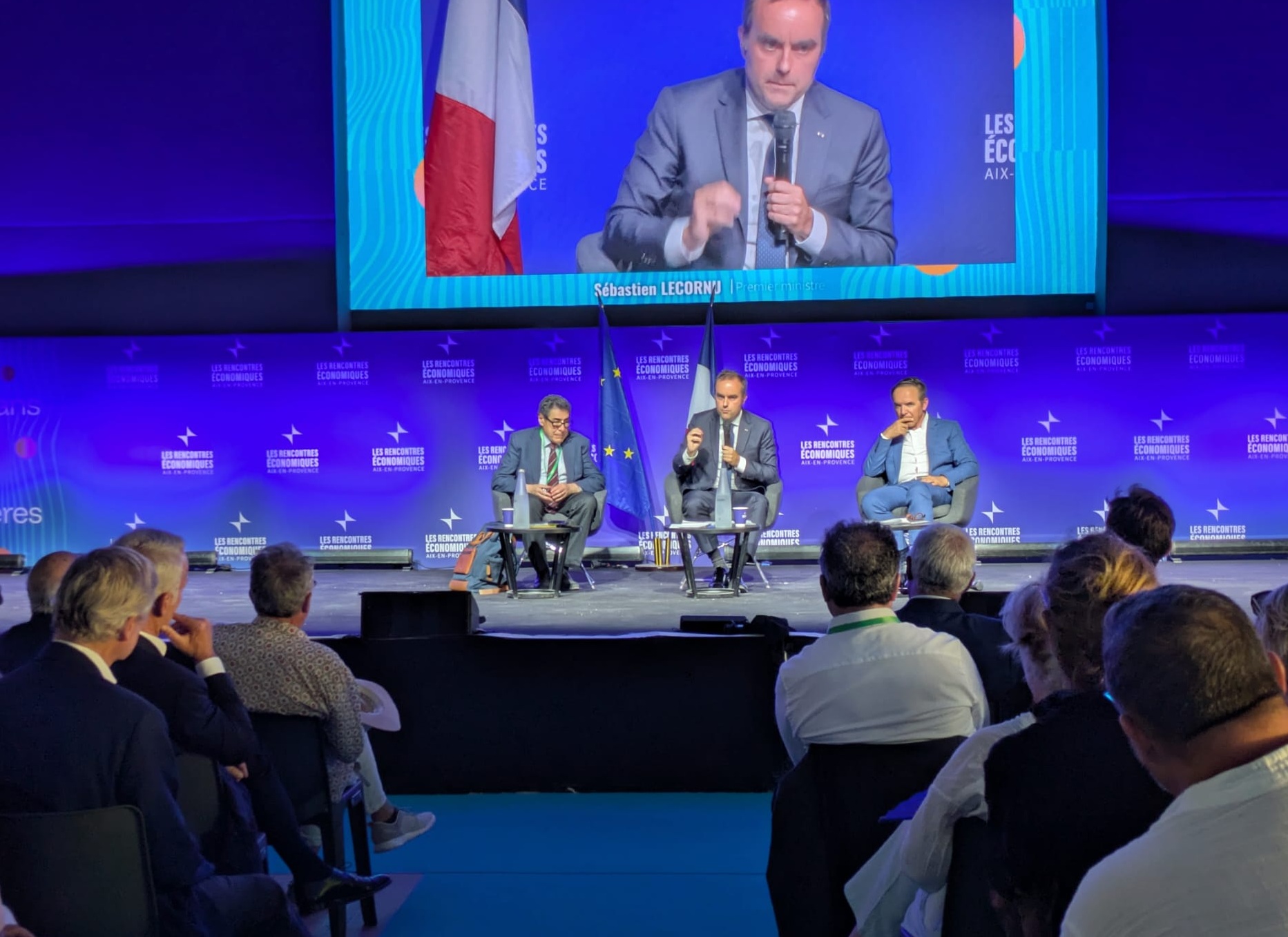
And even if the debate seems calmer between the business sector and Sébastien Lecornu, after a tense autumn and difficult discussions between the Prime Minister and Éric Maumy, the APRIL president, because of “the political and nearly budgetary crisis,” the collective “Too Much Is Too Much” continues its debates.
“”This is not burnout.
It is a considerable worry in view of the sense that the political world does not realize that businesses are now taking on enormous risk.
Those that are healthy invest abroad and those that are not disappear.
We want to influence the next PLFSS (Social Security Financing Bill) and the upcoming presidential election. We want a business-friendly environment, like in Switzerland, where the Finance Minister considers for every measure its effects on the private sector,” Arnaud Vaissié, head of the collective, tells us.
The first note of this movement, now a think tank, focused on the Zucman tax, which consisted of instituting a minimum tax rate for the country’s wealthiest fortunes. It would have applied to estates above €100 million. A proposal rejected by the National Assembly and vilified by “Too Much Is Too Much.”
“”This Zucman tax affair revealed that there is a deep sense of inequality in the distribution of wealth in the country. Whether you agree or not is not the issue. And this issue must be understood and addressed.
The question of mobilizing money where it sits, but without resorting to crude taxation, perhaps with a touch of Gaullism in the way of handling the topic, constitutes an antidote.
Patriotism is an antidote to the virus that is spreading in the country and that puts us against one another,” reiterated Sébastien Lecornu.
A Prime Minister who gave assurances to his audience, presenting himself as a political leader not entirely detached from the major issues of our era and the urgency to act on economic and military fronts. A little less on environmental topics, but perhaps not the place to discuss them.
Moreover, the debate’s host, economist Philippe Aghion, claimed to have seen in Sébastien Lecornu “a president.”
The latest Nobel Prize-winning economist had reminded at the outset that “”we want to feel urge, we want to have hope, we want to feel excitement. We are in a Gaullist moment, where we must witness a return of the Republic and, at the same time, a France that astonishes the world.””
This is not necessarily the path being taken at the moment, but these debates demonstrate one thing. We will not enchant the future or France by dismantling our social system and by placing on the middle class and those slightly above it the burden of the efforts to be made, nor by focusing the debate solely on deficit reduction.
We risk thus letting populists seize the collective narrative. So yes, we have drifted away from pure tourism news, but as running a business means planning ahead, we modestly give you the keys to anticipate the future.