Table of Contents
-
1. Explore the Perito Moreno Glacier
-
2. Admire Iguazú Falls
-
3. Discover the Mendoza region
-
4. Hike the Fitz Roy
-
5. Travel the Ruta de los Siete Lagos
-
6. Visit Ushuaia, the southernmost city in the world
-
7. Discover Quebrada de Humahuaca
-
8. Immerse in the atmosphere of San Telmo, Buenos Aires
-
9. Observe wildlife at the Valdés Peninsula
-
10. Enjoy the ski slopes at Las Leñas
-
11. Teatro Colón and Recoleta: the historic and cultural heart of Buenos Aires
-
12. Puerto Madero and Jardín Japonés: two faces of Buenos Aires’ serene modernity
-
13. Catena Zapata: at the heart of Argentine vineyards, between tradition and wine excellence
-
What budget to plan for 15 days in Argentina? Exploring a vast and varied country
-
How long does it take to visit Argentina? The art of traveling in the immensity
From the vast southern expanses to the deeply rooted northern traditions, Argentina offers a multitude of ways to tailor your stay. Hiking, wine tourism, wildlife watching, or exploring urban heritage: a selection of 13 ideas to explore the country from very different angles.
1. Explore the Perito Moreno Glacier
Located in the heart of Argentine Patagonia, the Perito Moreno Glacier stands as one of the most spectacular natural sites in Los Glaciares National Park, a UNESCO World Heritage site. About 78 km from the town of El Calafate, this ice giant covering more than 250 km² impresses with its blue walls and the creaks that mark the glacier’s slow advance.
Visitors can follow a network of panoramic walkways offering exceptional viewpoints of the glacier’s southern face, or opt for a boat excursion to approach this living sea of ice up close, constantly evolving. Perito Moreno has long been a rare example of a glacier in balance, but it is now retreating on some fronts, illustrating Patagonian landscapes.
2. Admire Iguazú Falls
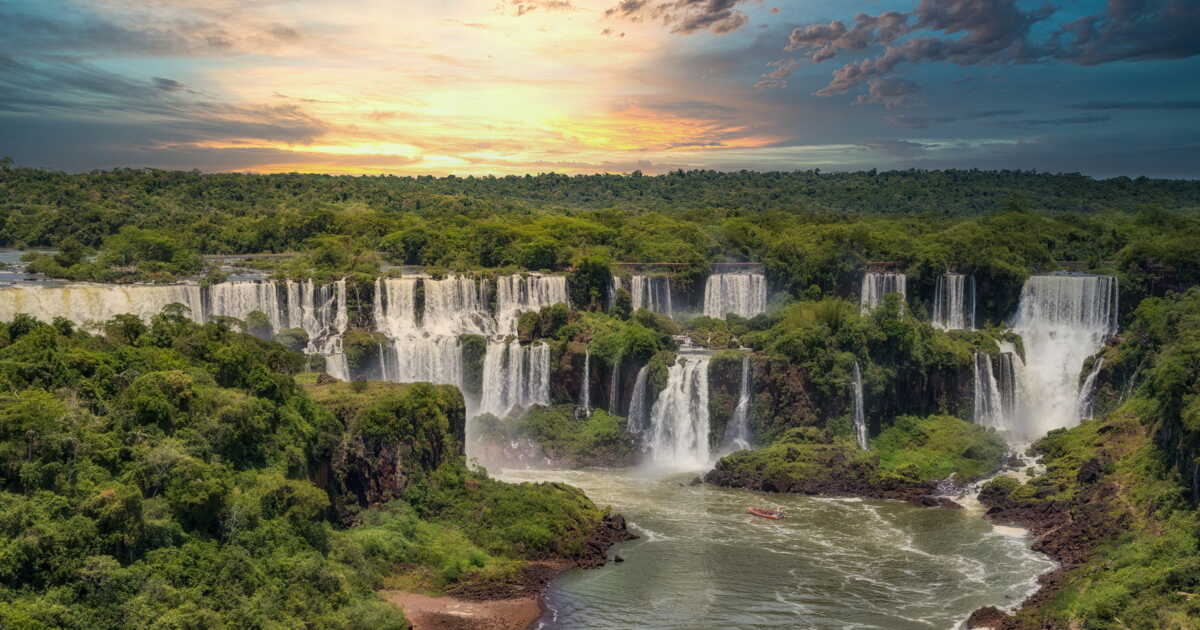
On the border between Argentina and Brazil, the Iguazú Falls rank among the most impressive natural wonders of the South American continent. Inscribed as a UNESCO World Heritage site, they comprise 275 cascades tumbling down the green gorge across 2.7 kilometers, presenting a display of power and beauty that takes one’s breath away.
The Iguazú National Park, on the Argentine side, offers an extensive network of panoramic trails and hanging walkways enabling visitors to observe the falls from multiple viewpoints, notably the famous Garganta del Diablo, where the water roars into the chasm below.
For a more sensory immersion, boat excursions venture right up to the foot of the cascades, delivering a direct and spectacular experience of nature’s force. A true symbol of the grandeur of South America’s tropical landscapes, Iguazú blends biodiversity, adventure and geographic wonder within an exceptionally rich setting.
3. Discover the Mendoza Region
Nestled at the foot of the Andes, the Mendoza region stands as the cradle of Argentine wine and a must for wine enthusiasts. Internationally renowned for its exceptional Malbecs, it hosts vineyards stretching as far as the eye can see, cultivated in a semi-desert climate ideal for grapes.
Visitors can follow tasting circuits in prestigious or family-run bodegas, discover wine-making techniques unique to the high Andean plateaus and savor the harmony between terroir and local know-how.
Against the backdrop, the majestic Andes lend the landscapes a dramatic dimension, making Mendoza a place where wine culture, gastronomy and grand nature converge. A true symbol of Argentine agricultural heritage, the region embodies the successful blend of tradition, modernity and the art of living around wine.
4. Hike the Fitz Roy
Located in southern Argentine Patagonia, near the village of El Chaltén, the Fitz Roy stands as one of the most emblematic symbols of trekking in Argentina. This granite massif, rising above 3,400 meters, offers an exceptional playground for trekking enthusiasts, with hiking trails around El Chaltén and technical routes reserved for experienced climbers.
The surrounding national parks reveal a mosaic of southern forests, glacial lakes and jagged spires, forming a setting of incomparable wild beauty. Among the most popular hikes, the Laguna de los Tres trail leads to a spectacular panorama of Fitz Roy, whose sheer faces dominate the Patagonian sky. A true sanctuary for nature and mountain lovers, the Fitz Roy embodies the grandeur of the Andean landscapes, where every step becomes an immersion into the essence of Argentine Patagonia.
5. Travel the Ruta de los Siete Lagos
Stretching between San Martín de los Andes and Villa La Angostura, the Ruta de los Siete Lagos is one of Argentina’s most spectacular scenic routes, a true emblem of Patagonia’s lakes. This winding road winds through a succession of Andean-Patagonian forests, majestic mountains and crystal-clear lakes with deep blue reflections, among which are Lacar, Nahuel Huapi and the Correntoso.
Accessible by car or bike, this route invites a peaceful discovery of nature with panoramic stops perfect for picnics and landscape photography. A true synthesis of Argentina’s natural heritage, the Ruta de los Siete Lagos embodies the spirit of a Patagonian road trip, blending freedom, contemplation and exploration at the heart of an environment of pristine purity.
6. Visit Ushuaia, the southernmost city in the world
Situated at the southern tip of the continent, Ushuaia proclaims itself the world’s southernmost city and a privileged starting point for journeys to Antarctica. Nestled between the Martial Mountains and the Beagle Channel, this emblematic port on Tierra del Fuego captivates with its dramatic natural setting and the variety of outdoor activities it offers.
Visitors can undertake hikes or bicycle rides in the Tierra del Fuego National Park, a protected area where subantarctic forests, wild coves and coastal trails provide stunning views of snowy mountains.
Beyond its role as a gateway to polar expeditions, Ushuaia embodies the meeting of adventure, nature and exploration, symbolizing the edge of a world where Patagonia blends into the distant southern ice.
7. Discover Quebrada de Humahuaca
Listed on UNESCO World Heritage, the Quebrada de Humahuaca, located in northwestern Argentina, stands out for the geological and cultural richness of its landscapes. This Andean valley with arid, colorful relief reveals a succession of spectacular rock formations, where mineral strata unfold in ochre, red and violet hues, offering a visually intense scenery.
Along the route, small traditional villages such as Purmamarca, Tilcara or Humahuaca preserve ancestral architectural and artisanal heritage, testifying to living Andean culture still deeply rooted in the region.
Between pre-Columbian history, local traditions and landscapes sculpted by time, the Quebrada de Humahuaca embodies a privileged place to observe Argentina’s North’s natural and human diversity, where every turn reveals a striking harmony between nature, culture and memory.
8. Immerse in the ambiance of San Telmo, Buenos Aires
In the heart of Buenos Aires, the historic district of San Telmo embodies the authentic, bohemian soul of the Argentine capital. Known for its cobbled streets, colonial-era buildings and antique markets, this preserved area offers an immersion into the city’s urban memory.
Birthplace of the tango, San Telmo still resonates with the chords of this iconic music, played in intimate clubs or on lively plazas. Each façade, each sign and each market stall tells a living story, where popular culture, artistic creation and Porteño tradition mingle.
Between art galleries, historic cafés and a convivial atmosphere, San Telmo remains a true open-air museum, a symbol of Buenos Aires’ cultural heritage and a reflection of the fusion between past and modernity that characterizes the Argentine capital.
9. Observe wildlife at the Valdés Peninsula
Listed as UNESCO World Heritage, the Valdés Peninsula, located on the Atlantic coast of Argentine Patagonia, is one of South America’s most important marine sanctuaries. This protected area hosts an exceptional fauna where southern right whales, Magellanic penguins,
Each season reveals a new life cycle, from spectacular cetacean migrations to births on secluded beaches. The designated observation zones allow approaching these species without disturbing their environment, making the peninsula a model of responsible and ecological tourism.
A true natural laboratory of marine biodiversity, the Valdés Peninsula embodies Patagonia’s wild grandeur and offers travelers a unique wildlife-watching experience, where nature and silence join to reveal the power of the living world.
10. Enjoy the ski slopes at Las Leñas
Nestled in the heart of the Andes, the Las Leñas resort is among South America’s most renowned for winter sports and alpine skiing. Located in Mendoza Province, it offers an expansive ski area, celebrated for its consistently good snow and a variety of pistes suitable for both beginners and advanced skiers. Surrounded by dramatic Andean scenery, the resort blends modern infrastructure, efficient lifts and mountain accommodations ensuring a comfortable stay.
Beyond skiing, Las Leñas attracts with its friendly atmosphere and opportunities to enjoy off-piste, heli-skiing, or snowshoeing. A true hotspot of Argentine winter tourism, the resort embodies the fusion of sporty adventure and grand nature, delivering an exceptional alpine experience in the heart of the Argentine Andes.
11. Teatro Colón and Recoleta: the historic and cultural heart of Buenos Aires
Discovering Buenos Aires inevitably passes through two emblematic places: Teatro Colón and the Recoleta district. Teatro Colón, opened in 1908, remains one of the world’s most prestigious opera houses, renowned for its exceptional acoustics and European-inspired architecture. Attending a performance or visiting this monument means stepping into Argentine artistic heritage.
Nearby, Recoleta unfolds its tree-lined streets, historic cafés and its famous cemetery, where illustrious figures such as Eva Perón lie. Together, these symbols embody the capital’s sophistication and memory, between European heritage and a distinctly South American identity.
12. Puerto Madero and Jardín Japonés: two faces of Buenos Aires’ serene modernity
Puerto Madero and the Jardín Japonés illustrate Buenos Aires’ ability to blend contemporary urban planning with serene spaces. Puerto Madero, a former port district revitalized, stands as a symbol of architectural modernity: skyscrapers, upscale restaurants and docks along the waterfront bear witness to the city’s renewed economy.
In contrast, the Jardín Japonés, located in the Palermo district, offers a peaceful haven inspired by Japanese culture, with its ponds, bridges and carefully arranged vegetation. These two places, though contrasting, convey the same ambition: to make Buenos Aires a vibrant metropolis, balanced between dynamism and contemplation.
13. Catena Zapata: at the heart of Argentine vineyards, between tradition and wine excellence
Located in the Mendoza region, the Catena Zapata winery is a global benchmark of Argentine wine. Founded in 1902, it helped popularize Malbec, the country’s emblematic grape, on the international scene. Its pyramid-shaped architecture, inspired by pre-Columbian civilizations, illustrates the link between cultural heritage and oenological innovation.
Visiting Catena Zapata means understanding Argentina’s winemaking know-how, rooted in a high-altitude terroir where the purity of the air and the Andean light give the wine a unique identity. This estate symbolizes the country’s excellence in producing wines that are powerful, elegant and deeply rooted in their land.
What budget should you plan for 15 days in Argentina? Exploring a vast and varied country
Planning a budget for 15 days in Argentina requires taking into account the country’s size and the variety of experiences on offer. On average, a balanced trip—combining Buenos Aires, Patagonia and the Andes—reaches a budget of between €2,000 and €3,500 per person, international flights included.
Expenses vary according to mode of transport, type of accommodation and chosen activities, such as exploring the southern glaciers or visiting Mendoza’s vineyards. The cost of living remains relatively affordable, particularly for meals and domestic transportation. A two-week stay thus allows you to grasp Argentina’s diversity without rushing, while enjoying comfortable travel and rich cultural experiences.
How long does it take to visit Argentina? The art of traveling in vastness
Estimating how much time is needed to visit Argentina means accepting that no amount of time fully suffices to cover such a vast territory. For a first approach, three weeks allow you to combine Buenos Aires, Iguazú Falls, the Lake District and Patagonia. However, a two-week itinerary already offers a nice diversity between urban culture and stunning nature.
The distance between regions often requires domestic flights. Travelers should favor depth over quantity, as each region—from Tierra del Fuego to the Northern Andes—deserves time to observe and understand. Visiting Argentina is above all about learning to travel through space and time, at the pace of a continent-sized country.
This article was written with the help of artificial intelligence, then corrected, supplemented and validated by the editors.

Amara Nambinga