
Hard times for the Gulf hubs.
While geopolitical tensions and thus instability persist in the region, affecting air traffic, the appeal of the Gulf’s strongholds— notably the Doha, Dubai, and Abu Dhabi hubs— could further diminish in the years to come.
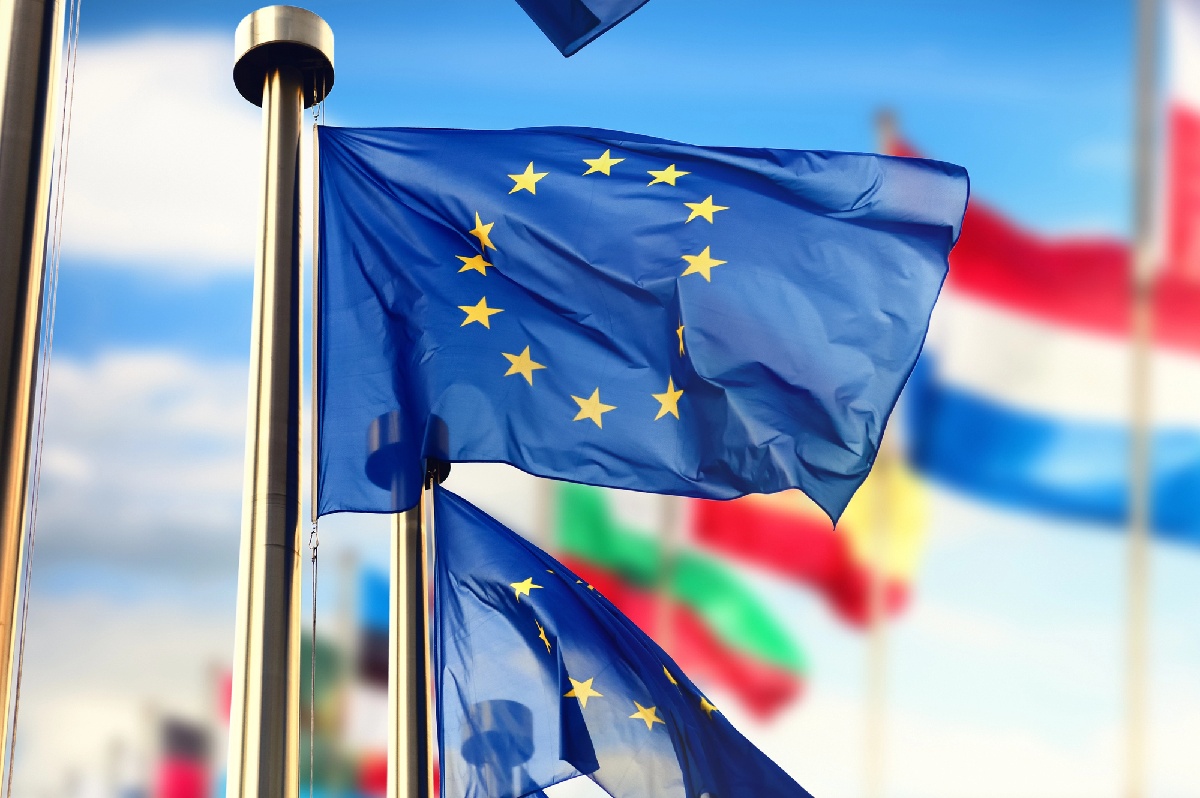
Indeed, in a proposal for a directive from the European Parliament and the Council, it is learned that the European Commission plans to extend its Emissions Trading System, the ETS, beyond intra-European flights.
Eric Drésin, secretary general of ECTAA (the European association of travel agents and tour operators), told TourMaG that this project is very recent, “we are really at the very beginnings of discussions on these issues. But there could be an increase in costs for the airlines.”
Briefly remind what the ETS are, Emissions Trading Schemes in English, which can be translated as: systems for trading emission rights. A system introduced in 2005 obliging companies to purchase rights to emit CO₂.
While geopolitical tensions and thus instability persist in the region, affecting air traffic, the appeal of the Gulf’s strongholds— notably the Doha, Dubai, and Abu Dhabi hubs— could further diminish in the years to come.
Indeed, in a proposal for a directive from the European Parliament and the Council, it is learned that the European Commission plans to extend its Emissions Trading System, the ETS, beyond intra-European flights.
Eric Drésin, secretary general of ECTAA (the European association of travel agents and tour operators), told TourMaG that this project is very recent, “we are really at the very beginnings of discussions on these issues. But there could be an increase in costs for the airlines.”
Briefly remind what the ETS are, Emissions Trading Schemes in English, which can be translated as: systems for trading emission rights. A system introduced in 2005 obliging companies to purchase rights to emit CO₂.
Chinese and Americans Spared by Brussels
 Regarding air transport, these emission quotas apply only to flights within Europe.
But starting in 2029, Brussels aims to adjust the criteria and include the scheme for flights whose destinations are less than 5,000 kilometers from Frankfurt.
Would then be affected a portion of Africa, of Russia and especially the Middle East with carriers such as Emirates, Qatar, Etihad or even the “little” Riyadh Air. This extension, on the simple principle that the farther you go the more you pay, can be understood. However Brussels is up against the hard law of the strongest which seems to become the law “full stop.” The famous 5,000 kilometers thus completely spare the United States and China, which had suggested that in the event of new “taxes” there would be retaliations.
Carbon quotas: European airlines protest
With this proposed ETS extension, at first glance one might think Brussels is restoring a bit of fairness in the fierce competition between European carriers and those from the Gulf that will now be impacted.
But most major European-based airlines think the opposite. For groups like Air France-KLM, Lufthansa or IAG, this extension would cover hundreds of new routes among those they operate and thus ETS costs would truly explode.
In the columns of the Dutch daily De Volkskrant, the carrier KLM had said that it already pays €172 million for emission rights, i.e., 1.5% of its total costs, and viewed a massive price rise with dismay in the coming years.
By means of a note published last May, Air France-KLM informed Brussels that it opposes “firmly any extension of the EU ETS to all flights departing the European Union to destinations outside Europe.” The group asserts that such a measure would further increase the decarbonization burden already disproportionately borne by European carriers. It adds that it would amplify distortions of competition vis-à-vis non-European carriers and could provoke retaliation measures from third countries.
And this document, produced by Air France-KLM’s top management, goes well beyond a mere protest. It is also a counterproposal to Brussels’ upcoming revision of the European emissions trading system, to which the group says it would contribute more effectively and profitably to the EU’s 2050 climate neutrality goal.
Among the proposed measures, and besides maintaining the current geographic scope of the ETS, Air France-KLM also calls for extending the free carbon quotas granted to carriers using SAF to beyond 2030, a limit set by Brussels.
Known as FEETS (Fuel EU ETS Support), this temporary mechanism allocates free carbon quotas called SAF Allowances to carriers using SAF to reduce their ETS bill.
This transitional measure, designed as an encouragement to adopt SAF, is supposed to end in principle in 2030 but for Air France-KLM, that limit is incompatible with industrial SAF investments that are planned over 15–20 years and with the ramping up of SAF-fuel obligations, which remains for a long time far more expensive than kerosene and will have to be carried in the tanks at 70% by 2050.
But most major European-based airlines think the opposite. For groups like Air France-KLM, Lufthansa or IAG, this extension would cover hundreds of new routes among those they operate and thus ETS costs would truly explode.
In the columns of the Dutch daily De Volkskrant, the carrier KLM had said that it already pays €172 million for emission rights, i.e., 1.5% of its total costs, and viewed a massive price rise with dismay in the coming years.
By means of a note published last May, Air France-KLM informed Brussels that it opposes “firmly any extension of the EU ETS to all flights departing the European Union to destinations outside Europe.” The group asserts that such a measure would further increase the decarbonization burden already disproportionately borne by European carriers. It adds that it would amplify distortions of competition vis-à-vis non-European carriers and could provoke retaliation measures from third countries.
And this document, produced by Air France-KLM’s top management, goes well beyond a mere protest. It is also a counterproposal to Brussels’ upcoming revision of the European emissions trading system, to which the group says it would contribute more effectively and profitably to the EU’s 2050 climate neutrality goal.
Among the proposed measures, and besides maintaining the current geographic scope of the ETS, Air France-KLM also calls for extending the free carbon quotas granted to carriers using SAF to beyond 2030, a limit set by Brussels.
Known as FEETS (Fuel EU ETS Support), this temporary mechanism allocates free carbon quotas called SAF Allowances to carriers using SAF to reduce their ETS bill.
This transitional measure, designed as an encouragement to adopt SAF, is supposed to end in principle in 2030 but for Air France-KLM, that limit is incompatible with industrial SAF investments that are planned over 15–20 years and with the ramping up of SAF-fuel obligations, which remains for a long time far more expensive than kerosene and will have to be carried in the tanks at 70% by 2050.
Plans to Abandon Routes?
In Air France-KLM’s document, the group also seems ready for significant concessions, notably route abandonments, provided that this SAF Allowances scheme is extended to intermodal practices feeding the group’s hubs at Paris-Charles de Gaulle and Amsterdam-Schiphol.
In other words, if Brussels were to reward airlines with free carbon quotas for transporting passengers by train to their hub, certain routes could simply be dropped.
The group would like to convert air passengers into rail passengers for those connecting to long-haul flights, replacing short- and medium-haul flights that fall under the EU Emissions Trading System.
We are thinking of certain links between French provinces and CDG, or other European cities near Amsterdam such as Brussels.
A little revolution.
In other words, if Brussels were to reward airlines with free carbon quotas for transporting passengers by train to their hub, certain routes could simply be dropped.
The group would like to convert air passengers into rail passengers for those connecting to long-haul flights, replacing short- and medium-haul flights that fall under the EU Emissions Trading System.
We are thinking of certain links between French provinces and CDG, or other European cities near Amsterdam such as Brussels.
A little revolution.