Contents
-
1. Nyhavn: between maritime heritage and Copenhagen’s living postcard
-
2. Dive into the Viking era at the National Museum of Denmark
-
3. Discover Aarhus, the vibrant European capital of culture
-
4. Wander along the Danish coast
-
5. Traverse Denmark’s imposing castles
-
6. Tivoli Gardens: tradition and enchantment in the heart of the Danish capital
-
7. Visit Rundetårn
-
8. Explore Ny Carlsberg Glyptotek, an art museum at the heart of Copenhagen
-
What to do in Denmark with family? Legoland Billund, a bricks-and-imagination universe at the heart of Denmark
-
What to do in Denmark when it rains? Explore indoor museums, castles and cultural spaces
They say it’s one of the happiest countries in the world. Renowned for its hygge-inspired lifestyle, a Danish term used to describe a joyful and comforting moment, Denmark attracts each year curious visitors eager to discover its capital Copenhagen, but also its wild and pristine natural landscapes away from mass tourism.
1. Nyhavn: between maritime heritage and Copenhagen’s living postcard
The Nyhavn canal embodies the iconic image of Copenhagen itself. A former merchant port turned into a lively pedestrian zone, it lines up its colorful 17th-century façades along a waterway dotted with old wooden boats.
Both a promenade and a place for contemplation, Nyhavn hosts numerous cafés, breweries and terraces, while remaining deeply connected to Danish literary history, notably through the figure of Hans Christian Andersen, who lived there. More than a photogenic backdrop, Nyhavn demonstrates how Denmark values its heritage by integrating it harmoniously into a contemporary urban setting.
2. Dive into the Viking Age at the National Museum of Denmark
The National Museum of Denmark, located in the heart of Copenhagen, stands as a must-see for history and Nordic archaeology enthusiasts, offering a comprehensive view of the Danish past through richly endowed collections. Among its highlights, the remarkable Viking artifacts collection draws attention for its preservation and symbolic significance, revealing the practices, beliefs and ways of life of the ancient Nordic peoples.
The permanent exhibitions trace the evolution of Danish society, from prehistory to the contemporary era, also incorporating elements of world heritage and international ethnographic perspectives. Through a rigorous yet accessible museography, the National Museum of Copenhagen fulfills a dual mission: to preserve the collective memory of Denmark and to illuminate visitors about the major milestones in its history, in a structured and well-documented setting with strong patrimonial and educational value.
3. Discover Aarhus, the vibrant European capital of culture
Denmark’s second-largest city by population, Aarhus stands out as a dynamic urban hub where cultural innovation, tourist appeal and academic vitality come together. Crowned European Capital of Culture in 2017, the city has managed to showcase its heritage while supporting contemporary creation. Among its major institutions, the ARoS Art Museum shines with its modern and contemporary art collections, as well as the iconic panoramic installation Your Rainbow Panorama, now a symbol of the local skyline.
The outdoor museum Den Gamle By, an immersive reconstruction of a Danish town from different eras, offers a lively reading of the country’s urban and social history. On the culinary front, Aarhus positions itself as a major culinary destination, spanning from Nordic New Cuisine to Michelin-starred tables, reflecting a local know-how in constant evolution.
City that is both cultural, historical and future-oriented, Aarhus embodies a stimulating alternative to the capital, anchored in a distinctly contemporary Danish identity.
4. Stroll along the Danish coast
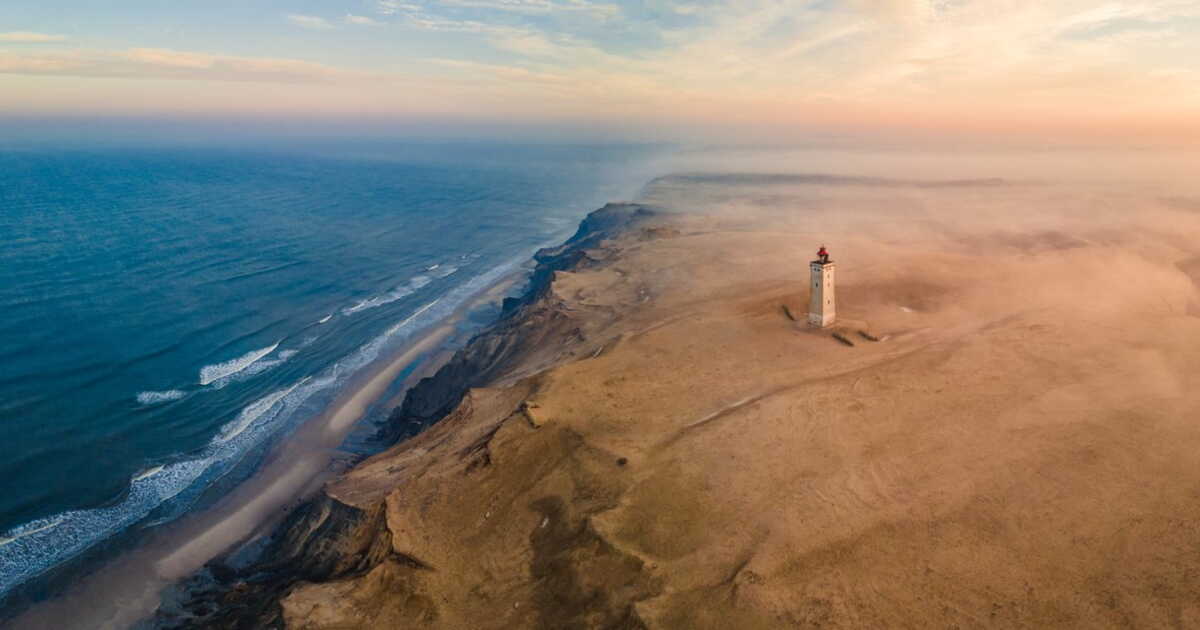
The Danish coastline, extending for thousands of kilometers, is one of the region’s major assets, offering a wide variety of maritime landscapes ripe for discovery and reflection. On the island of Møn, the white chalk cliffs of Møns Klint rise abruptly above the Baltic Sea, delivering spectacular viewpoints and well-kept trails that let you explore both the seafront and the surrounding forests.
Further north, at the tip of the Jutland peninsula, the Skagen region is known for its fine sandy beaches, its wind-swept coastline, and the remarkable meeting of the North and Baltic seas, visible at Grenen. These coastal spaces, often preserved and sparsely urbanized, offer a calming immersion in Danish nature, where silence, changing light, and understated beauty come together. A true field for walks and renewal, the Danish coastline answers the expectations of those seeking balance, simplicity and environmental quality.
5. Traverse Denmark’s imposing castles
The Denmark also stands out for the density and diversity of its historic castles, testifying to a royal and architectural history that is richly preserved. The Kronborg Castle, located in Helsingør, is one of the most emblematic, not only for its strategic position at the entrance to the Øresund, but also for its literary role: it forms the setting of Elsinore Castle in Shakespeare’s Hamlet, giving the site an international cultural resonance.
Further inland, the Frederiksborg Castle, perched on three islets and surrounded by French-style gardens laid out with care, illustrates the refinement of the Danish Renaissance through its lavish interiors and museum collections dedicated to national history.
Between royal residences, medieval fortresses and cultivated landscapes, Denmark offers a coherent and accessible patrimonial panorama, where each site invites both historical understanding and aesthetic contemplation. Combining dynamic urban centers, controlled natural environments and living traditions, the country makes for a complete destination that rewards the curious, history enthusiasts and travelers seeking meaning.
6. Tivoli Gardens: tradition and enchantment in the heart of the Danish capital
The Tivoli Gardens, opened in 1843 in Copenhagen, rank among the oldest amusement parks still operating in the world. Their longevity stems not only from their visual charm but also from their ability to blend family-friendly entertainment with cultural events and carefully curated aesthetics.
Located in the very centre of the capital, Tivoli offers traditional rides, open-air concerts and seasonal illuminations that attract both children and adults. The venue embodies a vision of Danish tourism based on quality, respect for history and constant adaptation to contemporary expectations.
7. Visit Rundetårn
The Rundetårn, or Round Tower, is an ideal place to begin a Danish journey focused on heritage discovery. This 17th-century site is renowned for its spiral staircase that allows visitors to reach an observatory perched above the old town of Copenhagen without steps on the way up.
From the summit, one can access one of the best viewpoints to observe the Copenhageners, the city’s roofs and the sunsets over the spires. Its charm lies in its architectural simplicity, imbued with the quaint charm of the Danish golden age.
For culture lovers, it is also a place linked to the country’s scientific history, regularly animated by exhibitions or events. In the afternoon, the Rundetårn offers a perfect break, whether on a weekend or a day-by-day itinerary, including during a rainy day, as the visit remains sheltered and accessible.
8. Explore Ny Carlsberg Glyptotek, an art museum at the heart of Copenhagen
Situated near the botanical garden and the Frederiksberg Palace, the Ny Carlsberg Glyptotek is a museum that brings together a vast collection of artworks ranging from Antiquity to the modern works of Danish painters. Founded by brewer Carl Jacobsen, this cultural institution also houses classical sculptures, an indoor garden under a glass roof, and is a top choice during a trip to Denmark, especially for a calm and enriching afternoon.
The museum integrates easily into a day-by-day exploration of the city, including during a rainy day. Its hushed atmosphere and neoclassical architecture provide a soothing contrast with the energy of the Nyhavn port nearby. For Copenhagen’s welcoming locals and visitors alike, the Glyptotek represents a true place to begin for an introduction to the beauty and history of art.
What to do in Denmark with family? Legoland Billund, a bricks-and-imagination universe at the heart of Denmark
Denmark stands out for its ability to welcome families in a safe, accessible setting rich in cultural and playful activities. In Billund, the birthplace of the famous Danish brand, Legoland remains a top destination for children, with themed attractions suitable for all ages.
In Copenhagen, the Tivoli Gardens, a historic amusement park located in the city center, offer a magical yet heritage-rich experience. Museums such as Experimentarium or the Viking Ship Museum in Roskilde are also designed with children in mind, featuring interactive setups that encourage learning through play. Denmark thus combines modernity with pedagogy, delivering a family-friendly experience that is both calming and stimulating.
What to do in Denmark when it rains? Explore indoor museums, castles and cultural spaces
Rainy days never diminish Denmark’s opportunities for discovery. The country offers a rich cultural scene suited to Nordic weather. In Copenhagen, Rosenborg Castle, with its royal treasures and preserved interiors, is a must-see.
Nearby, the Rundetårn (Round Tower) offers a sheltered ascent to an astronomical observatory, with a panoramic view of the capital. Art, design and natural science museums provide plenty of shelter for travelers wanting to extend their immersion in Danish history and creativity. Bad weather thus becomes an opportunity to better understand the country’s rich culture.
This article was drafted with the help of artificial intelligence, then revised, expanded and validated by our editorial team.