Tourism in France: Heatwaves, Foreign Tourists, and Purchasing Power


Didier Arino sur le bilan de l'été du tourisme en France : "Sans le relais des clientèles étrangères, la situation aurait été très mauvaise. Au final, franchement, nous sommes dans le haut de la fourchette de ce que nous avions envisagé dans nos simulations" - Photo Protourisme

MSC Croisières


TourMaG – We had spoken before the summer season, the economic context and the war in Ukraine suggested a difficult summer. On the eve of the return to school, what is tourism in France really like?

Didier Arino : If we look at the broad aggregates, the good news this year is that there were more foreigners visiting France, especially distant markets: Americans, Canadians, and Mexicans. Not more Brazilians, by the way, and I’m not sure why, nor Indians.

However, we welcomed more Koreans and Japanese. We also saw more Europeans: more Germans, Swiss, Dutch, and Belgians. For the British, I can’t give a clear read, as responses are quite mixed. They opted for destinations closer to home, along the Opal Coast, in Normandy… whereas in the South they were fewer.

An increased presence of Europeans and distant foreigners is good news for French tourism. There were also some French people who had planned to travel abroad but ended up staying in France. They contributed positively to French tourism this summer: we estimate them at roughly 700,000 to 800,000. This shows up in the drop in departures from travel agencies, even though agencies don’t represent the majority of travelers. There were also fewer French people traveling abroad, including those who organized trips themselves.

These French travelers helped cushion, to some extent, the drop in vacation departure intentions.


“The heatwave gave a boost to last-minute bookings”

TourMaG – Weather was at the center of headlines, with the heatwaves in particular. What role did it play in French decision-making?

Didier Arino : The heatwave actually had a boosting effect, contrary to what one might assume. It notably stimulated last-minute bookings, from people who hadn’t planned to depart and decided to go later. This concerns especially those with fewer constraints related to school holidays or peak periods, and who could no longer stand staying in cities.

This last-minute clientele was beneficial. It fed the coast, of course, but it also helped recover some of the delays seen in destinations like the Massif Central and accelerated mountain bookings.

We thus observed a good spread of flows across different space types, though there were clear losers: dry, waterless destinations that suffered during the heatwaves. Rural France, hot arid countryside, the results are more worrisome.

Destinations where cycling or nature activities in plains are popular took a hit, particularly in July. Canoe rental, houseboats, the itinerant cycling sector, and outdoor visiting sites all suffered substantially.

The heatwave and tighter purchasing power also impacted dining: roughly 60% of restaurateurs reported a downturn. This translated into stores that didn’t perform well and activity providers that faced difficulties.

TourMaG – Paris was particularly hit by the heatwave this summer; did this affect attendance?

Didier Arino : Regarding urban tourism, Paris is a special case because the capital relies heavily on international clientele. Paris fared relatively well.


Nouvelle-Aquitaine and Occitanie: two major regions with a lot of weight that are lagging

TourMaG – Did vacationers flee the South as some say because of this heatwave?

Didier Arino : On the Côte d’Azur, Nice fared very well, with a strong rise in foreign clientele. Marseille also performed very well in terms of bookings. When I hear that people fled the South, I react! No, they did not flee the South; they fled the heatwave.

In the South, there are also areas like the Pyrenees. To my knowledge, the Pyrenees are in the South, and they recorded very good bookings compared to previous years and to the average.

Of course, the coastal stations of the Pyrénées-Orientales and especially the interior territories were impacted. Occitanie was affected, as was Hérault. But some resorts held up well, such as La Grande-Motte, for example.

Two large regions with substantial weight are lagging: Nouvelle-Aquitaine and Occitanie. And when Normandy rises by 5%, that isn’t enough to offset the declines recorded in Nouvelle-Aquitaine and Occitanie, which weigh more heavily. I don’t yet know what the final figures will look like.

TourMaG – If we look at accommodation categories, is the overall picture uniform?

Didier Arino : In terms of overnight stays, they are down in the rental sector. Why? Because these are customers who ended up traveling less. The drop in overnight stays stems from people whose purchasing power is constrained: when people travel shorter durations and there are fewer travelers, it rarely translates into more nights.

For camping, it will be roughly stable, especially thanks to foreign visitors. This assessment isn’t final yet since September remains, but we should be moving toward a fairly stable trend, perhaps with fewer French and more foreigners. As for consumption, campsites saw higher demand for bare pitches rather than mobil homes.

Hotels, on the other hand, performed fairly well, boosted by growing foreign clientele, but also because a portion of French people who did not travel abroad chose hotels. Those with greater purchasing power are more likely to stay in hotels.

Finally, the situation is more varied for some holiday villages and certain tourist residences. It depends on the establishment, but we aren’t seeing a dramatic surge either.

To summarize, tourist accommodation will have a decent summer, even better than feared: the number of overnight stays is expected to fall around -2% in July-August, which isn’t dramatic. We’ve managed to limit the damage.

With a slightly smaller audience, it could indeed have been a catastrophe. Without the support of foreign clientele, the situation would have been very bad. In the end, frankly, we are at the high end of what we had anticipated in our simulations. We are at the maximum of what could be imagined, even if it is not thriving for sure.


“The sociology of tourism inevitably evolves things”

TourMaG – And what about the mountains, which seem to have stood out, with travelers seeking coolness…

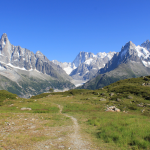
Didier Arino : Since the Covid period, mountains are on the rise again, and that’s a good thing. You can see it by visiting mountain resorts. But it depends on which mountains we’re talking about. Mountains with lakes, places that offer more freshness, have indeed performed well. It has been a good season for the mountains, which also benefited from an uptick in foreign attendance.

Regarding the quest for freshness, it’s important to recall that summer vacationers primarily seek sun, warmth—not extreme heat—and water.

When it rains, vacationers don’t think: “Fantastic, it’s cool and it’s raining!” That’s a construct of some journalists!

TourMaG – Is traveler behavior evolving?

Didier Arino : The sociology of tourism inevitably reshapes things. We are seeing fewer families and more seniors. About half of vacationers today are over 50. Retirees, for instance, keep their grandchildren and can travel at times other than July and August.

The peak season concerns only the 15 days of August when companies are closed. But in July, vacationers know they can easily find space and pay less. This year, due to purchasing power constraints, there was a kind of cat-and-mouse game, a yo-yo effect: I book, I cancel, I find a good deal, or I fear bad weather…


Amara Nambinga

Amara Nambinga

I write about tourism, culture, and emerging destinations with a Namibian perspective. Through my articles, I try to highlight the places, people, and travel stories that show how Africa and the wider world are changing.