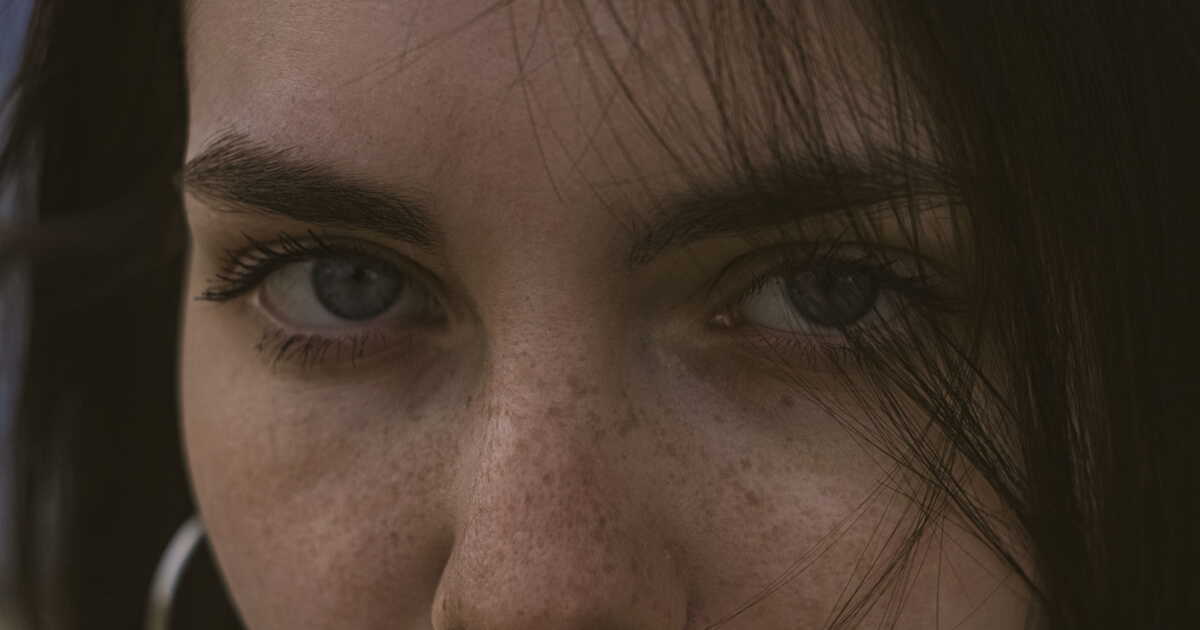
Travel opens the door to discovering new cultures, whether through cuisine, language, or daily life. It also pushes us out of our comfort zones and broadens our outlook. While traveling, encountering behaviors that feel unfamiliar is not uncommon. This is especially true in Germany, where many tourists have been surprised by the way Germans meet strangers with their gaze in public spaces, seemingly unconcerned about the discomfort it might cause those who feel observed.
One behavior that appears widespread in the country, and which tourists have dubbed the “German stare,” or “German gaze” in French. The phenomenon has also gained traction on social media, becoming a popular trend in which users imitate the Germans’ piercing look. In a recent statement, the Munich-based media Süddeutsche Zeitung Magazin sought to explain why Germans tend to look others directly in the eye, whether at a supermarket checkout, on a train platform, or even in a café while sipping their coffee.
A Fixed Gaze Is Considered a Sign of Respect by Germans
A gaze that is neither aggressive nor friendly, but simply intense, according to our colleagues, who add that a German “does not look by accident. He observes carefully and with perseverance.” Germans are, moreover, quite surprised by the enthusiasm this habit has sparked, which seems entirely natural to them. “We don’t even stare at people!”, many of them write on social networks. Moreover, in Germany, it would be rude not to sustain the gaze of one’s conversation partner. “Perhaps our gaze leans more toward rest than toward action. People enter our field of vision like birds into a lighthouse beam,” wrote one German.
In other cultures, contact is established in a completely different way. Americans, for instance, initiate conversations, the French pretend to be pensive, while people from Southern countries deploy a profusion of facial expressions and gestures. Germans, for their part, fixate on people without even realizing it. If the “German stare” gained so much traction, it might be because the brain responds instantly to looks. A 2016 study found that Britons consider eye contact excessive after about 3.3 seconds.
Germans Have a Different Conception of Public Space
According to the Munich-based media, Germans view public space less as a place to express individuality and more as a waiting area managed collectively. In 1963, sociologist Erving Goffman described the typical behavior of individuals in public spaces, which, in his view, corresponded to “a brief glance, then an openly averted gaze.”
The German gaze, meanwhile, is less guided by curiosity than by a need for control. Likewise, Germans are not known for forced friendliness or for syrupy expressions. That is why they do not smile back systematically. But when they do smile, it is very sincere. One can therefore conclude that the German gaze is neither an invitation nor an attack nor a judgment, but rather the antithesis of indifference in a country that values frankness.
@imtheplusone Alles gut? #germanstare #german #deutsch #comedy #funny #lustig #relatable #couplecontent
♬ Elevator Music – Bohoman