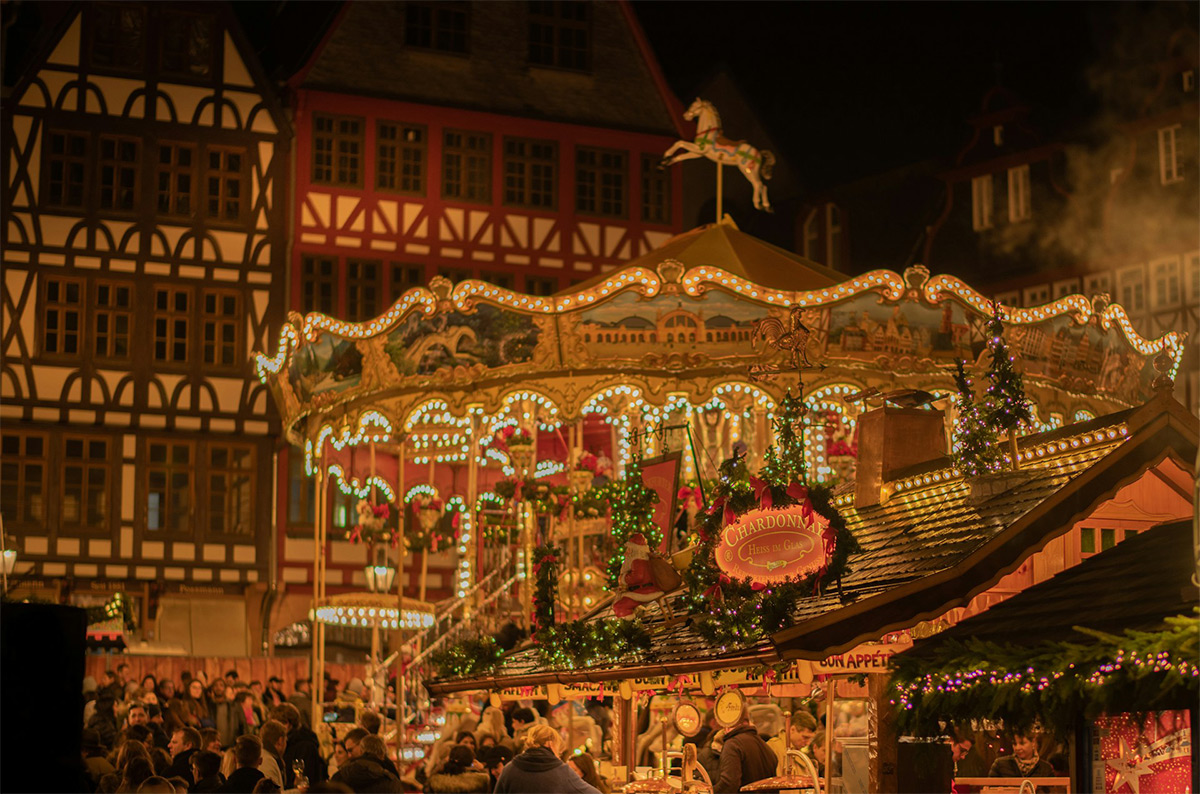


The naysayers will claim that the magic of Christmas has vanished, and that this event, which is normally eagerly anticipated, is today nothing more than a soulless commercial celebration, a tradition that fades year after year.
Let them speak, because now you know: in Germany the magic still works, through a thriving culture that continues to grow.
But what makes it so unique?
But where does it come from, actually?
The festive culture is not a novelty for Germans: they are believed to have organized the first Christmas market in Dresden, and they are also credited with the advent calendar concept. This period is deeply rooted in the culture, which has evolved over the centuries to culminate in the model we know today.
A collection of traditions forms the Christmas heritage, which the population reverently honors each year: December 5 is generally the Krampusnacht, a folkloric practice in which the Krampus (the German counterpart of the French Père Fouettard) roams the streets to “punish” naughty children with candy. You will often see young adults in costume parading through the streets, pretending to frighten the crowd. December 6 features Saint Nicholas on Nikolaustag, where, unlike the previous evening, the idea is to place treats or small gifts in the shoes of young children. One can also mention the Heiligabend Eve, the game of Weinachtsgurke, a treasure hunt around Christmas decorations, or the Krippenspiel, plays in which children reenact the birth of Jesus. In short, several practices that originate from local religious and spiritual beliefs, during which current residents gather and attend street processions.
A collection of traditions forms the Christmas heritage, which the population reverently honors each year: December 5 is generally the Krampusnacht, a folkloric practice in which the Krampus (the German counterpart of the French Père Fouettard) roams the streets to “punish” naughty children with candy. You will often see young adults in costume parading through the streets, pretending to frighten the crowd. December 6 features Saint Nicholas on Nikolaustag, where, unlike the previous evening, the idea is to place treats or small gifts in the shoes of young children. One can also mention the Heiligabend Eve, the game of Weinachtsgurke, a treasure hunt around Christmas decorations, or the Krippenspiel, plays in which children reenact the birth of Jesus. In short, several practices that originate from local religious and spiritual beliefs, during which current residents gather and attend street processions.
Christmas markets that stand out from the rest
Today, the concept is an indispensable highlight of the festive season, and it represents a unique draw for certain cities. This is precisely an interesting phenomenon to observe in Germany. Indeed, the local Christkindlmarkt or Weinachtsmarkt are not simply gatherings of stalls selling local specialties or hosting occasional musical events: they are true hubs of culture and authenticity with substantial scale, where visitors come for a deep immersion into local life.
The most notable example is the Nuremberg Christmas Market (Christkindlesmarkt), which attracts millions of visitors each year. A wide array of German specialties awaits, from foods to drinks, along with stalls highlighting local craftsmanship, such as those selling children’s toys or handmade decorative objects. Carriage rides add to the on-site entertainment, alongside attractions like merry-go-rounds and opportunities to join in singing carols, among other activities.
The most notable example is the Nuremberg Christmas Market (Christkindlesmarkt), which attracts millions of visitors each year. A wide array of German specialties awaits, from foods to drinks, along with stalls highlighting local craftsmanship, such as those selling children’s toys or handmade decorative objects. Carriage rides add to the on-site entertainment, alongside attractions like merry-go-rounds and opportunities to join in singing carols, among other activities.
A traditional model, but not rigid
Germany also benefits from a rich variety of Christmas markets spread across its cities, some of which offer innovative approaches to the concept. Consider the alternative Christmas markets of Cologne: more than seven official markets and around twenty local ones line the city, earning the Rhineland capital a top ranking among the world’s Christmas markets by Times.
We can take Sonnenschein Etage as an example, a Christmas market… located on a roof terrace.
Or the Blackfoot Beach market, a stunning artificial winter kingdom offering visitors a multitude of activities ranging from winter sports to Christmas gift-making workshops. Not to forget Altermarkt, which places a premium on artisans masters from all horizons, or the Cathedral Market, set under its magnificent spires towering 157 meters above.
In short, there is no shortage of options.
We can take Sonnenschein Etage as an example, a Christmas market… located on a roof terrace.
Or the Blackfoot Beach market, a stunning artificial winter kingdom offering visitors a multitude of activities ranging from winter sports to Christmas gift-making workshops. Not to forget Altermarkt, which places a premium on artisans masters from all horizons, or the Cathedral Market, set under its magnificent spires towering 157 meters above.
In short, there is no shortage of options.
Other facets of Christmas
Obviously, fully enjoying German Christmas does not stop at visiting markets. A wide range of workshops presenting artisanal production techniques is available across the country. In Saxony and Thuringia, for instance, sculpting workshops are offered by local artisans, helping to better understand how nutcracker figurines, the famous Christmas pyramids, and even a collection of children’s toys found at the markets are designed. It is also possible to learn how to create and decorate Adventskranz, the classic Christmas wreath. Numerous concerts are held in various churches to celebrate holy days with hymnody. In Munich, the Tollwood winter festival is worth the excursion, bringing together an interesting mix of cultural activities, concerts, and stalls showcasing diverse cultures.
Christmas is also the season to fill one’s belly, and among the various year-end festivals, some specifically focus on chocolate—an ideal opportunity to enjoy it in all its forms. The ChocolART Festival in Thuringia, not far from Stuttgart, is probably the best example. More broadly, restaurants offer throughout the holidays menus featuring the period’s typical culinary specialties. This is the chance to taste roast goose, potato salad with sausages, Bratwurst, roasted chestnuts, gingerbread, candied almonds, or Stollen, a Dresdner specialty. In fact, Dresden hosts Stollen festivals where pastry chefs compete to bake the best cake or join forces to prepare a giant version.
Finally, December snow provides the perfect opportunity to try winter sports. And even if skiing, tobogganing, or snowboarding does not tempt you, you can head to the bobsleigh tracks in Dresden or Königssee or ice-skate at the Nymphenburg Palace. If your aim is to escape the cold, Baden-Baden’s thermal springs offer a comforting retreat.
Convinced yet? Then give us a call, we promise you’ll get to sample a Glühwein 😉
Christmas is also the season to fill one’s belly, and among the various year-end festivals, some specifically focus on chocolate—an ideal opportunity to enjoy it in all its forms. The ChocolART Festival in Thuringia, not far from Stuttgart, is probably the best example. More broadly, restaurants offer throughout the holidays menus featuring the period’s typical culinary specialties. This is the chance to taste roast goose, potato salad with sausages, Bratwurst, roasted chestnuts, gingerbread, candied almonds, or Stollen, a Dresdner specialty. In fact, Dresden hosts Stollen festivals where pastry chefs compete to bake the best cake or join forces to prepare a giant version.
Finally, December snow provides the perfect opportunity to try winter sports. And even if skiing, tobogganing, or snowboarding does not tempt you, you can head to the bobsleigh tracks in Dresden or Königssee or ice-skate at the Nymphenburg Palace. If your aim is to escape the cold, Baden-Baden’s thermal springs offer a comforting retreat.
Convinced yet? Then give us a call, we promise you’ll get to sample a Glühwein 😉