The elegance of hospitality and the emotion of To’atā

To understand this relationship with heritage, one must distinguish between two forms of cultural representation that, far from opposing, complement each other as their aims differ.
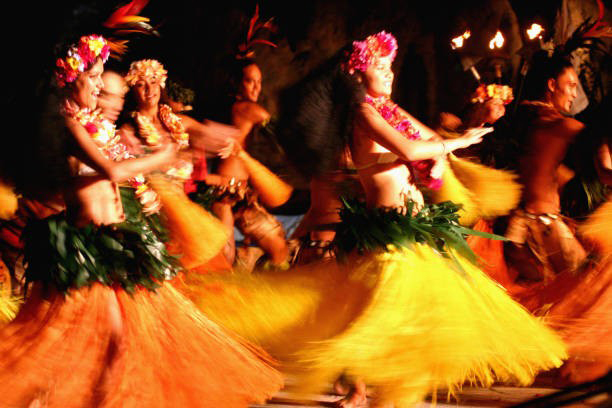
The hotel show constitutes a first essential and warm showcase. Designed for welcome and sharing, it offers a condensed, elegant, and immediately accessible format. It is an excellent doorway into Polynesian culture: a moment of aesthetic conviviality that allows a broad audience to become familiar with the grace of the dances and the beauty of the costumes, while providing artists with a steady income.
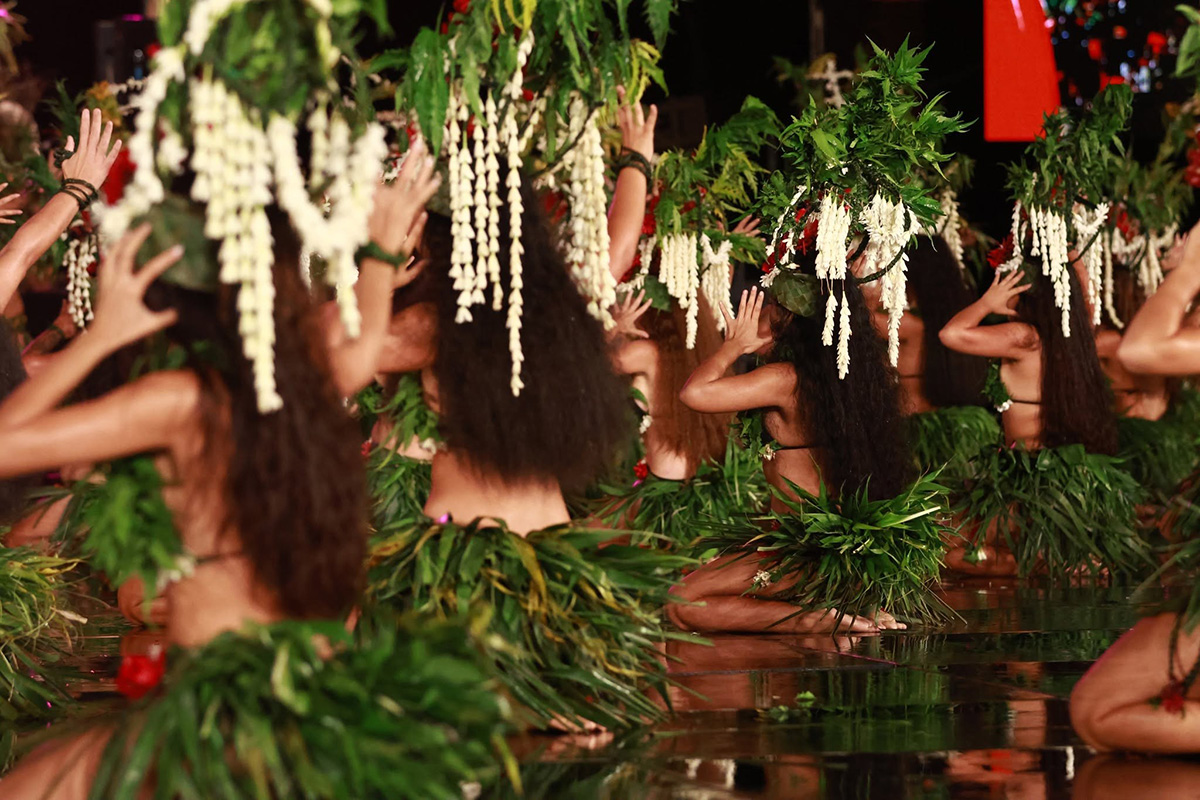
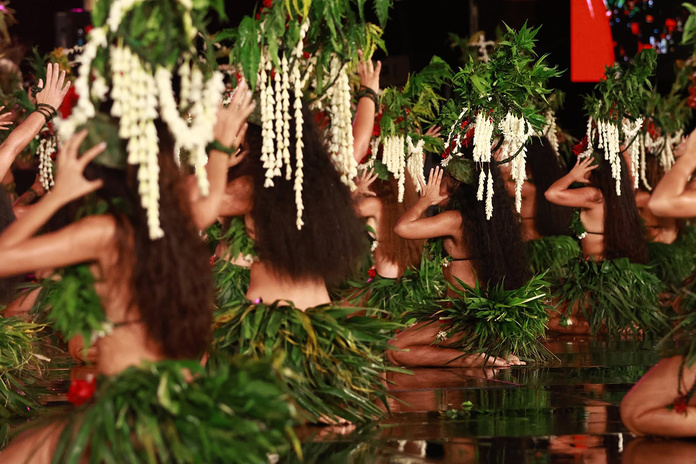
On the other hand, To’atā’s stage at Heiva i Tahiti belongs to a work of community art and the grand celebration of heritage. Where the hotel favors fluency and welcome, To’atā offers an immersive and vibrant experience. The experience there is carried by the raw power of pehe (the percussion) whose vibrations travel through the bodies of the spectators, by the literary richness of the ‘ōrero (the traditional oratory) and by the depth of historical or mythological frescos. One does not exclude the other: the former awakens interest gently, while the latter engages the individual in an aesthetic and collective experience of unparalleled intensity.
The hotel show constitutes a first essential and warm showcase. Designed for welcome and sharing, it offers a condensed, elegant, and immediately accessible format. It is an excellent doorway into Polynesian culture: a moment of aesthetic conviviality that allows a broad audience to become familiar with the grace of the dances and the beauty of the costumes, while providing artists with a steady income.
On the other hand, To’atā’s stage at Heiva i Tahiti belongs to a work of community art and the grand celebration of heritage. Where the hotel favors fluency and welcome, To’atā offers an immersive and vibrant experience. The experience there is carried by the raw power of pehe (the percussion) whose vibrations travel through the bodies of the spectators, by the literary richness of the ‘ōrero (the traditional oratory) and by the depth of historical or mythological frescos. One does not exclude the other: the former awakens interest gently, while the latter engages the individual in an aesthetic and collective experience of unparalleled intensity.
The art of embracing one’s roots
How can one explain a person growing up near such a gathering without ever taking part? Several everyday factors help explain this distance.
First, the family environment plays a crucial role. In many households — whether metropolitan, from the Chinese community, or the Polynesian bourgeoisie — the attention and priorities of youth are often directed toward other horizons: playing universal sports, pursuing classic studies, or learning European music.
Secondly, material and linguistic barriers come into play. Access to To’atā is sometimes seen as logistically complex (ticket costs, parking, rapid ticket sales) and symbolically reserved for an inner circle. Moreover, Heiva mobilizes an academic, supported, and highly poetic Tahitian. For those who do not master the language perfectly, the difficulty in grasping the deep meaning of the chants can provoke a certain reserve and reinforce the feeling of not quite belonging.
First, the family environment plays a crucial role. In many households — whether metropolitan, from the Chinese community, or the Polynesian bourgeoisie — the attention and priorities of youth are often directed toward other horizons: playing universal sports, pursuing classic studies, or learning European music.
Secondly, material and linguistic barriers come into play. Access to To’atā is sometimes seen as logistically complex (ticket costs, parking, rapid ticket sales) and symbolically reserved for an inner circle. Moreover, Heiva mobilizes an academic, supported, and highly poetic Tahitian. For those who do not master the language perfectly, the difficulty in grasping the deep meaning of the chants can provoke a certain reserve and reinforce the feeling of not quite belonging.
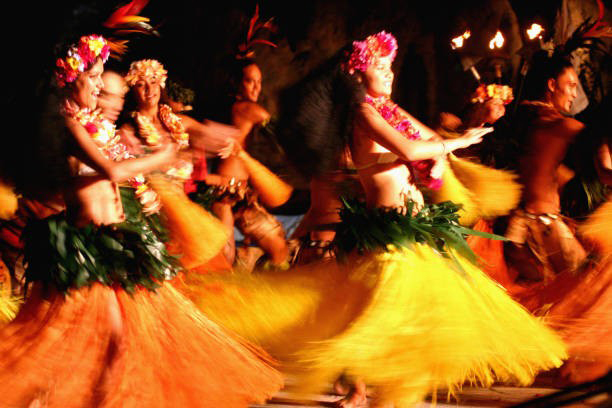
The Awakening of the Senses: the moment when magic takes hold
The shift from a discreet spectator stance to that of a passionate observer often happens along the daily professional life. It is by rubbing shoulders with the practitioners that all the devotion and beauty of this art come to light.
In corporate settings, the Heiva period reveals the captivating commitment of colleagues involved. One observes an impressive organization: choreographic placement sketches drawn on scraps of paper during coffee breaks to long hours spent in the costume workshop braiding plant-based headpieces after work. This backstage immersion invites the desire to understand: what drives these men and women to invest so much energy for a few minutes of pure grace on To’atā’s stage?
The answer comes with a first immersion, notably during a dress rehearsal. That night, all certainties vanish. Facing the majesty of the chants, the rigor of the alignments, and the intensity of the renditions, one realizes that nothing is superficial: everything is inhabited, dressed in a deep intention. The mistake would simply have been to limit one’s view of dance to the welcome performances alone, without grasping the full scope of the works presented at the Heiva.
This moment of grace marks the beginning of a reconciliation with one’s identity. The discomfort of having stayed apart for too long yields to a renewed sense of pride. It becomes clear that tradition is not a fixed inheritance, but a living space that simply waits for us to come in and take part.
In corporate settings, the Heiva period reveals the captivating commitment of colleagues involved. One observes an impressive organization: choreographic placement sketches drawn on scraps of paper during coffee breaks to long hours spent in the costume workshop braiding plant-based headpieces after work. This backstage immersion invites the desire to understand: what drives these men and women to invest so much energy for a few minutes of pure grace on To’atā’s stage?
The answer comes with a first immersion, notably during a dress rehearsal. That night, all certainties vanish. Facing the majesty of the chants, the rigor of the alignments, and the intensity of the renditions, one realizes that nothing is superficial: everything is inhabited, dressed in a deep intention. The mistake would simply have been to limit one’s view of dance to the welcome performances alone, without grasping the full scope of the works presented at the Heiva.
This moment of grace marks the beginning of a reconciliation with one’s identity. The discomfort of having stayed apart for too long yields to a renewed sense of pride. It becomes clear that tradition is not a fixed inheritance, but a living space that simply waits for us to come in and take part.


Moana Voyages: A Passion Lived From Within
Growing up in the Fenua and mastering the magic of Heiva at one’s own pace is a wonderful adventure. This path demonstrates that cultural belonging does not come from automatic inheritance, but from a choice: the choice to push open the doors of To’atā in order to live one’s culture from the inside.
It is this same immersion mindset that guides the Moana Voyages team on a daily basis. Experiencing the Heiva i Tahiti is not improvised: the event requires a real on-the-ground understanding: from selecting ritual evenings to booking the best seats facing the stage. Relying on local specialists who themselves live this fervor—on stage or in the stands—the agency aims to transmit these unique keys to understanding. It thus enables each traveler to move beyond mere spectator status and to touch the authenticity of Polynesian culture.
It is this same immersion mindset that guides the Moana Voyages team on a daily basis. Experiencing the Heiva i Tahiti is not improvised: the event requires a real on-the-ground understanding: from selecting ritual evenings to booking the best seats facing the stage. Relying on local specialists who themselves live this fervor—on stage or in the stands—the agency aims to transmit these unique keys to understanding. It thus enables each traveler to move beyond mere spectator status and to touch the authenticity of Polynesian culture.


Teura OPUU
Assistante Produits & Marketing – Moana Voyages
+689 40 50 57 94 | Téléphone Ext. 573
www.moanavoyages.com
Assistante Produits & Marketing – Moana Voyages
+689 40 50 57 94 | Téléphone Ext. 573
www.moanavoyages.com