
I did not come to the Outback to write an article about women.
For three weeks, with my niece Marion behind the camera, our travel diary for TourMaG was meant to tell a territory, its routes, its landscapes and above all those who live there.
Yet, along the kilometers, something began to catch my attention.
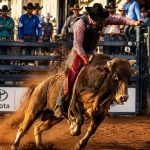
At the entrance of a bush hotel, behind the bar of a pub, in an open-air cinema, in the middle of a kangaroo sanctuary, in an art gallery or behind the barriers of a rodeo, they were there.
Not necessarily where the traditional Outback imagination would have placed them, and rarely occupying the spotlight to claim their role. They worked, created, welcomed, transmitted, led.
It took me several steps to understand that this sequence of encounters might tell us something about today’s interior Australia.
For three weeks, with my niece Marion behind the camera, our travel diary for TourMaG was meant to tell a territory, its routes, its landscapes and above all those who live there.
Yet, along the kilometers, something began to catch my attention.
At the entrance of a bush hotel, behind the bar of a pub, in an open-air cinema, in the middle of a kangaroo sanctuary, in an art gallery or behind the barriers of a rodeo, they were there.
Not necessarily where the traditional Outback imagination would have placed them, and rarely occupying the spotlight to claim their role. They worked, created, welcomed, transmitted, led.
It took me several steps to understand that this sequence of encounters might tell us something about today’s interior Australia.
In Broken Hill, another story behind the miners’ tale
It’s probably in Broken Hill that the thread began to unfold.
Artist Amanda Johnson belongs to the fourth generation of a family from this mining town on the edge of the desert.
In her studio, her paintings tell of the bush, but also of the women who inhabited it. One of her most revealing works was born from a commission for the centenary of the Country Women’s Association. They initially asked for a painting.
While poring over the association’s archives and a century of local history, Amanda felt that a single painting would not suffice. She ultimately built her narrative across several panels, tracing the achievements of these women by era.
Listening to her, I began to view Broken Hill differently. The city isn’t devoid of masculine legends. Miners went underground, fortunes were made and lost, BHP was born here and the “line of lode” belongs to Australian industrial mythology.
But beside this story existed another reality, perhaps less spectacular but just as fundamental: women raising families, organizing the community, working, caring, bearing isolation, and sustaining lives built around the mine.
Amanda wasn’t trying to rewrite this history. She was complementing it. And this nuance would accompany me for the rest of the journey.
Artist Amanda Johnson belongs to the fourth generation of a family from this mining town on the edge of the desert.
In her studio, her paintings tell of the bush, but also of the women who inhabited it. One of her most revealing works was born from a commission for the centenary of the Country Women’s Association. They initially asked for a painting.
While poring over the association’s archives and a century of local history, Amanda felt that a single painting would not suffice. She ultimately built her narrative across several panels, tracing the achievements of these women by era.
Listening to her, I began to view Broken Hill differently. The city isn’t devoid of masculine legends. Miners went underground, fortunes were made and lost, BHP was born here and the “line of lode” belongs to Australian industrial mythology.
But beside this story existed another reality, perhaps less spectacular but just as fundamental: women raising families, organizing the community, working, caring, bearing isolation, and sustaining lives built around the mine.
Amanda wasn’t trying to rewrite this history. She was complementing it. And this nuance would accompany me for the rest of the journey.
In Winton, intuition becomes evident
A few hundred kilometres further north, Winton would reveal a completely different face to this feminine presence.
This small town in Queensland is associated with some of Australia’s great myths: Waltzing Matilda, the dinosaurs, the origins of Qantas, the vast cattle stations of Western Queensland.
Historically, the world here has been deeply masculine. When I speak with several residents about the impression the town gives today, the same story returns: that of the shearers, the men of the properties, old street fights, a harsh culture shaped by work and isolation.
And yet, the Winton we encountered exuded something else. The town now has as mayor Cathy White, the first woman to hold that role. Lydia Evert, she, oversees the Royal Theatre, one of the last outdoor cinemas still operating in Australia.
In this corrugated-iron venue opened in 1918, handed down in her husband’s family since 1937 and still run by volunteers, locals used to come to dance, attend boxing matches, meet up and sometimes fall in love.
Lydia doesn’t merely preserve the walls: she keeps a place alive where a community continues to gather under the stars.
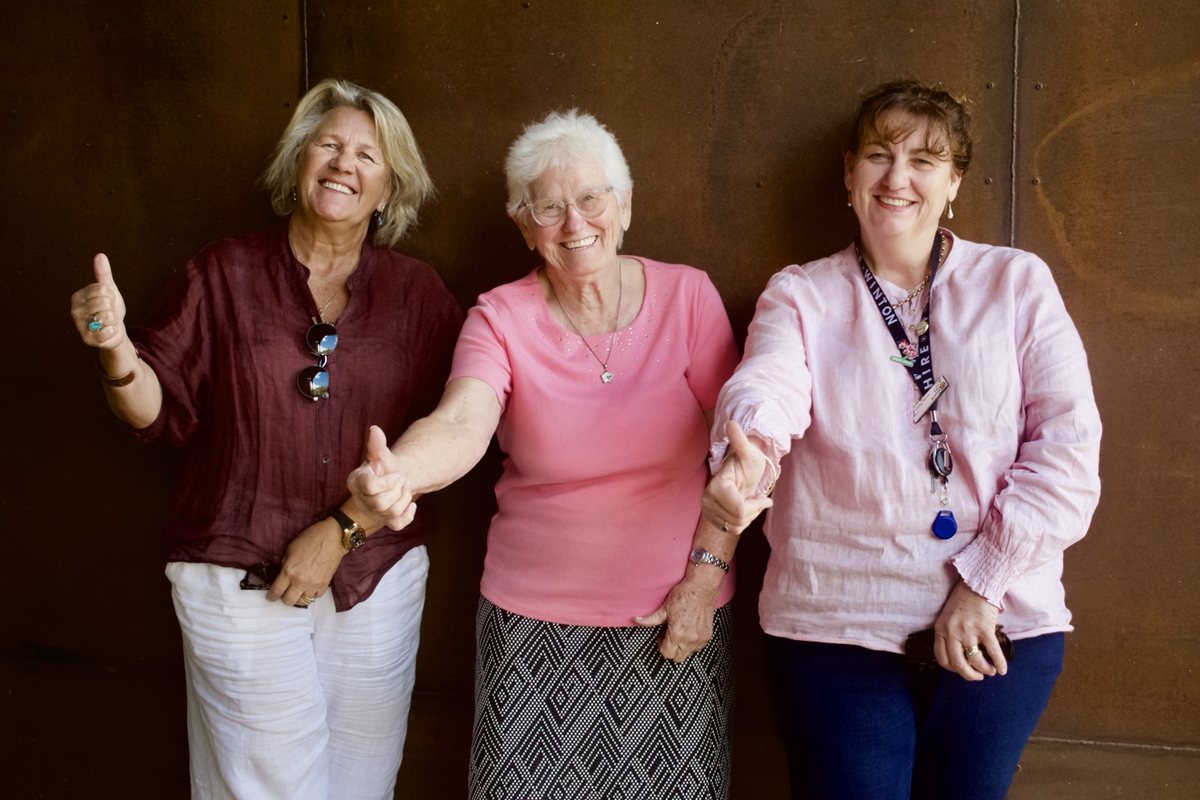
Elsewhere in Winton, other women lead, undertake, organize events, welcome travelers or take care of wildlife.
In a wildlife refuge in Winton, Marion found herself with a young kangaroo in her arms. This kind of encounter speaks volumes about the Outback: a door opens, someone begins to share their daily life and, a few minutes later, you step into a fragment of their life. These are not staged attractions. They are people who agree to share their world.
This small town in Queensland is associated with some of Australia’s great myths: Waltzing Matilda, the dinosaurs, the origins of Qantas, the vast cattle stations of Western Queensland.
Historically, the world here has been deeply masculine. When I speak with several residents about the impression the town gives today, the same story returns: that of the shearers, the men of the properties, old street fights, a harsh culture shaped by work and isolation.
And yet, the Winton we encountered exuded something else. The town now has as mayor Cathy White, the first woman to hold that role. Lydia Evert, she, oversees the Royal Theatre, one of the last outdoor cinemas still operating in Australia.
In this corrugated-iron venue opened in 1918, handed down in her husband’s family since 1937 and still run by volunteers, locals used to come to dance, attend boxing matches, meet up and sometimes fall in love.
Lydia doesn’t merely preserve the walls: she keeps a place alive where a community continues to gather under the stars.
Elsewhere in Winton, other women lead, undertake, organize events, welcome travelers or take care of wildlife.
In a wildlife refuge in Winton, Marion found herself with a young kangaroo in her arms. This kind of encounter speaks volumes about the Outback: a door opens, someone begins to share their daily life and, a few minutes later, you step into a fragment of their life. These are not staged attractions. They are people who agree to share their world.
Amanda-Lyn Pearson: taking the bush codes and reinventing them
Then we met Amanda-Lyn Pearson. The night before, she had been under the lights of the Dusty Hour: sequins, a top hat, acrobatics and the crack of the stockwhip.
The next morning, with an Akubra on her head and boots on her feet, she guided us through Crackup Corner, the remarkable HQ she built at the edge of Winton with her husband Will.
Amanda-Lyn grew up in remote Australia, often on the road. She wanted to be an artist without really knowing how one could practice this craft from the bush. She learned, traveled, sought skills and performed in different places around the world before the Western Queensland finally asserted itself as an obvious choice: “It felt like home.”
What she does today is hard to classify, and that is precisely what makes it compelling. The Crack Up Sisters borrow from traditional bush arts, the stockwhip, circus, burlesque, acrobatics and clowning to tell Australia in their own way.
She does not reject the old Outback codes. She takes them, plays with them and carries them elsewhere. When we discuss Winton and its evolution, Amanda-Lyn also revisits this masculine story.
The dinosaurs arrived, tourism developed, the town changed. And with it, another energy became more visible. It was at that moment that I stopped thinking my encounters were coincidences.
The next morning, with an Akubra on her head and boots on her feet, she guided us through Crackup Corner, the remarkable HQ she built at the edge of Winton with her husband Will.
Amanda-Lyn grew up in remote Australia, often on the road. She wanted to be an artist without really knowing how one could practice this craft from the bush. She learned, traveled, sought skills and performed in different places around the world before the Western Queensland finally asserted itself as an obvious choice: “It felt like home.”
What she does today is hard to classify, and that is precisely what makes it compelling. The Crack Up Sisters borrow from traditional bush arts, the stockwhip, circus, burlesque, acrobatics and clowning to tell Australia in their own way.
She does not reject the old Outback codes. She takes them, plays with them and carries them elsewhere. When we discuss Winton and its evolution, Amanda-Lyn also revisits this masculine story.
The dinosaurs arrived, tourism developed, the town changed. And with it, another energy became more visible. It was at that moment that I stopped thinking my encounters were coincidences.
In small towns, the ones that keep the door open
Guardians, but above all facilitators
One English word kept returning to me during this journey: custodian. “Guardian” would be its most immediate translation, but it remains imperfect.
For these women, they do not stay still protecting an idealized vision of the past. On the contrary. Many of them take what deserves preservation and find a way to pass it on, sometimes reinventing it, for a new generation, for a new generation.
Lydia keeps a cinema that is more than a century old alive rather than a museum piece.
Amanda Johnson brings an otherwise less visible history into painting.
Amanda-Lyn turns bush gestures into contemporary spectacle.
Others protect wildlife, lead a community, host an event or open the door of a pub every morning to travelers from the other end of the country.
To preserve and to evolve, moving together. Perhaps that, at heart, is what touched me most about them.
For these women, they do not stay still protecting an idealized vision of the past. On the contrary. Many of them take what deserves preservation and find a way to pass it on, sometimes reinventing it, for a new generation, for a new generation.
Lydia keeps a cinema that is more than a century old alive rather than a museum piece.
Amanda Johnson brings an otherwise less visible history into painting.
Amanda-Lyn turns bush gestures into contemporary spectacle.
Others protect wildlife, lead a community, host an event or open the door of a pub every morning to travelers from the other end of the country.
To preserve and to evolve, moving together. Perhaps that, at heart, is what touched me most about them.
Another way of telling the Outback to French travelers
For French tourism, this story isn’t merely anecdotal. It speaks to how we might tell the story of the Australian interior.
The Outback will continue to captivate with its red tracks, its cattle stations, its stockmen, its road trains, its centenarian pubs and its rodeos.
It is certainly not about erasing this imagery: it belongs to the country and remains deeply alive. But stopping at that image would today amount to telling only part of the story.
Contemporary travel can also enable meeting the artist who paints the memory of the Broken Hill women, the one who turns the stockwhip into stage language in Winton, the woman who keeps a cinema under the stars, the one who rescues injured kangaroos, or those who work behind one of the country’s great rodeos.
These are precisely the encounters that turn an itinerary into immersion. And they remind us of something our 5,000 kilometers taught us: in the Outback, the territory can never be fully understood from the road. You must stop, push a door and speak to those who live behind it.
The Outback will continue to captivate with its red tracks, its cattle stations, its stockmen, its road trains, its centenarian pubs and its rodeos.
It is certainly not about erasing this imagery: it belongs to the country and remains deeply alive. But stopping at that image would today amount to telling only part of the story.
Contemporary travel can also enable meeting the artist who paints the memory of the Broken Hill women, the one who turns the stockwhip into stage language in Winton, the woman who keeps a cinema under the stars, the one who rescues injured kangaroos, or those who work behind one of the country’s great rodeos.
These are precisely the encounters that turn an itinerary into immersion. And they remind us of something our 5,000 kilometers taught us: in the Outback, the territory can never be fully understood from the road. You must stop, push a door and speak to those who live behind it.
The women who changed my view of the Outback
At first, I thought I would find one of the last territories where the masculine imagination of Australia fully survived: miners, stockmen, cattlemen, pilots, cowboys. They were there, and some offered extraordinary encounters.
But that isn’t exactly how I view the Outback today. Behind its most visible myths, I met women who preserve its memory, keep its communities alive, and, without necessarily seeking to proclaim it, are already helping write what it will become.
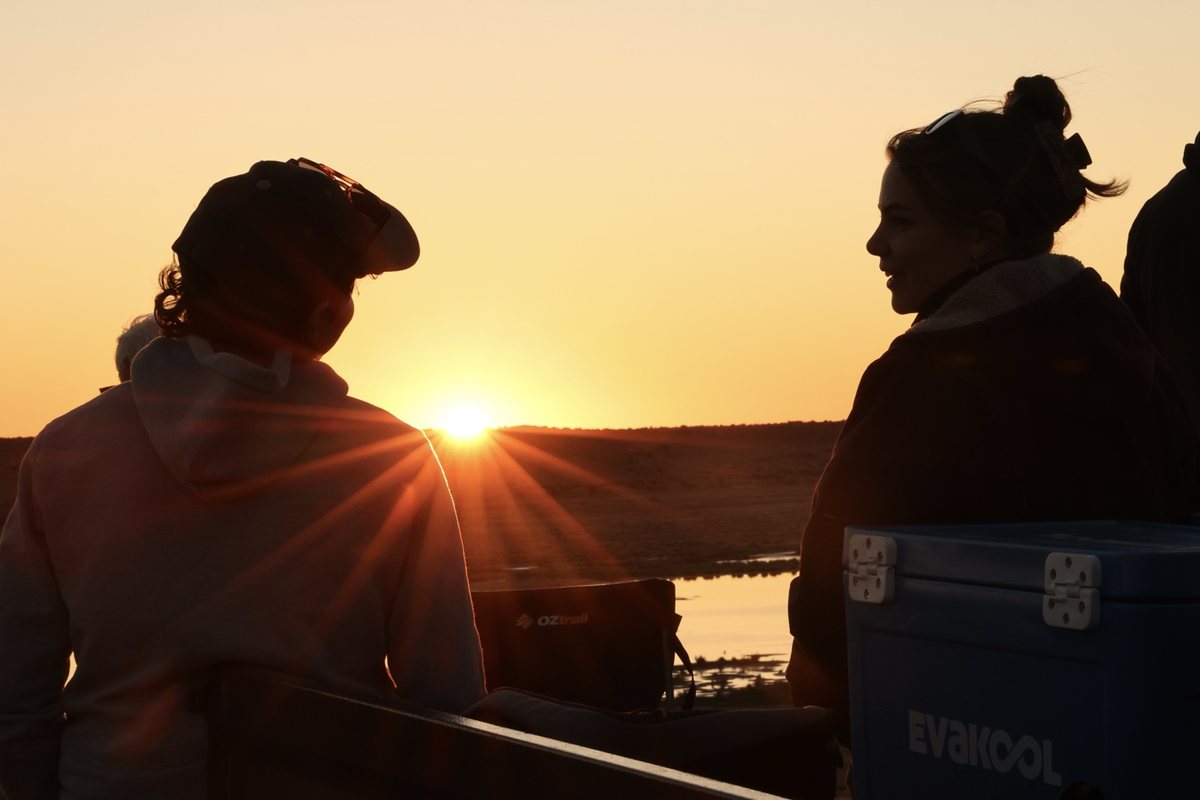
In Big Red, to the west of Birdsville, I photographed Marion at sunset in the middle of a conversation with a young woman from the Birdsville Hotel team.
Two silhouettes against the desert, almost nothing around them, just a conversation as the sun disappeared behind the dunes. I did not yet know that this photograph would probably become the last image of this story.
The road went on. But the women I met along the way had changed the way I looked at the Outback.
But that isn’t exactly how I view the Outback today. Behind its most visible myths, I met women who preserve its memory, keep its communities alive, and, without necessarily seeking to proclaim it, are already helping write what it will become.
In Big Red, to the west of Birdsville, I photographed Marion at sunset in the middle of a conversation with a young woman from the Birdsville Hotel team.
Two silhouettes against the desert, almost nothing around them, just a conversation as the sun disappeared behind the dunes. I did not yet know that this photograph would probably become the last image of this story.
The road went on. But the women I met along the way had changed the way I looked at the Outback.
Sébastien Cros
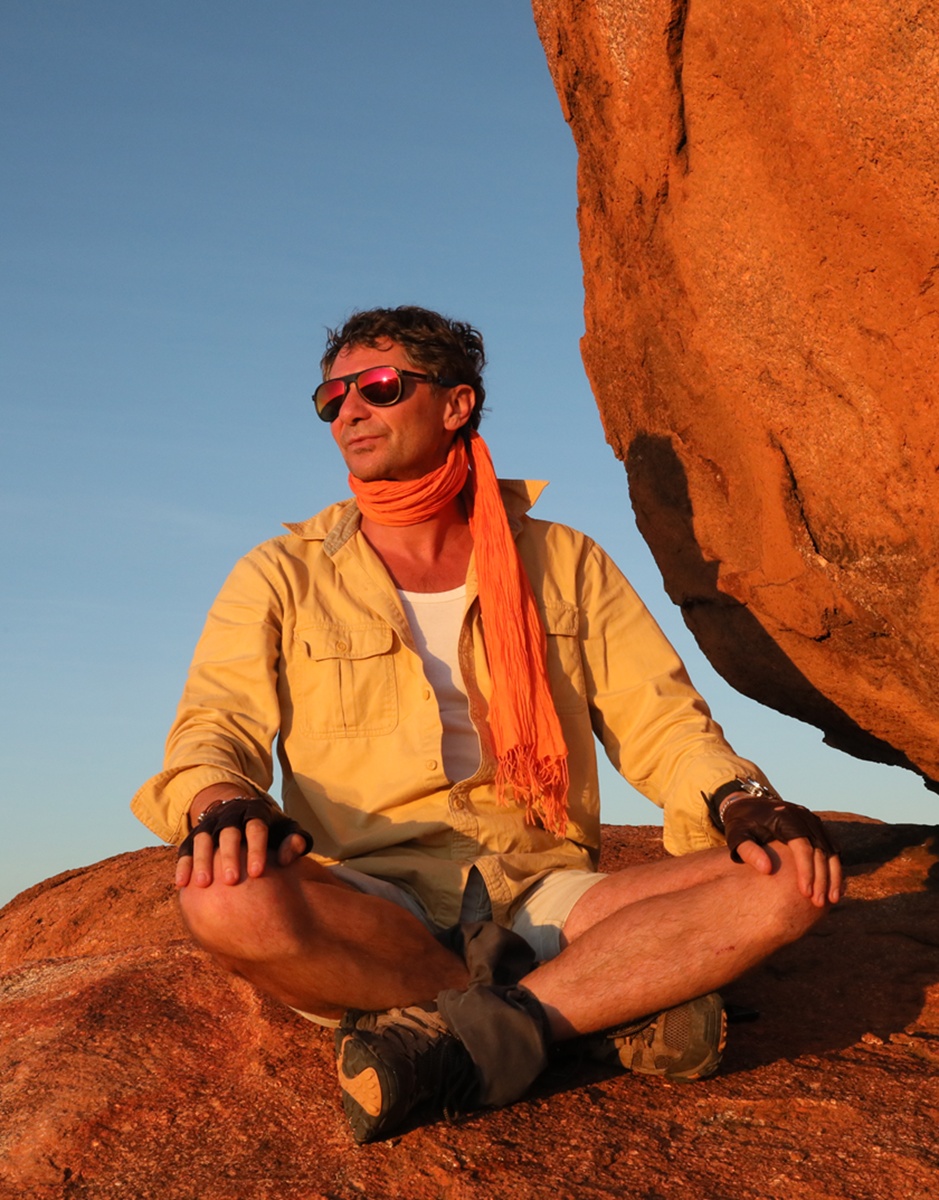
Sébastien Cros is an independent journalist and photographer based in Australia, founder of WeTravelAustralia™.
After twenty-five years in the Australian travel industry, notably as Managing Director of Across Australia (Goway group), he now dedicates his writing to editorial narratives focused on the destination, at the crossroads of storytelling, photography, and on-the-ground perspectives.
After twenty-five years in the Australian travel industry, notably as Managing Director of Across Australia (Goway group), he now dedicates his writing to editorial narratives focused on the destination, at the crossroads of storytelling, photography, and on-the-ground perspectives.