
It is a little after five in the afternoon, the eve of the opening, and Buchanan Park is almost deserted.
The sun is low, the dust not yet kicked up. In the empty arena, a performer rehearses the national anthem before a silent crowd.
In the distance, you can hear the horses in their iron stables.
The sponsor stands are set, the barbecues are waiting, and the metal corridors through which tomorrow’s bulls and horses will surge into motion are in place.
Nothing happens, and yet everything feels already present. A vibration. For someone who has never attended a rodeo, stepping into this arena the day before the first event feels a bit like entering a Colosseum before the games. The next day, the Colosseum is full.
The sun is low, the dust not yet kicked up. In the empty arena, a performer rehearses the national anthem before a silent crowd.
In the distance, you can hear the horses in their iron stables.
The sponsor stands are set, the barbecues are waiting, and the metal corridors through which tomorrow’s bulls and horses will surge into motion are in place.
Nothing happens, and yet everything feels already present. A vibration. For someone who has never attended a rodeo, stepping into this arena the day before the first event feels a bit like entering a Colosseum before the games. The next day, the Colosseum is full.
“This is where legends are made”
Since 1959, Mount Isa, a mining town of around 19,000 residents set at the crossroads of the North West Queensland routes, lives to the rhythm of its rodeo.
Hailed as the largest in the southern hemisphere, the event drew in 2026 nearly 800 participants from across Australia and New Zealand for three days of competition in Buchanan Park’s red arena.
At the arena’s edge, Kath Rose, the event’s press liaison, sets the scene without mincing words: “It’s the biggest rodeo in the southern hemisphere, the most loved and the most famous in Australia. This is where legends are made.” And when I tell her that every French traveler to Australia should experience this at least once, her reply comes fast: “This is an international bucket list experience.”
From the first evening, the spectacle delivers on its promise. Horses bursting from stalls in a riot of metal and hoofbeats, riders hurled into the dust, the barrel racing at full tilt, the crowd’s cheers as soon as the clock appears.
Then comes the national anthem, and a gesture that takes the visitor by surprise. Thousands stand, hats leave their heads and rest on chests.
In this Outback arena, hundreds of kilometers from major cities, there is something distinctly special: the pride of a land, its traditions, and those who keep them alive.
Hailed as the largest in the southern hemisphere, the event drew in 2026 nearly 800 participants from across Australia and New Zealand for three days of competition in Buchanan Park’s red arena.
At the arena’s edge, Kath Rose, the event’s press liaison, sets the scene without mincing words: “It’s the biggest rodeo in the southern hemisphere, the most loved and the most famous in Australia. This is where legends are made.” And when I tell her that every French traveler to Australia should experience this at least once, her reply comes fast: “This is an international bucket list experience.”
From the first evening, the spectacle delivers on its promise. Horses bursting from stalls in a riot of metal and hoofbeats, riders hurled into the dust, the barrel racing at full tilt, the crowd’s cheers as soon as the clock appears.
Then comes the national anthem, and a gesture that takes the visitor by surprise. Thousands stand, hats leave their heads and rest on chests.
In this Outback arena, hundreds of kilometers from major cities, there is something distinctly special: the pride of a land, its traditions, and those who keep them alive.
The Sunday Outfit, A Saturday Moment
The people in the stands deserve description, because the rodeo is as much about wearing it as watching it.
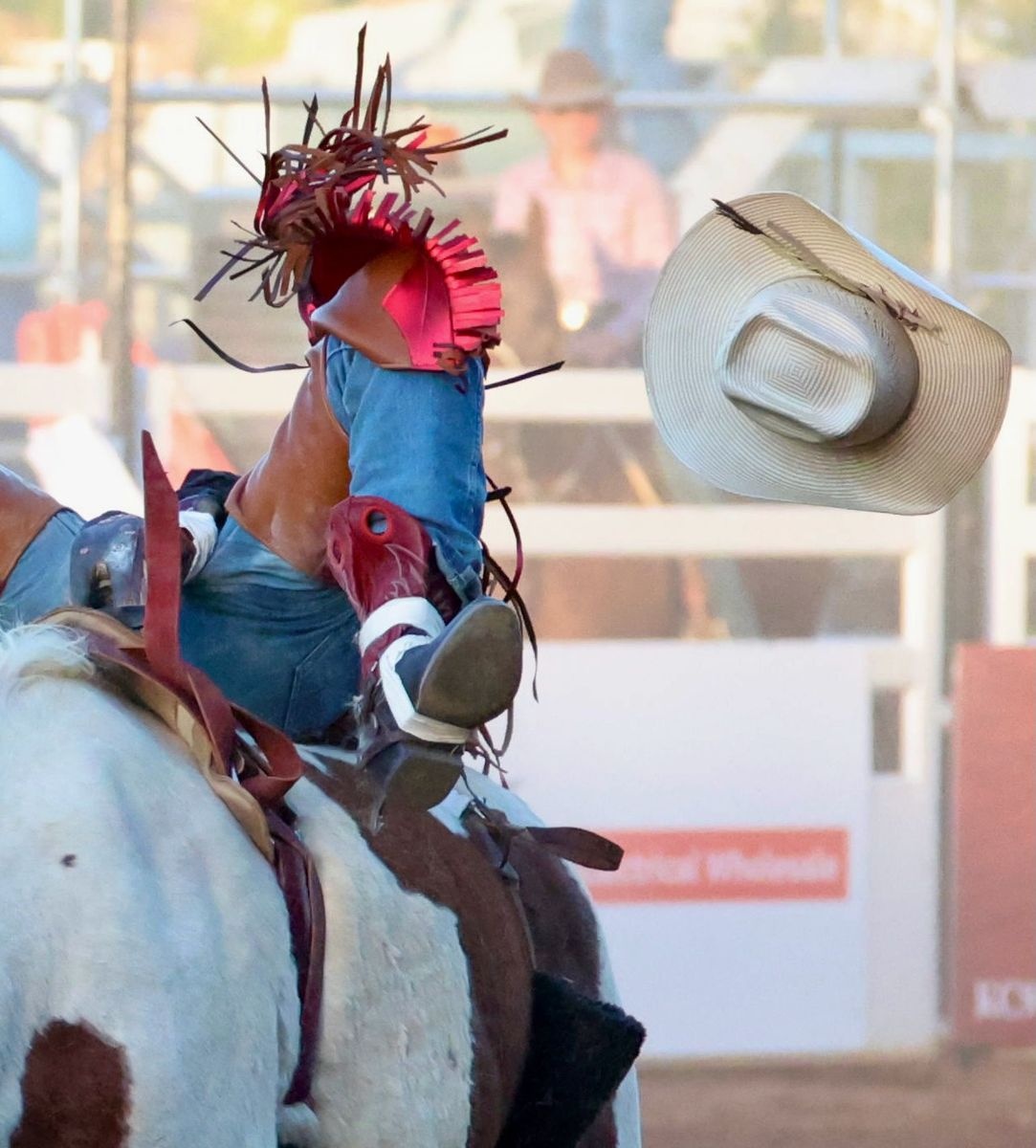
Long-sleeved shirts with nacre buttons, belts with silver buckles, spurred boots, sturdy jeans. In the arena, the riders add leather protective vests and those long-fringed chaps that flutter with every buck.
The junior events see kids donning mesh helmets and reinforced vests. And on every head, from the 70-year-old stockman to the girl with the pink marker, the same emblem: the hat.
At the Akubra stand, a major partner in the event, Elisa talks of the brand as one would speak of a family. 150 years this year, in a country that, as a federated nation, doesn’t even reach such an age.
Hats are consistently made in Kempsey, New South Wales, from rabbit-fur felt. “You can’t get much more Australian than one of these,” she smiles. It’s hard to imagine anything more Australian.
And then there are the stories. The night before, a contest celebrated the rodeo’s oldest Akubra. In the morning, a woman arrived with hers, battered, sun-worn, heavy with more anecdotes than felt: she left with a new one, and the old will keep going.
Elisa speaks of hats that vanish at parties and later return to their owners, family heirlooms seven decades old brought to her to be revived. Here, a hat is not an accessory. It is a biography.
A few aisles over, Ash, a milliner with Urban Dust Hat Co from Victoria for its first edition, shapes bespoke felt hats with steam and hands-on care, engraving the future owner’s name into the crown.
He notes that Europeans attend as well, English, Irish, Italians, French. In the corridors, though, English is heard most of all. This is exactly why this reportage exists: so that one day, in these stands, one might also hear a bit of French.
Long-sleeved shirts with nacre buttons, belts with silver buckles, spurred boots, sturdy jeans. In the arena, the riders add leather protective vests and those long-fringed chaps that flutter with every buck.
The junior events see kids donning mesh helmets and reinforced vests. And on every head, from the 70-year-old stockman to the girl with the pink marker, the same emblem: the hat.
At the Akubra stand, a major partner in the event, Elisa talks of the brand as one would speak of a family. 150 years this year, in a country that, as a federated nation, doesn’t even reach such an age.
Hats are consistently made in Kempsey, New South Wales, from rabbit-fur felt. “You can’t get much more Australian than one of these,” she smiles. It’s hard to imagine anything more Australian.
And then there are the stories. The night before, a contest celebrated the rodeo’s oldest Akubra. In the morning, a woman arrived with hers, battered, sun-worn, heavy with more anecdotes than felt: she left with a new one, and the old will keep going.
Elisa speaks of hats that vanish at parties and later return to their owners, family heirlooms seven decades old brought to her to be revived. Here, a hat is not an accessory. It is a biography.
A few aisles over, Ash, a milliner with Urban Dust Hat Co from Victoria for its first edition, shapes bespoke felt hats with steam and hands-on care, engraving the future owner’s name into the crown.
He notes that Europeans attend as well, English, Irish, Italians, French. In the corridors, though, English is heard most of all. This is exactly why this reportage exists: so that one day, in these stands, one might also hear a bit of French.
Eight Seconds
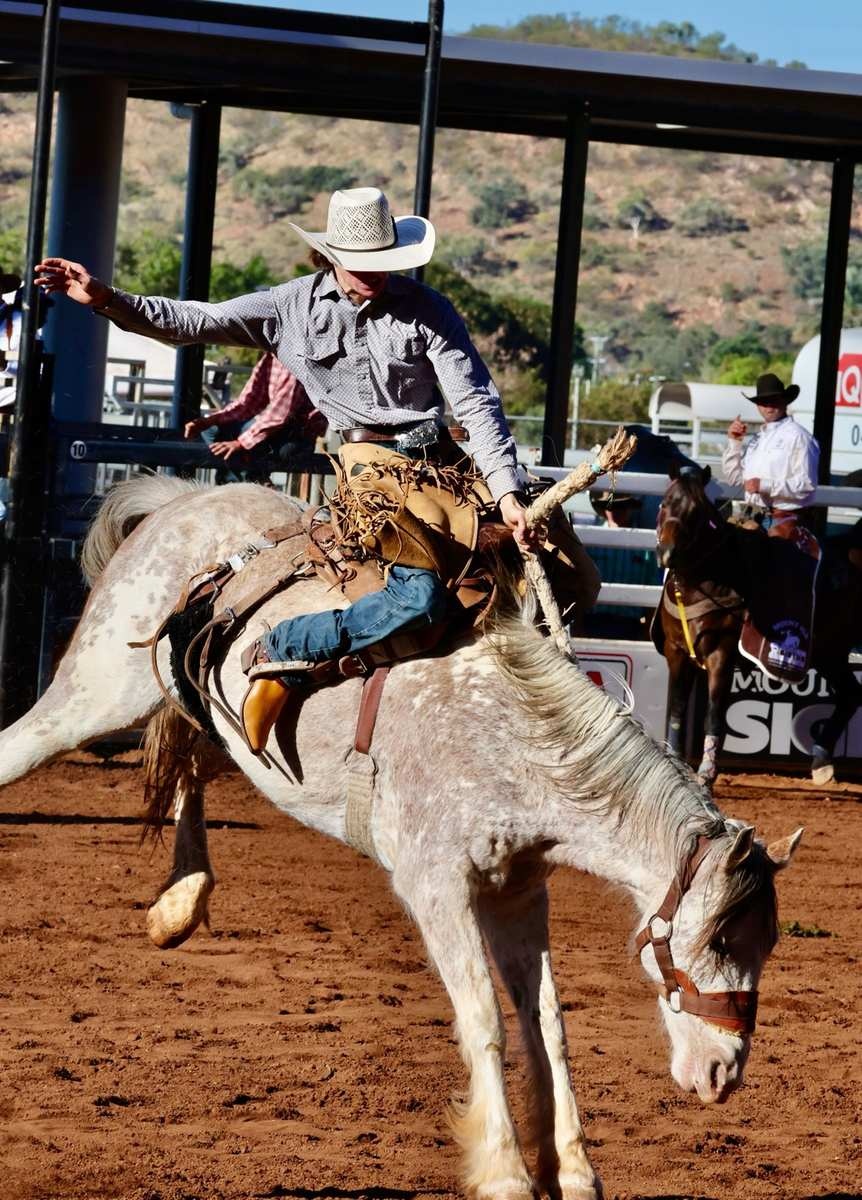
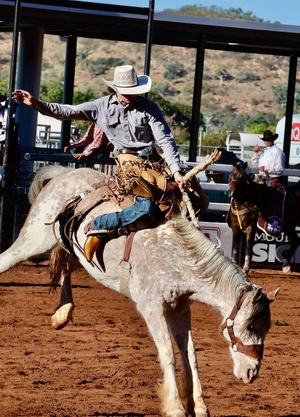
The heart of the rodeo rests on a rule as simple as it is formidable.
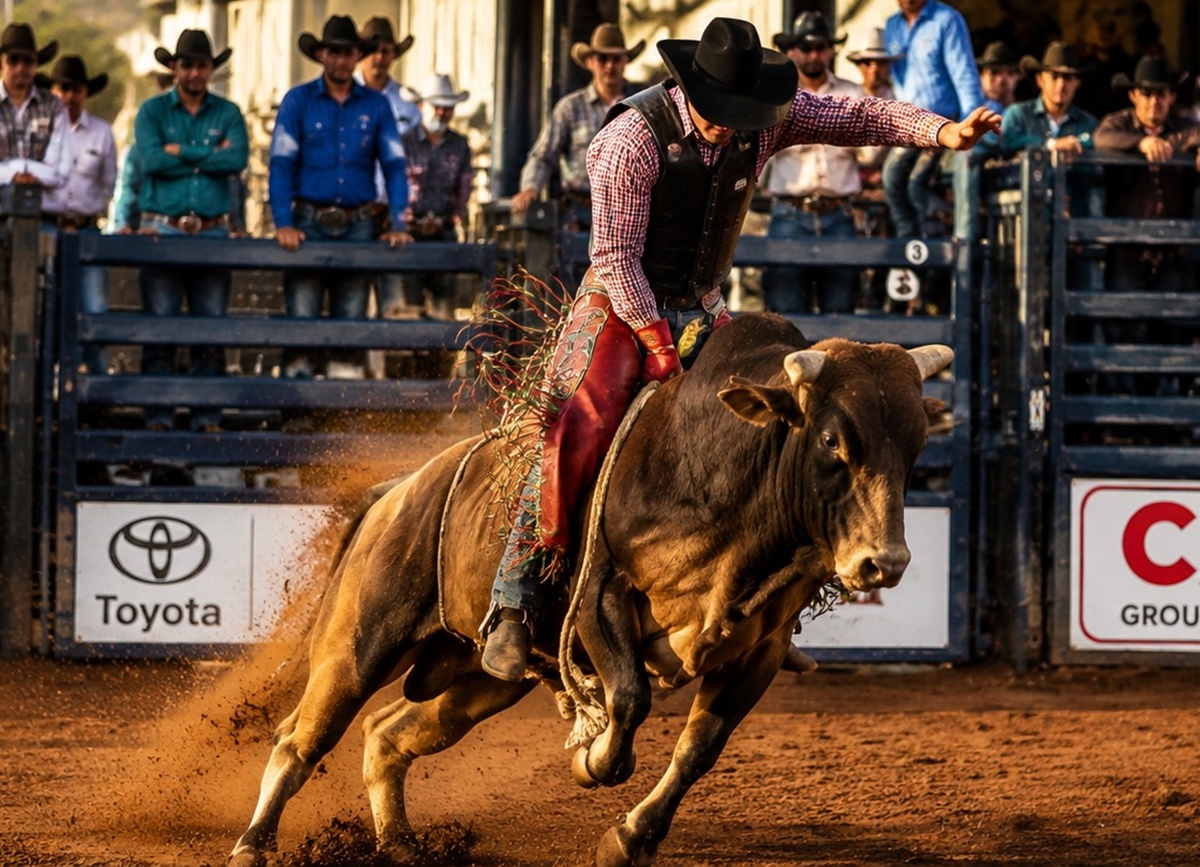
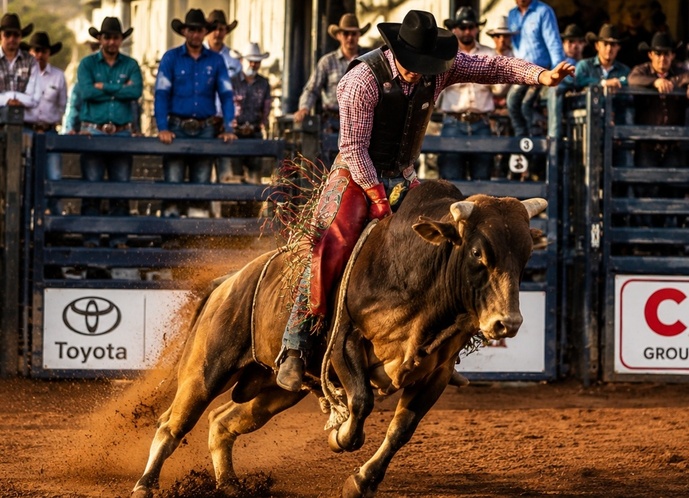
On the bulls, everything hinges on a braided rope, the bull rope, wound around the animal and tightened on the rider’s gloved hand. Only one hand is allowed to hold. If the other hand brushes the beast, that’s disqualification.
You must hold eight seconds on an animal whose every move seems aimed at one goal: to make you loosen your grip.
As soon as a rider nears the eight-second mark, the entire stadium rises and roars.
And there is another image, like a Western ride: the heifer bolts out, the horse bucks behind, the lasso spins above the hat like a halo. As soon as the loop drops, the cowboy dives from his mount, pins the beast to the ground, and ties its legs. A few seconds of surgical precision, at full speed.
On the bulls, everything hinges on a braided rope, the bull rope, wound around the animal and tightened on the rider’s gloved hand. Only one hand is allowed to hold. If the other hand brushes the beast, that’s disqualification.
You must hold eight seconds on an animal whose every move seems aimed at one goal: to make you loosen your grip.
As soon as a rider nears the eight-second mark, the entire stadium rises and roars.
And there is another image, like a Western ride: the heifer bolts out, the horse bucks behind, the lasso spins above the hat like a halo. As soon as the loop drops, the cowboy dives from his mount, pins the beast to the ground, and ties its legs. A few seconds of surgical precision, at full speed.
An Australian Tradition Before It Is a Show
What the French Travel Trade Can Do With It
For travel agencies, the commercial lesson from these three days boils down to one reversal: don’t tack rodeo onto an itinerary, build the itinerary around the rodeo.
The period corresponds to the austral winter, especially conducive to discovering this part of Queensland, and the event gives clients something brochures sometimes struggle to articulate: a concrete reason to travel on a specific date.
The product already exists on the map. Brisbane can serve as an entry point, before continuing to Longreach, Winton, and Mount Isa, by plane, by car, or by mixing several modes of transport.
Seven to ten days already allow a genuine immersion in inland Australia, with the rodeo as the culminating highlight.
Longreach adds the history of Qantas, the stockmen, and the Thomson River. Winton adds the dinosaurs, Waltzing Matilda, and a remarkably creative community. Mount Isa provides the grand finale and the arena.
One constraint remains: plan ahead. Accommodation capacity is not expandable, and the rodeo period inherently creates high demand. For a tour operator or agency aiming to build a program around the event, bookings must be made well in advance.
The coming years will offer several opportunities to shine a spotlight on Queensland. The 2027 Rugby World Cup, hosted in Australia from October 1 to November 13, will attract a substantial international clientele, including French visitors, even if it does not coincide with the August rodeo.
Then Brisbane 2032 will place Queensland at the center of international attention.
All of these occasions show travelers that beyond the coast and its iconic sights there is another Australia. The rodeo, at heart, is a hand that grips a rope and a hand raised toward the sky. For balance. And for style.
French professionals, seize the rope: the arena has been ready since 1959.
The period corresponds to the austral winter, especially conducive to discovering this part of Queensland, and the event gives clients something brochures sometimes struggle to articulate: a concrete reason to travel on a specific date.
The product already exists on the map. Brisbane can serve as an entry point, before continuing to Longreach, Winton, and Mount Isa, by plane, by car, or by mixing several modes of transport.
Seven to ten days already allow a genuine immersion in inland Australia, with the rodeo as the culminating highlight.
Longreach adds the history of Qantas, the stockmen, and the Thomson River. Winton adds the dinosaurs, Waltzing Matilda, and a remarkably creative community. Mount Isa provides the grand finale and the arena.
One constraint remains: plan ahead. Accommodation capacity is not expandable, and the rodeo period inherently creates high demand. For a tour operator or agency aiming to build a program around the event, bookings must be made well in advance.
The coming years will offer several opportunities to shine a spotlight on Queensland. The 2027 Rugby World Cup, hosted in Australia from October 1 to November 13, will attract a substantial international clientele, including French visitors, even if it does not coincide with the August rodeo.
Then Brisbane 2032 will place Queensland at the center of international attention.
All of these occasions show travelers that beyond the coast and its iconic sights there is another Australia. The rodeo, at heart, is a hand that grips a rope and a hand raised toward the sky. For balance. And for style.
French professionals, seize the rope: the arena has been ready since 1959.
Sébastien Cros
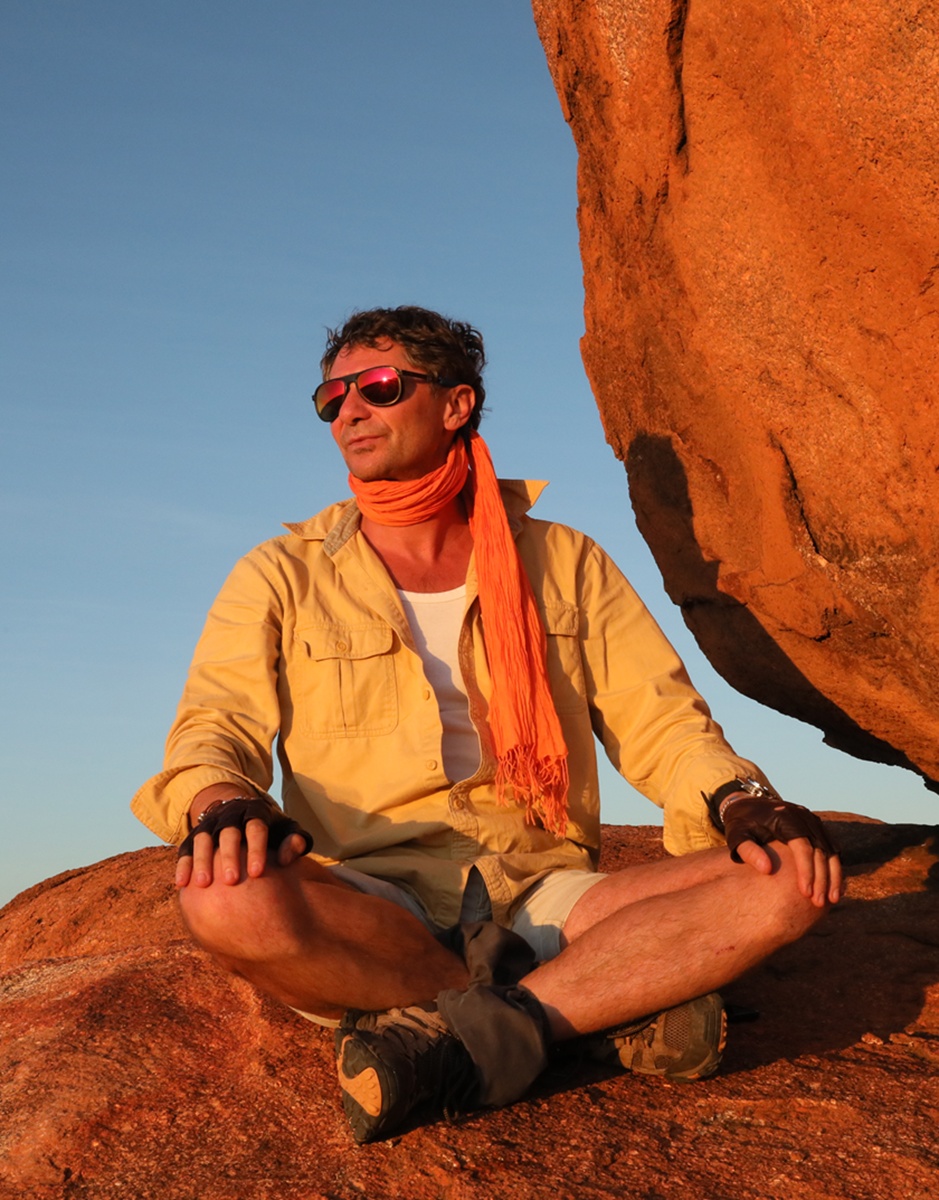
Sébastien Cros is an independent journalist and photographer based in Australia, founder of WeTravelAustralia™.
After a quarter of a century in the Australian tourism industry, notably as Managing Director of Across Australia (Goway group), he now devotes his writing to editorial narratives centered on the destination, blending storytelling, photography, and on-the-ground insight.
After a quarter of a century in the Australian tourism industry, notably as Managing Director of Across Australia (Goway group), he now devotes his writing to editorial narratives centered on the destination, blending storytelling, photography, and on-the-ground insight.