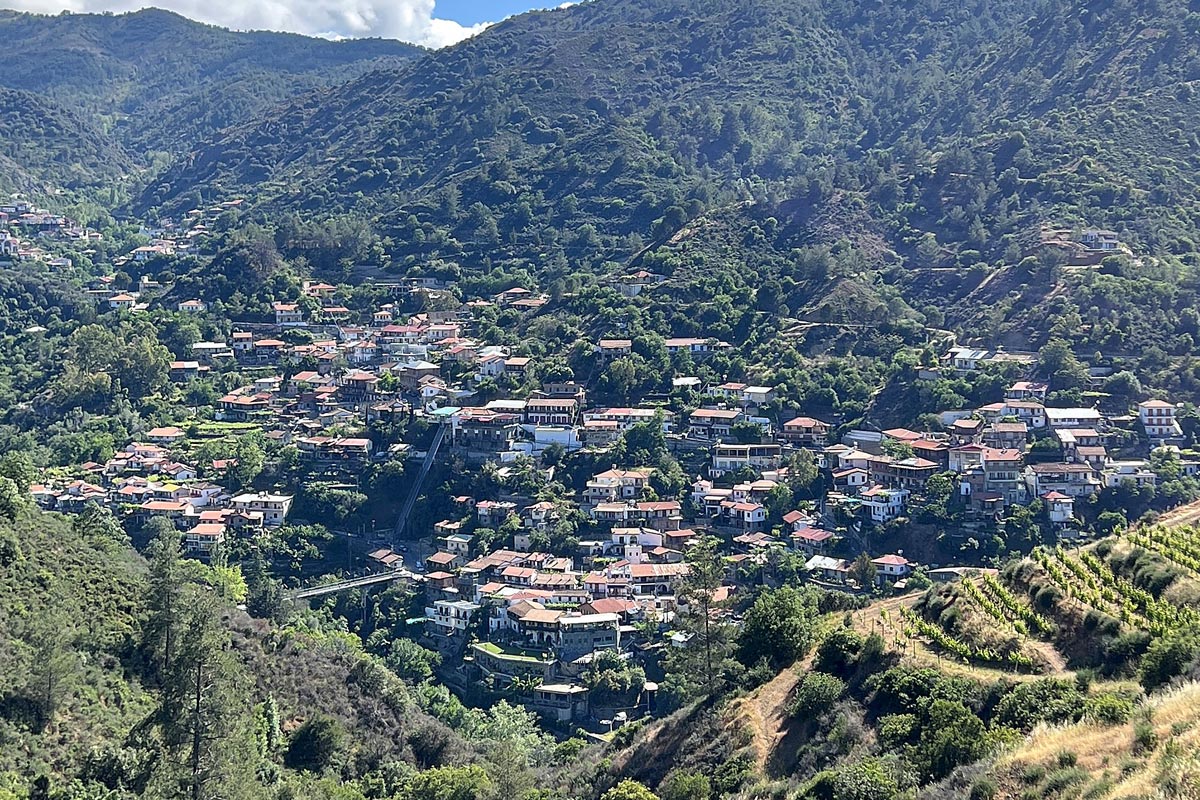


A vineyard untouched by phylloxera
Archaeological finds of wine presses and Neolithic amphorae unearthed at Pyrgos-Mavroraki attest to continuous viticulture for more than 5,500 years. But the island’s singularity lies elsewhere: phylloxera never reached it. The vines remained ungrafted, and Cyprus preserves ancient plant stock that the reconstruction of European vineyards has wiped out elsewhere.
Xynisteri, the most planted white grape, yields pale wines with moderate alcohol, between 11 and 12.5%, with notes of citrus and green apple; it expresses itself best at altitude. Mavro dominates on the red side. Rare varieties have been making a comeback for about thirty years: Maratheftiko, whose female flowers require co-planting for fertilization, and Yiannoudi, long thought extinct, which produces tannic reds with blackberry and clove. The professional landscape has also changed. Four large Limassol wineries historically held the market. Since 1989, more than sixty small regional cellars have established themselves, for a total of around 64 cellars registered today.
Sept routes balisées, du Troodos à l’Akamas
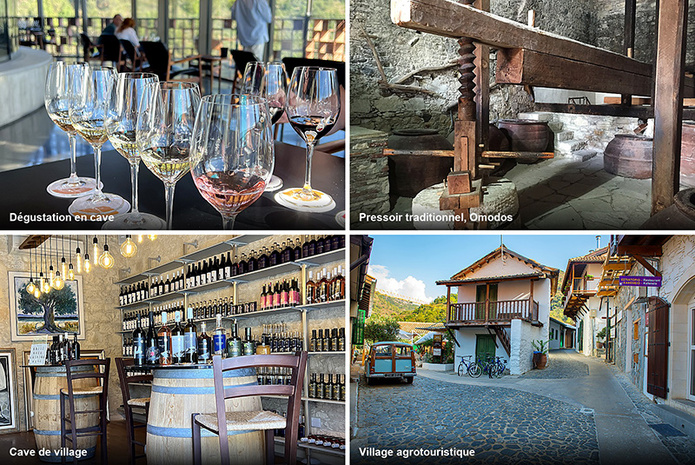
These itineraries are not limited to tastings. The Cyprus Wine Museum is located in Erimi; the Laneia antique press has been restored and Omodos preserves its “Linos” press beside the Monastery of the Holy Cross. Lofou, Vouni and Arsos are among the best-preserved stone villages in the south of the Troodos.
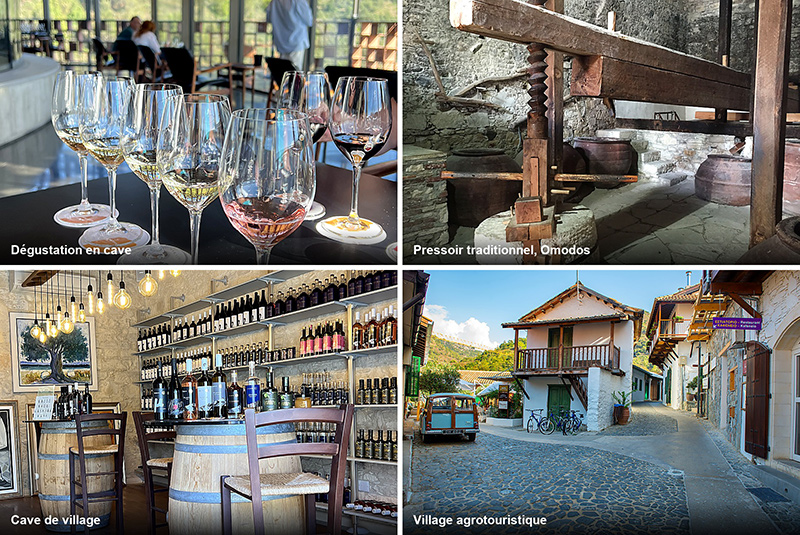
The Commandaria and the fourteen villages of the appellation
History plays a special role here, enjoyed by French-speaking visitors. Kolossi Castle, bastion of the Templars and then of the Knights of Saint John, marks the entry to the route. The wine’s name goes back to the Grand Commandery established in 1192. In the 13th century, tradition says that Philip Augustus crowned it during a “battle of the wines” bringing together European vintages.
Dormir au village, dans le bâti restauré
Creative Tours offers this format as a self-drive program. “Nature and Agrotourism” runs for eight days and seven nights, with a rental car, winter or summer. The itinerary goes from Larnaca to the village of Tochni, then into the Troodos massif, before reaching the west coast at Latchi. The chosen accommodations belong to village architecture and boutique hotel style. The program blends seasonal tasks, such as orange picking or olive gathering depending on the month, making halloumi, and heritage discovery: Lefkara and its lace, the Agros damask rose distillery, the artist village of Laneia, and the Byzantine monasteries of the Troodos listed by UNESCO.
The terroir can be tasted beyond the vineyard
The calendar follows the harvest. Limassol’s Wine Festival, the island’s oldest and most important, takes place in the municipal gardens at the end of September or early October: local cellars are represented there and the municipality offers the wines. The Pitsilia Wine Festival, in Pelendri, occurs around the same time with producers. Anogyra celebrates its pasteli in October, Agros the rose in mid-May.
Rendez-vous à l’IFTM Top Resa
Après 41 ans à Chypre, Creative Tours s’installe également à Athènes
This installation marks the culmination of a long-standing ambition: to offer tourism professionals local expertise, a tailor-made service, and direct access to the Greek market. Our method remains unchanged: a multilingual on-the-ground team, agreements negotiated directly with our hotel partners, and full control of the logistics chain, from transfers to exclusive circuits.
The adventure continues in Greece, with the same commitment to proximity, responsiveness and local knowledge that has accompanied Creative Tours for more than forty years.
Creative Tours Cyprus, réceptif francophone à Chypre


1 Arch. Makariou III, Mesa Geitonia, 4000 Limassol, Cyprus
Tel: +357 25 89 87 00
Email: [email protected]
Official site: www.creative.com.cy
B2B partner space: https://pro.creative.com.cy/login/sign_up?lang=fr
Group brochure 2027: on request
>> Creative Tours in the DESTIMAG Directory