Summary
-
1. Fjord Cruises like the Geirangerfjord
-
2. Visit Oslo
-
3. Northern Lights in Tromsø
-
4. Hike to Preikestolen
-
5. Exploration of the Lofoten Islands
-
6. Driving the Atlantic Road
-
7. Whale Watching in Vesterålen
-
8. Skiing and Winter Sports in the Lyngen Alps
-
9. Bryggen: dive into Bergen’s World Heritage
-
Is Norway an expensive country? A key question for properly planning your trip
-
What is the best time to visit Norway? Finding the season that suits you
-
What is the capital of Norway? A look at Oslo, a cultural and natural crossroads
-
What is the capital of Norway? A look at Oslo, a cultural and natural crossroads
-
What to do in Norway when it rains? Indoor activities for a different day
Norway, a Nordic country with diverse landscapes, captivates with its majestic fjords, impressive mountains, and the Northern Lights. Whether you seek wild nature, culture, or adventure, Norway has plenty to offer throughout the year.
1. Fjord Cruises like the Geirangerfjord
Exploring Norway’s spectacular fjords aboard a cruise makes for an ideal destination for travelers in search of grand landscapes and a unique geological immersion. From the Geirangerfjord to the Lysefjord, and the Nærøyfjord, some of which are listed as part of the world heritage, these cruises skim along sheer precipitous cliffs, revealing the southwest coast and the inland of a Norway shaped by the melting snows.
During summer, from May to August, longer days allow sailing while enjoying the midnight sun in parts of Norway. The excursion, often accessible by car from Bergen, offers a stunning viewpoint on Norwegian nature and can easily fit into a road trip passing through the Kms of Oslo and the southeast coast, all the way to the far northern reaches of the Arctic.
2. Visit Oslo
Oslo, a dynamic capital and cultural hub, serves as a strategic starting point to explore Norway, located only a few kilometers from Oslo to early forays toward the spectacular fjords and the inland. The city houses major cultural institutions such as the Fram Museum, the Munch Museum, and the Viking Ship Museum, reflecting the country’s rich historical and artistic heritage.
Its Opera House, with its contemporary design, dominates the waterfront and offers a unique view of the harbor. Between local specialties, street art works, and strolls in parks, the capital is enjoyed both in summer, during the long bright days of the summer months, and in the cooler season, and fits easily into a road trip toward Bergen or the southwest coast.
The Viking Ship Museum
Just a few kilometers from Oslo, the Viking Ship Museum houses an exceptional collection of ships from the IX century, remnants of a time when Norway dominated northern maritime routes. This museum traces with precision shipbuilding techniques and Viking funerary practices. The Viking Ship Museum in Oslo is currently closed for renovation and will reopen in 2027.
The Norwegian Folk Museum
Located on the Bygdøy Peninsula in Oslo, the Norwegian Folk Museum recreates in life-size form the traditional rural Norwegian home, with farms, standing wooden churches, and buildings from all regions of the country. This living reconstruction allows a single glance to embrace the diversity of Norwegian territory, from the southeast to the northern regions, through the inland.
Even in rainy weather, this outdoor museum represents a wonderful activity to understand the social and cultural foundations of a country both modern and rooted, often discovered during a road-trip from Bergen, or between two hikes on the white-sand beaches of the North.
Vigeland Park
The Vigeland Park, in the heart of Oslo, brings together more than 200 monumental bronze and granite sculptures by Gustav Vigeland, exploring the stages of human life. Free and accessible year-round, it represents an artistic viewpoint as well as a relaxing space during the summer holidays.
This iconic park, situated close to the city center, entices nature lovers with its broad tree-lined avenues, especially pleasant on good days and in the May month when the midnight sun begins to brush the Norwegian evenings. A stroll here perfectly complements a cultural stay in the great Norwegian city.
The Fram Museum
Located in Oslo, the Fram Museum displays one of the most famous polar ships in the world, a witness to the great Arctic expeditions toward the Svalbard archipelago and the Arctic capital. Through immersive experiences, the museum recounts the extreme conditions endured by explorers, faced with vast wildernesses, the melting snow, and sometimes polar bears.
This museum site fits into a broader reflection on Nordic explorations, found at other northern Norway sites accessible after several hours of hiking or via driving routes. It is recommended on rainy days or as a stop between two culturally or naturally oriented road-trip steps.
3. Northern Lights in Tromsø
Located in the northern Norway, Tromsø, regarded as the Arctic capital, is a must-visit reference for observing the aurora borealis. Between September and April, this large Norwegian city attracts nature lovers who come to witness this unique phenomenon, particularly spectacular during the long winter nights.
excursions departing from Tromsø often lead toward the Nordland county, across a vast preserved wilderness where the dancing lights reflect on the frozen fjords. Halfway between the Svalbard archipelago and Bergen, the region also offers a culturally enriching setting, marked by polar history and notable wildlife, including migratory bird species and occasionally polar bears visible further north.
4. Hike to Preikestolen
Overlooking the Lysefjord, the Cliff of the Pulpit, or Preikestolen, is an iconic rock formation in the southeast of Norway. Accessible via a marked trail requiring about four hours of walking, this hike is renowned for its switchbacks and broad views of the coastline from the parking lot to the summit.
With its 604 meters of elevation, the platform offers an exceptional vantage on one of the country’s most spectacular fjords, especially in the summer when the long days allow starting the walk late. For an optimal experience, plan to wear good shoes and include this stop in a road trip departing from Bergen or the Oslo area, traversing the southeast coast.
5. Exploration of the Lofoten Islands
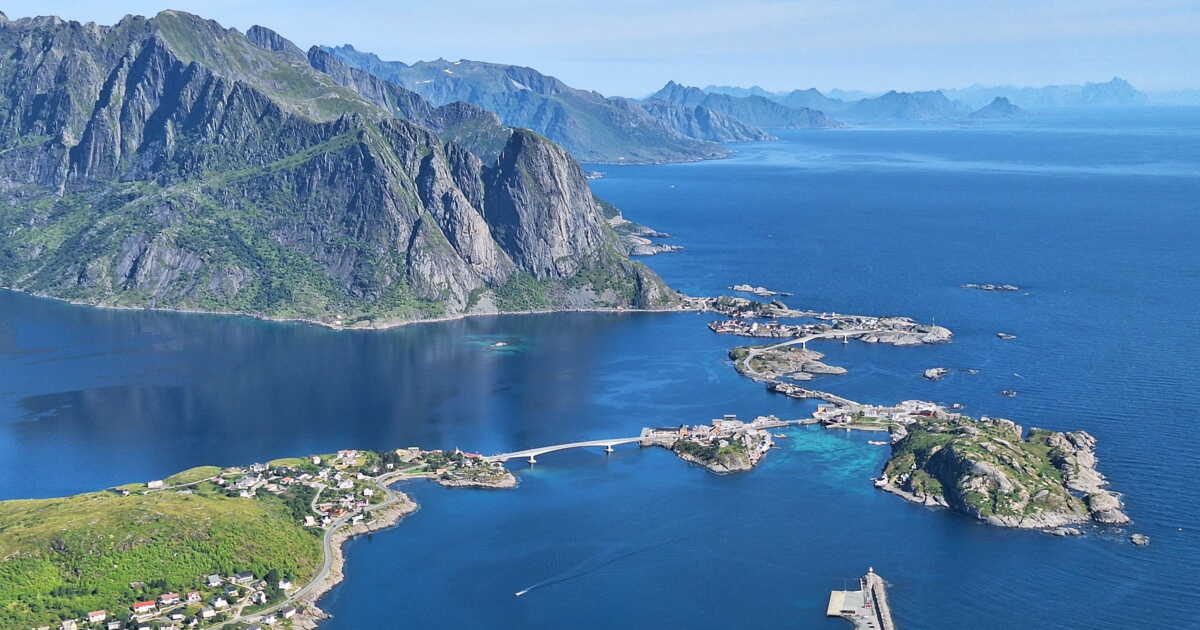
Located in the Nordland county, the Lofoten Islands are a jewel of the northern Norway, famed for their white-sand beaches, their sheer cliffs, and traditional fishing villages. This ideal destination blends rugged nature with local culture, offering activities such as kayaking, hiking, and fishing.
In winter, the aurora borealis is frequent there, while summer returns the long sunny days, perfect for travelers seeking light and adventure. From Bergen, a road trip across the country by car makes it possible to reach this archipelago, offering the opportunity for a complete Bergen-to-North Cape itinerary. These islands also serve as a sanctuary for various bird species, especially in spring, a prime time for naturalists.
6. Driving the Atlantic Road
The Atlantic Road, one of Europe’s most dramatic coastal routes, winds between rocky islets and modern bridges along the southeast Norwegian coast. Suited for a road trip, this route connects Kristiansund to Molde and can be included in an itinerary starting from Bergen. It offers a succession of viewpoints over a wild stretch of sea and mountains, where the summer days reveal the landscape’s intensity.
From the bay side, travelers can also discover traditional villages and sample local specialties. It is a route that appeals to nature lovers who enjoy panoramic driving and cultural stops.
7. Whale Watching in Vesterålen
The Vesterålen Islands, situated north of the Lofoten archipelago, are an international benchmark for whale watching, especially in the summer when cetaceans migrate northward. This activity attracts travelers seeking marine thrills and discovery of pristine ecosystems. Accessible from Tromsø or via a Bergen-to-North-Cape itinerary, the region is ideal for sea excursions guided by marine biologists.
Along the way, you cross bird-rich zones, traditional port towns, and rugged cliffs, perfect for photography and contemplation. The area is also part of the Nordland County, recognized for its commitment to sustainable tourism.
8. Skiing and Winter Sports in the Lyngen Alps
Located not far from Tromsø, the Lyngen Alps present an exceptional playground for winter sports enthusiasts. With their jagged peaks plunging into the spectacular fjords, these Nordic mountains enable backcountry skiing, dog sledding, or snowmobiling.
This region, despite its remote inland area, remains accessible by car via a well-maintained road network, even in winter. The May and March months are especially popular for spring skiing.
Midway between wild nature and professional guidance, the Lyngen allure appeals to nature lovers seeking thrills in a destination ideal where the midnight sun sometimes lights up late runs.
9. Bryggen: Delving into Bergen’s World Heritage
Bryggen, inscribed on the World Heritage List, stands as one of the most representative symbols of Bergen, this great Norwegian city situated on the bay side, in the southeast of Norway. This historic district, famous for its narrow lanes and colorful wooden facades, recounts the Hanseatic history of maritime trade. Easily accessible by car or on foot after a road trip from Oslo or the southeast coast, it embodies a wonderful cultural activity for travelers seeking authenticity.
Exploring Bryggen allows sampling local specialties, admiring street art works, and observing Bergen’s architectural evolution from an urban viewpoint. In the summer months, the good days extend the visit pleasantly until midnight in summer, offering a privileged moment to enjoy the city between the vast wilderness of the surrounding mountains and the bustling harbor.
The Norway, balancing preserved nature with cultural diversity, offers a wide range of activities for every traveler. Whether you are drawn to breathtaking winter panoramas or summer adventures, you will find an activity to suit you. Discovering fjords, cultural cities like Oslo, and phenomena such as the northern lights, creates unforgettable moments that will make your stay rich and diverse.
Consider exploring other lesser-known aspects of Norway to enrich your journey, and keep in mind the need for a flexible itinerary to fully enjoy this captivating country.
Is Norway expensive? A key question for properly planning your trip
Asking whether Norway is an expensive country is a legitimate question before organizing your stay. This Nordic nation, rich in facilities, modern infrastructure, and natural heritage, maintains price levels higher than the European average, especially in major cities like Oslo or Bergen.
Access to some major attractions, such as the Pulpit Rock or Trolltunga, may incur additional costs (transport, parking, accommodation). Nevertheless, Norway offers numerous free or low-cost nature experiences, which remain one of the country’s main draws. For travelers seeking rugged beauty and vast wilderness, the cost-to-experience ratio stays favorable.
What is the best time to go to Norway? Find the season that suits you
The best time to visit Norway largely depends on the activities you seek. The summer months, from June to August, offer pleasant temperatures and the opportunity to experience the midnight sun, particularly in northern Norway or the Svalbard archipelago.
These sunny days facilitate hiking—equipped with good footwear—toward iconic sites such as Trolltunga, which is accessible only after several hours of walking. May often marks the snowmelt in southern Norway and signals a busy tourist season ahead. In winter, travelers chasing the aurora borealis and tranquility also find an ideal destination.
What is the capital of Norway? A look at Oslo, a cultural and natural crossroads
The dynamic capital and largest city of Norway, Oslo sits on the southeast coast, close to many natural curiosities. It is the starting point for numerous road trips to Bergen or toward the inland. Situated a few kilometers from Oslo, nature quickly reclaims its space again, with fjords, forests, and white-sand beaches.
Oslo is also a cultural hub where one can discover museums like the Viking Ship Museum or the Fram Museum, which testify to Norwegian historical richness. A modern city, it embodies the alliance between urban development, sustainability, and heritage valorization.
What to do in Norway when it rains? Indoor activities for a different day
When weather turns fickle, Norway offers numerous cultural and historical options. Visiting the Norwegian Folk Museum reveals traditional buildings and everyday objects from different regions of the country. The Viking Ship Museum, with its preserved ships, delves into the Scandinavian maritime world.
Oslo and Bergen also teem with art galleries, street art works, and exhibition halls that enrich any rainy day. These visits complement summer or winter holidays with a deeper perspective on Norwegian society.
This article was written with the help of artificial intelligence, then edited, expanded, and validated by the newsroom journalists.