What if your next address was an entire island, accessible only by boat? Off the coast of the Shetland, Hildasay is offered for sale at 350,000 pounds sterling, or about 400,000 euros. This isolated tract of land spanning around one hundred hectares houses a quay, two freshwater lochs, and an old rudimentary dwelling. But behind these wild landscapes lies also a surprising history, marked by granite quarries and a small community once settled on the island.
A Wild Island Accessible Only by Sea
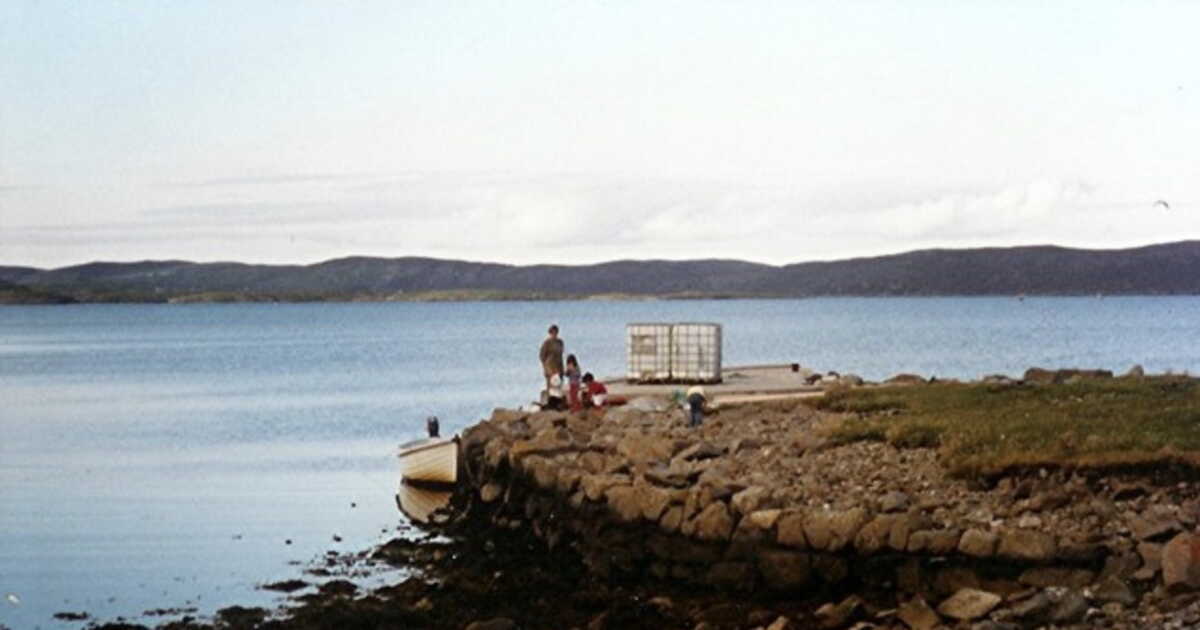
Located off the west coast of the Shetland Islands, Hildasay covers roughly 108 hectares. The island is not connected to any road, and access is available only by boat from the mainland or neighboring islands. It does, however, have its own quay, which serves as the main entry point to its shores.
The terrain remains relatively gentle. The highest point reaches about 32 metres, while the area hosts two freshwater lochs. A small traditional shelter, known in Scotland as a “bothy,” also provides a place to take cover on site. Simple and with little comfort, it mainly offers a privileged vantage point over the surrounding maritime landscapes.
The island also serves as a refuge for numerous bird species as well as a varied marine and coastal fauna, such as otters, eiders, guillemots, cormorants and Arctic terns.
For Kelvin Anderson, the real estate agency marketing the property, this is “an extraordinary opportunity to acquire Hildasay, a private island that is both beautiful and historic, located off the west coast of the Shetland”. The agency’s spokesperson, quoted in the listing, also describes the place as “a truly unique asset offering privacy and heritage in one of Britain’s most remarkable island landscapes”.
But behind this wild landscape and the sense of isolation lies a history far more dynamic, sharply contrasting with its current state.
Granite Exported to Australia and the Chris Lewis Adventure
By the end of the 19th century, the island was far from deserted. In 1891, around 30 people lived there and drew their incomes mainly from two activities: granite extraction and herring processing. The local stone, recognizable for its red and green hues, was exploited on a substantial scale.
A rail line specially laid allowed the blocks to be hauled to the port before shipment. According to the real estate agency, the granite quarried on Hildasay is said to have been sent as far as Australia. Even today, the remnants of this industrial activity are visible through abandoned blocks and the traces of the old railway.
This history, however, is not the only recent episode to have drawn attention to Hildasay. In 2020, during the Covid-19 pandemic, the British adventurer Chris Lewis visited the island. Aged 39 at the time, he was roaming the coasts of the United Kingdom and sleeping in a tent in the Shetlands when the lockdown was imposed on March 23.
With his dog Jet, he obtained a special permit to settle in the island’s lone house during the restrictions. His experience on the island later gave rise to a book, “Finding Hildasay”, devoted to his journey around the British coastline.
More than a century after the era when around thirty inhabitants worked there, Hildasay no longer hosts a permanent community. It is now offered as a rare private property, with its landscapes, its industrial ruins and its maritime access. All for 400,000 euros, a price that would allow its future owner to become master of an entire Shetland island, the price of an apartment in Paris.