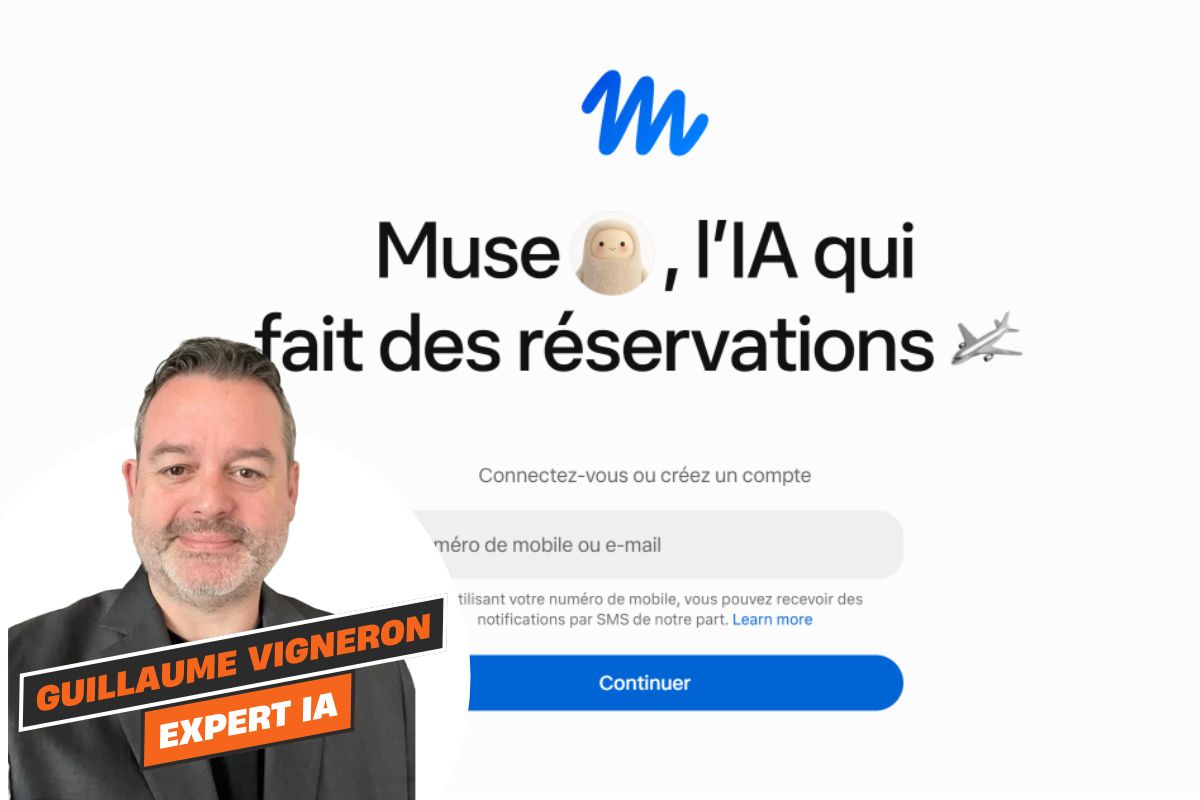


Behind the new agents such as Muse, Instinct, Hermes, or OpenClaw lies a far more important question: tomorrow, who will actually organize our trips, and above all, who will control the relationship with the traveler?
Since November 30, 2022 and the explosive launch of ChatGPT 3.5, generative AI has mainly accustomed us to chat: you ask your favorite AI a question, the model answers and can propose an itinerary for Athens, compare two destinations, or suggest a hotel.
Since the beginning of 2026, a new generation of tools, the AI agents, begins to take another step. This time—as the name suggests—they act.
This wave began at the start of the year with the release of OpenClaw on January 29, 2026, the principle of which will inspire all the other products: Hermes Agent in February, GrokBot and Instinct in August, and finally Muse from Meta in September.
In less than a year, the market has transformed around this (very real) promise: to move artificial intelligence from the status of interlocutor to that of a permanent executor.
From Simple Digital Advisor to Persistent Executor
 The travel sector could become one of the best testing grounds for this new generation of AI capable of taking action online.
 The reason lies in the very nature of a trip: planning four days in Copenhagen requires chaining together a considerable number of small operations such as searching for the cheapest flight, looking at hotels in the best location, knowing the exchange rate, checking museum or attraction hours, booking a good table, or tweaking the plan when weather changes.
Individually, none of these tasks is very complicated, but their accumulation — in AI terms, orchestration — is much more demanding.
This is precisely what AI agents seek to absorb.
A late-September Business Insider piece offers a fairly concrete glimpse of this evolution. Jay Eskenazi, a former UX professional at Expedia, tested several tools, including Muse, Instinct, and Grok Bot, during a three-week trip across Europe.
He no longer asked an AI merely to craft a travel program; he fed it his own notes, preferences, and constraints.
Muse could then reorganize his days by taking into account opening hours and ticket availability, and even showed signs of initiative: the agent suggested coherent geographic itineraries and could transfer them to Google Maps.
During the trip, it continued to adapt its recommendations based on newly available information. Impressive.
While it is not yet the fully autonomous travel agency promised by some marketing-driven rhetoric, the shift in usage is already visible: the user no longer necessarily looks up information before every decision but progressively delegates the search and organization to their agent.
From Information Search to Goal Definition
They open Google, Booking, Expedia, Airbnb or Skyscanner, compare results, click, and pay. Each platform thus tries to become the starting point of this search.
The AI agent changes this logic because a traveler could simply request:
“Organize four days in Lisbon for two adults, under 1,500 euros in total, with a view of the Tagus but not too far from the Bairro Alto.”
From there, the agent could query several services, compare prices with the user’s known preferences, verify cancellation conditions, and then prepare the booking so the traveler only has to click “accept.”
The economic battle would shift as soon as the question is not only which site appears first on Google, but which offer will be selected by the AI agent.
Accenture sums up this change quite directly in a study titled “Win the AI agent, win the traveler” published in September 2026.
According to this study, tourism companies must now think about their visibility to AI agents themselves, what is called GEO for Generative Engine Optimization.
If an agent compares hotels, loyalty programs, cancellation policies, and payment methods for its user, it becomes a decisive intermediary in the decision.
Tourism SEO could thus gradually gain a second target: after the human, the machine working for them.
Travel Players Do Not Stay Idle
Its CEO, Ariane Gorin, nevertheless believes that a single agent will probably not control the entire travel journey. She bets instead on a coexistence between multiple entry points and specialized agents.
Other players are already pushing further.
In Europe, Visa announces that it has completed real commercial transactions initiated by AI agents with participating merchants. Travel is among the sectors targeted by the development of these payment infrastructures.
eDreams ODIGEO is also working with Visa to enable identified agents to make reservations within parameters defined by the client.
The goal is precisely to distinguish an authorized agent from any automated traffic and to keep authentication mechanisms around payments.
The boundary between advisor and buyer is thus starting to become rather blurred.
Towards a Personal Traveler Agent?


His approach focuses on management, organizational, and performance challenges linked to integrating AI into companies. He has already trained over 1,500 professionals in the practical use of generative AI in their work.
Guillaume Vigneron also speaks as a lecturer on topics related to AI, the future of work, and organizational transformation.