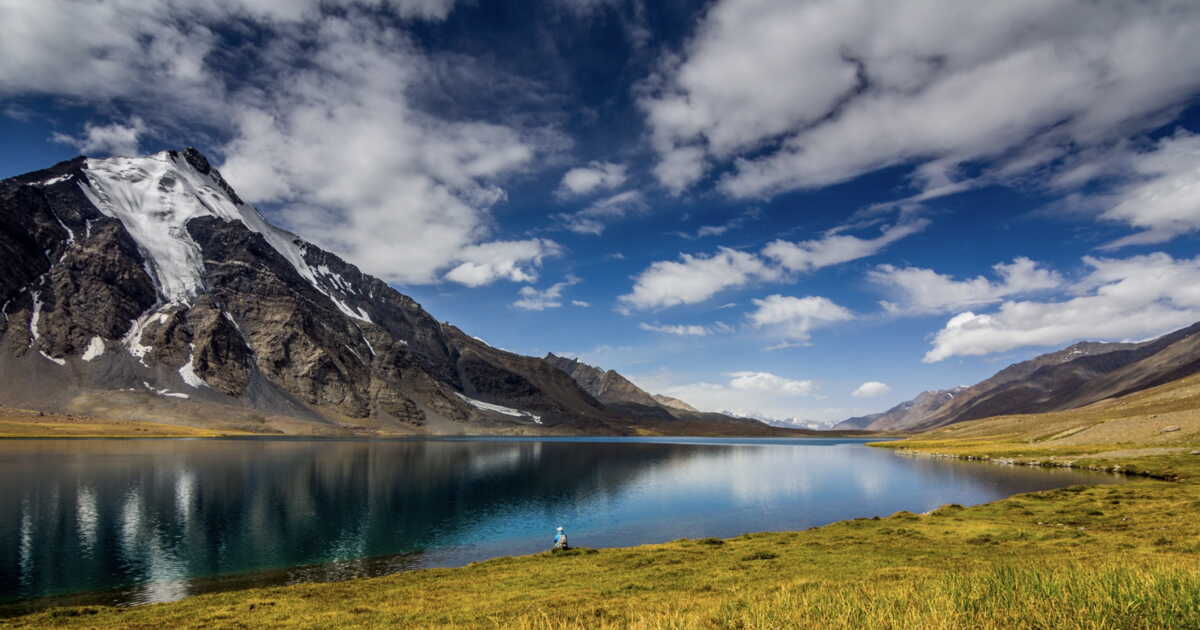
What if you went to speak with fairies? In northern Pakistan, certain ancestral traditions still form part of the daily lives of locals. In the Ishkoman Valley, snow-capped mountains, glacier-fed rivers, and isolated villages create a landscape that remains relatively untouched by tourists. The region is also home to surprising beliefs inherited from folklore long before the arrival of Islam. Among them is the practice of consulting individuals who claim to communicate with supernatural beings in order to obtain answers about the future, as the BBC reports.
Ishkoman, a remote valley at the heart of the Pakistani mountains
Located in Gilgit-Baltistan in northern Pakistan, the Ishkoman Valley ranks among the least-visited mountainous regions in the country. Close to the Wakhan Corridor in Afghanistan, it stands out for its snowy peaks, glacier-fed waterways, and villages nestled in a rugged landscape. In spring, flowering cherry trees also color the slopes and winding roads.
Accessing this secluded region takes time. From Islamabad, the Pakistani capital, the drive spans roughly 650 kilometers. It passes along the Karakoram Highway, a high-altitude international road that partly traces the ancient Silk Road route. Another option is to fly to Gilgit and then continue by car for four to five hours. Travel remains subject to the challenges inherent to mountain roads.
This geographical setting helps preserve an atmosphere distant from the bustle of major tourist hotspots. In Chatorkhand, a village in the valley, accommodations offer a chance to discover mountain life, with riverside strolls and flocks of sheep. Hiking enthusiasts can also take a 45-kilometer route between Nalter and Ishkoman, doable in three or four days. The trek includes crossing Pakora Pass at an altitude of 4,700 meters and a glacier crossing.
The cultural life is another important aspect of the region. The majority of the population is Isma’ili Muslim, a branch of Shiism that places particular emphasis on the spiritual dimensions of faith. Local gatherings can be animated by the dadang, a drum, and the rubab, a string instrument, to the rhythm of traditional dances such as the Dani Hareep.
Ancient beliefs still present in the valley
Ishkoman also preserves traditions related to the Peris, supernatural beings from the folklore of the Chitral region. Inspired by Persian mythology, these are celestial-spirit creatures or winged, luminous fairies of immense beauty. In northern Pakistani tales, they are portrayed as benevolent spirits or women wearing traditional local outfits (such as the Cholo or the Shalwar) with large bird wings. These figures belong to stories that predate the spread of Islam in the area. According to traditional beliefs, they move between the human world and the divine realm.
Shamans were once reputed to be able to communicate with these beings and seek their counsel. While this practice sharply declined over the last century, a few individuals continue to keep it alive. Among them is Rashida, a valley resident who is known for her consultations, during which she claims to relay the Peris’ answers.
Visitors as well as locals come to her with questions about their futures. This tradition coexists with Muslim religious practices, and those who consult her do not necessarily see a contradiction. It testifies to the persistence of ancient beliefs in a region where different worldviews have stacked on each other over centuries.
The valley also features linguistic particularities that reflect its cultural diversity. “The only Ishkoman valley has ten languages spoken”, explains Sana Marwat, co-owner of a local tourist accommodation, to the BBC. Khowar, also called Chitrali, is among the most common languages, but it is very different from Urdu, the national language of Pakistan.
Finally, tourism initiatives can help shift the role of women within the local economy. In some valley establishments, women now hold paid jobs, a situation still relatively uncommon in this region. The implementation of work schedules adapted to family responsibilities makes it possible to balance work and home life.
Between high-mountain landscapes, musical traditions, and ancient beliefs, Ishkoman thus offers a glimpse into a rural Pakistan whose cultural practices remain largely unfamiliar to outsiders.