

Then, as the seasons passed, I realized there was another category of travelers, just as fascinating. Those who returned. I remember hearing these few words repeatedly on the quays: « We have been here before… ».
This phrase could be followed by « …with another company », « …three years ago » or even « …it was our first cruise on the Seine ».
If these travelers returned, it was because they had kept an excellent memory of their previous cruise. But this loyalty brought with it a new responsibility. Would we manage to give them a new experience, without denying what had attracted them the first time?
Also read : River port manager: this behind-the-scenes role that makes all the difference
A loyalty that goes beyond the destination
 When we return to the same region multiple times, our way of traveling naturally evolves. The first time, we discover the musts.
The second time, we seek more confidential places, a different ambiance, encounters, and more authentic experiences. We no longer simply visit a destination; we aim to live it differently.
In river cruising, this logic is a little different. Of course, you reconnect with a ship, a crew, a level of service and that distinctive atmosphere that left its mark on your first journey.
But you also reconnect with a river, landscapes, towns, villages, a heritage and emotions that made you want to return.
Major companies now offer itineraries across several rivers, sometimes in several countries. If a client decides to sail again on the Seine rather than discover the Rhine, the Danube, the Douro or the Rhône, it is because they were seduced not only by the company… but also by the territory it allowed them to discover.
Their loyalty is thus not tied solely to the boat, nor solely to the destination. It arises from the meeting of the two. Between the experience lived aboard and the one lived ashore. It is precisely this alchemy that makes loyal travelers so distinctive.
A challenge that destinations do not always see
The destination, however, almost always ignores it. Yet it will have to satisfy everyone: the traveler who is discovering, just like the one who returns. Thus, the same excursion must persuade, on the same day, a first-time visitor awed by the discovery… and a loyal traveler who already knows the classics.
Some might be tempted to renew excursions systematically. However, the must-sees remain must-sees.
After all, the Seine would not truly be the Seine without the Eiffel Tower, Monet’s Giverny, or the beaches of the D-Day landings.
These sites form part of the very identity of this cruise. They are often the reason travelers chose this itinerary. Removing them in the name of novelty would be a mistake. Yet thinking that they alone suffice would be equally misguided. The loyal traveler does not necessarily seek a new destination. They seek a new way to live it.
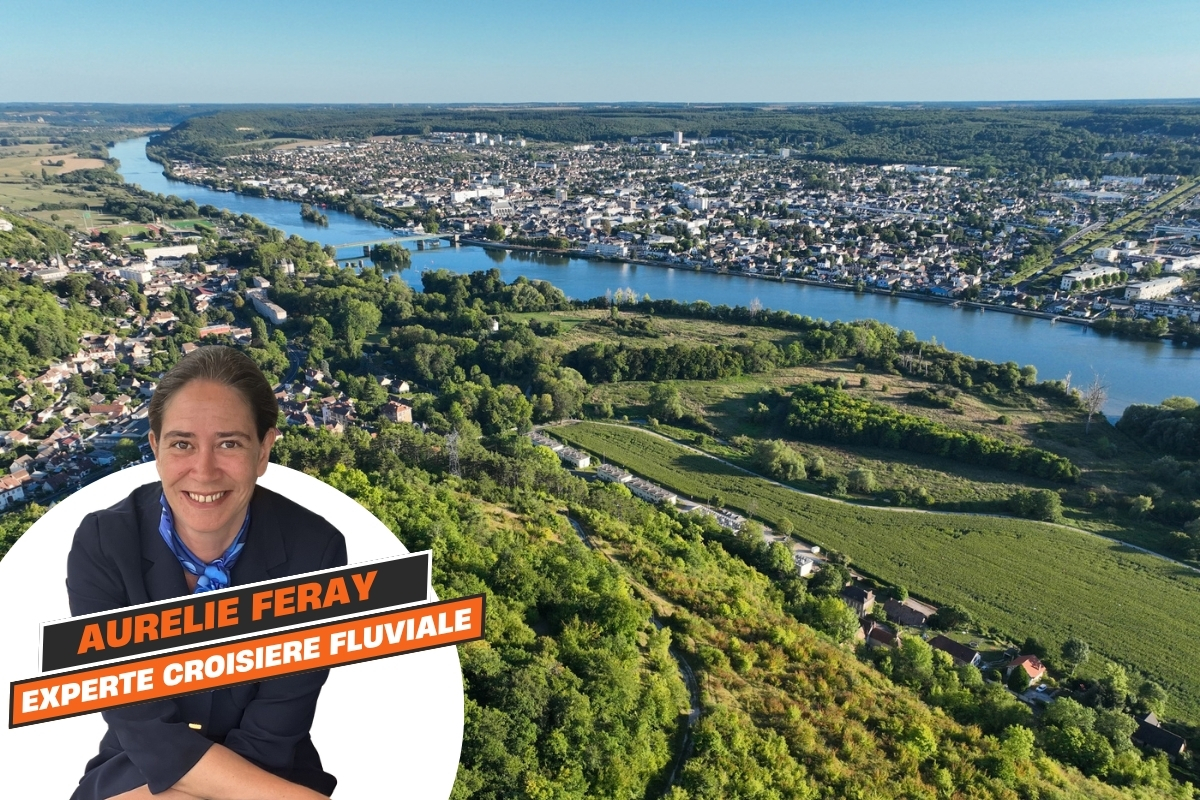
The one who has already admired Giverny might enjoy returning there. But they will be just as happy to extend their day in Vernon, meet a craftsman, discover the banks of the Seine, participate in a local event or simply spend more time strolling.
Every territory has stories just waiting to be told.
A tremendous opportunity for the regions
It is also a chance to distribute flows more evenly, to showcase lesser-known places, to highlight artisans, producers, guides or events that struggled to find their place in traditional itineraries.
Each new experience offered gradually broadens the discovery of a territory. And it widens the economic ripple effects of the cruise. This reflection obviously concerns destinations.
But it also speaks to cruise companies. Destinations know their territory. They know which new experiences can be proposed, which partners deserve to be promoted, and which events can enrich a port call.
The companies, for their part, know their travelers. They know who discovers the river for the first time, who returns regularly, which excursions have already been done and what their clients’ interests are.
It is in this complementarity that perhaps lies one of the major challenges for river tourism in the future. It remains to ensure that this knowledge circulates more.
Without going so far as to customize every excursion, better sharing this information would already allow us to imagine more scalable offerings and to better anticipate passengers’ expectations.