What if your next trip could bring you face to face with living beings that have endured for thousands, even hundreds of thousands of years? From California’s forests to the depths of the Mediterranean, certain sites shelter exceptional witnesses to Earth’s history. Monumental trees, centenarian animals, and plants capable of surviving in extreme conditions offer as many discoveries for travelers eager to stray from the beaten path. Here are ten destinations listed by CNN where you can observe these astonishing survivors, sometimes at the heart of spectacular landscapes.
Des forêts américaines aux îles méditerranéennes, sur les traces des doyens végétaux
Head to California, in the western United States, to encounter one of the planet’s oldest living trees. In the White Mountains, the Western Bristlecone Pine, also known as the Methuselah Pine (Pinus longaeva), is believed to be around 5,000 years old. Regarded as the oldest non-clonal living organism known, it owes its name to the biblical figure famed for living 969 years. Its exact location remains secret to prevent damage, but a 7.2–kilometer hike through the Inyo National Forest allows visitors to discover other multi‑millennial bristlecones. Their gnarled silhouettes rise on arid ridges, in a landscape that reminds us some trees stood before the construction of the pyramids of Egypt.
Another atmosphere in Utah, where the Trembling Giant, or Pando, spans over more than 40 hectares. This colony brings together nearly 50,000 quaking aspen (Populus tremuloides) that are genetically identical, linked by a shared root system. It is therefore a single organism, with an age estimated at around 80,000 years. To discover this vegetal giant, travelers can stay in a campground located at the heart of the Fishlake National Forest. When the wind rustles the leaves of thousands of trunks, the sound of this forest takes on a unique dimension.
In Europe, head to Crete, Greece, where an olive tree in the village of Vouves still bears olives after about 2,000 to 3,000 years of existence. Its massive, weathered trunk attracts artists, politicians, and visitors fascinated by its longevity. A museum dedicated to traditional olive harvesting methods also reveals the importance of this tree in the island’s agricultural history, once at the heart of Minoan civilization.
In Germany, in Hildesheim, a rose about 1,200 years old grows against the Saint Mary’s Cathedral. According to tradition, it was planted in 815. Despite the bombings of the Second World War that left the building in ruins, it survived and now reaches more than nine meters in height. To see it in bloom, plan a visit at the end of May or the beginning of June.
Des Andes à l’Antarctique, des rencontres rares au bout du voyage
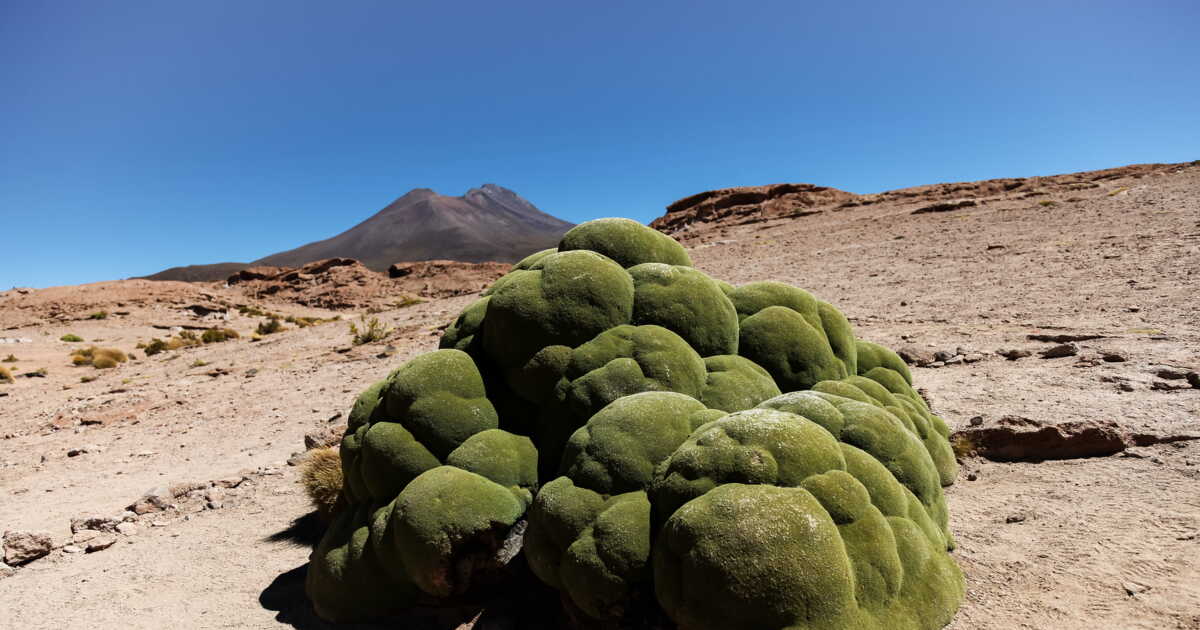
Fans of more unusual destinations can set off to explore the Andes, spanning Peru, Bolivia, northern Chile, and western Argentina. At high altitude, the yareta (Azorella compacta) forms vibrant green masses that resemble rocks covered with moss. This plant from the Apiaceae family withstands freezing temperatures, wind, and drought. Its growth is so slow that it gains only about one meter in a century. The largest specimens could thus reach 3,000 years. Once burned as fuel, it is now protected in several South American countries.
For an underwater discovery, head to Formentera, the smallest of Spain’s Balearic Islands. Off its shores, a posidonia meadow (Posidonia oceanica) stretches for nearly 16 kilometers. This organism, which reproduces clonally, would be around 200,000 years old and ranks among the oldest living organisms known. Diving and snorkeling allow exploration of this Mediterranean ecosystem. On land, visitors can also explore the island, discover its caves and lighthouses, far from the bustle of neighboring Ibiza.
For the more seasoned travelers, the journey can extend to Antarctica. In the icy waters of the McMurdo Sound, volcanic sponges (Anoxycalyx joubini) could have lived for around 15,000 years. Their age is estimated from their size and exceptionally slow growth. They can reach up to two meters tall and grow between 15 and 150 meters in depth, in a habitat populated by small crustaceans, worms and starfish. Only experienced divers, accompanied by operators capable of organizing dives under the ice, can hope to observe them.
Other encounters are more accessible. On Saint Helena, in the South Atlantic, Jonathan, a Seychelles giant tortoise, was born around 1832. Now about 194 years old, he still lives on the governor’s estate, where he was brought in 1882.
In the Pacific, Midway Atoll, northwest of the Hawaiian archipelago, hosts Wisdom, a Laysan albatross of about 75 years. Since its banding in 1956, the female is believed to have flown more than 4.8 million kilometers in her life and raised at least 30 chicks. The bird regularly returns to this atoll to breed, despite a journey marked by surviving a tsunami.
Finally, in Sri Lanka, the Mahamevnawa gardens in Anuradhapura host Jaya Sri Maha Bodhi, a sacred fig tree around 2,300 years old. Derived from a cutting taken from the tree beneath which Buddha is said to have attained enlightenment, it is regarded as the oldest planted tree with a documented date. Today, pilgrims and visitors still come to pay homage, especially on full moon days.
Whether hiking in the mountains, staying on islands, or setting off on polar expeditions, these destinations add a new dimension to travel: that of meeting organisms that existed long before us and whose preservation is a major challenge.