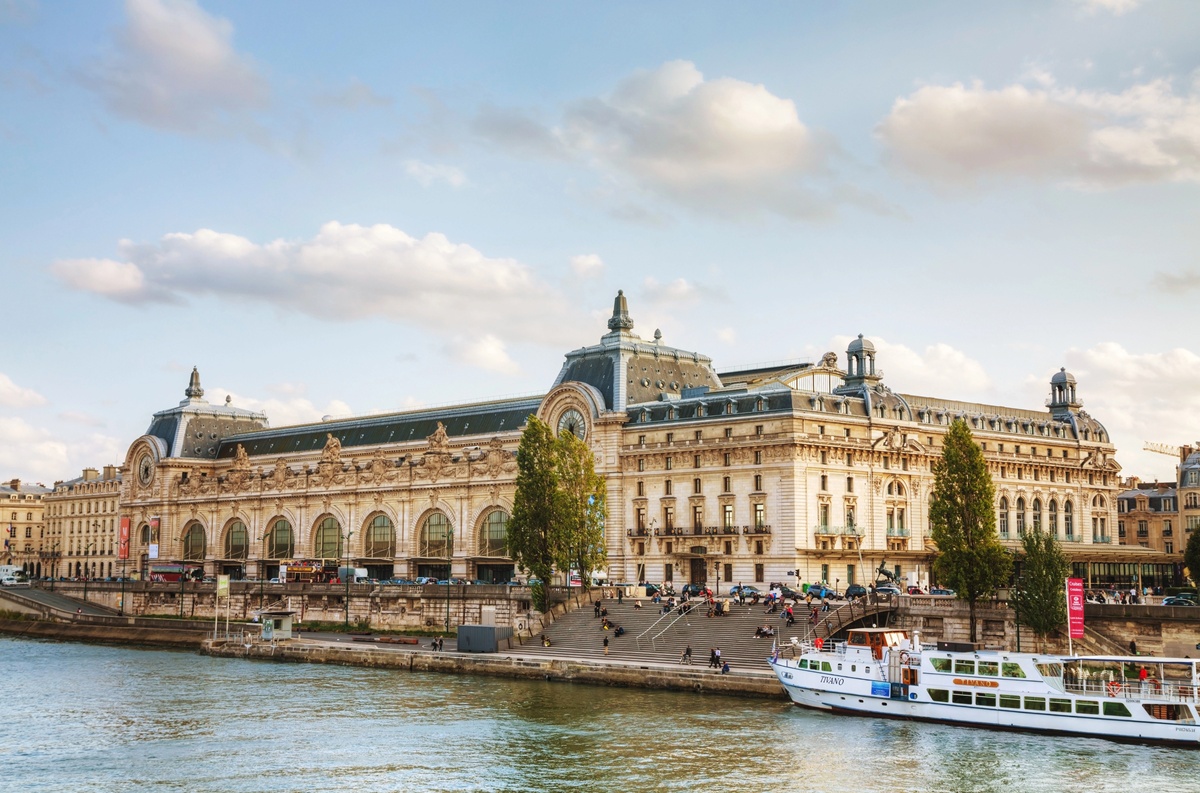
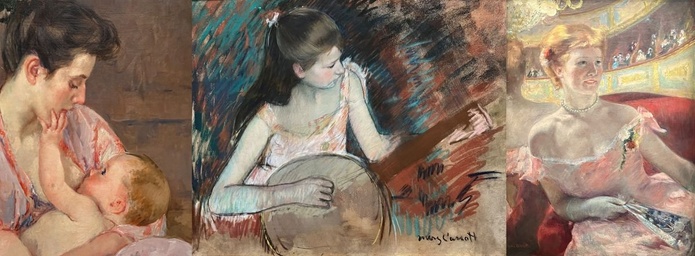


It is an unprecedented retrospective that the Musée d’Orsay in Paris is presenting up to January 31, 2027.
Realised in collaboration with the National Portrait Gallery in London and the Museum of Fine Arts in Boston, it showcases the breadth of talent of a painter little known to the French public, the American Mary Cassatt.
Until now, French national museums had never dedicated major exhibitions to this important figure of the Impressionist movement who, a friend of Manet, Berthe Morisot, and Edgar Degas, nonetheless lived six decades in France.
Organized on the occasion of the centenary of her death, the Orsay Museum exhibition comprises more than 80 paintings, prints and pastels, drawn from European and American collections.
It is an engaging portrait of this artist that emerges. Mary Cassatt had made independence the guiding principle of her life. In a milieu that was then largely male-dominated, she managed to establish herself as a professional painter. And to live from her art.
Her depictions of elegant young women, moving in society, hosting at home or enjoying theater, are delicate. Moving, her paintings of “mother and child”—her favored theme—convey a most striking sense of life in motion.
They also reflect a tender intimacy that Cassatt herself did not personally experience: at her time, women’s lives remained largely governed by conventions and prejudices; she remained single, dedicating herself entirely to her career.
Linked to American elites by birth, Mary Cassatt also played a pioneering intermediary role with American collectors to acquaint them with the French avant-garde of the period. This modern, engaged woman also actively participated in the fight for women’s suffrage.
Cézanne, the other autumn blockbuster exhibition
In addition to introducing this American artist, the Musée d’Orsay is devoting, until January 31, 2027, an exhibition—and an immersive virtual reality experience—to Auguste Bartholdi, a major figure of 19th-century French sculpture, best known to the general public for his Statue of Liberty.
Symbolic of the ideals of his era, this gigantic work, installed in New York Harbor since 1886, has since stood as a major and universal symbol.
Moreover, the Grand Palais is hosting a blockbuster exhibition “Cézanne and Us” which traces, with nearly 180 works, how the work of the Aix-en-Provence painter (1839-1906) has been discovered, interpreted, and transformed, from the late 19th century to today.
We should also mention, at the Louvre, the exhibition devoted to the important 17th-century Spanish painter Francisco de Zurbarán (until January 25, 2027), the exhibition “Eternal Tintoretto” at the Jacquemart-André Museum, the “First Nations” exhibition at the Quai Branly Museum (until January 10, 2027) or, at the Petit Palais, the exhibition “Bruxelles 1900” which will offer a plunge into the artistic scene of the Belgian capital at the turn of the 20th century and the Belle Époque, highlighting its role as a major hub of European modernity.
Finally, two expositions continue to mark Monet’s centenary: “Monet, Painting Time” at the Musée de l’Orangerie (until January 25, 2027) and “Histories of Landscapes: From Monet to Hockney” at the Musée Marmottan, also until January of next year.
Also read: A stroll in the Seine valley, in Claude Monet’s footsteps.
Beyond Parisians and provincial audiences, these exhibitions—especially those around Monet and the Cassatt retrospective—are likely to attract a broad international clientele, including Americans.
There is little doubt if one recalls that between March and July of this year, the exhibition “Renoir and Love: The Happy Modernity” drew 644,855 visitors at the Musée d’Orsay. And the exhibition “Matisse” drew 567,188 visitors at the Grand Palais.
During the summer, a drop in museum attendance and revenue
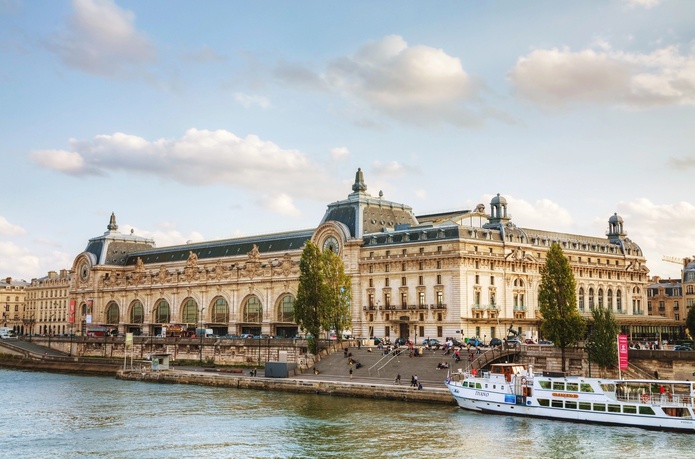
Just like these blockbuster exhibitions, museums and their permanent collections are an asset to the Parisian tourism industry.
Unless it is Paris’s excellent tourism momentum (+8.3% year-on-year in May 2026) that directly feeds the queues at exhibitions and museums.
However, last summer, repeated heat waves weighed on the attendance of Parisian museums. Indeed, the Louvre had to close 11 times from 4 p.m. during heat peaks in June and July 2026, resulting in the cancellation of 60,000 tickets, a 9% drop in attendance compared with summer 2025, and revenue losses estimated at 1 million euros.
The Louvre is by no means an isolated case. Other Parisian museums and cultural venues, and even Versailles Castle, had to adjust their hours, temporarily close certain spaces, or curtail activities during heat peaks, thereby recording declines in attendance and financial losses for the season.
Nevertheless, this negative impact was absorbed by other periods, so that overall annual attendance should not collapse.
According to Paris je t’aime, the total number of tourists in Greater Paris remained stable compared with 2025 (6.4 million visitors). Indeed, during the summer, visitors largely changed their habits, shunning museums to seek outdoor coolness.
 Published by Paula Boyer Journalist LuxuryTravelMaG – TourMaG.com
See all articles by Paula Boyer


Ajoutez TourMaG à votre flux Google Actualités