

But for a long time, it has been our hotels, in Greece, in Spain, in Tunisia or in Mauritius, that keep it alive on a day-to-day basis under the Lookéa, Marmara, Framissima or Bravo brands.
The tour operator brings the brand, the plane and the entertainment; we bring the walls, the dining, the teams and the service.
A question is therefore worth asking frankly: we hoteliers, do we really know what this contract is worth, and under what conditions does it allow us to serve this guest well?
A Demand That Persists: A Chance for Our Occupancy Rates
 The figures should reassure our commercial management.
In the 2024/2025 fiscal year, Seto member tour operators generated €4.36 billion in revenue for nearly 2.9 million guests [1].
By the end of December 2025, bookings for summer 2026 at clubs were up 44.3%, with Greece taking the lead over Spain [1].
Despite a spring slowed by the Middle East conflict, the September balance shows that standalone clubs rose by 1.5% while itineraries dropped by 16.2%.
For us, the lesson is clear: a hotel positioned as a club has a steadier fill base than the market average.
Club Med sets the high benchmark: in 2025, an average daily rate of €241 and 75.8% occupancy, with the objective of 100 villages in ten years. Which hoteliers wouldn’t dream of such indicators?
They prove above all that a well-executed club concept can sustain high prices.
Who is the guest we host?
The senior couple, increasingly present in June and September, evaluates us on quietness, the dining, and the quality of the bedding.
The active couple or the solo traveler expects sport and socializing.
TUI France has, moreover, segmented the Lookéa offering into two atmospheres, festive and relaxing [2].
Is our hotel designed to allow these audiences to coexist without conflicting uses? And do our teams speak French, from reception to the maître d’hôtel?
What Our Tour Operator Partners Experience
In France, a club commits to six months, compared with around four on the Italian market [3]: this is, for us, a lever to extend the season, but also a shared risk.
The tour operator faces higher airfares, direct sales (Club Med achieves 73% direct or semi-direct sales), the decline of families using agencies, down 6% by summer 2025, heat that pushes seniors toward September, and geopolitical risk.
Concentration is accelerating: in 2025, Karavel Fram acquired Alpitour France and its Bravo Club and Sea Club brands [3]. Fewer interlocutors means, for us, a shrinking negotiating power. How can we rebalance it?
The Right Price: Our Equation Before Any Signature
The North American Model: A Competitor Arriving Here
Hyatt claims more than 150 all-inclusive resorts and 58,000 rooms, Marriott runs 38 with 20 projects in development [7], and Hyatt strengthened its position in 2025 with the acquisition of Playa Hotels & Resorts.
Moreover, six out of ten American and Canadian travelers say they are more likely than five years ago to choose all-inclusive, and 84% of those who have tried it would return [7].
Canadian tour operators, from Transat to Sunwing, have made it central to their offer to Mexico and the Caribbean, and Club Med opened a village in Quebec, in Charlevoix.
What should prompt European hoteliers is their method: à la carte dining rather than a single buffet, loyalty programs that retain guests, and adults-only spaces.
Most of all, these chains are arriving on our shores: Hilton already operates all-inclusive resorts in Crete and Rhodes, and Hyatt targets Greece and Portugal [8].
Are our independent club-contract hotels ready to face better-capitalized, better-distributed competitors?
What Loses Value in Our Hotels, What Gains in Reputation
– Gain visibility: the accessible premium, adults-only spaces, eco-clubs and ecolodges announced by TUI France for 2027 [5], mountain destinations (+10% at Club Med in 2025), unusual formats like a club cruise on the Nile [5], and experiences rooted in local culture.
Each hoteliers should ask themselves in which column their product sits today.
The Club of Tomorrow Is Built in Our Hotels
– wellness spaces (yoga, sleep, healthy eating)
– local gastronomy served à la carte
– verifiable sustainability (Club Med reports 97% of its resorts Green Globe certified [10])
– digital personalization
– multigenerational welcoming
– and climate adaptation, with more shade, staggered hours and extended seasons.
These investments are the responsibility of the owner and the operator, not the tour operator. Have we included them in our renovation plans?
Five Priorities for Us, Hoteliers
Second, invest in family infrastructures and quiet spaces.
Third, train our teams to welcome in French.
Fourth, offer the tour operator flexibility on the shoulder seasons, where senior demand grows.
Fifth, measure satisfaction continuously: at TUI, the clubs’ activities score 8.9 out of 10 [4], and it is this level of rigor that decides renewal of our contracts.
The French-speaking club is not a product of the past, but a demanding, predictable and loyal market. It will reward hoteliers who know their costs, invest in their product, and negotiate as partners, serving a client who will not compromise on quality.
Sources
[2] Le Quotidien du Tourisme (2025). Summer 2025: new features in TUI clubs; TUI France, Lookéa Club page, tui.fr.
[3] L’Echo touristique (février 2025). Karavel/Fram buys Alpitour France, to give it a chance to grow.
[4] Tavares, J.M. et Kozak, M. (2015). Tourists’ preferences for the all-inclusive system and its impacts on the local economy. European Journal of Tourism, Hospitality and Recreation, 6(2), 7-23.
[5] Arbelo-Pérez, M., Arbelo, A. et Pérez-Gómez, P. (2019). Impact of all-inclusive packages on hotel efficiency. Current Issues in Tourism, 22(8). doi:10.1080/13683500.2017.1323850
[6] All-inclusive and value creation in hospitality: Evidence from a mature destination, 2001-2017 (2019). Tourism Management, 74, 234-246.
[7] Levine, I. (31 juillet 2026). Why Hyatt and other global giants are betting big on all-inclusives. Forbes.
[8] Hotel Dive. Hyatt brand leader talks all-inclusive strategy, global travel trends. hoteldive.com
[9] Le Quotidien du Tourisme (2025). TUI France: 24 clubs open this winter and new concepts for 2026-2027.
[10] La Tribune de l’Hôtellerie (2026). Club Med annual results 2025, CSR section.
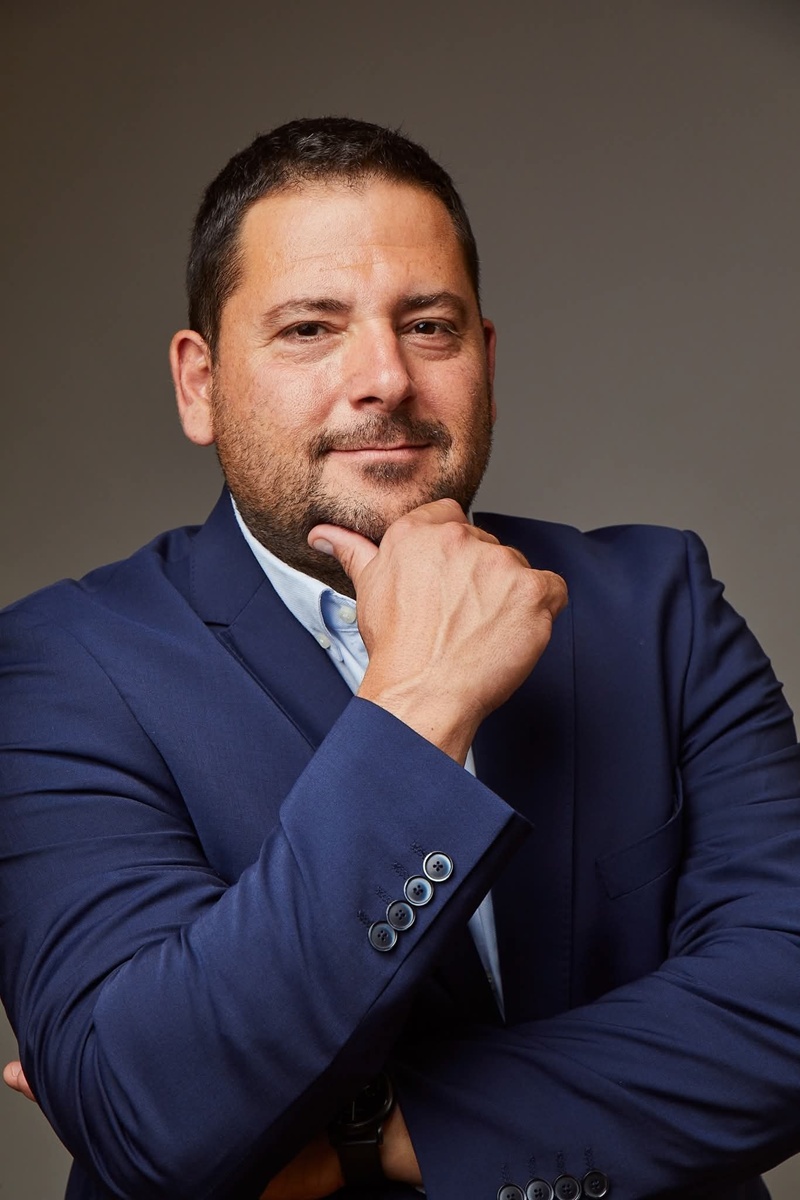
A graduate of Glion (CH) in hotel and tourism management, he specialized in strategic financial management at the Metropolitan School of Business & Management (UK).
He has 30 years of experience in hotel management, finance, project development and quality systems.
A former MBA teacher at IEFT, he knows the French market well and regularly publishes in Greek and international travel press. He is also a painter.