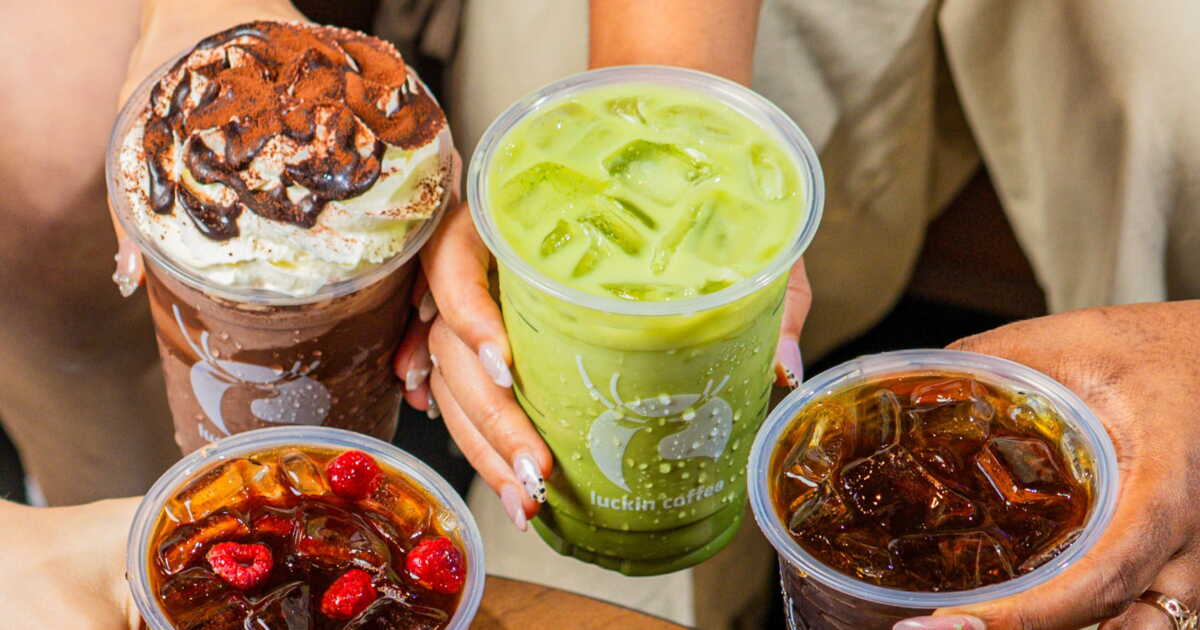
For the Middle Kingdom, everything is in the cup. From Cotti Coffee to Heytea, and including Mixue, Chinese coffee and tea brands are blooming at a breakneck pace across the Atlantic, with numerous outlets in New York and other major coastal cities. In May 2025, Luckin Coffee did not yet own any stores in the United States. A year later, the brand counts more than twenty addresses in Manhattan. Globally, Mixue has surpassed McDonald’s, becoming the largest chain by the number of outlets.
After several years of sharpening customer service and viral marketing on social networks in China, these companies turned to international markets to apply the same recipe that made them successful: sophistication, technology, original and “instagrammable” drinks.
A Different Way to Consume and Order
Their expansion into the United States is driven by the enduring trend of “Chinamaxxing.” On social media, TikTok in particular, many users claim to be in their “Chinese phase,” adopting traditional clothing and culinary practices, or other references from this Asian sphere. “These chains benefit from a wave of cultural influence that they neither created nor funded”, explains Shaoyu Yuan, Associate Professor of International Relations at New York University, to Bloomberg, on Saturday, November 14.
Unlike Starbucks, where ordering at the counter with a staff member is the norm, phones and tablets constitute a technological alternative, notes Aaron Jourden, Senior Director of Research and International Studies at Technomic. With Luckin or Cotti, customers often go through an app, preselect their drink, and pick it up at the counter when it is ready.
discounts can even be sent directly to the phones of regulars. Prices are deliberately very affordable, and the surprise does not stop there. Brand-branded items are collectible, such as badges and plush toys.
Having trouble finding a good fit there?
According to a Bloomberg Businessweek study, only 23% of Americans aged 13 to 74 have already frequented a chain of coffee or tea originating from mainland China or Taiwan. Even among Gen Z, this share reaches only 38%. The companies involved now aim higher, farther afield, beyond the trendy hubs of New York and Los Angeles.
However, this expansion could quickly hit limits. The high costs of labor and rents could restrain these chains that partly rely on very low prices. Mixue has already had to scale back its ambitions in Japan for this reason. “At this stage, these chains still have a lot to prove”, says Sandy Lim, an analyst at S&P Global Ratings.