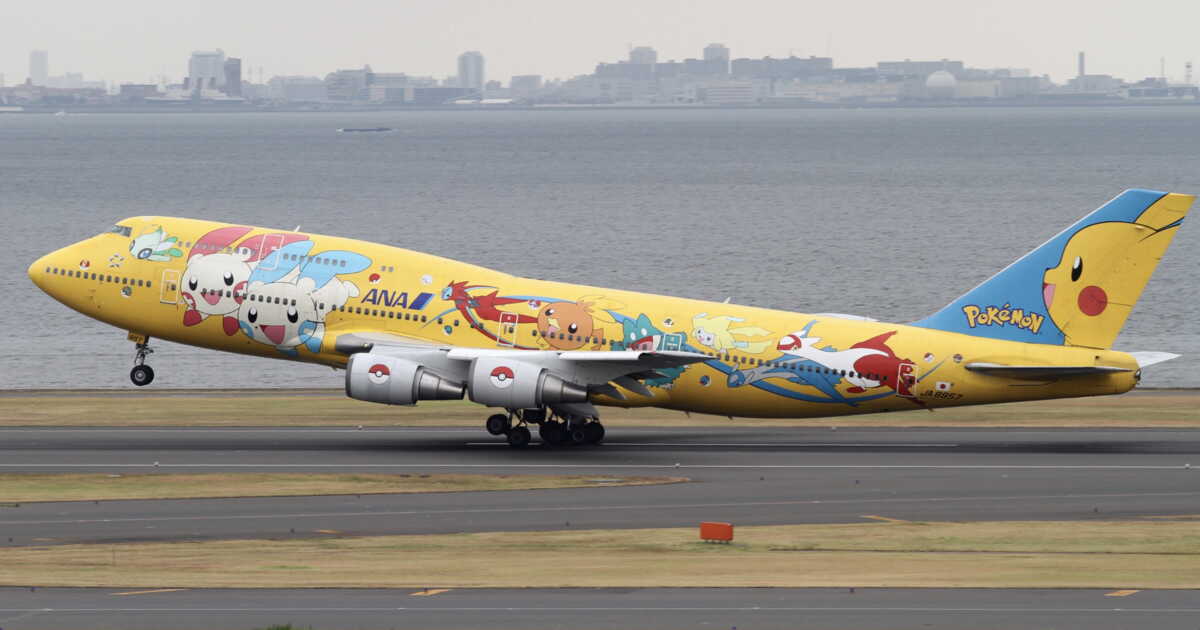
A city airport fully decorated in Pokémon colors, Pikachu statues by the hot springs, and rice fields transformed into pilgrimage sites for fans of the franchise… In Japan, an original initiative is trying to revive a region still scarred by a natural disaster. Since the earthquake on January 1, 2024, the Noto Peninsula, located on the country’s west coast, has struggled to bounce back its tourism activity. To attract new visitors, local authorities chose a surprising strategy: partnering with the world of these famous imaginary creatures. A project that leans on nostalgia and Pokémon’s global popularity, without forgetting the scale of the damage.
A Pokémon Airport to Attract New Visitors to the Peninsula
It’s a world first. Noto Satoyama Airport has become the first airport entirely devoted to Pokémon. In its hall, a huge inflatable Pikachu welcomes travelers. A little farther, a statue of Machamp, the four-armed Pokémon, carries a rolling suitcase. The automatic doors, directional signs and waiting areas have also been decorated with illustrations of different creatures from the franchise.
Travelers can also extend the experience in the shops and at the Annon restaurant, which offers, among other things, a blue Dragon-type Pokémon-inspired iced drink: a blue soda with sea salt, derived from a local specialty, Wajima cider.
Behind this playful transformation lies a real reconstruction project. The airport is taking part in a three-year collaboration with “Pokémon with YOU,” a Japanese charitable and humanitarian program created by The Pokémon Company after the Tōhoku earthquake and tsunami of March 2011.
Before this operation, the facility mainly served business travelers, with only two daily round-trips to Tokyo’s Haneda Airport. Now, it is also one of the stops on the Pokémon Trail, a tourist route that links five attractions spread across the peninsula. The aim is to encourage visitors to discover this coastal region, known for its landscapes, fishing traditions and terraced farming cultures.
View this post on Instagram
From Hot Springs to Rice Paddies, a Journey Through a Region Scarred by Disaster
Among the stops on the circuit is Wakura Onsen, a historic hot-spring town. Its public foot bath, closed for more than two years after damage to underground pipes caused by the quake, reopened in May 2026 with Pokémon-themed decorations. Statues of Pikachu, Psyduck and Poliwag now line the basin. The hot spring water even flows from a pipe shaped like a Gyarados.
The reopening is a hopeful sign for local businesses. A few minutes away on foot, the Noto Milk ice-cream shop has also resumed activity after four months of interruption caused by the earthquake. Its general manager, Shogo Horikawa, notes the arrival of new customers who came specifically to discover the Pokémon installations. In an interview with the BBC, he explains: “Some ryokan are still closed, but as new accommodations reopen, we expect the number of visitors to Wakura Onsen to continue to rise.”
The route also takes visitors to the Shiroyone Senmaida terraced rice fields, near Wajima. Cultivated since the Edo period, they comprise about 1,000 plots built into the hillside. Two statues, representing Chochodile and Lucario, have been installed in the middle of this spectacular landscape. Fans can also discover five Pokémon-colored manhole covers in the city of Wajima.
But the visit also reveals the scars left by the disaster. Along the Sosogi coast, entire portions of the tourist coastline have disappeared. “This area used to be a beach where people came to bathe, says a taxi driver to the English media. Residents earned their living by running guesthouses. But today, Sosogi coast tourist sites have been completely destroyed.”
Construction equipment remains plentiful along the coastline. Reconstruction will take time. Rie Namura, head of the international tourism team in Ishikawa Prefecture, believes that this collaboration can help the region reach younger generations and international travelers. She also notes the residents’ willingness to preserve their heritage despite the disasters.
For Matsu Shigeyuki, head of general affairs at Noto Airport, the project already has another success to its name: “It has also brought smiles to local children who come to visit. I hope the Pokémon Airport will continue to make children happy.”.