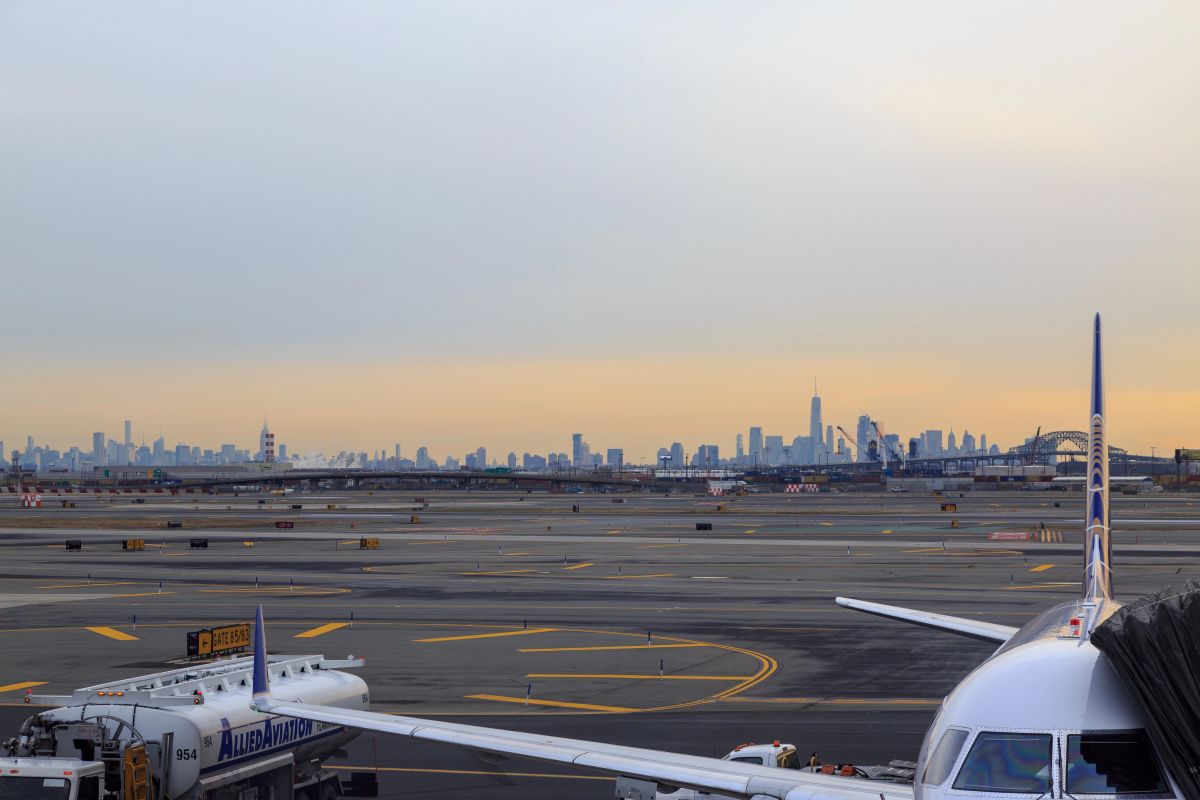


« We have an extremely old air traffic control system. »
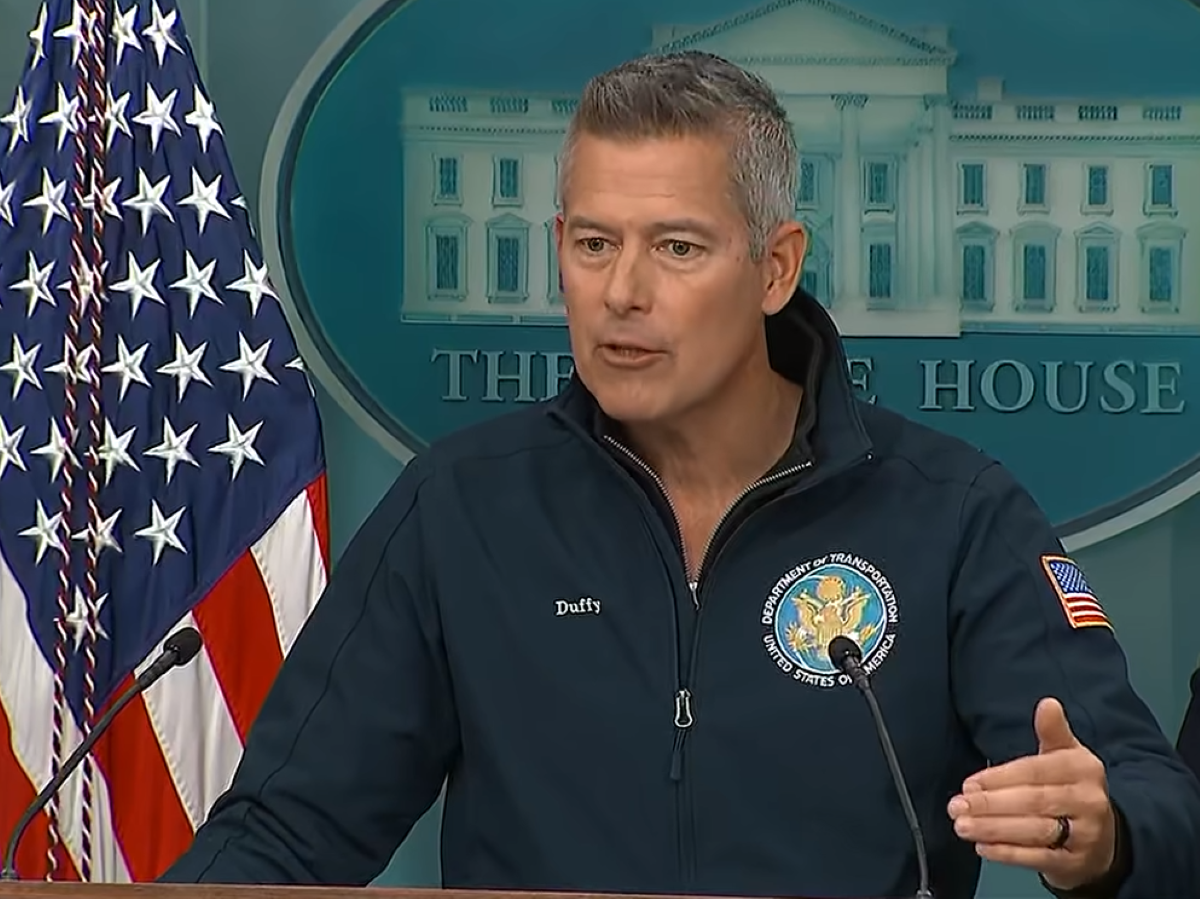
This admission, made publicly during a White House press conference by the United States Transportation Secretary Sean Duffy after last Friday’s massive outage, describes a situation that is not new.
In our pages, last year, following a major catastrophe and numerous incidents at American airports, we already spoke of air safety “at the end of its tether” and the urgency to modernize air traffic control.
More than 20,000 flights disrupted
What happened last Friday regarding the regulation of aircraft across the United States? Sean Duffy, alongside the U.S. Secretary of Homeland Security Markwayne Mullin, provided explanations.
At 3:36 p.m., controllers nationwide noted instability affecting radar, communications systems, control centers, and TRACON (Terminal Radar Approach Control).
In the United States, airports operate with a control tower. The next level is TRACON, followed by en-route centers.
TRACONs and centers began receiving incoherent radar data and encountered difficulties in communicating with aircraft.
It was at that moment that the FAA took responsibility for instituting a “nationwide ground stop,” i.e., grounding all departures. This was lifted in the evening at 8:15 p.m. after more than 20,000 flights were delayed or canceled, according to Reuters.
For now, the theory of a cyberattack is not being pursued, according to the Secretary of Homeland Security:
“First, I want everyone to understand clearly that there is no link between this incident and Microsoft. I know many people are drawing that connection.
At this stage, nothing indicates that this is a cyberattack. Generally, when a cyberattack occurs, some actors quickly claim responsibility. For now, no such element has been detected. We have seen no signal, no trace, no evidence showing that a third party penetrated the system.
All signs point rather to a technical or mechanical failure.”
Thus, as we write, we are dealing with another incident, the consequence of a partly obsolete system that must be modernized very quickly.
The investigation is currently focusing on a router failure, a kind of digital switch that guides radar information and flight plans between the different air traffic control centers.
Shared responsibility between Democrats and Republicans
So who is to blame?
Honesty requires acknowledging that responsibility does not rest solely with the current administration.
We recall, however, that last year the DOGE (Department of Government Efficiency), led for a few months by Elon Musk, had driven hundreds of FAA employees out, including some who held technical roles related to maintaining operational readiness of critical navigation equipment.
There is currently no causal link with the November 13 outage, but one can still question the wisdom of such cuts when the aging state of the U.S. air traffic control system was already known.
After the Washington disaster in January 2025, when air traffic control was already under scrutiny, President Trump claimed the solution: “I changed the standards of the Obama administration which were mediocre, and they are now extraordinary. We now have the highest abilities, the most competent personnel. We will restore public confidence.”
Not sure that what happened last Friday is likely to restore that confidence.
But these aging air traffic control problems do not date from Donald Trump’s rise to power.
They span several decades with Republican and Democratic administrations having come and gone.
In 2025, however, American officials finally confirmed the diagnosis of an aging system that needed modernization immediately.
Today we see that the concrete improvements made are largely insufficient, despite a political majority that had been favorable up to now.
Sean Duffy stated on Saturday at a press conference that since 2025 he has been passionately asking for budgets for this modernization emergency, which, in his view, has not been given enough consideration by Congress that votes the necessary funds.
An initial allocation of $12.5 billion has nonetheless been granted.
“We used it very well, but it is not enough,” he said, suggesting to the media to pose the right questions: “Ask all members of Congress if they support creating an air traffic control system. Do you want us to build it for America?” and adding: “I think all members of Congress should say yes, and I guarantee all Americans will tell those members, yes, give them the money, let them finish this job…”
Whichever the case, and despite an evident consensus on urgency, signing a multi-billion-dollar check will not happen in a single day.
The political system and institutions, as in other countries, do not necessarily allow rapid unlocking of funds. They must be proposed, voted on in the House of Representatives, debated and voted on in the Senate before being allocated and transformed into contracts.
A funding request revised upward in 24 hours
Exactly how much, according to the U.S. Transportation Secretary, does air traffic control need to modernize?
November 13 is an interesting day on this topic. The morning itself, a few hours before the outage, the Trump administration requested $30.1 billion from Congress to modernize infrastructure.
That very evening, after the outage, the request climbed from $20 billion to $50 billion.
Would the sight of thousands of airplanes halted on every taxiway of American airports, from Los Angeles to New York, have convinced policymakers of a situation even more serious than they thought?
“This is an emergency, this is an emergency,” Sean Duffy repeated twice during his White House press conference.
Also, the Homeland Security Department’s site quotes U.S. Homeland Security Secretary Markwayne Mullin: “This is a national security issue. The President has declared a national emergency on this matter, and it is now up to Congress to act and fund its modernization. It is vital that we implement this new system.”
Even though, to date, this emergency has not yet been officially declared a “National Emergency” under federal law, what happened last Friday should facilitate obtaining the billions of dollars needed for the urgent modernization of U.S. air traffic control in the best possible time.
 Publié par Christophe Hardin AirMaG Editor – TourMaG.com
Voir tous les articles de Christophe Hardin


Ajoutez TourMaG à votre flux Google Actualités