

One of the highlights of the 17th APG World Connect, once again this year, was to bring together the CEOs of airlines in the same place and at the same time.
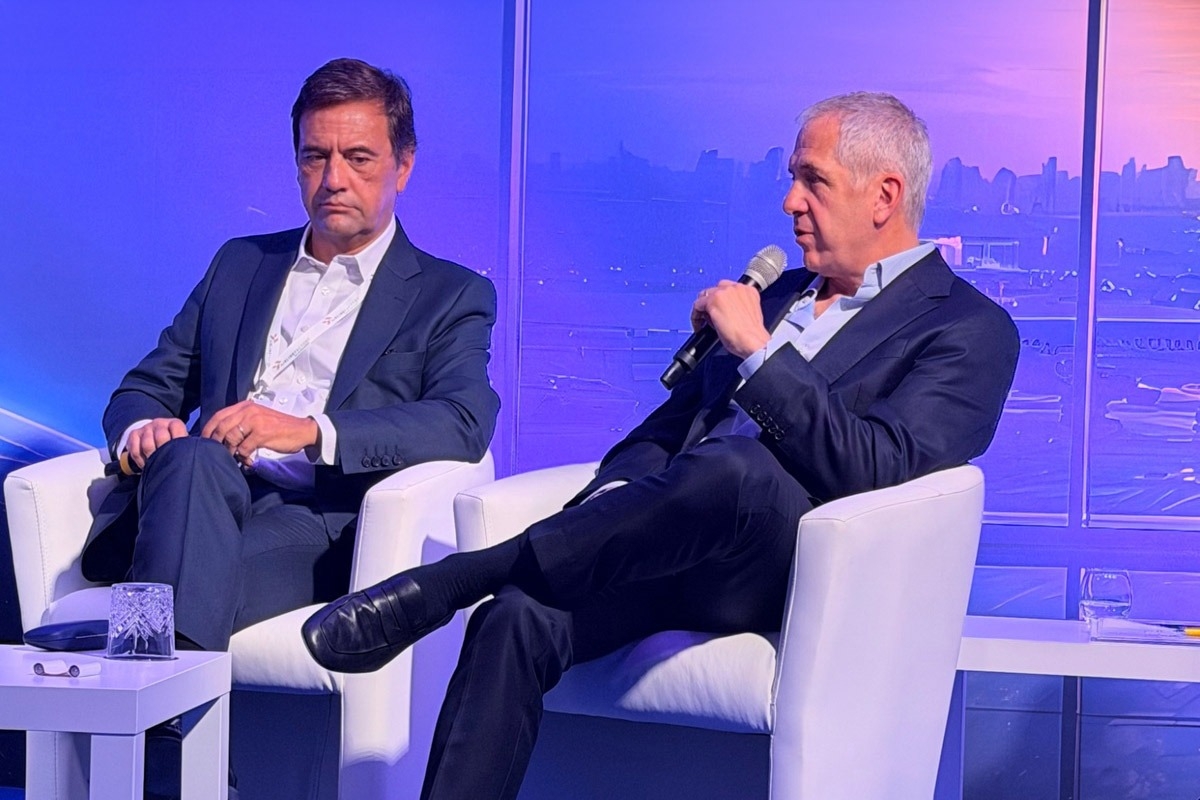
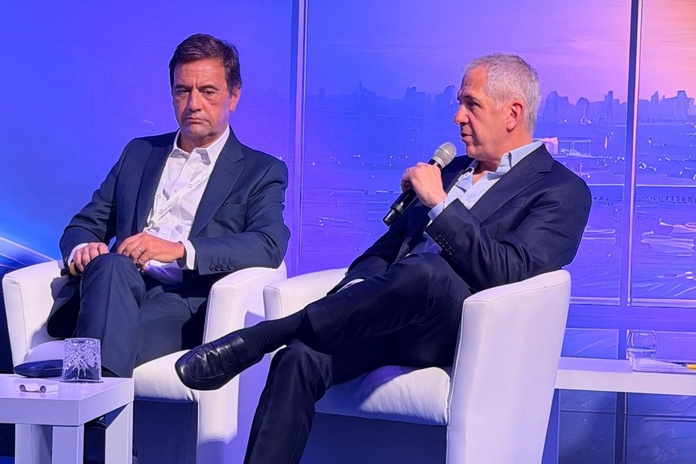
Last Friday, in the Fairmont Monaco hotel’s salons, we were able to witness an interesting cross-conversation between two airline CEOs, both of whom are at a turning point in their respective histories.
Roberto Alvo, the CEO of LATAM, after taking the helm of the company when it was on the brink of bankruptcy in 2020 and under Chapter 11 protection, led a successful restructuring and was able to report for the year 2025 spectacular profits, a record profitability with 87 million passengers carried, allowing him to…
TAP, for its part, under Luis Rodrigues, has just chosen a powerful shareholder, the Lufthansa Group, which, subject to a Brussels agreement still to be obtained, will provide it with substantial commercial and financial strength.
How does each of the two CEOs, major players in Lusophone air transport, now see the future? An engaging dialogue in which each expressed his expectations. More hopes than misgivings.
AI, the best customer-service advisor?
In addressing one of the conference’s key questions about the aviation sector’s ability to adapt to changes, the LATAM CEO expressed his enthusiasm for what AI could bring to understanding the customer.
According to him, this rapidly advancing technology will also transform the customer relationship and enable an increasingly refined understanding of travelers.
“Hyper-personalization will allow for much closer interaction with customers, their families, and the entire ecosystem around them.
For a company the size of LATAM, which accounts for about a third of air travel in South America, this represents a tremendous opportunity,” says Roberto Alvo, who also foresees a fundamental evolution in the coming years: “Today passengers have complete control when booking a trip. You choose your destination, your times, the type of aircraft, your seat, the additional services… everything is in your hands. In a few years, the process will be different. You will take your phone and simply say: ‘Claude, I want to go to Punta Cana for a weekend.’ You will express your need, and in doing so you will relinquish control. The artificial intelligence will then take over. Whether it is Claude, OpenAI, or any other platform, it will have to offer you the best possible solution. The real question will be: on what will these algorithms base their decisions? How can they be sure that the recommendation they provide is the right one? In my view, this will highlight a fundamental element of our industry: trust. Companies that offer the best travel experience will naturally receive more recommendations. Algorithms will primarily aim to provide travelers with reliable and trustworthy answers. For otherwise, users will immediately switch platforms. That is why I see enormous potential ahead of us. We will be able to understand our customers better and offer them exactly what they are seeking. But everything will rest on our ability to provide a travel experience of sufficiently high quality to earn this trust.”
A small revolution, according to Roberto Alvo, which will lead to a shift in the reasons why travelers choose airlines.
“Personally, this excites me a lot,” he told the audience, although not sure travelers’ agencies share that enthusiasm.
Luis Rodrigues: “TAP is not intended to become a global brand.”
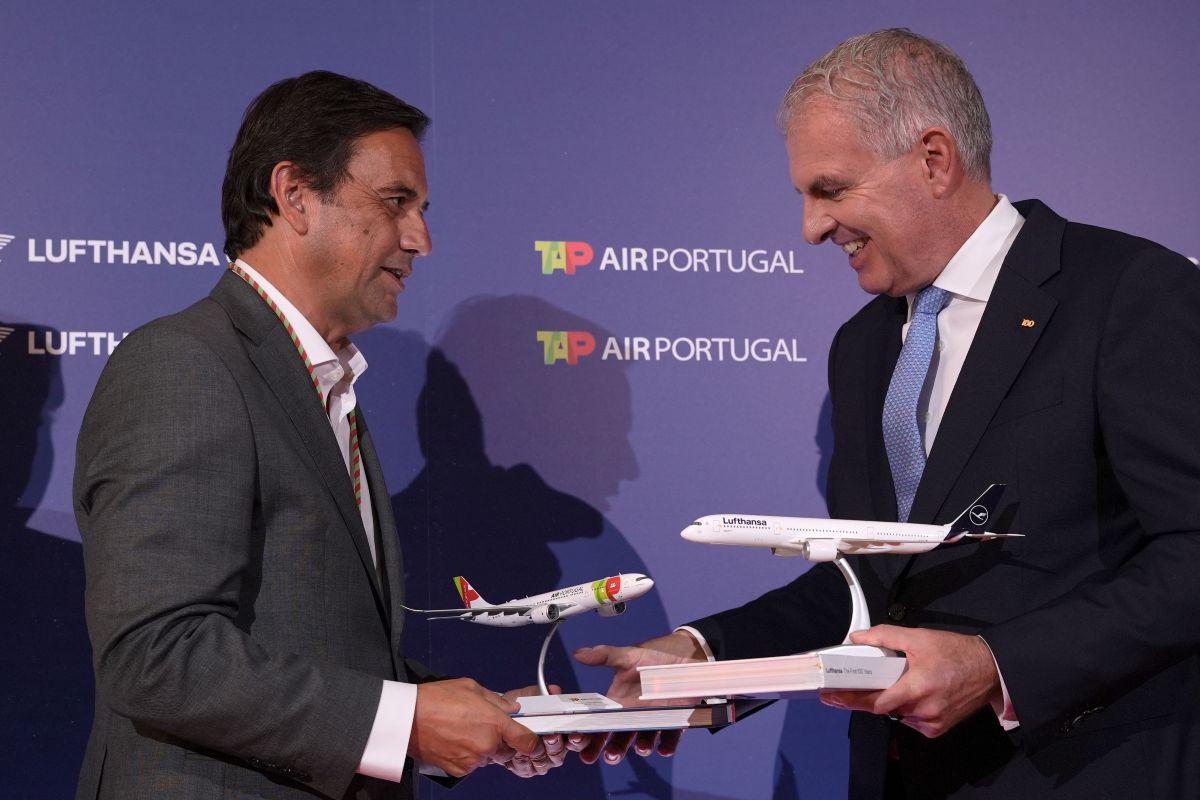
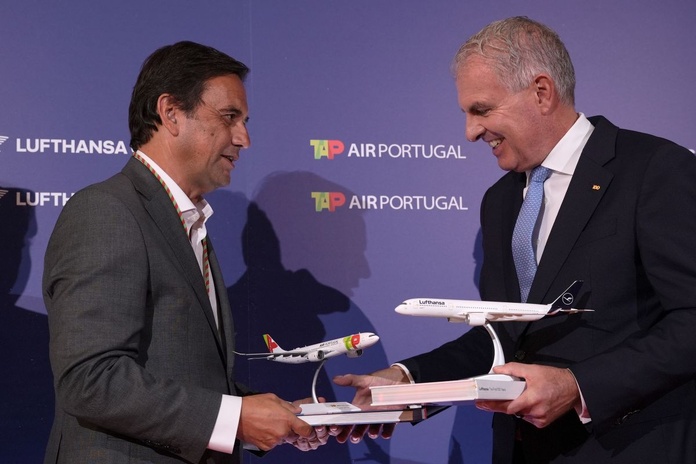
Luis Rodrigues, the TAP CEO, likely had plenty to say about artificial intelligence as well, but unsurprisingly the debate organizers (and the audience) were eager to hear his comments on what has been making headlines in the aviation world a few days ago: TAP’s engagement (which must be approved by Brussels) with the Lufthansa Group.
On the prowess of technology, he nevertheless made this remark in response to the previous discussion where the fascinating astrophysicist Patrick Michal captivated the audience with the remarkable advances of science:
“While listening to Patrick describing these incredible scientific advances in space, I wondered: how is it that we on Earth are still losing baggage!”
A light-hearted challenge, greeted by applause, before returning to the subject of TAP’s entry into the Lufthansa group.
Just after the official signing, on 3 November last, of the agreement for Lufthansa to acquire a 44.9% stake in TAP Air Portugal, TAP’s CEO’s comments were highly anticipated.
“I obviously cannot comment on the precise details of the operation since we are still in the regulatory phase.
Let us say that we have been asked to marry, and we now hope that this will lead to a lasting union,”
If the benefits for Lufthansa are well known, notably the access to TAP’s network to Brazil and the rest of Latin America, as well as traffic between Europe and Portugal, and between Southern Europe and North America, what are the advantages and prospects for TAP?
“The interest in this operation is very clear. When you pair a mid-sized airline like TAP with a powerful group such as Lufthansa, we combine strength with flexibility. We combine power with agility, and that is an extremely strong combination for both parties. We are very excited about this prospect.” » commented Luis Rodrigues, who also highlighted one of the major challenges posed by this closer alignment: harmonizing corporate cultures.
“That is a crucial element, and we will therefore focus a large part of our efforts on this in the coming years. We must be extremely vigilant.”
And quoting a Harvard professor: “Corporate culture devours strategy for breakfast. If we do not pay enough attention to this aspect, the best strategy in the world will not be enough.”
Luis Rodrigues also unveiled TAP’s flight plan.
“There are naturally synergies in revenue, costs, and mutual learning. We look forward to realizing them once regulatory authorities give us the green light. That said, TAP does not intend to become a global brand.
Our ambition is to help make Lufthansa a truly global brand. Our goal is to be the best airline, or the reference, in the strategic markets we serve: Brazil is obviously at the heart of this strategy.
Venezuela also plays a role, to a lesser extent, as do all the connections necessary to this ecosystem.”
Also, the TAP CEO was clear on the geographic scope of his company: “Under my leadership, TAP does not intend to open routes to Asia or to engage in all-out expansion. We must stay focused on markets where we have a real strategic advantage.
That will guide our efforts in the years to come, and for that we need the power and resources of a group like Lufthansa.” »
Roberto Alvo: “There are possibilities of cooperation with TAP.”
Brazil will thus be a fundamental market for the Portuguese company as it competes with LATAM in South America.
However, sitting beside Luis Rodrigues, the LATAM head also sees real cooperation possibilities there.
“We have long maintained a very solid relationship with Lufthansa, inherited notably from the time when TAP belonged to Star Alliance.
At the same time, our commercial relations with TAP continue to strengthen. If we look at the situation as a whole, we will now have three large European groups of relatively comparable size operating toward South America.
Even today, Lufthansa is slightly smaller in this market. With TAP, the Lufthansa Group could become the leading, or one of the leading, European carriers to South America. But more than competitive challenges, I see here primarily a cooperation opportunity. LATAM operates in five countries. We are capable of feeding flights for almost all carriers arriving in South America.
In São Paulo-Guarulhos, we represent nearly two-thirds of air movements, and this airport concentrates about 70% of Brazil’s international traffic. Unlike Europe, air flows in Latin America are far more concentrated. A large portion of traffic passes through São Paulo.
We can therefore offer our European partners, just as we do with our American partners, a very large volume of connections.”
And turning to his neighbor: “How many destinations do you have in Brazil? Thirteen? Fifteen? We’ve stopped counting! This evolution will offer us new possibilities for cooperation with Lufthansa and TAP. And I can’t wait to see what we can build together.”
Message to regulators: “Let us catch our breath!”
Two men, two ambitious airlines brimming with projects, but fully aware of the challenging context in which the air sector operates today.
In answer to the final question about the wishes they would like to see realized, Luis Rodrigues voiced three asks:
“First, those who trigger false bomb alerts in aviation should stop. We could be on the verge of something very complicated.
Not necessarily because there will be more real threats, but because all the measures that must be put in place to prevent them could seriously complicate everyone’s lives. My second wish goes to regulators.
Could you please let us catch our breath a little? The sector is already incredibly complex. We were just discussing regulatory issues in Brazil yesterday, but that is a reality found worldwide.
I would simply like a bit of stability while we navigate through this particularly difficult period economically and socially.
Finally, my third concern regards connectivity, and this is not only a wish but a real worry. In Europe, we have numerous peripheral and ultraperipheral regions.
Air connectivity plays a fundamental social role there. I fear that small airlines will struggle more and more to survive in the current economic environment. If this situation were to affect regional services on a lasting basis, we would face a much larger societal problem. We must absolutely safeguard this connectivity, not only in Europe but worldwide. This is probably my main concern.”
A hyper-regulated sector, Roberto Alvo also called for moderation from public authorities.
“I completely share Luis’s view. Europe is a mature market; Latin America is not yet. Here, the number of flights per capita is around one-fifth of Europe’s, and aviation’s economic impact is considerable.
Every job created in aviation generates between six and ten jobs in surrounding industries. Aviation not only contributes to connectivity; it is also a powerful engine of economic and social development.
Unfortunately, for years we have often lacked coherent public policies capable of fostering sector development. Aviation is a development engine, and if I had one wish for policymakers, it would be this: take more time to reflect. Think long-term. Too often we sacrifice substantial potential by favoring short-term solutions. Our industry is one of the essential circulatory systems of the global economy.
The pandemic showed us this. When aviation stopped, a large part of the world stopped with it. If that had lasted longer, the economic consequences would have been dramatic.
I would like to see more governments think about building a sustainable future for our sector rather than over-regulating to respond to immediate considerations. And I would add one point regarding connectivity: in Latin America, connectivity is sometimes even more vital than in Europe.” »
Viewed 1,647 times
Rate
New comment :
In the same section :
<
>
Friday, November 27, 2026 – 10:05 Malaysia Airlines orders 10 Boeing 787 Dreamliners
|
Thursday, November 26, 2026 – 18:06 Tunisair: the airline’s future up for vote on December 15
|