On long-haul flights, not all passengers travel under the same conditions. Between the standard economy seat, the enhanced offerings of business class, and the private suites of first class, comfort gaps can be substantial. But these differences are evolving. For several years, airlines have been increasingly equipping their business cabins with high-end amenities, to the point of rivaling some first-class cabins. This evolution raises a question for carriers: how can they continue to justify the price of a first-class ticket?
From economy to first class, what are the differences onboard?
To understand the changes currently underway, one must first distinguish the different travel categories. Economy remains the most accessible option. Passengers have a single seat that is generally quite close to that of their neighbor, with limited legroom. On long journeys, the seatback can recline, but the seat cannot be transformed into a bed.
Between this layout and business class, some airlines also offer a premium economy. It provides more legroom, wider seats, and sometimes additional perks, such as improved dining or priority boarding. It represents an intermediate level of comfort, without offering the amenities of business cabins.
The difference is far more pronounced with the latter. On long-haul flights, business-class seats can convert into fully horizontal beds. Passengers also enjoy more elaborate dining, a more attentive service, and generally access to airport lounges. Some airlines now offer true small private suites, with sliding doors to preserve privacy.
First class goes even further, with more generous private spaces, luxurious equipment, and a particularly personalized service, and sometimes even a shower on board. But this gap has gradually narrowed.
Business class emerged in the 1970s, notably to offer business travelers a more comfortable option than economy. In 1978, Pan Am launched its Clipper Class, an intermediate cabin where the seats remained close to those of economy. Qantas introduced the following year what is generally considered the first true business class, with wider seats and enhanced services.
For a long time, first class retained a major advantage: fully horizontal beds. British Airways was among the first to offer them, as early as 1995. But around the turn of the 2000s, flat beds arrived in business class as well. In 2003, Virgin Atlantic took a new step with its Upper Class Suite, which notably allows each passenger direct access to the aisle.
Airlines must reinvent their first class
This upgrade in quality has changed the game. Several carriers eventually ended up eliminating their international first class, judging that their business cabin already met travelers’ expectations for more comfort at a high price. United Airlines thus dropped this offering in the 2010s. American Airlines has also progressively phased out its Flagship First cabin.
Rather than maintaining two separate cabins, some airlines choose to evolve their business class toward ever-more luxurious offerings. United notably introduced in 2026 its Polaris Studio, suites 25% larger than the standard Polaris seats, equipped with 27-inch screens and offering, among other things, caviar. At American Airlines, the Flagship Suite Preferred seats provide about 20% more space for sleeping compared to the airline’s usual suites.
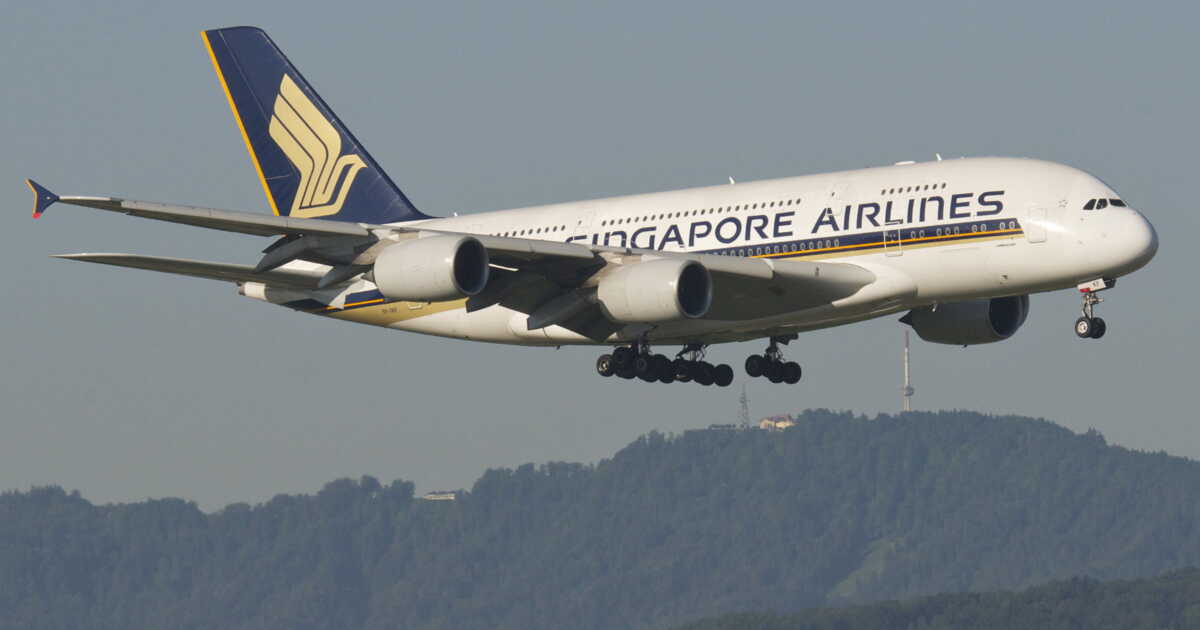
Airlines that maintain first class thus must find new arguments. Singapore Airlines announced a $1.6 billion investment to refresh its long-haul cabins. Expected from 2027, its new suites will feature curved doors and a particularly generous private space. In the central suites, two leather chairs can be converted into a bed 152 centimeters wide and 203 centimeters long.
Air France also relies on its La Première suites, with spaces including seats, storage, and curtains running from floor to ceiling. Emirates offers, on certain Boeing 777s, suites completely enclosed by doors reaching up to the ceiling.
But luxury no longer stops at the aircraft door. Airlines are also investing in ground services: private check-in, chauffeur transfers, lounges reserved for a select group of travelers, gourmet dining, or spa treatments. In Frankfurt, Lufthansa even has a terminal dedicated to its first-class passengers. In Paris, Air France’s La Première lounge offers a menu crafted by chef Alain Ducasse.
For travelers, these evolutions complicate the choice. A first-class ticket can cost up to twice as much as a business-class ticket. Yet the equipment also varies depending on the aircraft within the same airline. Before booking, it is therefore wiser to check the exact cabin configuration and the services included.
As Daniel Baron, founder of the aviation design consultancy LIFT Aero Design, told CNN: “It’s a moving puzzle whose pieces are constantly changing”.