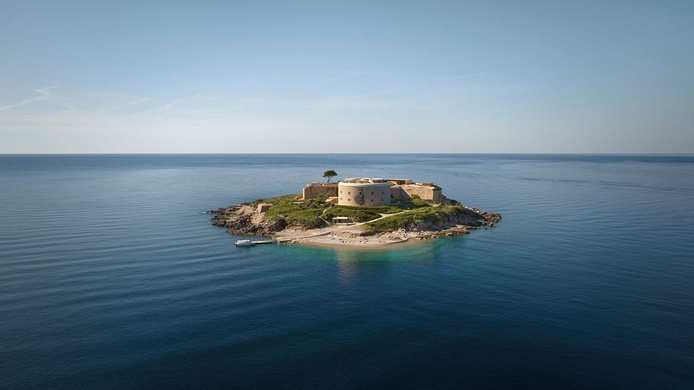


The Bay of Kotor is part of the UNESCO World Heritage list. The fortress sits between sea and sky, on Mamula Island, dating from the period when Montenegro was under Austro-Hungarian rule.
It had been abandoned for quite some time. Before it could become an elegant five-star property, seven years of restoration work were required under the impulse of Samih Sawiris, a billionaire Egyptian businessman, who has been the majority shareholder of FTI Group since the Covid crisis and is already known for his tourism investments, notably in Montenegro, Egypt and Morocco.
Regenerative travel
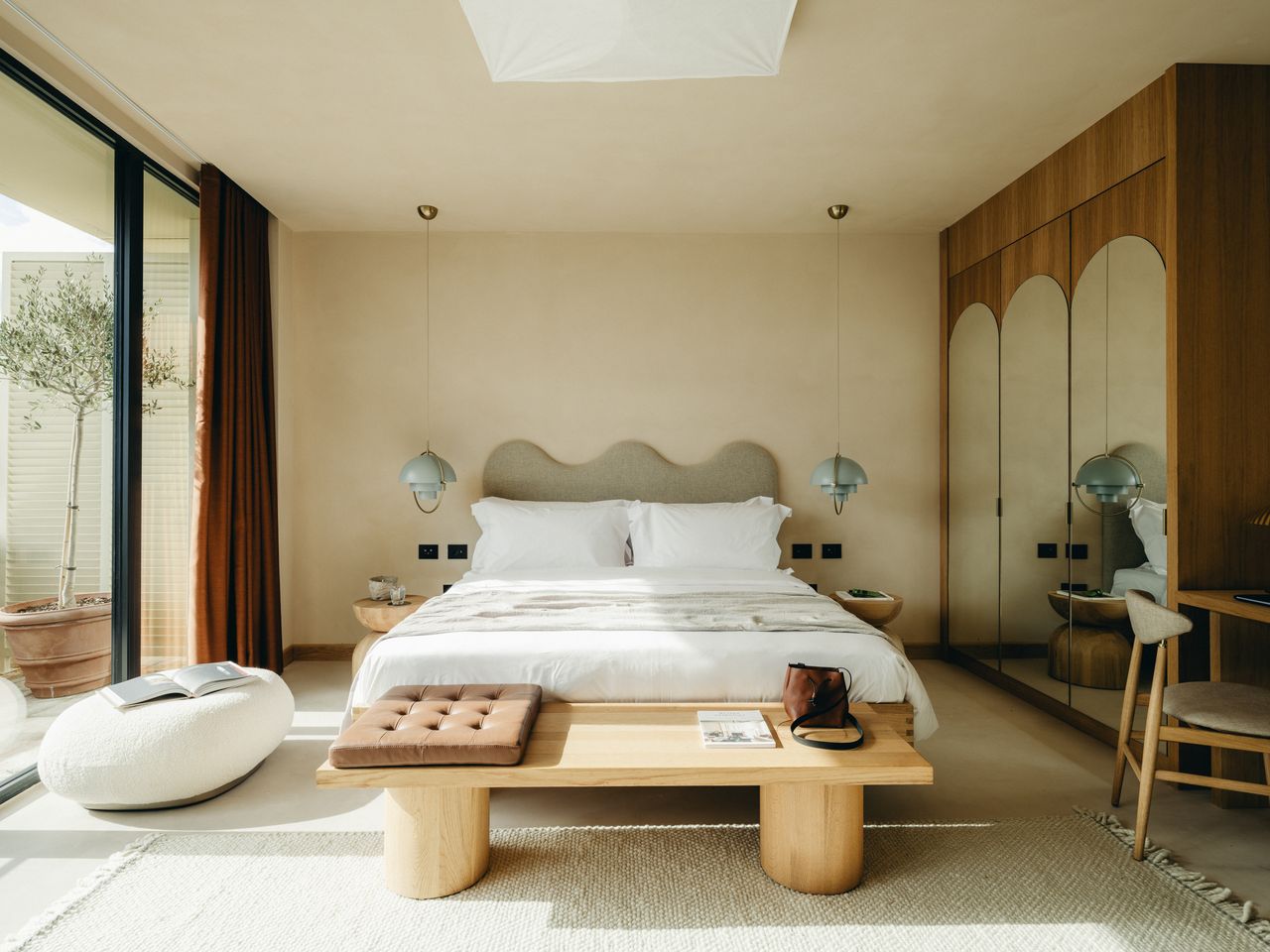
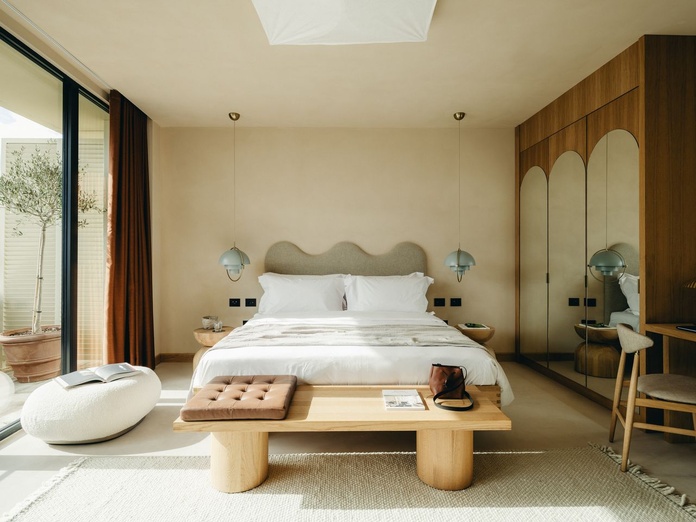
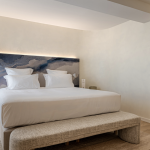
This private retreat of 32 rooms and suites (from €700 per night in the shoulder season and €1,471 in high season) with views over the Adriatic Sea features a beach, a Spa installed in the fortress’s central tower, three pools, three restaurants, and a bar. Resident artists are invited, and opera nights are held there.
Mamula Island by Banyan Tree targets a very high-end clientele seeking an authenticity that “luxury hotels don’t always offer”.
Banyan Group has no intention of stopping there. The brand now carries ambitious plans for Europe, both in Western and Eastern Europe. « We are on the lookout for new opportunities, provided they align with our philosophy », insists Kishan Chandnani.
A singular venture that began in Thailand
< b> The brand has stayed true to this approach since its beginnings. Banyan Tree is, in fact, a unique adventure born in 1994 at the initiative of two Singaporeans, Ho Kwon Ping and his wife Claire Chiang.
< b> This adventure first rooted in Thailand. In 1984, during a holiday at Bang Tao Bay on Phuket’s west coast, in the Andaman Sea, the couple discovered a vast tract of land nestled in a secluded lagoon. Enchanted by the beauty of the site, they bought it, believing it to be the perfect place to build a nature hotel.
Unfortunately, Ho Kwon Ping and his wife were disappointed: the land had been polluted by the discharge from a tin mine. They had to implement an environmental regeneration program by introducing native plants and planting nearly 7,000 trees.
It was only ten years later that they were able to construct their very first five-star complex, the Banyan Tree Phuket: 173 luxurious private villas, nestled in lush greenery.
Banyan Tree: luxury in nature
Even though, today, the Banyan Tree brand also develops urban hotels in key markets like Bangkok, Dubai, Doha, the aim of harmonizing with the environment continues to guide the design of its hotel complexes, not unlike Six Senses (IHG).
Wherever they are, Banyan Tree properties are anchored in the spirit of the place.
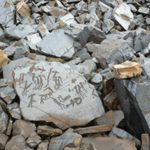
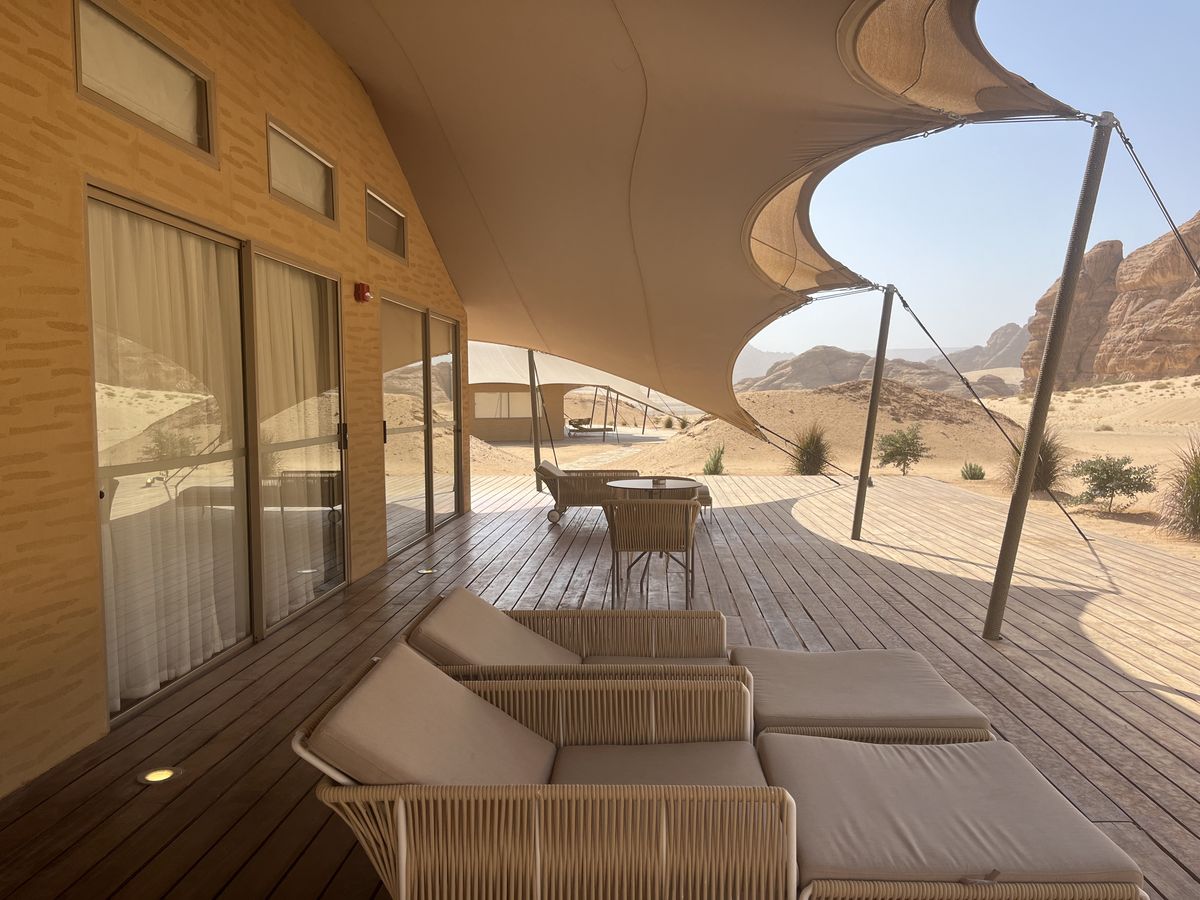
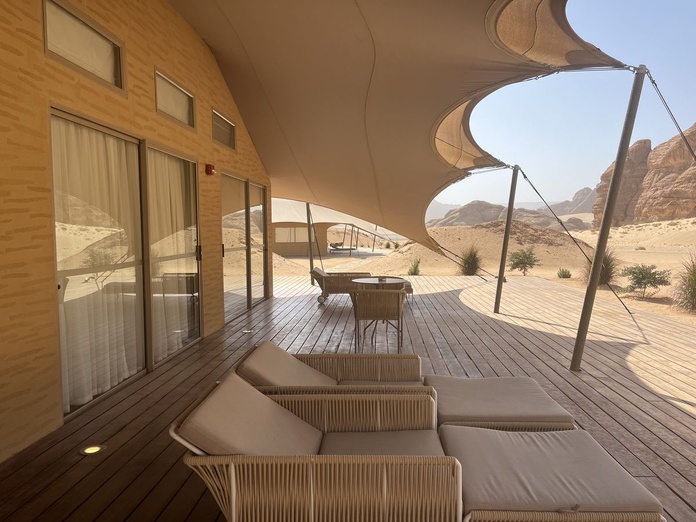
This is the case with Banyan Tree AlUla, in Saudi Arabia. Wrapped in the silence of the Ashar desert valley, its 72 standalone villas, cloaked in canvas, display the sandy hues of the surrounding dunes and neighboring sandstone towers.
They confirm Banyan Tree’s intention to immerse itself in local history — here, the Nabataean civilization — combining service excellence with environmental respect to offer unique experiences to travel connoisseurs.
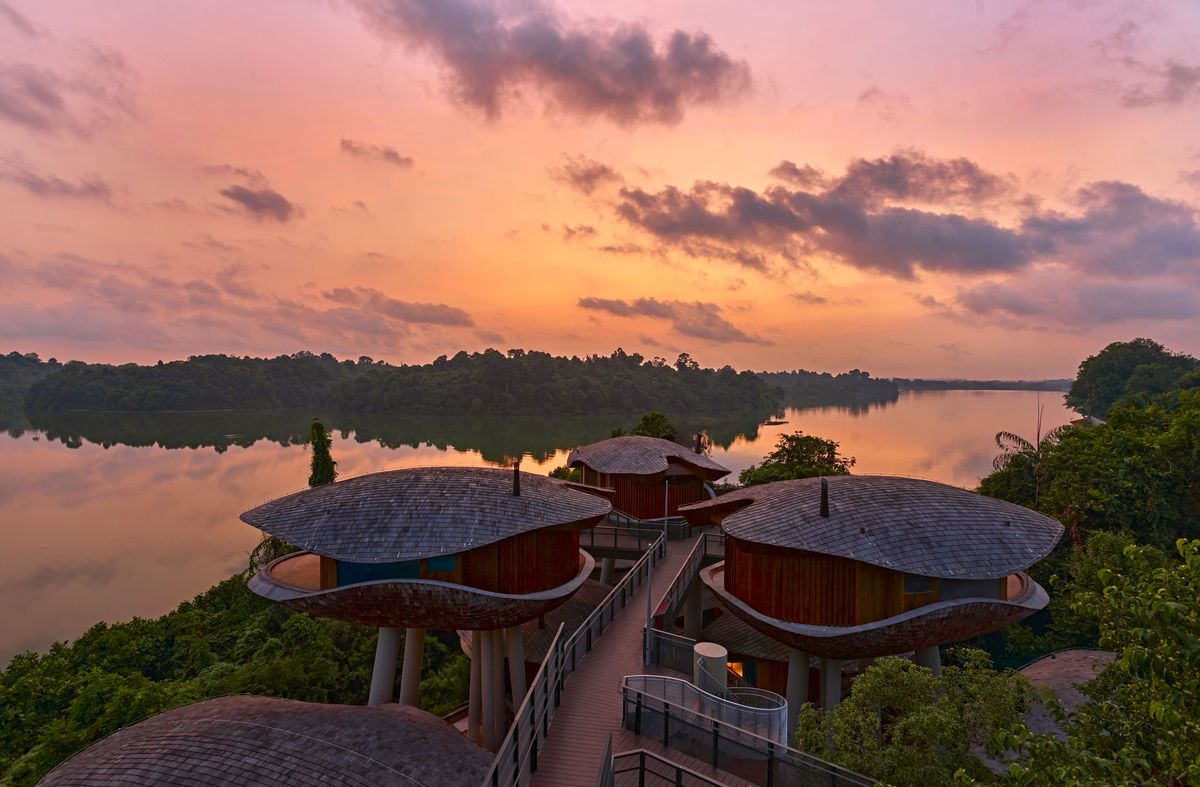
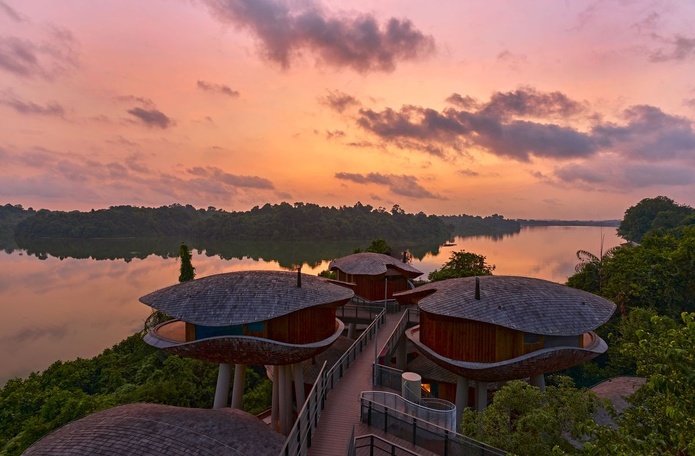
This is also true of the Mandai Rainforest Resort by Banyan Tree, which marked in November 2025 the brand’s debut in Singapore, in the heart of a nature reserve. Its 338 rooms and 24 Tree Houses shaped like seeds perched in trees were designed in harmony with nature, as were the wellness offerings, retreats, and guided walks.
This Resort has also earned the BCA Green Mark Platinum certification for its low environmental impact.
Reconnect one’s soul to wildlife
Located in Tanzania, this intimate eco-luxury refuge inviting “to reconnect one’s soul with the wild” comprises only six villas. Built by artisans and inspired by Maasai architecture, they blend into the surrounding savanna where wildlife roams freely.
However, the most accomplished expression of Banyan Tree’s nature-led luxury surely lies, since June 2022, in Bali, Indonesia.
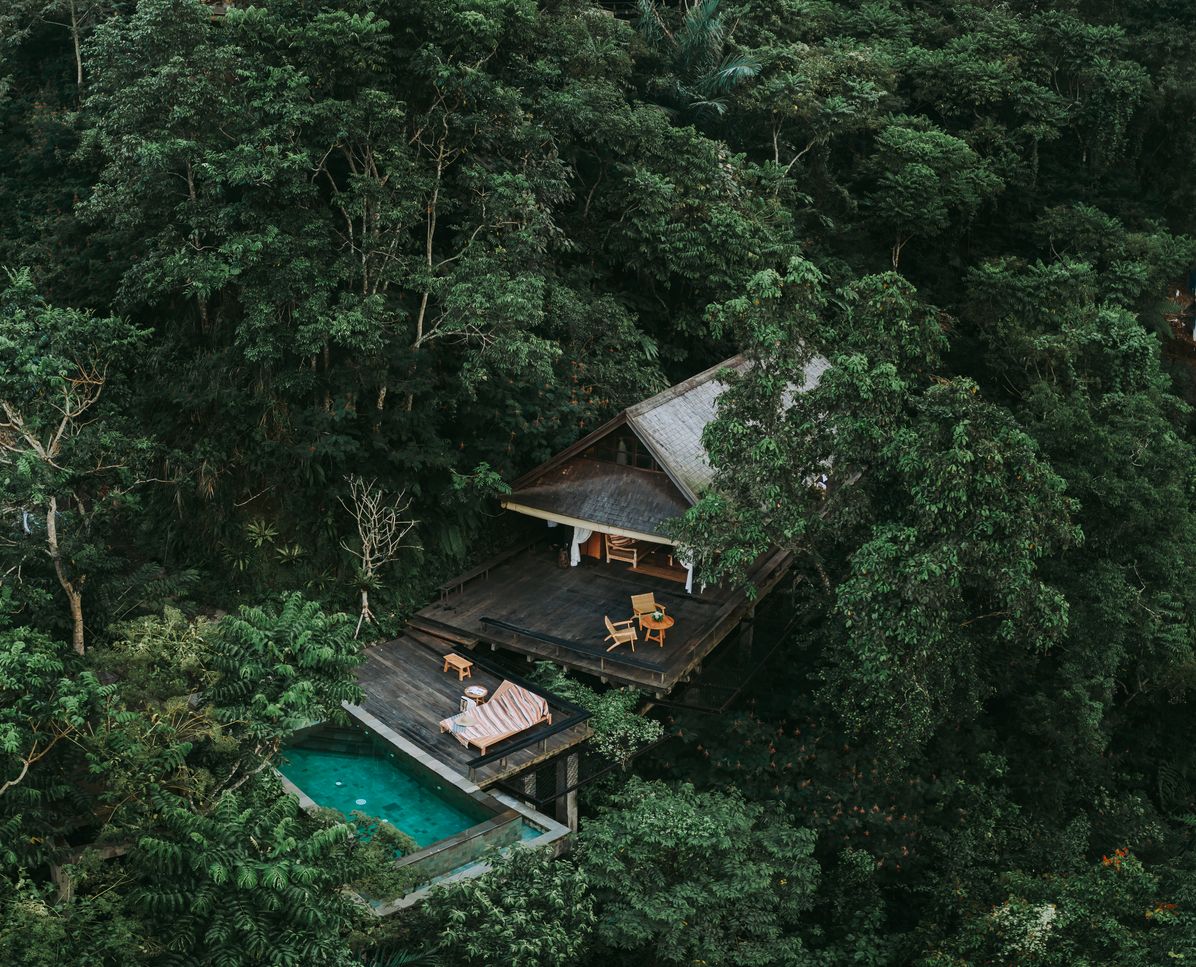
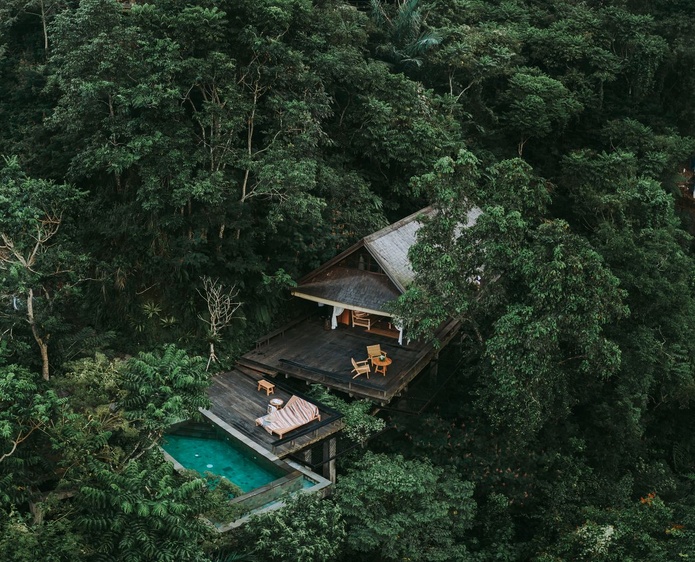
Guided by the philosophy “no walls, no doors”, the 16 wooden private villas, decorated with handcrafted items from Buahan, A Banyan Tree Escape, invite a deep communion with the rice paddies, the tropical forest, and the Ayung River that surrounds them.
In partnership with AccorHotels
 Published by Paula Boyer Head of LuxuryTravelMaG – TourMaG.com
 See all articles by Paula Boyer