

Between glamping, sport tourism, and micro-adventure, Bon Air Club seeks to create a new category of tourist accommodation.
The young French company will open its first site in July 2026 in the Alpes Mancelles, with the ambition to roll out five outdoor “base camps” in France within five years.
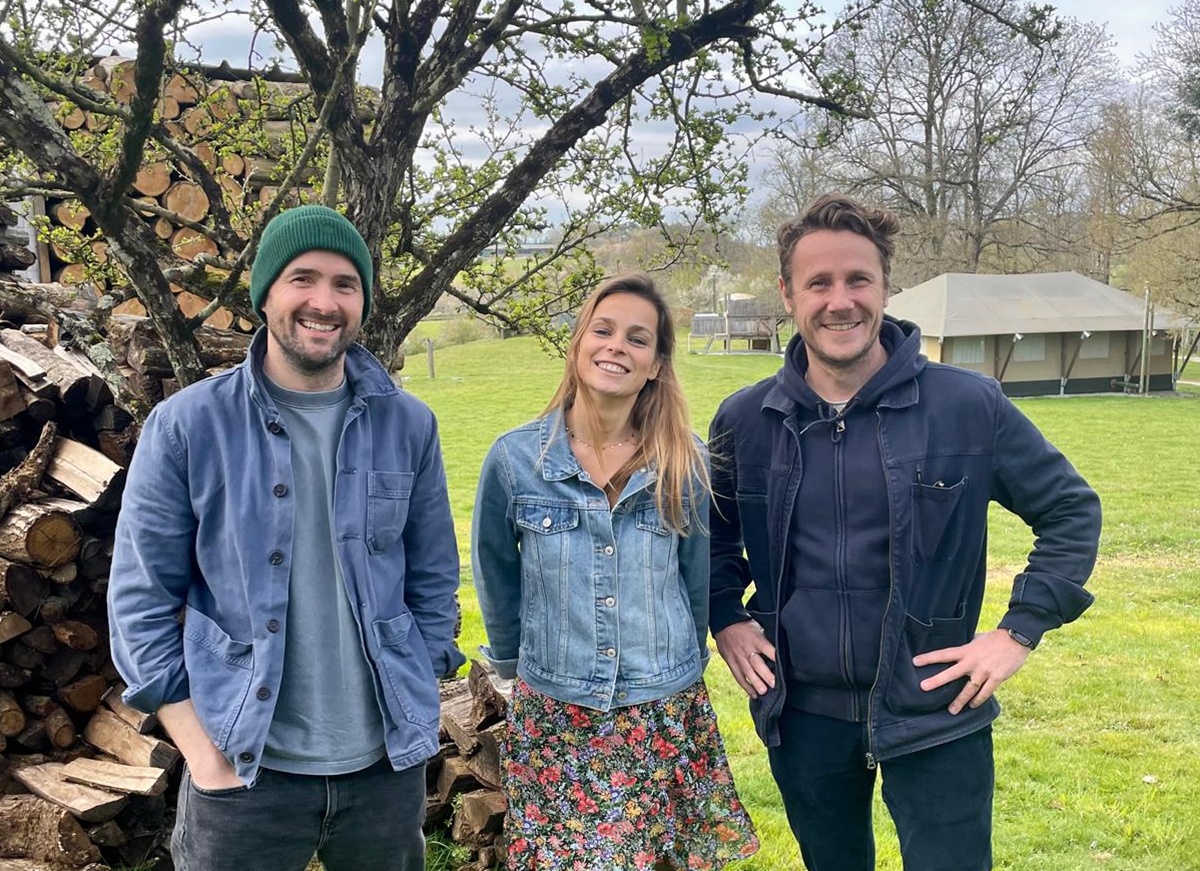
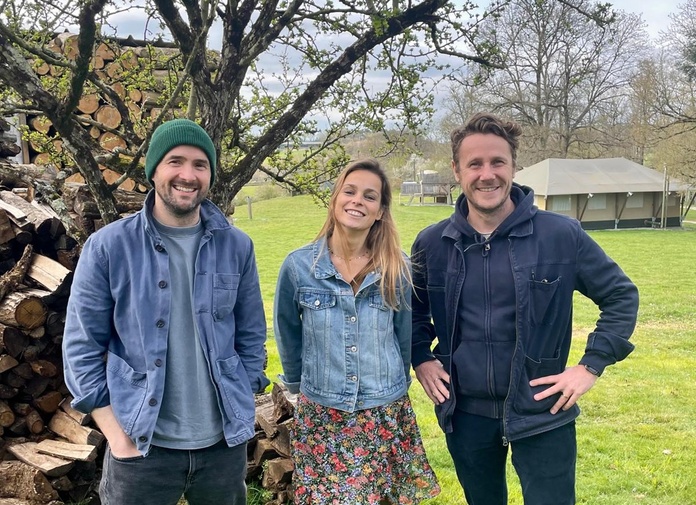
Founded in 2025 by Ségolène Desplanques, Grégory Thibord and Pierre-Yves Le Gal, the company is betting on evolving traveler expectations: “We have seen several trends emerging: the rise of outdoor activities, especially among urban audiences, but also a demand for local travel with greater flexibility,” explains co-founder Ségolène Desplanques.
The young French company will open its first site in July 2026 in the Alpes Mancelles, with the ambition to roll out five outdoor “base camps” in France within five years.
Founded in 2025 by Ségolène Desplanques, Grégory Thibord and Pierre-Yves Le Gal, the company is betting on evolving traveler expectations: “We have seen several trends emerging: the rise of outdoor activities, especially among urban audiences, but also a demand for local travel with greater flexibility,” explains co-founder Ségolène Desplanques.
The concept sits at the crossroads of camping and traditional hoteliering. But the co-founder stresses the distinction from conventional outdoor-hospitality models.
“What we offer is a reconnection to nature through movement. We lean more toward outdoor sport and adventure,” she explains. The first site will eventually include 40 accommodations on eight hectares.
The concept rests on “base camps” that are open nearly year-round and designed for outdoor activities: trail, hiking, gravel biking, kayaking, rock climbing or bivouacking, all within easy reach.
“What we offer is a reconnection to nature through movement. We lean more toward outdoor sport and adventure,” she explains. The first site will eventually include 40 accommodations on eight hectares.
The concept rests on “base camps” that are open nearly year-round and designed for outdoor activities: trail, hiking, gravel biking, kayaking, rock climbing or bivouacking, all within easy reach.
The first establishment will open in Saint-Léonard-des-Bois, in Sarthe
The first établissement will open in Saint-Léonard-des-Bois, in the Sarthe department, in the heart of the Alpes Mancelles. Located less than two and a half hours from several major metropolises, the site has been chosen for its potential for outdoor activities.
The project, supported by Sarthe Tourism and the Pays de la Loire region, represents an investment of 6.5 million euros.
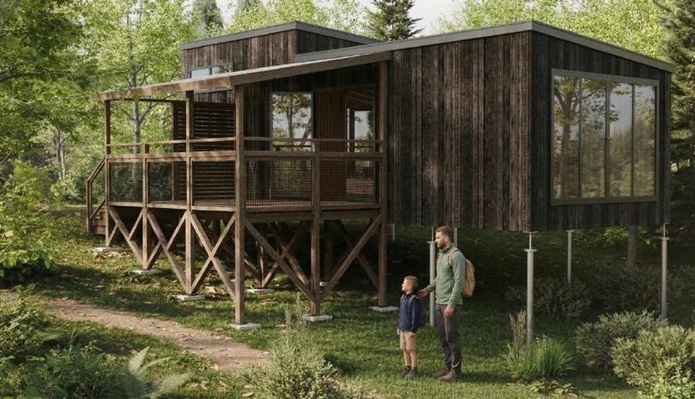
The base camp will include, at opening, 36 accommodations, a central refuge with a restaurant and an indoor climbing wall, a forest spa and several convivial spaces.
To reinforce the outdoor dimension, the site will also offer rental equipment and various gear dedicated to sports activities.
“We have an outdoor center with equipment at disposal, bikes, climbing gear, bivouac kits or gear for heading out even when it rains,” details Ségolène Desplanques.
Funding rounds completed with bank financing.
To finance its development, Bon Air Club has carried out several fundraising rounds, complemented by bank financing.
“We carried out two fundraisings in parallel: one for the holding company and another to fund the first site,” explains Ségolène Desplanques.
According to the co-founder, the financing of the first base camp rests mainly on a banking pool comprising three institutions, supplemented by private investors and regional support.
“The order of magnitude is around 7 million euros of investment per site,” she notes.
“We carried out two fundraisings in parallel: one for the holding company and another to fund the first site,” explains Ségolène Desplanques.
According to the co-founder, the financing of the first base camp rests mainly on a banking pool comprising three institutions, supplemented by private investors and regional support.
“The order of magnitude is around 7 million euros of investment per site,” she notes.
One site per year to build a national network of five base camps
Ultimately, Bon Air Club plans to open one site per year to establish a national network of five base camps.
The company favors redeveloping existing sites rather than building on virgin ground, particularly due to constraints linked to zero net artificialization (ZAN).
“Starting from virgin land to launch a tourism offer has become almost impossible today,” says Ségolène Desplanques.
The leader mentions notably taking over former holiday villages or small quirky accommodation facilities facing economic difficulties: “Many project developers struggle to endure over time without scaling up to a size that would allow hiring employees,” she notes.
The company favors redeveloping existing sites rather than building on virgin ground, particularly due to constraints linked to zero net artificialization (ZAN).
“Starting from virgin land to launch a tourism offer has become almost impossible today,” says Ségolène Desplanques.
The leader mentions notably taking over former holiday villages or small quirky accommodation facilities facing economic difficulties: “Many project developers struggle to endure over time without scaling up to a size that would allow hiring employees,” she notes.