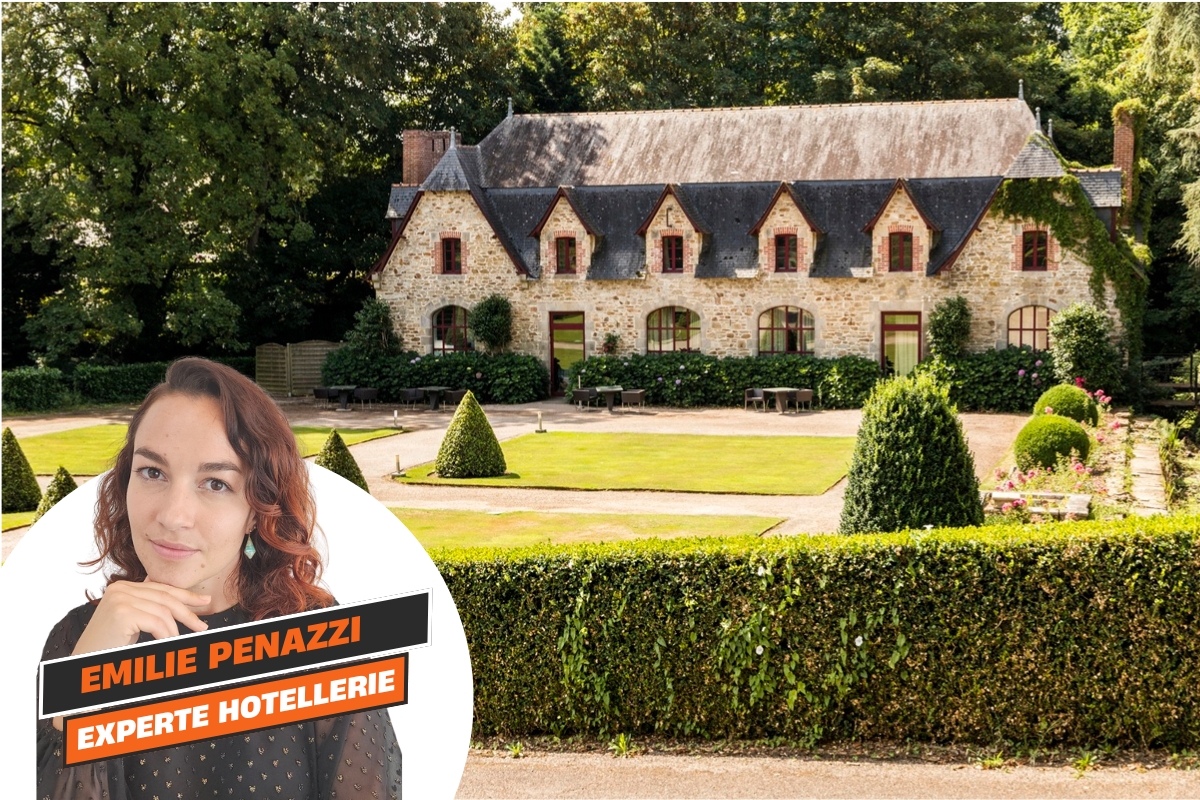


These particularities, however, form the foundation of solid performance, capable of being structured around three levers that strengthen each other.
Pricing the Difference, Measuring Beyond the Room
 The first lever touches the revenue strategy, and it rests on a widely documented conviction: in a competitive market, product differentiation yields more durable revenues than chasing the bottom prices.
 The rarity and heterogeneity of the rooms become the arguments, since a restricted inventory, made up of spaces that stand out for their history, view, and size, allows a pricing grid where each room represents a product in its own right.
The value-creation phase is essential because the sector is gradually moving away from RevPAR, which centers on the room alone, in favor of indicators that incorporate the value created per guest and actual profitability, from TRevPAR to GOPPAR.
A characterful property, whose dining, experiences, and ancillary services often carry as much weight as the nightly rate, benefits from thinking this way, and its pricing grid is built as an overall strategy.
Consequently, hoteliers might place less emphasis on price based on sleep quality and more on the guest journey.
The service and the human, the most difficult advantage to copy
A small establishment potentially benefits from a higher personnel-to-guest ratio and a relational proximity that enables a level of attentiveness that mass scale dilutes.
Harvard Business School has formalized this mechanism under the name of the “service-profit chain”, where employee satisfaction fuels client satisfaction, which in turn underpins financial performance.
This effect of internal climate always translates into the client’s lived experience. The advantage of human intervention therefore bears fruit once organized, when training, the quality of procedures, and the smoothness of internal communication turn hospitality intentions into measurable loyalty.
In this era of AI, the quality of human service remains a condition for the value of hospitality, and we now have the tools to devote the necessary time to it.
The narrative, turning heritage into experience
The experience economy, theorized by Pine and Gilmore, established that travelers seek memorable moments and judge offerings by the level of authenticity they perceive.
For a characterful property, heritage and territory constitute an asset ready to become a story, because the history of a building, its regional anchoring, and local know-how form what luxury hospitality calls the soul of a house, a differentiating source that underpins loyalty as well as recognition.
The narrative proves its value when it leaves the brochure to take shape in lived experience, from a staged arrival to partnerships with regional artisans, and it fully aligns with the principles of regenerative tourism.