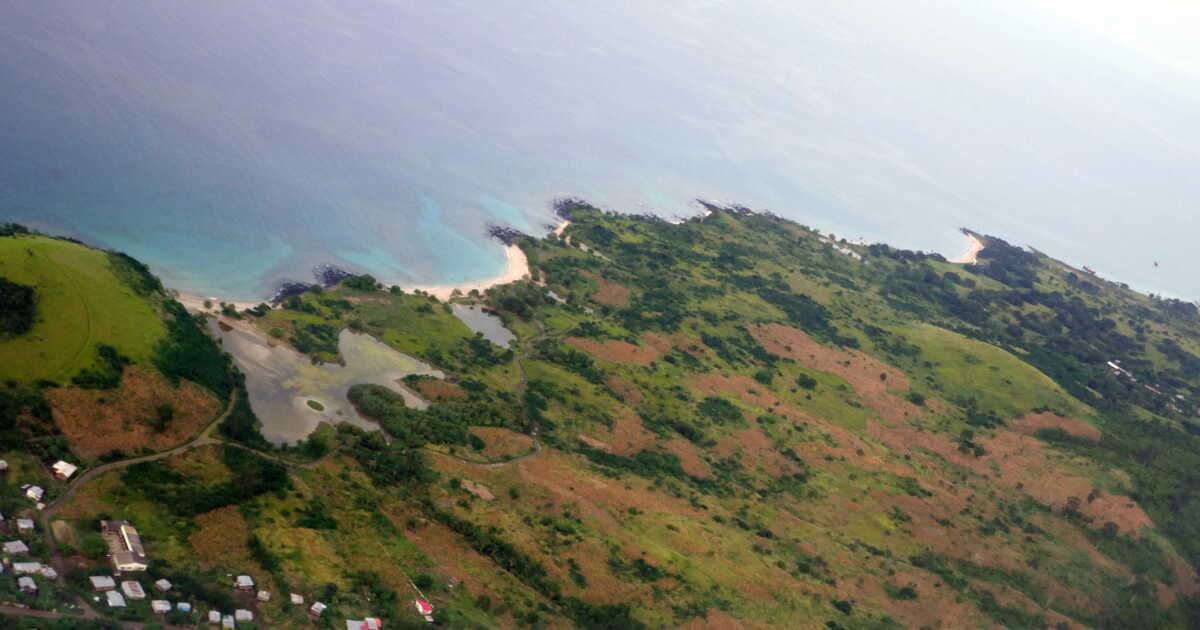
Voters in São Tomé and Príncipe, a small island state in central Africa, are set to head to the polls on Sunday, July 19, 2026 to elect their president. A former Portuguese colony that became an independent state in 1975, São Tomé and Príncipe is a Lusophone archipelago located in the Gulf of Guinea with around 200,000 inhabitants, renowned for its cocoa and coffee production. Here are five things to know about the country.
1. “The Chocolate Island”
Cocoa is deeply rooted in the history of São Tomé and Príncipe, and the island of São Tomé earned the nickname “The Chocolate Island”. By the end of the 19th century, the archipelago was the world’s leading producer with nearly 35,000 tonnes per year. On the slopes of an extinct volcano overlooking the Atlantic, the cocoa, derived from plants imported by the Portuguese in the 18th century, grows in a lush landscape. The fertile soils of São Tomé do not require fertilisers or pesticides.
But after independence in 1975, “the Portuguese left with their know-how, epidemics struck the cocoa and the State redistributed land to former workers without any oversight. Production collapsed,” explained to AFP Maria Nazaré Ceita, a historian at the University of São Tomé. Likewise, São Tomé and Príncipe has long been a hub of coffee culture and remains so, with production smaller but oriented towards high quality. The production of vanilla and pepper has recently developed.
2. Slavery and Colonization
“Who has shown this long path? This path to São Tomé ?”, asked the famous Cape Verdean singer Cesária Évora in her 1992 song Sodade, in memory of her Cape Verdean compatriots forcibly brought to work on the São Toméan plantations. The islands of São Tomé and Príncipe were colonized by the Portuguese from the late 15th century. They were the scene of a violently brutal slave trade, initially aimed at the intensive cultivation of sugar cane and then cocoa and coffee.
Thousands of men and women from Central Africa were forced into servitude to work on the plantations. According to historians, São Tomé and Príncipe was a hub of the transatlantic slave trade: around six million people are believed to have been deported from the island at that time. With the abolition of slavery in 1876, “contractual workers” were then brought—often by force—from Angola, Mozambique, Cape Verde, Gabon or Congo.
3. Paradise Beaches and Luxury Tourism
With luxuriant nature and paradisiacal beaches on these volcanic islands where nearly 600 species of plants have been catalogued, the country has all the makings of a small paradise. Yet underdeveloped infrastructure, challenges in investing in the tourist sector, and the cost of travel hinder the development of tourism in the archipelago. Visiting during the dry season is a luxury: a round trip from Lisbon costs around 1,500 euros. Tourism aimed at a wealthy clientele has therefore grown, with several luxury hotels in the archipelago, including three five‑star properties.
4. The Oil Hope
Launched in the early 2000s, oil exploration has given rise to many hopes in the country. Several international companies, including the French group TotalEnergies in 2024 or Brazilian Petrobras in 2023, have secured offshore exploration licenses. “Commercial production is expected after 2030,” according to the energy sector lobbying group African Energy Chamber, “subject to fruitful discoveries and a sustained influx of investments.”
5. A Model of Democracy in Africa
After attempts at coups in 2003 and 2009, the parliamentary regime has stabilized, and the country has established itself as a model of parliamentary democracy in Africa. One coup attempt, quickly foiled by the army, did nevertheless occur in November 2022. Since the introduction of multi-partyism in 1991 after 15 years of a Marxist one-party regime, two parties have dominated São Toméan political life and jostle for power, the Independent Democratic Alternative (ADI, centre-right), and the Movement for the Liberation of São Tomé and Príncipe – Social Democratic Party (MLSTP-PSD, centre-left), born from the former single party.