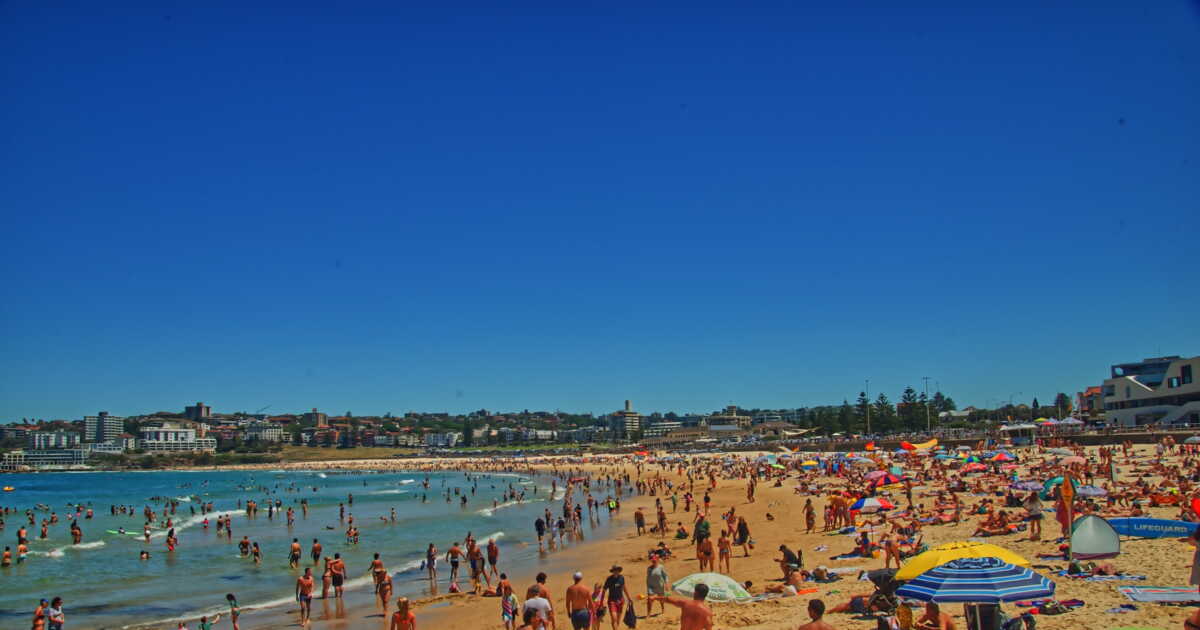
Tourists, kept informed in real time on their phones about whether the site they want to visit is crowded and urged to prefer another monument, the fight against overtourism could be steered by new technologies increasingly used by the sector. Since this summer, Parc du Marquenterre in the Baie de Somme, a major site for observing wild birds, has been predicting the expected attendance for the next 15 days, hour by hour, on its website.
“We have staff who have worked at the Park for many years and can say on Thursdays whether the weekend will be crowded or calm”, explained to AFP by François Goudeau, communications director for the Syndicat Mixte Baie de Somme. “But we didn’t know how to model this information. And we also wanted the public to be aware of this issue and to be able to postpone their visit or choose another site”, he adds. The new tool, which has run meteorological data and attendance through AI, has made it possible to identify peak visitation times throughout the year.
Anticipating Tourist Pressure
Cathy Sahuc, hailing from the aerospace sector, co-founded the startup Murmuration in the Toulouse region seven years ago. “We did a lot of work with satellites in our previous lives and we realized the impact of human activity on the environment, particularly tourism” she relates. To assess how many visitors a site can accommodate without excessive degradation, Murmuration, which notably uses satellite data, developed its own method based on environmental indicators: the health of vegetation, biodiversity, air quality, drought stress, to which is added a measure of tourist pressure.
“For a department, for example, we would say: ‘Here is the margin you still have to continue hosting people’. Or else ‘you’re at the limit, you must stop marketing or think about a better distribution’, emphasizes Cathy Sahuc. In the face of crowded streets, as in Barcelona, residents are calling for protective measures, such as mandatory reservations implemented in the calanques of Marseille. The Haute-Savoie prefecture has already put in place access-regulation measures to Mont-Blanc because of overtourism.
Encouraging Visitors to Change Their Destination
In Italy, in the Dolomites, some sites also experience high footfall, such as Tre Cime di Lavaredo, very popular on social networks. A regional native, Julian Palmarin, co-founded Touristinfo.ai, which helps sites better manage their flows. “AI unfortunately provides the most probable answer. If you ask what to do, it will send you three hours away to the most frequented site”, he tells AFP. The aim is to encourage visitors to change their destination or their timings before restrictions become necessary.
“The way we use it is by taking information from official sources, from destinations, and presenting it to the public in a way decided by the destination itself”, he specifies, for example guiding away from certain zones. Operators have access to a wealth of data: satellites, ticketing, parking, but also airline reservation records.
“You can see (…) when a traveler searches and when they finally books. This data allows destinations and travel players to anticipate, capture the traveler who is doing the search, and steer them with more attractive offers, or at other times”, details Evantia Giumba, France director of Amadeus, a leading tech player in air travel, present at the tourism professional fair IFTM, which concludes Thursday in Paris.
A Vital Lever for Some Sites
These tools could become a crucial lever for management. “It is vital for some sites that are increasingly degraded”, argues Cathy Sahuc, before adding: “The working tool of a tourism agency is the territory. If it is destroyed, there is no longer any economic activity”. “After this summer’s testing, we note that the public has not yet changed its behavior, but there is greater acceptability when there are waits, acknowledges François Goudeau. He notes that it is now essential to work “with all the prescribers, tourist offices, and hoteliers to guide their clients with good advice”.