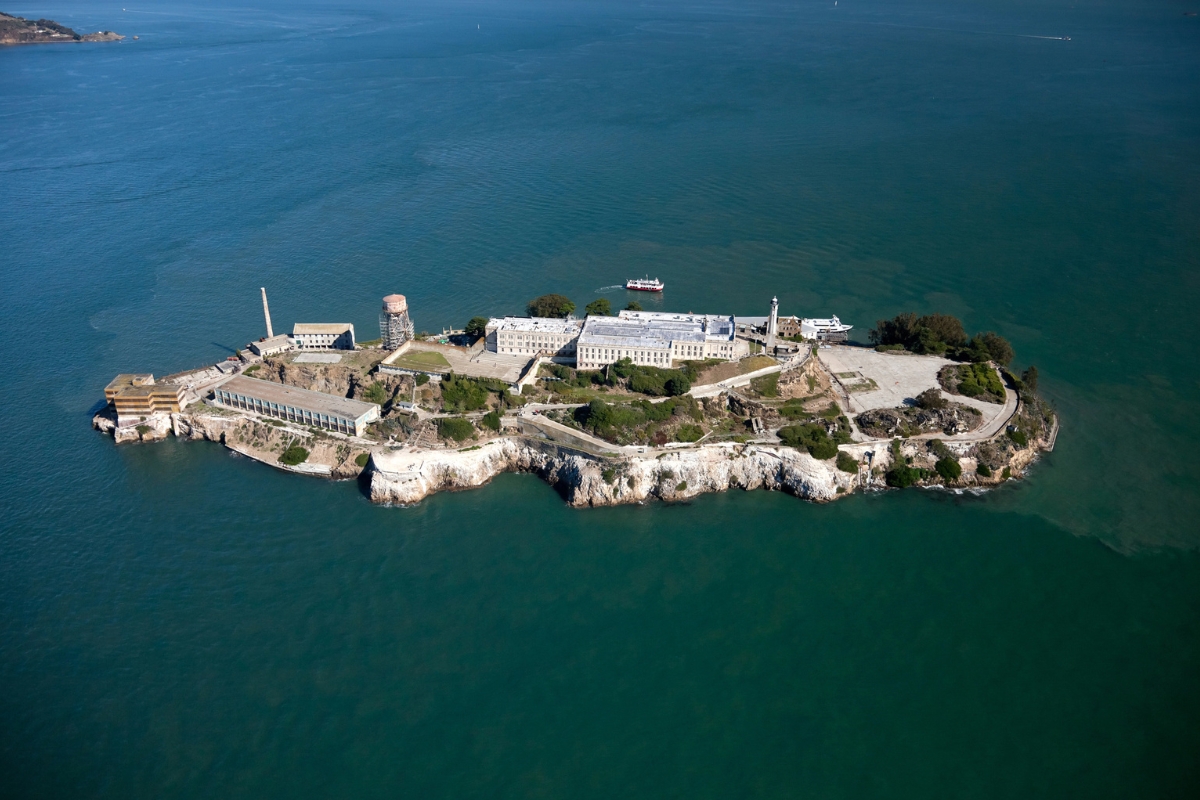
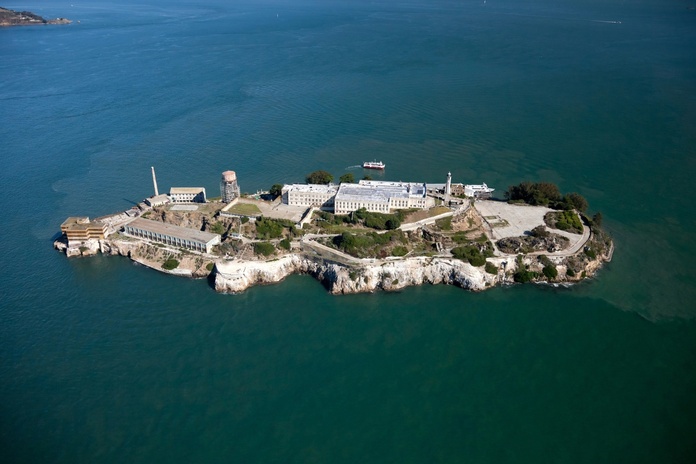


Auschwitz, Chernobyl, Alcatraz, the D-Day beaches, or abandoned villages… These places, associated with death, conflicts, disasters, or human suffering, attract visitors from around the world.
Welcome to the dark side of the profession, dark tourism! A practice often reduced to a form of unhealthy tourism.
Yet this definition does not fully capture the diversity of sites involved and the motivations of those who visit them.
Although the term is recent (1996), the practices are much older and today encompass several categories of visits:
– sites of memory and places linked to genocides or conflicts,
– sites of disasters and accidents,
– former prisons and execution sites,
– abandoned sites, deserted villages
– or places associated with legends and ghost stories.
From voyeurism to the duty of remembrance
Dark tourism is often associated with voyeurism, or with a fascination with death and human suffering. Nevertheless, visitors’ motivations are in fact much more diverse.
“You can have people who are interested in what happened on a site from a historical perspective, simply put. That is, to learn, to know the history of the world, and thus also the tragic history,” explains Fabrice Folio, a French geographer.
The researcher also distinguishes a sensitization approach, tied to the duty of remembrance and to the principle of the “never again”. To learn from these events to prevent their recurrence.
Other visitors come seeking a link with their personal or family history. On Gorée Island in Senegal, for instance, he observed a significant presence of American and African American visitors. “It was also a form of reconnecting with Africa, in relation to their ancestors, in search of their roots”, he explains.
He also mentions the “mea culpa tourism”, a démarche by which visitors seek to confront the dark pages of their own country’s or culture’s history.
A challenge for professionals
Interest in dark tourism also represents a growing market.
According to market research firm Grand View Research, the global market for this sector was valued at 31.8 billion dollars in 2023. It could reach 38.6 billion dollars by 2030, with an average annual growth of 2.9%.
This momentum opens opportunities for travel professionals. Agencies, tour operators and receptive operators can incorporate these sites into their itineraries, build thematic visits, or offer experiences around historical heritage and local narratives.
But their role is not limited to promoting a destination. The selection of sites, the choice of guides and the quality of information conveyed contribute to how visitors discover these places.
Fabrice Folio stresses that « the challenge is therefore to avoid reducing a territory to its painful history. Calling on specialized guides, contextualizing events and involving local actors helps give more meaning to the visit.»
An evolving practice
Dark tourism is no longer limited to visits to memorials, battlefields or former detention sites. New practices are emerging.
Fabrice Folio notes in particular a “ tiktokisation of tragic sites. A trend that relies on self-staging and the search for images to share on platforms. “These formats favor the spectacular, and the risk is that the place is reduced to an image, or even a selfie on a site loaded with memory. Our role is to restore the context.”, explains the founder of the Voyage Interdit site.
Urban exploration constitutes another evolution of these practices, with explorations of abandoned places sometimes outside official tourist circuits.
The researcher also mentions the emergence of visits linked to climate change; “some travelers travel to glacier fronts or endangered natural sites, with the aim of discovering them before their transformation or disappearance”, insists Fabrice Folio.
For travel professionals, the challenge is therefore to accompany these new expectations without yielding to sensationalism alone. Mediation, respect for the sites, and raising visitor awareness remain essential to give meaning to these experiences.