

It wasn’t the country of honor this year, but it once again did honor to the IFTM fair with an impressive stand, a tangible sign of a substantial investment to win over an even wider audience of European travel professionals.
The Dominican Republic went all out. A multi-level stand, if you please, paired with the traditional gala dinner for tourism players in one of Paris’s most beautiful hotels.
It is David Collado, the Minister of Tourism himself, who, during this dinner, and as in previous years, hosted the evening with vibrant energy and the power of blue sea imagery and sunsets projected on a large screen and set to music.
The minister has finely honed his narrative of the country’s story, a tale somewhat romanticized, of this small nation that believed in its resources and gradually built a success, a solid tourism industry.
The images roll by, in pastel, faded tones of the first propeller-driven twin engine at Punta Cana airport, as well as a few small hotels, up to the large carriers arriving from around the world to let travelers enjoy the colorful landscapes and the most modern hotel infrastructures.
For several years, David Collado has ridden this flamboyant dynamic, this success of which he is one of the architects, turning him into a popular figure in his country and beyond.
The idea that, buoyed by this popularity, he could run in the next presidential elections in 2028 is increasingly taking shape.
When, in the course of a sentence in his speech during the dinner, he seemed to say that it was one of his final “performances,” some in the audience saw the beginning of a new adventure for this 50-year-old politician.
The Dominican Republic went all out. A multi-level stand, if you please, paired with the traditional gala dinner for tourism players in one of Paris’s most beautiful hotels.
It is David Collado, the Minister of Tourism himself, who, during this dinner, and as in previous years, hosted the evening with vibrant energy and the power of blue sea imagery and sunsets projected on a large screen and set to music.
The minister has finely honed his narrative of the country’s story, a tale somewhat romanticized, of this small nation that believed in its resources and gradually built a success, a solid tourism industry.
The images roll by, in pastel, faded tones of the first propeller-driven twin engine at Punta Cana airport, as well as a few small hotels, up to the large carriers arriving from around the world to let travelers enjoy the colorful landscapes and the most modern hotel infrastructures.
For several years, David Collado has ridden this flamboyant dynamic, this success of which he is one of the architects, turning him into a popular figure in his country and beyond.
The idea that, buoyed by this popularity, he could run in the next presidential elections in 2028 is increasingly taking shape.
When, in the course of a sentence in his speech during the dinner, he seemed to say that it was one of his final “performances,” some in the audience saw the beginning of a new adventure for this 50-year-old politician.
Dominican Republic: Air France Returns, ITA Arrives
For now, the minister and the Dominican tourism officials are campaigning to further strengthen the country’s positioning on the European market.
France, which remains among the top 10 source countries of visitors, plays a strategic role. In 2025, the Dominican Republic welcomed 132,747 foreign tourists residing in France.
In 2026, the market shows positive growth: from January to August, the country recorded 112,056 tourists from France, a rise of 14.3% compared with the same period in 2025, representing 14,039 additional visitors.
One of the main axes of the Dominican Republic’s participation in IFTM is the presentation of major innovations in air connectivity, which ease European travelers’ access to the country’s various destinations.
Air Caraïbes continues to strengthen its commitment by serving three Dominican airports: Punta Cana, Santo Domingo, and Samaná.
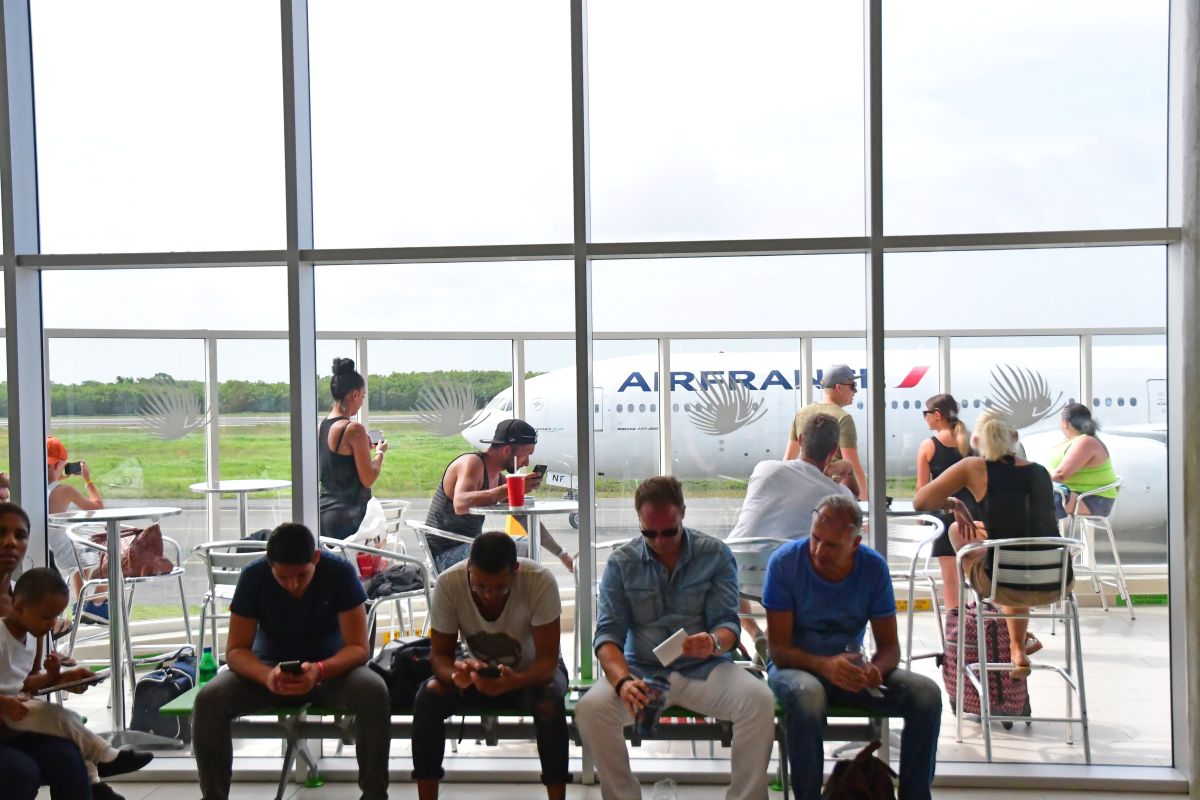
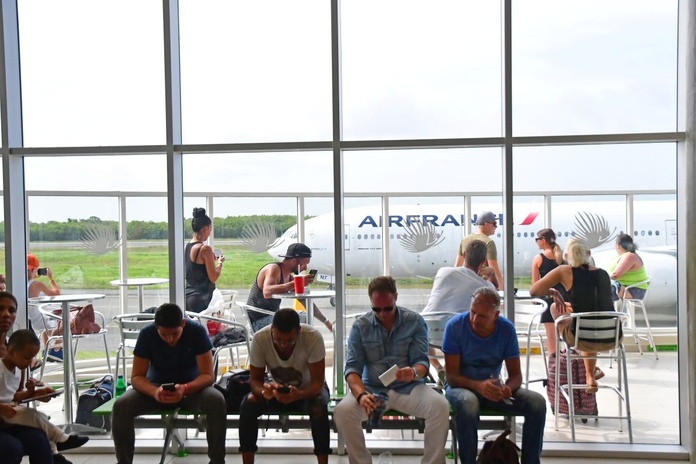
Added to this offering is Air France, which will reinforce the direct link between Paris-Charles de Gaulle and Punta Cana starting November 30, 2026, at a rate of three flights per week.
Air France’s return, confirmed last year at this same IFTM fair, is crucial for the country and resulted from intense negotiations between the French carrier, the Dominican government, and a private Dominican business conglomerate “ Grupo Puntacana S.A ”, represented by its CEO Frank Elias Rainieri.
Significant concessions on fuel prices were reportedly offered to enable this return, allowing an effective reconnection of the island with Northern European markets.
To the south, Italy will also reconnect, enabling another significant step forward in the diversification strategy and strengthening the destination’s connectivity with Europe.
ITA Airways will launch on November 30, 2026 its new direct Rome-Fiumicino–Santo Domingo route, marking the arrival of the Italian carrier in the Caribbean.
The service will begin with a weekly flight, then increase to two flights per week from mid-December. These connections represent a meaningful advance in the strategy to diversify and strengthen the destination’s connectivity with Europe.
“We are also well connected in Spain to Madrid thanks to Iberia and Air Europa as well as in Germany to Frankfurt with Condor,” explained Jennifer Elias Franjul, Director of International Marketing at the Ministry of Tourism, who was at the fair.
France, which remains among the top 10 source countries of visitors, plays a strategic role. In 2025, the Dominican Republic welcomed 132,747 foreign tourists residing in France.
In 2026, the market shows positive growth: from January to August, the country recorded 112,056 tourists from France, a rise of 14.3% compared with the same period in 2025, representing 14,039 additional visitors.
One of the main axes of the Dominican Republic’s participation in IFTM is the presentation of major innovations in air connectivity, which ease European travelers’ access to the country’s various destinations.
Air Caraïbes continues to strengthen its commitment by serving three Dominican airports: Punta Cana, Santo Domingo, and Samaná.
Added to this offering is Air France, which will reinforce the direct link between Paris-Charles de Gaulle and Punta Cana starting November 30, 2026, at a rate of three flights per week.
Air France’s return, confirmed last year at this same IFTM fair, is crucial for the country and resulted from intense negotiations between the French carrier, the Dominican government, and a private Dominican business conglomerate “ Grupo Puntacana S.A ”, represented by its CEO Frank Elias Rainieri.
Significant concessions on fuel prices were reportedly offered to enable this return, allowing an effective reconnection of the island with Northern European markets.
To the south, Italy will also reconnect, enabling another significant step forward in the diversification strategy and strengthening the destination’s connectivity with Europe.
ITA Airways will launch on November 30, 2026 its new direct Rome-Fiumicino–Santo Domingo route, marking the arrival of the Italian carrier in the Caribbean.
The service will begin with a weekly flight, then increase to two flights per week from mid-December. These connections represent a meaningful advance in the strategy to diversify and strengthen the destination’s connectivity with Europe.
“We are also well connected in Spain to Madrid thanks to Iberia and Air Europa as well as in Germany to Frankfurt with Condor,” explained Jennifer Elias Franjul, Director of International Marketing at the Ministry of Tourism, who was at the fair.
Unblocking and Decentralizing Tourism
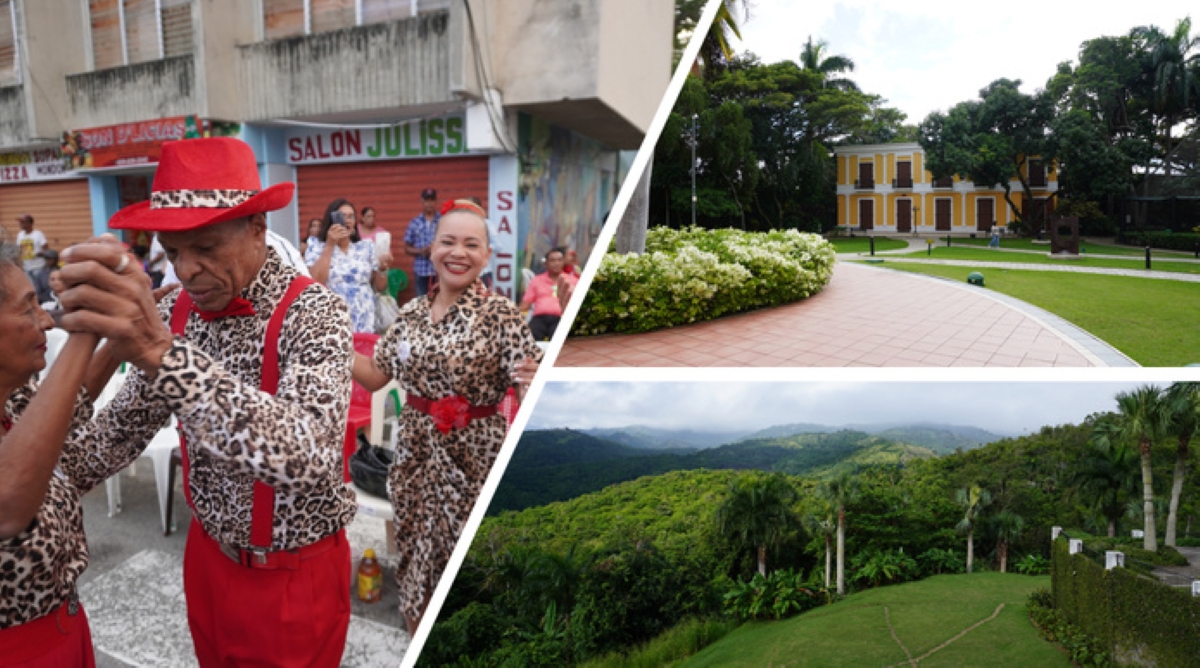
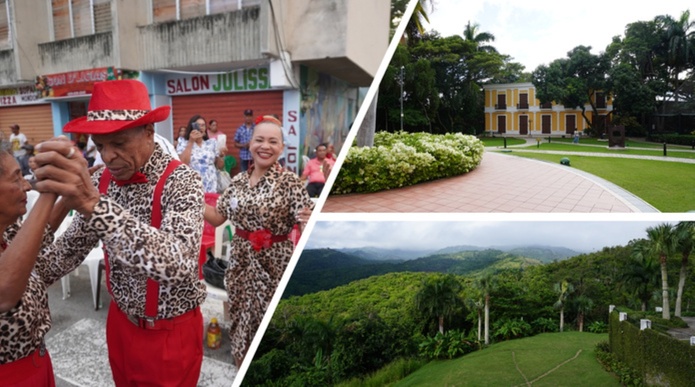
Beyond solid air connections, another challenge for “La Isla Bonita” is to diversify its tourism offerings and decentralize them.
Punta Cana, at the eastern tip of the Dominican Republic, initially powered the destination’s success and has become one of the world’s most powerful beach hubs, with its stunning beaches and large resorts.
“The goal now is to value other parts of the island and other forms of tourism,” explains Jennifer Elias Franjul.
By establishing a presence in Santo Domingo and on the northern coast in Samaná, Air Caraïbes promotes a tourism focused on culture, gastronomy, and nature, with unique experiences such as whale watching in Samaná Bay.
Air Europa, which launched in 2024 service from Madrid to Santiago de los Caballeros, the country’s second city, renowned for its cultural identity, local life, and, among other things, the remarkable León Cultural Center, the largest in the Dominican Republic.
From this charming city, one can then access the slopes of the island’s northern range of mountains with lush greenery, agricultural lands offering numerous ecotourism opportunities and outdoor activities, and on the sea side, magnificent beaches with colorful and authentic seaside towns.
Punta Cana, at the eastern tip of the Dominican Republic, initially powered the destination’s success and has become one of the world’s most powerful beach hubs, with its stunning beaches and large resorts.
“The goal now is to value other parts of the island and other forms of tourism,” explains Jennifer Elias Franjul.
By establishing a presence in Santo Domingo and on the northern coast in Samaná, Air Caraïbes promotes a tourism focused on culture, gastronomy, and nature, with unique experiences such as whale watching in Samaná Bay.
Air Europa, which launched in 2024 service from Madrid to Santiago de los Caballeros, the country’s second city, renowned for its cultural identity, local life, and, among other things, the remarkable León Cultural Center, the largest in the Dominican Republic.
From this charming city, one can then access the slopes of the island’s northern range of mountains with lush greenery, agricultural lands offering numerous ecotourism opportunities and outdoor activities, and on the sea side, magnificent beaches with colorful and authentic seaside towns.
Roads, Airports: Major Works
To facilitate travel and land connectivity, the government has launched a massive program to develop road networks.
Unblocking, for example, the Southwest to open up the long-isolated region is one of the national goals. Thus, at the island’s opposite end, the beautiful Cabo Rojo region is getting a port that, in time, could accommodate 1 million cruise passengers per year. Roads are being improved and by 2027 a brand-new airport is expected to rise in Oviedo, located 15 minutes from the port.
Another diversification project that Jennifer Elias Franjul presented: to valorize the Miches region on the eastern coast, north of Punta Cana, and close to the airport, facing Samaná Bay.
A zone with enormous natural potential, beaches, mountains, and lagoons. A strategic region that will undoubtedly benefit from the arrival of the Air France flight in November and where Dominican authorities are investing heavily.
In December, they invited the tourism journalists association to discover Miches.
Unblocking, for example, the Southwest to open up the long-isolated region is one of the national goals. Thus, at the island’s opposite end, the beautiful Cabo Rojo region is getting a port that, in time, could accommodate 1 million cruise passengers per year. Roads are being improved and by 2027 a brand-new airport is expected to rise in Oviedo, located 15 minutes from the port.
Another diversification project that Jennifer Elias Franjul presented: to valorize the Miches region on the eastern coast, north of Punta Cana, and close to the airport, facing Samaná Bay.
A zone with enormous natural potential, beaches, mountains, and lagoons. A strategic region that will undoubtedly benefit from the arrival of the Air France flight in November and where Dominican authorities are investing heavily.
In December, they invited the tourism journalists association to discover Miches.
 Published by Christophe Hardin Journalist AirMaG – TourMaG.com
 See all articles by Christophe Hardin


Add TourMaG to your Google News feed