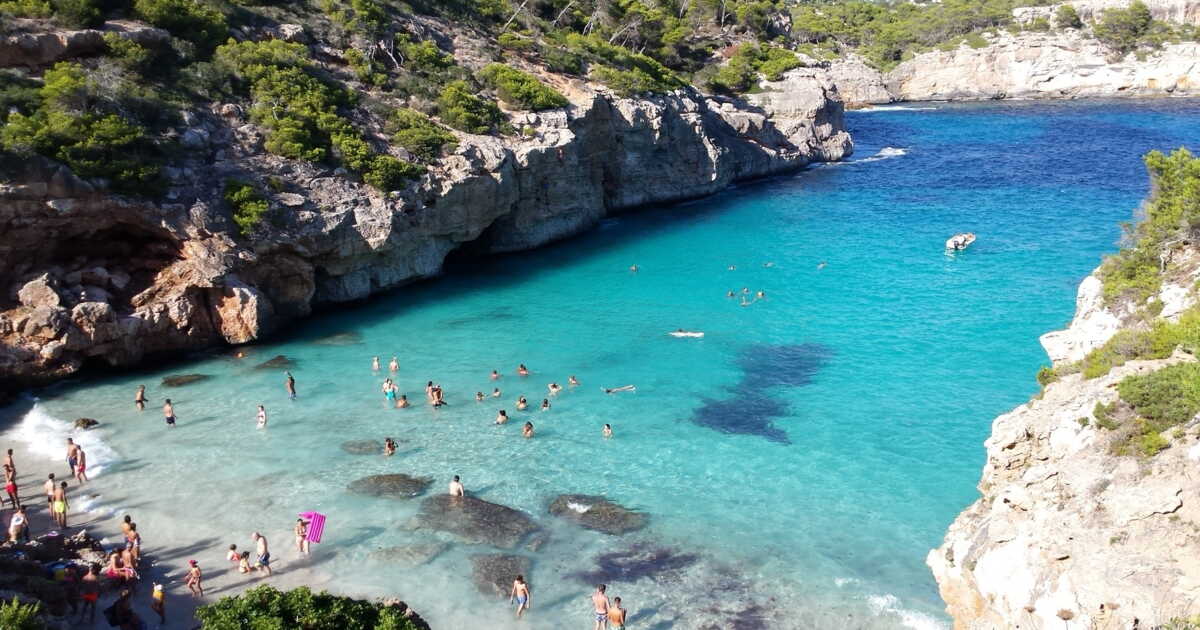
Summer is over, but it remains possible to enjoy pleasant temperatures on several European islands… even in autumn or winter. Some Mediterranean destinations stay sufficiently mild in October to plan a seaside getaway, while others allow for a sunny respite in December. Beyond the beaches, these islands host historic villages, volcanic landscapes and natural sites that are worth visiting off-season. Here are eleven destinations to consider to extend the sunny days without traveling to the far end of the world.
Spain, four islands to enjoy the sun after the summer
Ibiza, renowned for its parties and its clubs, presents a very different face when tourist crowds thin. In October, the average temperature hovers around 20 °C. Conditions therefore remain favorable for exploring the beaches and savoring the last rays of sunshine of the year. The north of the island is particularly interesting for those seeking more tranquility. Described as the “last village of Ibiza” by the site Ibiza Spotlight, Sant Joan de Labritja has preserved a rural atmosphere, with a limewashed church dating from the eighteenth century and an artisanal market held every Sunday.
Majorca, the largest of the Balearic Islands, has more than 260 beaches and records an average temperature of 19 °C in October. The period is also suitable for activities beyond lounging. Visitors can notably discover harvest-related festivities, fairs, and artisan markets organized in inland villages. Cycling enthusiasts also benefit from roads less crowded than in peak summer. In the mountains, Valldemossa offers a picturesque setting, a charming historic center, and the palace of King Sancho, a fourteenth-century royal residence.
To rediscover mild temperatures in December, the south of Tenerife ranks among the favored areas in the Canary Islands. The thermometer typically ranges between 17 and 22 °C. Playa del Duque beach, located in Costa Adeje, remains an option to enjoy the coastline in winter. Very popular with families during the summer, it should return to greater calm during the colder months.
Gran Canaria also benefits from temperatures between 17 and 22 °C in December. To move away from the most touristy areas, the Hidden Gem Guide recommends visiting Agüimes and Ingenio, two towns on the eastern side of the island. In Agüimes, bronze statues are scattered through the streets. Ingenio is known for its lace craftsmanship and houses the white church of La Candelaria, built in 1901.
From the Mediterranean to the Atlantic, seven other islands to extend the sunny days
In Sicily, October allows exploring coastal landscapes, historic squares, and villages without the crowds of the peak season. The average temperature hovers around 15 °C, even if much hotter spells can occur. On the northern coast, Cefalù stands out as a preferred stop. Often described as one of Italy’s most beautiful villages, the locality features an impressive Norman cathedral and a medieval old town.
Gozo, one of the 21 islands that compose the Maltese archipelago, blends Mediterranean scenery, ancient heritage and a still-warm autumn climate. In October, temperatures hover around 21 °C. Ramla Bay, considered by Tripadvisor as the island’s best beach, stands out with its golden sand and crystal-clear waters. A worthwhile stop to enjoy the coastline before winter arrives.
Less famous than Crete or Rhodes, Alonissos can reach about 24 °C in October. The island is accessible by plane via mainland Greece, then by ferry to the main port of Patitiri. According to Ferryhopper, the crossing from Mantoudi, on the island of Euboea, to Alonissos takes about two hours. The old town, perched on a hill, offers panoramic views of the Aegean Sea and the neighboring island of Skopelos.
In October, temperatures on Brač, in Croatia, range from 14 to 20 °C. The largest island of Dalmatia is particularly known for Zlatni Rat, also called the Golden Horn or the Cape of Gold. This pebbly beach has a tip whose shape constantly evolves under the influence of wind, waves and currents.
In Portugal, Madeira typically records between 15 and 20 °C in December, with a mix of sunny spells and rainy intervals. Its lush landscapes and numerous hiking trails make it a popular destination for walkers when the weather allows. To discover the northern coast differently, the Achadas da Cruz cable car offers a journey of about five minutes. Built originally to facilitate transporting harvests for farmers, it operates daily and today allows visitors to admire the coastline from above.
With average temperatures around 14 °C in December, Cyprus is suitable for cultural visits and winter excursions. The island offers a varied range of accommodations for different budgets. To move away from the most frequented spots, the village of Pelendri, in the Limassol district, is worth a detour. It charms with its traditional stone houses and Cypriot cuisine.
The Azores, a Portuguese archipelago in the North Atlantic, consist of nine volcanic islands. According to Travel Scoop, average temperatures reach about 17 °C in December. São Miguel, the largest and most visited, features lakes, volcanic landscapes and black-sand beaches. For a less frequented escape, Terceira provides an alternative. Travel + Leisure magazine presents it as an still little-known destination of the archipelago. There you can find lava-carved natural pools and a lower tourist traffic than on neighboring, more lively islands.
Between the beaches of the Balearics, the Mediterranean villages and the volcanic landscapes of the Atlantic, these destinations offer several options for off-season travel. The Canary Islands stand out for their particularly mild winter temperatures, while the Mediterranean islands are primarily appealing in autumn.