Summary
-
The oldest living cultures in the world
-
Kakadu, where the landscape tells the story of the Bininj and the Mungguy
-
The Tiwi, on islands where culture is lived daily
-
The Larrakia, guardians of Darwin’s territory
In Australia, Aboriginal culture is not confined to museums. It is still transmitted through languages, stories, ceremonies, and knowledge of the land. A reality particularly visible in the Northern Territory, where Aboriginal and Torres Strait Islander peoples account for 26.3% of the population, compared with 3.2% nationally. For several days, we traveled on assignment to meet three Top End peoples to understand how these cultures continue to live and reinvent themselves today.
The oldest living cultures in the world
Indigenous peoples have occupied Australia for at least 65,000 years. Long before the arrival of the British in 1788, the continent consisted of hundreds of distinct nations, each with their own language, traditions, territories, and social systems. To speak of “Aboriginal culture” in the singular is therefore misleading.
Despite this diversity, certain beliefs and values cross many communities. The most important is undoubtedly the relationship to Country. For Indigenous peoples, the land is not merely a geographic space. It gathers ancestors, animals, plants, waterways, sacred sites, and the narratives associated with them. Humans are not owners of it: they are its guardians.
This worldview is expressed notably through Dreaming stories, the “Time of Dreams.” Stories that recount the creation of the world by ancestral beings, shaping landscapes and establishing the rules that govern relationships between humans, animals, and nature.
Among these foundational figures, the Rainbow Serpent occupies a central place in many northern Australian traditions. Associated with water, fertility, and creation, it is said to have shaped rivers, billabongs, and certain landforms during its journeys.
The Indigenous societies also rely on highly developed kinship systems. A person’s identity is defined by their clan, family ties, ceremonial responsibilities, and sometimes their totem, associated with an animal species, plant, or natural element. Some rights and duties are transmitted through the father, others through the mother. Marriage rules are strictly regulated, and unions traditionally could occur only between certain categories of people.
In several northern Australian communities, some relationships are subject to avoidance rules. For example, an adult man should not speak directly to his mother-in-law. Other restrictions sometimes apply to siblings after puberty.
Kakadu, where the landscape tells the story of the Bininj and the Mungguy
Listed as a UNESCO World Heritage site for its natural and cultural riches, Kakadu is primarily the ancestral land of the Bininj and Mungguy. The site is co-managed by the traditional owners and Parks Australia.
Here, culture is omnipresent in the landscape. Every escarpment, every water point, and every floodplain holds a particular meaning and forms part of a complex network of stories handed down through generations.
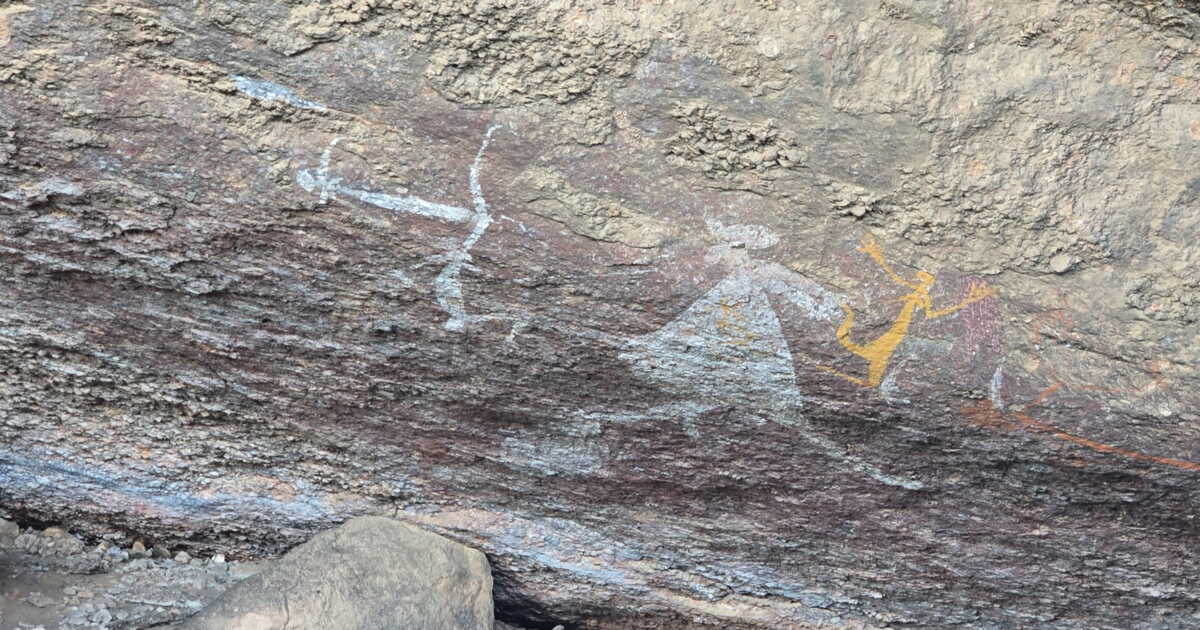
Visitors often discover this culture through the impressive sites of Ubirr and Burrungkuy. With thousands of paintings made across different eras— some dating back as far as 20,000 years— Kakadu hosts one of the world’s most significant concentrations of rock art.
The so-called “X-ray” style is perhaps the most famous. Artists depicted animals with their bones, organs, and internal anatomy. Barramundi, turtles, and crocodiles thus appear as true biological diagrams.
But this art is not limited to these depictions. Kakadu’s cliffs also house Mimi figures, spiritual beings described as extremely slender and living in rock crevices. According to the traditions of western Arnhem Land, they would have taught humans hunting, dancing, and painting.
There are also scenes of hunting, Dreaming narratives, and paintings illustrating early contacts with the Macassan fishermen from Indonesia and later with Europeans.
For the Bininj and Mungguy, these works are not merely artistic. They constitute real open-air libraries, meant to transmit knowledge about animals, the seasons, sacred places, and social rules.
This knowledge of the land is reflected in the way they observe the environment. Unlike the Western calendar, Kakadu residents distinguish six seasons. Each season is identified by precise cues: the flowering of certain plants, the arrival of migratory birds, crocodile behavior, and the rising waters.
These observations guide hunting, fishing, gathering, and the controlled burning practiced for millennia. Today, these knowledge systems still play a crucial role in managing the national park.
The Tiwi, on islands where culture is lived daily
To the north of Darwin, one must go by sea to reach the Tiwi Islands. The forests, beaches, and mangroves shape a world apart, long kept difficult to access from the mainland. The Tiwi have developed a distinctive culture there, with their own languages, stories, ceremonies, and codes of life.
Here, the sea is both a means of travel and a source of food. Fishing, hunting, and gathering remain part of the lives of some families. From a young age, people learn to recognize species, know where to find them, and when to harvest. This knowledge is passed on in the field, by accompanying parents or grandparents.
On the islands, the stories told overlay the landscapes. A rock, a beach, or a patch of forest may be associated with an ancestor, a Dreaming episode, or a particular rule. Places are thus never completely separated from the stories attached to them.
But it is especially during ceremonies that this culture takes on a spectacular dimension. The best known is the Pukumani, a funerary ritual organized after the death of a community member. The ceremony accompanies the deceased and marks the separation between the living and the one who has died. It mobilizes families, songs, dances, body painting, and ritual objects. Among these objects are the famous Pukumani poles, tall wooden posts erected around the grave. Carved and painted with motifs unique to Tiwi culture, they are made for a specific person and participate in the funeral rite.
Art is everywhere on the islands. Paintings, sculptures, textiles, and contemporary objects reuse motifs and stories passed down within the communities. Artists are now adapting them to new media and exhibiting them abroad. Contemporary creation thus becomes another way to carry Tiwi culture far beyond the islands.
The inhabitants live with their era: they go to school, work, use the Internet, and travel. But ceremonies, stories, language, and country-based knowledge continue to find their place in community life.
The Larrakia, guardians of Darwin’s territory
At first glance, Darwin has little in common with Kakadu’s wild landscapes or the Tiwi Islands. The capital of the Northern Territory lines up roads, buildings, shops, and residential districts. Yet beneath the modern city lies the ancestral territory of the Larrakia, the “Saltwater People.” The sea plays a central role in this culture, as do the rivers, mangroves, and lands surrounding the city.
Colonisation profoundly disrupted this relationship to the land. The establishment of the city, population movements, and policies imposed on Indigenous peoples reduced their access to lands and disrupted the transmission of their languages and practices. But Larrakia culture has not disappeared. Today it is experiencing a significant revitalization movement, driven especially by families, artists, and community organizations.
This culture is visible even in Darwin’s public spaces. Works of art, place names, ceremonies, and events help make the Larrakia history visible in a city where visitors could easily forget that they are on Indigenous land.
Darwin is also a meeting place for the Territory’s various cultures. Aboriginal people from Arnhem Land, the Tiwi Islands, the Kimberley, and the Australian interior live there, work there, or come to practice their art. The capital thus brings together languages, artistic styles, and traditions that are very different. In galleries and cultural centers, one can move in a few streets from a Tiwi work to a painting from Arnhem Land or to a desert artist’s creation.
The Museum and Art Gallery of the Northern Territory houses the National Aboriginal and Torres Strait Islander Art Awards (NATSIAA), which highlight the contemporary work of Aboriginal and Torres Strait Islander artists from the Torres Strait every year. The Larrakia Cultural Centre also sits within this dynamic. Its opening in September 2026 is intended to showcase to the public Larrakia cultural objects that have recently been repatriated after being kept abroad for decades.
Rights Long Denied
The Aboriginal and Torres Strait Islander peoples of the Torres Strait were long excluded from many civil rights in Australia. At the federal level, the right to enroll and vote in elections was granted to all Indigenous Australians in 1962. Queensland was the last state to grant them voting rights in local elections, in 1965. Enrollment and voting only became mandatory for Indigenous citizens in 1984.
A major turning point also occurred in 1967. In a referendum, more than 90% of voters approved a constitutional amendment allowing, among other things, the counting of Indigenous populations in the national census and giving the federal Parliament the power to legislate specifically on their behalf.
Since then, the rights and representation of the First Peoples have remained a key issue in Australian public life. In 2023, a referendum proposed embedding in the Constitution an “Aboriginal and Torres Strait Islander Voice,” a body to represent Indigenous peoples before Parliament and the federal government. The proposal was rejected by voters, with 39.94% of national votes in favor.
Despite legal and political advances, significant socio-economic gaps persist between Indigenous populations and the rest of the population. The national program “Closing the Gap” aims in particular to reduce these gaps in health, education, employment, housing, and safety. The Australian government publishes annually a progress report on achievements and remaining targets.
Beyond the ballot box, memory tensions also surface each year around January 26 (the date of the arrival of the First Fleet in 1788), Australia’s official national day. Called “Invasion Day” or “Survival Day” by its critics, this date has sparked a growing national debate, with Indigenous peoples and their supporters denouncing the celebration of the beginning of colonization and their dispossession.